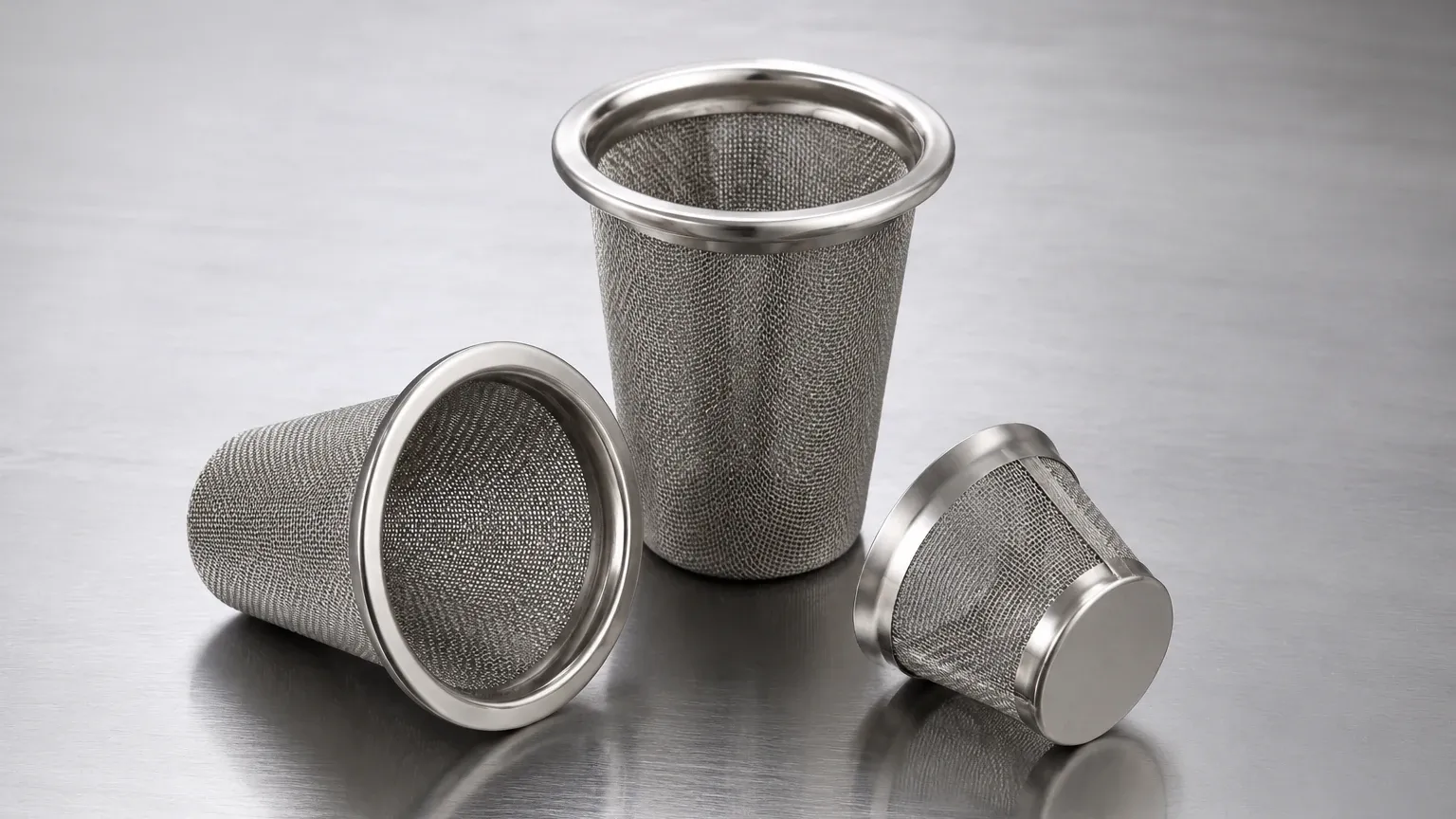
40 Micron Cell Strainers
In precision industrial filtration and laboratory processing, the 40 micron cell strainer represents a critical threshold for particle separation. While often associated with biological research and tissue dissociation, the engineering principles governing these components extend into broader industrial applications where fine-mesh Strainers & Baskets are required to ensure fluid purity and protect downstream equipment. Understanding the technical specifications, material performance, and selection criteria is essential for engineers and procurement teams looking to optimize filtration efficiency.
Understanding 40 Micron Filtration Mechanics
A 40 micron rating signifies that the filter media is designed to prevent the passage of particles larger than 40 micrometers (μm). To put this in perspective, a human hair is typically between 50 and 70 microns in diameter. Achieving this level of precision requires advanced manufacturing techniques, particularly when using stainless steel wire mesh.
In industrial settings, the 40 micron cell strainer serves as a fine-mesh barrier. The effectiveness of this barrier depends on the "absolute" versus "nominal" rating. For critical applications, such as pharmaceutical processing or high-purity chemical filtration, an absolute rating is preferred, ensuring that 99.9% of particles at the specified size are captured. Kaifil utilizes high-grade stainless steel weaving to maintain uniform pore distribution, which is vital for consistent flow rates and predictable separation outcomes.
The Role of Stainless Steel in Fine Mesh Strainers
While many laboratory cell strainers are made from disposable plastic and nylon, industrial-scale applications frequently demand the durability and chemical resistance of stainless steel. Stainless steel 304 and 316L are the primary materials used in the construction of high-performance strainers and baskets.
1. Chemical Compatibility: Stainless steel 316L offers superior resistance to corrosion, especially in environments involving chlorides or acidic solutions. This makes it the standard choice for pharmaceutical and food-grade filtration.
2. Thermal Stability: Unlike polymer-based strainers, stainless steel components can withstand extreme temperatures, allowing for sterilization via autoclaving or steam-in-place (SIP) procedures.
3. Structural Integrity: At the 40-micron level, the wire mesh is delicate. A robust stainless steel frame or basket support prevents the mesh from deforming under pressure, ensuring the filtration surface remains flat and effective.
Engineering Considerations for Strainers & Baskets
When integrating 40 micron cell strainers into an industrial workflow, several engineering factors must be evaluated to ensure the longevity of the filtration system. Selecting the right Strainers & Baskets involves more than just choosing a micron size; it requires an analysis of the entire fluid system.
Flow Rate and Pressure Drop
As the pore size decreases to 40 microns, the resistance to flow increases. This is known as the pressure drop (ΔP). Engineers must calculate the clean pressure drop to ensure the pump system can handle the resistance without compromising throughput. If the flow rate is too high for the surface area provided, the mesh may experience premature blinding (clogging), leading to frequent downtime for cleaning or replacement.
Effective Filtration Area (EFA)
To mitigate pressure drop and extend the service life of the strainer, increasing the Effective Filtration Area is a common strategy. This can be achieved through pleated designs or by using larger basket configurations. A larger EFA allows for a lower velocity of fluid passing through the mesh, which reduces the force at which particles impact the screen, thereby minimizing the risk of particle "breakthrough" or mesh damage.
Mesh Weave Types
For 40 micron applications, the type of weave significantly impacts performance:
* Plain Weave: The simplest form, where wires cross over and under each other. It provides high flow but may have less stability at very fine micron ratings.
* Twilled Weave: Allows for heavier wires to be used for a given mesh count, increasing the strength of the 40-micron screen.
* Dutch Weave: Provides a much higher mechanical strength and is often used in high-pressure applications where fine filtration is required.
Applications Across Key Industries
The utility of 40 micron cell strainers and related stainless steel baskets spans multiple sectors, each with unique performance requirements.
Pharmaceutical and Biotechnology
In these industries, cell strainers are used to create single-cell suspensions from primary tissues or to remove cell clumps and debris before flow cytometry. When scaled up to industrial production, stainless steel baskets with 40-micron liners are used to protect sensitive chromatography columns or to filter active pharmaceutical ingredients (APIs) from solvents.
Food and Beverage Processing
Precision filtration is used to remove fine particulates from oils, syrups, and juices. The 40-micron threshold is often used as a final polishing step to ensure product clarity and remove microscopic contaminants that could affect taste or shelf life. Because these applications involve human consumption, the use of food-grade stainless steel and smooth, crevice-free welds is mandatory to prevent bacterial growth.
Chemical and Petrochemical
In chemical processing, fine strainers protect nozzles and precision valves from particulate wear. A 40 micron cell strainer made from specialized alloys can handle aggressive reagents that would dissolve standard plastic lab equipment.
Evaluating Quality and Avoiding Common Risks
When sourcing 40 micron filtration components, technical professionals must be aware of common failure modes and quality indicators. Substandard strainers can lead to process contamination or equipment failure.
1. Mesh Migration and Shedding: In low-quality strainers, individual wires may become loose and migrate into the filtrate. High-quality industrial strainers utilize sintered mesh or specialized welding techniques to ensure that the mesh remains intact even under high-pressure pulses.
2. Bypass Risks: A common failure in basket strainers is fluid bypass, where the fluid flows around the edge of the filter element rather than through the mesh. This is usually caused by poor sealing or an improperly seated basket. Precision-engineered frames with high-quality gaskets are essential to prevent bypass.
3. Clogging and Cleaning Protocols: 40 micron mesh is susceptible to blinding, especially if the fluid contains fibrous or gelatinous materials. Understanding the cleaning requirements—whether it be ultrasonic cleaning, backwashing, or chemical soaking—is vital for maintaining the total cost of ownership. Stainless steel is particularly advantageous here, as it can be cleaned and reused multiple times, unlike disposable alternatives.
Customization and OEM Solutions
Standard off-the-shelf strainers do not always meet the specific needs of complex industrial systems. Customization is often required to fit existing pipework, accommodate specific flow directions, or meet unique filtration challenges. Kaifil specializes in providing tailored Strainers & Baskets that can be adapted to various micron ratings and housing configurations.
Customization options often include:
* Reinforced Support: Adding perforated metal backing to the 40-micron mesh to handle higher differential pressures.
* Handle and Lifting Lug Designs: For large industrial baskets, ease of removal for cleaning is a significant operational consideration.
* Multi-Stage Filtration: Combining a coarse outer screen with a 40-micron inner liner to handle fluids with a wide range of particle sizes, thereby protecting the fine mesh from heavy loading.
Total Cost of Ownership (TCO) Considerations
While the initial cost of a stainless steel 40 micron cell strainer or basket is higher than a disposable plastic version, the TCO is often significantly lower in an industrial context. Factors contributing to this include:
* Reduced Waste: Reusable stainless steel components align with corporate sustainability goals and reduce the costs associated with hazardous waste disposal.
* Durability: A well-maintained stainless steel strainer can last for years, whereas plastic strainers are prone to cracking and mesh tearing.
* Process Reliability: High-precision metal mesh provides more consistent filtration results, reducing the risk of batch rejection or downstream equipment damage.
Final Checklist for Purchasing 40 Micron Strainers
Before finalizing a purchase or specifying a component for a new project, engineers should confirm the following details with their supplier:
* Material Certification: Ensure the stainless steel grade (e.g., 304, 316L) is verified with material test reports (MTRs).
* Micron Accuracy: Confirm if the 40-micron rating is nominal or absolute and request pore size distribution data if necessary.
* Pressure Rating: Verify the maximum differential pressure the mesh can withstand before deformation occurs.
* Seal Compatibility: If the strainer uses O-rings or gaskets, ensure the material (Viton, EPDM, PTFE) is compatible with the process fluid.
* Cleaning Compatibility: Confirm that the strainer design allows for the intended cleaning method without damaging the fine mesh.
By focusing on these technical parameters and choosing high-quality Strainers & Baskets, industrial operators can achieve precise particle separation at the 40-micron level while ensuring the long-term reliability of their filtration systems. Whether for laboratory-scale cell processing or large-scale chemical manufacturing, the integrity of the mesh and the robustness of the strainer construction remain the most critical factors for success.