


Engineering Guide to Wire Mesh Filter Housing and Element Integration
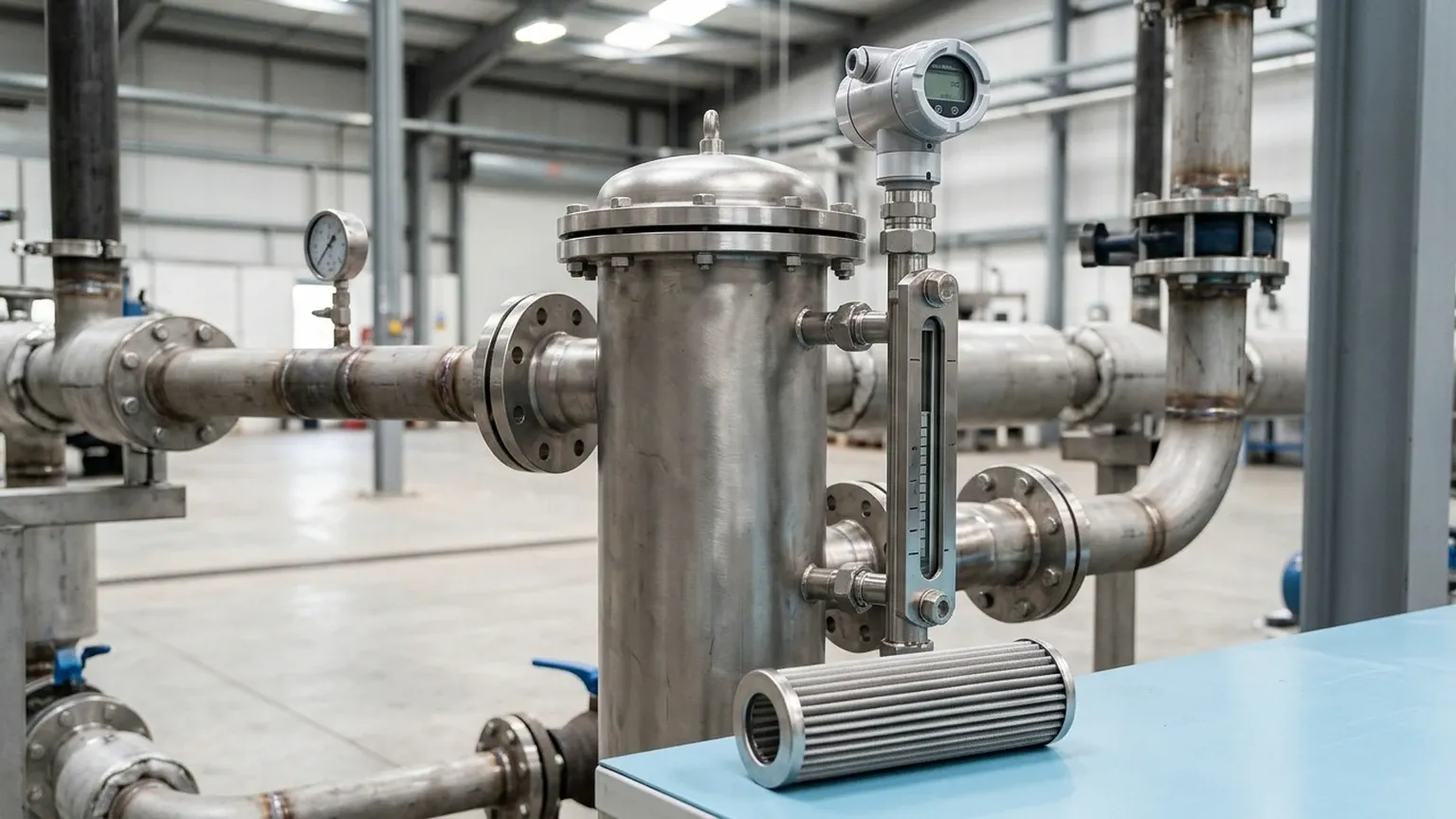
In industrial filtration, the performance of a system is defined by the synergy between the pressure vessel and the internal media. A wire mesh filter housing serves as the structural containment for specialized filtration components, ensuring that fluids are directed through the media under controlled pressure and flow conditions. For engineers and procurement specialists, understanding the technical nuances of housing design—and how it accommodates Wire Mesh Filter Cylinders & Tubes—is essential for optimizing process efficiency and equipment longevity.
Industrial filtration demands more than just basic particle separation; it requires a robust mechanical assembly capable of withstanding thermal cycling, chemical aggression, and high differential pressures. This guide examines the engineering principles, selection criteria, and operational considerations for wire mesh filter housings in B2B industrial environments.
1. The Functional Role of Wire Mesh Filter Housing
The primary function of a wire mesh filter housing is to provide a leak-proof environment where raw process fluids are forced through a precision filter element. Unlike disposable plastic housings used in light commercial applications, industrial-grade housings are typically fabricated from stainless steel to meet the rigorous demands of chemical processing, hydraulic systems, and food production.
Structural Integrity
Industrial housings are designed as pressure vessels. They must manage the internal pressure of the fluid while providing a secure seat for the internal filter. The housing's internal geometry is critical; it must minimize turbulence and prevent "dead zones" where stagnant fluid could lead to bacterial growth or sediment buildup.
Flow Path Management
In a standard configuration, the fluid enters the housing through an inlet port, fills the space surrounding the filter element, and is forced through the mesh from the outside-in (or occasionally inside-out, depending on the application). The filtered fluid then exits through a central core. The housing must be sized correctly to ensure that the fluid velocity does not exceed the structural limits of the internal mesh layers.
2. Integrating Wire Mesh Filter Cylinders & Tubes
The heart of any filtration housing is the internal element. In high-performance industrial settings, Wire Mesh Filter Cylinders & Tubes are the preferred choice due to their rigidity and precise pore distribution. The interface between the housing and these cylinders is a critical engineering checkpoint.
Sealing Mechanisms
To prevent fluid bypass—where contaminated liquid skips the filter and goes straight to the outlet—the housing must utilize reliable sealing interfaces. Common methods include:
* O-Ring Seals: Typically made of Viton, EPDM, or PTFE, these provide a compression seal at the top and bottom of the filter tube.
* Knife-Edge Seals: A machined sharp edge in the housing that bites into a soft gasket on the filter element.
* Threaded Connections: Some tubes are designed with NPT or BSP threads to screw directly into the housing manifold, providing a high-pressure metal-to-metal or taped seal.
Support Structures
Because wire mesh can be susceptible to deformation under high differential pressure, the wire mesh filter housing often includes internal support rods or perforated baskets. These structures ensure that the filter cylinders remain centered and do not collapse when the pressure drop ($\Delta P$) increases due to cake build-up.
3. Material Selection and Corrosion Resistance
Material compatibility is the leading factor in determining the service life of a wire mesh filter housing. Since these systems often handle corrosive chemicals or high-temperature steam, the choice of alloy is paramount.
Stainless Steel 304 vs. 316L
* Grade 304: Suitable for general industrial use, water treatment, and mildly corrosive environments. It offers excellent mechanical strength and cost-effectiveness.
* Grade 316L: The "L" stands for low carbon, which improves weldability and resistance to intergranular corrosion. 316L contains molybdenum, making it essential for applications involving chlorides, acids, or pharmaceutical-grade purity.
Surface Finishes
In the food, beverage, and pharmaceutical sectors, the internal surface of the housing must be polished to a specific Ra (Roughness Average). Electropolishing is often employed to remove microscopic burrs and pits, ensuring the housing can be effectively cleaned via CIP (Clean-in-Place) protocols.
4. Engineering Design Considerations for Flow and Pressure
When specifying a wire mesh filter housing, engineers must calculate the total pressure drop of the system. This is the sum of the pressure drop across the clean housing and the pressure drop across the Wire Mesh Filter Cylinders & Tubes.
Differential Pressure Monitoring
Most industrial housings are equipped with upstream and downstream gauge ports. Monitoring the differential pressure is the only reliable way to determine when the internal mesh requires cleaning or replacement. A sudden spike in pressure may indicate a process upset, while a sudden drop could indicate a ruptured mesh or a failed seal.
Connection Types
* Flanged Connections (ANSI/DIN): Preferred for high-pressure and large-diameter piping where easy removal is required.
* Sanitary Tri-Clamp: Standard in the biotech and food industries for quick disassembly and hygiene.
* Threaded (NPT/G): Common in hydraulic systems and small-scale chemical dosing lines.
5. Installation and Operational Constraints
The physical placement of a wire mesh filter housing significantly impacts maintenance efficiency. If a housing is installed in a confined space without adequate "pull clearance," technicians will struggle to remove the internal filter tubes for cleaning.
Orientation and Venting
Vertical orientation is standard for most liquid filtration housings. This allows for the inclusion of a vent valve at the highest point to bleed off trapped air during startup. Trapped air can cause cavitation and uneven loading of the filter mesh, leading to premature failure. Similarly, a drain port at the lowest point is necessary for safely emptying the housing before maintenance.
Bypass Manifolds
In continuous processes where downtime is not permitted, housings are often installed in a "duplex" configuration. This involves two housings connected by a three-way valve system. When the filter in one housing reaches its dirt-holding capacity, the flow is diverted to the second housing, allowing the first to be serviced without stopping the production line.
6. Maintenance and the Cleaning of Mesh Elements
One of the primary advantages of using stainless steel wire mesh within a housing is that the media is often cleanable and reusable. This significantly reduces the total cost of ownership compared to disposable depth filters.
Cleaning Methodologies
* Backwashing: Reversing the flow of fluid through the housing to dislodge particles trapped on the surface of the mesh.
* Ultrasonic Cleaning: Removing the filter cylinders and placing them in an ultrasonic bath to shake loose fine particulates from the mesh intersections.
* Chemical Soaking: Using caustic or acidic solutions to dissolve organic or mineral scaling that backwashing cannot remove.
Replacement Cycles
While the housing itself may last decades, the internal Wire Mesh Filter Cylinders & Tubes have a finite lifespan. Repeated cleaning cycles and mechanical stress will eventually lead to "wire fraying" or pore enlargement. Regular inspection of the mesh integrity is required to ensure the system continues to meet its micron rating specifications.
7. Procurement Checklist for International Buyers
When sourcing a wire mesh filter housing for a global project, technical clarity is required to avoid integration errors. Buyers should confirm the following parameters with the manufacturer:
1. Design Pressure and Temperature: Ensure the housing meets the maximum possible surge pressure of the system, not just the operating pressure.
2. Micron Rating Compatibility: Confirm that the housing's internal seats are compatible with the specific micron rating of the mesh cylinders required for the application.
3. Fluid Compatibility: Provide the manufacturer with a full chemical profile of the fluid, including pH levels and the presence of abrasive solids.
4. Certification Requirements: Determine if the housing needs to comply with specific regional standards such as ASME Section VIII, PED (Pressure Equipment Directive), or 3A Sanitary Standards.
5. Seal Material: Specify the elastomer for O-rings based on chemical compatibility and thermal limits.
Conclusion
A wire mesh filter housing is a critical component that bridges the gap between raw industrial fluids and refined process outputs. By selecting a housing that is engineered for durability and precisely matched to high-quality Wire Mesh Filter Cylinders & Tubes, facilities can achieve reliable filtration performance with minimal maintenance overhead. Whether in a high-pressure hydraulic circuit or a sterile pharmaceutical line, the correct combination of housing design and mesh engineering is the foundation of process stability.
