


Strainer 6×6
In industrial fluid handling and processing, the efficiency of a system often depends on the reliability of its primary filtration components. The term "strainer 6×6" typically refers to one of two critical specifications in the engineering world: either a basket strainer with 6-inch by 6-inch physical dimensions or, more commonly, a wire mesh configuration featuring 6 openings per linear inch in both directions. Regardless of the specific interpretation, these components are foundational to protecting downstream equipment such as pumps, valves, and heat exchangers from particulate contamination.
Selecting the correct Strainers & Baskets requires a deep understanding of fluid dynamics, material compatibility, and the mechanical stresses of the application environment. For engineers and procurement specialists, the goal is to balance effective particle retention with minimal impact on system pressure and flow rates.
Understanding the Specifications of a Strainer 6×6
When evaluating a strainer 6×6, the first step is to clarify whether the requirement pertains to the physical size of the basket or the mesh density. In many heavy-duty industrial applications, a 6×6 mesh is a standard choice for coarse filtration.
Mesh Density and Particle Retention
A 6×6 mesh indicates six wires per inch in both the warp and weft directions. This results in an opening size of approximately 3.35mm (0.132 inches), depending on the wire diameter used. This configuration is ideal for "scalping" or removing large debris, such as scale, welding slag, or stones, before the fluid reaches more sensitive secondary filters or high-precision machinery.
Dimensional Considerations
If the "6×6" refers to the physical dimensions of the strainer basket (6 inches in diameter and 6 inches in height), the design focus shifts to the volume of the collection chamber. A strainer with these dimensions must be engineered to provide a sufficient "open area ratio." Ideally, the total area of the holes in the strainer should be at least four to six times the cross-sectional area of the inlet pipe to prevent excessive pressure drop as the basket fills with debris.
Engineering Considerations for Industrial Strainers & Baskets
The performance of a strainer 6×6 is dictated by its structural design and the materials used in its construction. Industrial environments demand components that can withstand high pressures, corrosive chemicals, and thermal cycling.
Material Selection: SS304 vs. SS316
Stainless steel is the industry standard for high-performance filtration.
* SS304: Suitable for general industrial use, providing excellent strength and basic corrosion resistance for water treatment and non-acidic chemical processing.
* SS316: Preferred for marine environments, pharmaceutical production, and highly corrosive chemical applications due to the addition of molybdenum, which enhances resistance to pitting and crevice corrosion.
Open Area and Flow Dynamics
One of the most critical metrics for any strainer is the percentage of open area. A strainer 6×6 with a high open area percentage allows for longer run times between cleaning cycles. If the open area is too low, the fluid velocity through the remaining openings increases, which can lead to "particle bypass" or mechanical deformation of the mesh under high differential pressure.
Applications and Industry Use Cases
Customized Strainers & Baskets are utilized across a broad spectrum of industries, each with unique operational challenges.
Chemical and Petrochemical Processing
In these sectors, strainers are used to protect expensive flow meters and control valves. A strainer 6×6 made from SS316L is often required to handle aggressive solvents and high-temperature fluids. The mesh must be robust enough to resist the shear forces of high-viscosity liquids.
Food and Beverage Production
Filtration in the food industry requires "sanitary" designs. This means the strainer 6×6 must have smooth welds and polished surfaces to prevent bacterial growth. These strainers are frequently used in the initial stages of processing to remove bulk solids from raw ingredients or to protect bottling lines from stray fragments.
Water Treatment and Irrigation
For large-scale water intake systems, a 6×6 mesh strainer acts as a primary barrier against organic matter and stones. The durability of the stainless steel construction ensures that the strainer can withstand the abrasive nature of sand and silt over long periods without significant wear.
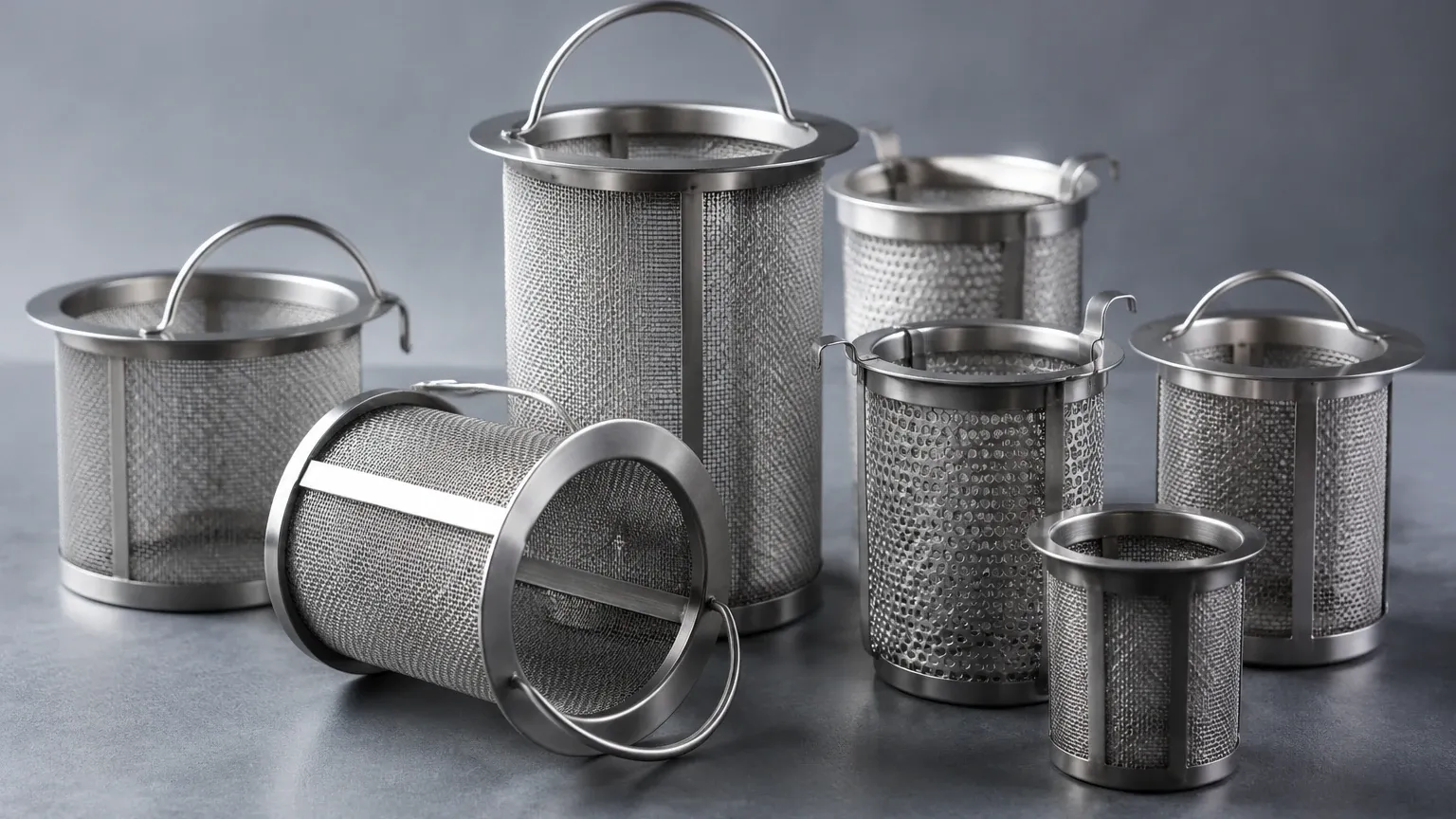
Customization Options for Precision Filtration
Off-the-shelf solutions rarely meet the exacting needs of specialized industrial systems. Professional manufacturers like Kaifil provide OEM capabilities to tailor the strainer 6×6 to specific housing configurations and performance requirements.
Perforation Patterns and Reinforcement
While the 6×6 mesh provides the filtration, it often requires a perforated metal backing for structural support, especially in high-pressure hydraulic systems. Engineers can specify the hole pattern (staggered vs. straight) and the thickness of the support basket to ensure the unit does not collapse under a heavy debris load.
Handle and Connection Designs
To facilitate ease of maintenance, custom strainers can be equipped with various handle types, such as bail handles, slant handles, or threaded pull-tabs. Furthermore, the flange or ring at the top of the strainer must be precision-machined to ensure a bypass-free seal within the strainer housing. Options include O-ring grooves, flat gaskets, or machined metal-to-metal seats.
Maintenance and Operational Efficiency
The total cost of ownership for a strainer 6×6 is heavily influenced by how easily it can be cleaned and how long it lasts in service. A well-designed strainer reduces downtime and labor costs.
Monitoring Differential Pressure
Engineers should always install pressure gauges upstream and downstream of the strainer. A significant increase in differential pressure (ΔP) indicates that the strainer 6×6 is reaching its dirt-holding capacity. Cleaning should typically occur before the pressure drop reaches a level that could cavitate a downstream pump or trigger a system bypass.
Cleaning Protocols
Stainless steel strainers are favored because they are reusable. Depending on the contaminant, cleaning can be achieved through backwashing, ultrasonic cleaning, or manual pressure washing. For sticky or resinous materials, chemical cleaning may be necessary, which is why material compatibility (SS316 vs. SS304) is so vital during the initial selection phase.
Replacement Cycles
While stainless steel is durable, it is not indestructible. Regular inspections should look for signs of wire fraying, weld fatigue, or "blindness" (where particles become permanently lodged in the mesh). Replacing a worn strainer 6×6 proactively is significantly less expensive than repairing a damaged pump or dealing with a contaminated batch of product.
Selecting the Right Strainer for Your System
When sourcing a strainer 6×6, providing the manufacturer with a complete technical profile is essential for ensuring the component performs as expected. Engineers should confirm the following parameters before procurement:
1. Fluid Characteristics: Viscosity, temperature, and chemical composition.
2. Flow Rate: Maximum and normal operating flow to calculate expected pressure drop.
3. Contaminant Profile: The size, shape, and concentration of the particles being removed.
4. Housing Compatibility: Precise measurements of the internal diameter and seating depth of the strainer housing.
5. Pressure Rating: The maximum operating pressure the system will experience.
By focusing on these technical boundaries, purchasing teams can avoid the common pitfalls of undersized or incompatible filtration components. A high-quality Strainers & Baskets solution from a specialized manufacturer ensures that the strainer 6×6 serves as a reliable guardian for the entire industrial process, maintaining system integrity and optimizing production uptime.
In conclusion, whether the requirement is for a specific 6×6 mesh size or a 6-inch basket dimension, the emphasis must remain on material quality and precision engineering. As systems become more complex and equipment more sensitive, the role of the humble strainer becomes increasingly critical in the pursuit of industrial excellence.
