


Strainer 6m70
In heavy-duty industrial applications and high-performance engine systems, the integrity of fluid filtration is a primary factor in operational longevity. The strainer 6m70, commonly associated with the filtration requirements of large-scale diesel engines and industrial power units, serves as a critical line of defense against particulate contamination. For engineers and maintenance professionals, understanding the technical specifications, material requirements, and engineering nuances of these components is essential to preventing premature wear on high-pressure fuel systems and hydraulic circuits.
Industrial strainers, particularly those designed for rigorous environments like the 6M70 series applications, must balance high flow rates with precise particle retention. As a specialized manufacturer of Strainers & Baskets, Kaifil provides the technical insight necessary to evaluate these components from an engineering perspective, ensuring that replacement or OEM parts meet the stringent demands of modern industrial machinery.
The Technical Role of the 6m70 Strainer in Fluid Systems
The primary function of a strainer 6m70 is the removal of gross contaminants from fuel or lubrication lines before the fluid reaches secondary, finer filtration stages or sensitive downstream components like injectors and pumps. In the context of industrial engines, even small metallic shavings or environmental debris can cause catastrophic failure if allowed to enter the high-pressure combustion circuit.
From a mechanical engineering standpoint, the strainer operates as a surface filtration element. Unlike depth filters that trap particles within a thick medium, the 6m70 strainer utilizes a precision-engineered mesh or perforated surface to block particles larger than a specific micron rating. This design is intentional; it allows for a lower initial pressure drop (Delta P) while providing a robust barrier that can be cleaned or replaced during routine maintenance intervals. For systems where uptime is critical, the reliability of this initial filtration stage dictates the service life of the entire fluid handling system.
Engineering Considerations: Material Selection and Durability
When sourcing or specifying a strainer 6m70, material selection is the most significant factor influencing performance in corrosive or high-temperature environments. While standard automotive filters may use plastic or low-grade alloys, industrial-grade strainers require materials that can withstand chemical exposure and mechanical stress.
Stainless Steel 304 vs. 316L
Stainless steel is the industry standard for high-quality strainers. Grade 304 provides excellent strength and basic corrosion resistance suitable for most hydraulic and fuel applications. However, in environments where the fluid may contain corrosive additives or where the equipment is operated in marine or chemical processing settings, Grade 316L is preferred. The addition of molybdenum in 316L enhances resistance to pitting and crevice corrosion, ensuring the mesh remains intact over thousands of operational hours.
Thermal Stability
Industrial engines and hydraulic systems often operate at elevated temperatures. A strainer 6m70 constructed from high-grade stainless steel maintains its structural integrity and filtration accuracy at temperatures where synthetic or composite materials might soften or deform. This thermal stability ensures that the pore size of the mesh remains constant, preventing "media migration" or the passage of oversized particles during peak thermal loads.
Evaluating Filtration Efficiency and Micron Ratings
A common challenge for purchasing teams is determining the correct filtration fineness for a strainer 6m70. The "micron rating" refers to the size of the openings in the strainer mesh. For a suction-side or primary strainer, the goal is typically to remove particles in the 50 to 150-micron range, though custom applications may require finer or coarser specifications.
* Absolute vs. Nominal Ratings: It is vital to confirm whether the strainer is rated nominally (an approximate percentage of particles retained) or absolutely (100% of particles of a certain size are blocked). In critical 6M70 engine applications, absolute ratings are often preferred for the primary protection of the fuel lift pump.
* Open Area Ratio: Engineers must also consider the "open area" of the strainer. A higher open area reduces the velocity of the fluid passing through the mesh, which lowers the pressure drop and reduces the risk of cavitation in suction lines. A well-designed basket or cylindrical strainer optimizes this ratio by using high-strength, thin-diameter wire mesh supported by a perforated metal skeleton.
Structural Integrity: Wire Mesh vs. Perforated Metal
The physical construction of the strainer 6m70 determines its ability to withstand "burst pressure"—the point at which the pressure differential across a clogged filter causes the media to collapse. For industrial applications, a multi-layered approach is often the most effective.
1. Single Layer Mesh: Suitable for low-pressure applications where ease of cleaning is the priority. These are typically made from plain weave or twilled weave stainless steel wire cloth.
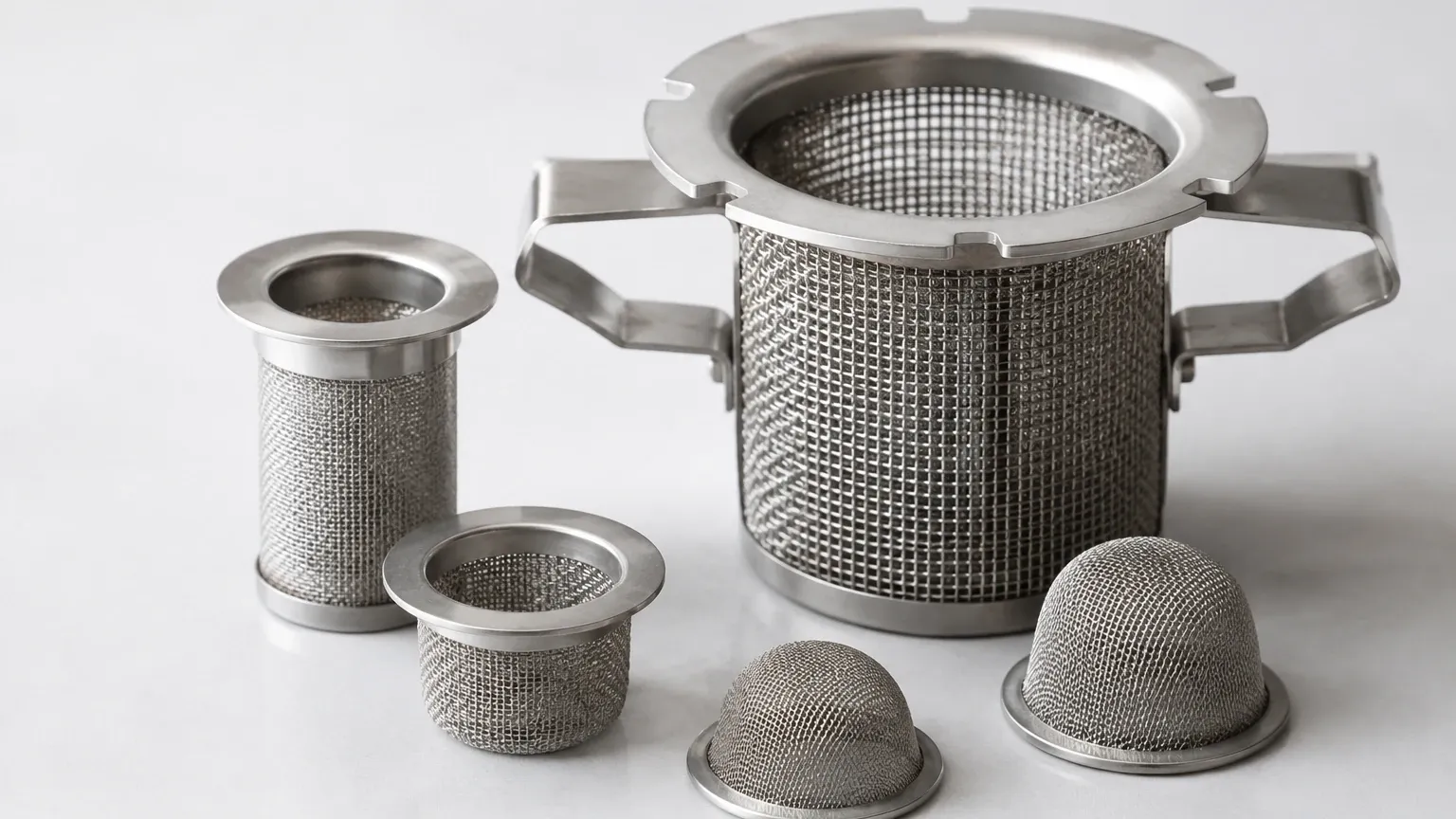
2. Reinforced Baskets: For the 6m70, the filtration mesh is often pleated or wrapped around a heavy-duty perforated metal core. This core provides the mechanical strength to resist high differential pressures, while the outer mesh layer provides the precise filtration required.
3. Pleated Designs: To increase the surface area without increasing the overall footprint of the strainer, pleated stainless steel designs are used. This significantly extends the time between cleaning cycles by distributing the contaminant load over a larger area.
Common Risks and Maintenance Protocols
Failure to properly maintain or select the correct strainer 6m70 can lead to several systemic issues. Understanding these risks allows engineers to implement better procurement and maintenance strategies.
Pressure Drop and Cavitation
As a strainer collects debris, the resistance to flow increases. If the pressure drop across the strainer exceeds the system's design limits, it can lead to cavitation in pumps. This is particularly dangerous in fuel systems, where cavitation can erode pump internals and lead to inconsistent combustion. Monitoring the pressure differential is the most effective way to determine when a strainer needs service.
Gasket and Seal Compatibility
A strainer is only as effective as its seal. When replacing a strainer 6m70, the interface between the strainer body and the housing must be perfectly sealed to prevent bypass. Professionals should ensure that the O-rings or gaskets are made from materials compatible with the fluid—such as Viton for high-temperature fuel applications or Nitrile (Buna-N) for standard hydraulic oils.
Cleaning vs. Replacement
One of the primary advantages of stainless steel Strainers & Baskets is their cleanability. Unlike disposable paper filters, stainless steel elements can often be cleaned using ultrasonic baths or back-flushing techniques. However, it is critical to inspect the mesh for signs of "blinding" (permanent clogging) or physical damage to the wire weave. If the mesh is frayed or the support structure is deformed, the unit must be replaced to ensure system safety.
Customization and OEM Solutions for Specialty Applications
In many industrial contexts, a standard off-the-shelf strainer 6m70 may not meet specific environmental or flow requirements. This is where custom manufacturing becomes essential. Kaifil specializes in engineering bespoke filtration solutions that adapt to existing housing dimensions while improving performance characteristics.
Customization options include:
* Variable Micron Ratings: Adjusting the mesh density to target specific contaminants found in certain fuel grades or industrial environments.
* Enhanced Structural Support: Adding internal ribs or thicker perforated cores for systems prone to high-pressure spikes.
* Specialized Coatings: Applying surface treatments to reduce particle adhesion, making the strainer easier to clean and more resistant to biofilm buildup in water-heavy applications.
By working with a manufacturer that understands the intersection of metallurgy and fluid dynamics, purchasing teams can secure components that offer a lower total cost of ownership through extended service life and reduced machinery downtime.
Conclusion: Selecting the Right Strainer for Long-Term Performance
The selection of a strainer 6m70 should not be treated as a commodity purchase. It is a technical decision that impacts the efficiency, safety, and lifespan of expensive industrial assets. By focusing on high-grade materials like 304 or 316L stainless steel, verifying absolute micron ratings, and ensuring robust structural reinforcement, engineers can mitigate the risks of fluid contamination.
Whether you are maintaining a fleet of heavy-duty engines or managing a complex industrial fluid circuit, the quality of your primary filtration is paramount. For those seeking reliable, high-performance filtration components, exploring the range of Strainers & Baskets from a specialized manufacturer like Kaifil ensures that your equipment remains protected by precision-engineered solutions tailored to the most demanding industrial environments.
