


70 Μm Cell Strainers
In the landscape of precision filtration, the 70 μm cell strainer represents a critical threshold for industrial and laboratory separation processes. While often associated with bench-top biological research, the requirement for 70-micron filtration extends deep into industrial pharmaceutical manufacturing, fine chemical processing, and specialized food production. At this scale, the choice of filtration media and the structural integrity of the strainer or basket determine not only the purity of the filtrate but also the efficiency and longevity of the entire processing line.
For engineers and procurement teams, selecting 70 μm filtration components involves more than just identifying a pore size. It requires a comprehensive understanding of material science, fluid dynamics, and the mechanical stresses inherent in industrial environments. This guide explores the technical considerations, material advantages, and engineering requirements for high-performance 70 μm filtration solutions.
Technical Foundations of 70 μm Filtration
Filtration at the 70-micron level falls within the category of fine particle separation. To achieve a consistent 70 μm aperture, manufacturers typically utilize high-precision stainless steel wire mesh. Unlike depth filters, which trap particles within a thick matrix, wire mesh strainers provide surface filtration, ensuring that particles larger than the specified micron rating are retained on the screen surface.
Mesh Count and Wire Diameter
Achieving a 70 μm opening requires a specific combination of mesh count (the number of wires per linear inch) and wire diameter. For a 70-micron aperture, a typical mesh count might range from 200 to 250, depending on the wire thickness. Engineering the mesh involves a trade-off between the "open area" and the structural strength of the screen. A higher open area percentage allows for greater flow rates and lower pressure drops but may result in a more delicate mesh that requires additional support structures, such as perforated metal backing or coarser mesh layers.
Weave Types
The most common weave for 70 μm filtration is the plain weave, where each warp wire crosses alternately over and under each shute wire. This provides a high degree of dimensional stability and a consistent aperture size. In specific high-pressure applications, a twill weave may be employed, allowing for thicker wires to be used for the same micron rating, thereby increasing the mechanical durability of the strainer.
Material Selection: Stainless Steel vs. Synthetics
While disposable plastic cell strainers are common in low-volume laboratory settings, industrial applications almost exclusively demand stainless steel. The transition from synthetic polymers to metal filtration components is driven by several critical factors related to performance and total cost of ownership.
Chemical and Thermal Resistance
Industrial processes often involve aggressive solvents, high temperatures, or extreme pH levels that would degrade or melt standard plastic strainers. Stainless steel, particularly grades 304 and 316L, offers exceptional resistance to a wide array of chemicals. 316L stainless steel, with its addition of molybdenum, provides superior resistance to pitting and crevice corrosion, making it the standard choice for pharmaceutical and marine-grade applications. Furthermore, stainless steel components can withstand high-temperature sterilization processes, such as autoclaving or Steam-in-Place (SIP) cycles, without losing dimensional accuracy.
Durability and Reusability
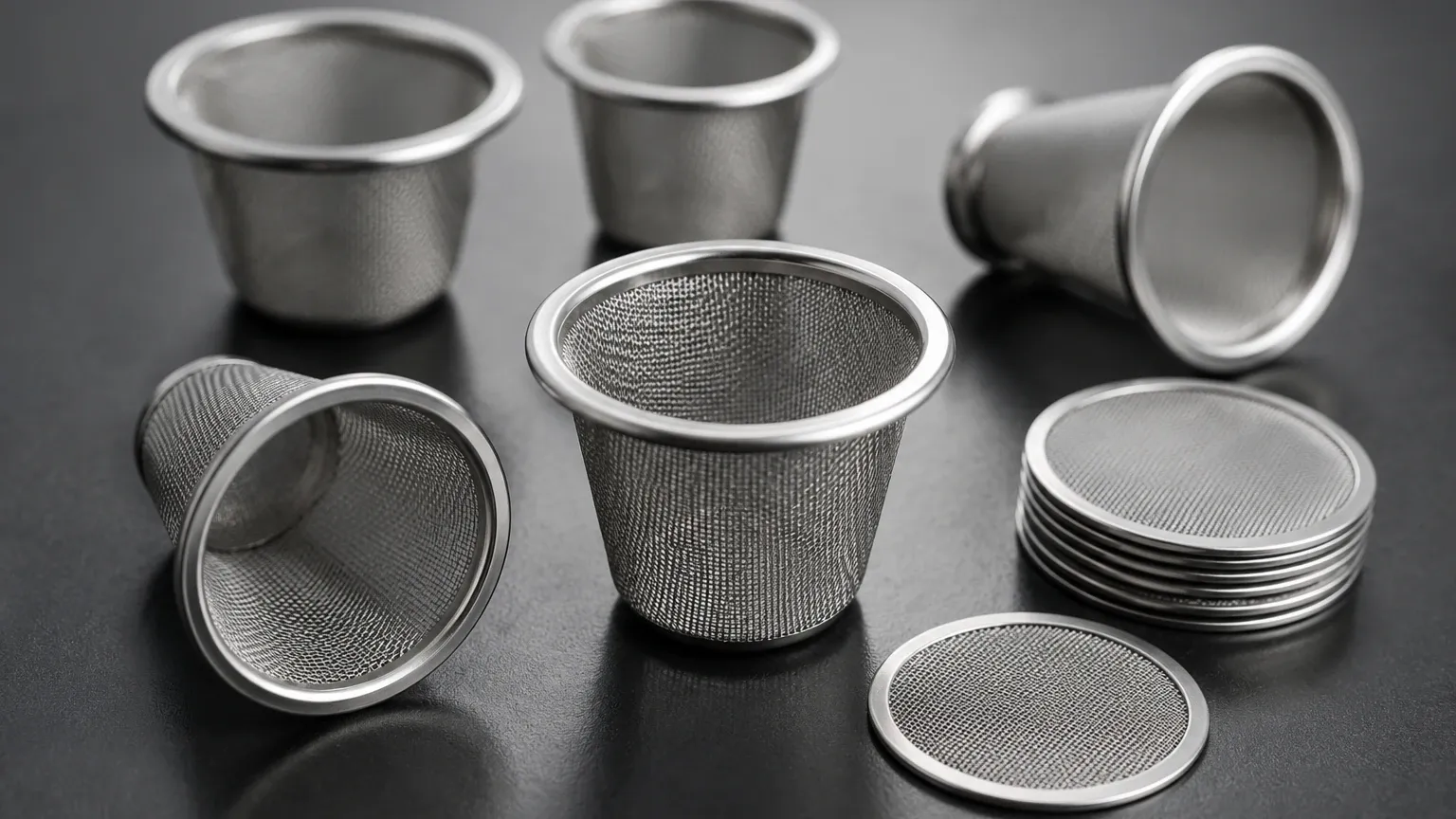
In a B2B manufacturing context, the waste and recurring costs associated with single-use plastic strainers are often prohibitive. Stainless steel Strainers & Baskets are designed for long-term use. They can be cleaned using ultrasonic baths, backwashing, or chemical cleaning agents, allowing them to be returned to service repeatedly. This durability ensures that the 70 μm aperture remains consistent over hundreds of cycles, whereas plastic mesh can stretch or tear under pressure.
Industrial Applications of 70 μm Strainers
The application of 70 μm filtration is diverse, spanning industries where particle size control is paramount for product quality or equipment protection.
Pharmaceutical and Biotechnology
In the production of biologics and pharmaceuticals, 70 μm strainers are used to remove cell clumps, tissue debris, or undissolved powders from liquid formulations. This is a critical step before the fluid moves to finer downstream filtration stages (such as 0.22 μm sterile filters). By removing the bulk of the larger particulate matter, the 70 μm strainer prevents premature clogging of expensive membrane filters, thereby optimizing the entire filtration train.
Fine Chemicals and Coatings
Manufacturers of high-performance inks, coatings, and specialty chemicals utilize 70 μm filtration to ensure product uniformity. In these applications, the strainer removes oversized pigments or contaminants that could cause defects in the final application, such as clogging spray nozzles or creating surface irregularities in thin-film coatings.
Food and Beverage Processing
In the food industry, 70 μm filtration is often used for clarifying extracts, essential oils, and syrups. The stainless steel construction is essential here to meet stringent food safety standards, as it does not leach plasticizers or chemicals into the product and can be thoroughly sanitized to prevent cross-contamination.
Engineering Considerations for Custom Strainers
When integrating a 70 μm mesh into an industrial system, the design of the housing and the support structure is as important as the mesh itself. Custom-engineered strainers must account for the specific fluid dynamics of the application.
Flow Rate and Pressure Drop
Every filtration element introduces a resistance to flow, known as a pressure drop (ΔP). For 70 μm mesh, the pressure drop is influenced by the fluid's viscosity, the flow velocity, and the percentage of open area in the mesh. Engineers must calculate the required surface area to ensure that the pressure drop remains within the system's operational limits. This often leads to the design of pleated cartridges or large-format basket strainers, which increase the available filtration surface area without increasing the overall footprint of the equipment.
Structural Reinforcement
A 70 μm mesh is relatively thin. In high-pressure systems or applications with high flow velocities, the mesh can deform or burst if not properly supported. Industrial strainers often utilize a multi-layer construction. The 70 μm "working mesh" is sintered or welded to a coarser support mesh or a perforated metal core. This composite structure provides the precision of fine filtration with the mechanical strength of heavy-duty industrial components.
Connection and Sealing
To prevent "bypass"—where fluid flows around the filter rather than through it—the sealing mechanism must be precise. Custom strainers can be designed with various end-cap configurations, including NPT threads, flanged connections, or sanitary Tri-Clamp fittings. High-quality gaskets and O-rings, selected based on chemical compatibility, ensure a leak-proof seal within the filter housing.
Quality Control and Performance Validation
For industries like pharmaceuticals and aerospace, the performance of a 70 μm strainer must be verifiable. Manufacturers employ several testing methods to ensure that every component meets the specified filtration accuracy.
1. Bubble Point Test: This non-destructive test measures the pressure required to force air through a liquid-wetted pore. It is a reliable method for verifying the maximum pore size and ensuring there are no defects or tears in the mesh.
2. Glass Bead Test: A more rigorous validation involves passing calibrated glass beads of a specific size (e.g., 70 μm) through the filter and measuring the retention rate. This provides a direct measurement of the filter's efficiency.
3. Material Certification: B2B buyers should require Mill Test Reports (MTRs) to verify the grade and composition of the stainless steel used, ensuring compliance with industry standards such as ASTM or ISO.
Maintenance and Total Cost of Ownership
While the initial investment in a custom stainless steel 70 μm strainer is higher than that of disposable alternatives, the long-term economic benefits are significant. The total cost of ownership (TCO) includes the purchase price, installation costs, maintenance labor, and disposal fees.
Cleaning Protocols
To maintain optimal flow rates, 70 μm strainers require regular cleaning. The method depends on the nature of the contaminant:
* Ultrasonic Cleaning: Highly effective for removing fine particles trapped within the mesh openings.
* Backwashing: Suitable for automated systems where the flow is periodically reversed to flush particles off the surface of the strainer.
* Chemical Cleaning: Used when organic or mineral scales build up on the mesh, requiring compatible solvents or acids to dissolve the debris.
Replacement Cycles
Unlike plastic strainers that are discarded after a single use, a well-maintained stainless steel strainer can last for years. Replacement is typically only necessary if the mesh becomes mechanically damaged or if the cleaning process can no longer restore the required flow rate due to permanent fouling. This longevity reduces downtime and simplifies inventory management for maintenance teams.
Conclusion: Selecting the Right Partner
Implementing an effective 70 μm filtration solution requires a partner who understands the nuances of industrial manufacturing. It is not enough to simply provide a mesh; the manufacturer must be able to consult on material selection, structural design, and integration into existing systems. For engineers tasked with optimizing process efficiency and product purity, investing in high-quality, custom-engineered stainless steel strainers is a strategic decision that pays dividends in reliability and performance.
When evaluating suppliers, consider their ability to provide custom designs, their adherence to quality control standards, and their experience in your specific industry. A robust 70 μm filtration component is a small but vital link in the industrial chain, and its quality directly impacts the success of the entire operation.
