


8 Strainer Price
In industrial piping and fluid handling systems, an 8-inch strainer is a critical component designed to protect downstream equipment—such as pumps, meters, and valves—from damage caused by debris and particulate matter. For procurement officers and mechanical engineers, understanding the factors that influence an 8 strainer price is essential for budgeting and ensuring system reliability. The cost of an industrial strainer is rarely a fixed figure; rather, it is a reflection of material science, pressure ratings, design complexity, and specific filtration requirements.
When evaluating Strainers & Baskets, technical professionals must look beyond the initial purchase price. A lower-cost unit that fails prematurely due to corrosion or causes excessive pressure drop can lead to operational expenses that far outweigh any upfront savings. This guide examines the technical variables that dictate the market pricing for 8-inch strainers and provides a framework for making informed purchasing decisions.
Understanding the Variables in 8-Inch Strainer Pricing
The pricing of an 8-inch strainer is primarily determined by its physical weight and the complexity of its manufacturing process. At this size, the volume of metal required is significant, making the unit price highly sensitive to global raw material markets. However, the application environment dictates the specific configuration, which can cause the price to vary by several hundred or even thousands of dollars.
Key variables include:
- Material Grade: The choice between carbon steel, 304 stainless steel, and 316L stainless steel.
- Pressure Class: Standard ANSI 150# versus high-pressure 300# or 600# ratings.
- Design Type: Y-strainers, basket strainers, or duplex strainers.
- Filtration Level: The micron rating or perforation size of the internal element.
- Connection Type: Flanged, butt-weld, or specialized victaulic connections.
Material Selection: The Primary Driver of Cost
Material selection is perhaps the most significant factor in determining the 8 strainer price. In industrial filtration, stainless steel is the preferred choice for its durability and resistance to oxidation.
304 Stainless Steel vs. 316L Stainless Steel
For many general-purpose industrial water applications, 304 stainless steel provides an excellent balance of corrosion resistance and cost. However, in environments involving chlorides, high salinity, or aggressive chemicals (common in chemical processing and pharmaceutical industries), 316L stainless steel is necessary. The addition of molybdenum in 316L enhances its resistance to pitting and crevice corrosion. Because 316L is more expensive to produce and more difficult to machine, a 316L strainer will typically carry a 20% to 40% premium over a 304 stainless steel equivalent.
Specialty Alloys
In extreme cases involving highly corrosive acids or high-temperature steam, engineers may require exotic alloys like Monel, Hastelloy, or Duplex stainless steel. These materials can increase the price of an 8-inch strainer by a factor of three or four compared to standard stainless steel grades. At Kaifil, material integrity is prioritized through strict sourcing to ensure that the material grade matches the specified application requirements.
Design Complexity and Its Impact on Price
The physical architecture of the strainer significantly impacts the manufacturing labor and material volume required.
Y-Type Strainers
An 8-inch Y-strainer is often the most economical choice for high-pressure applications where the amount of solids to be removed is relatively low. Its compact design requires less material than a basket strainer. However, because the "leg" of the Y-strainer is smaller, it has a lower dirt-holding capacity and a higher pressure drop (Delta P) as it fills.
Basket (Simplex) Strainers
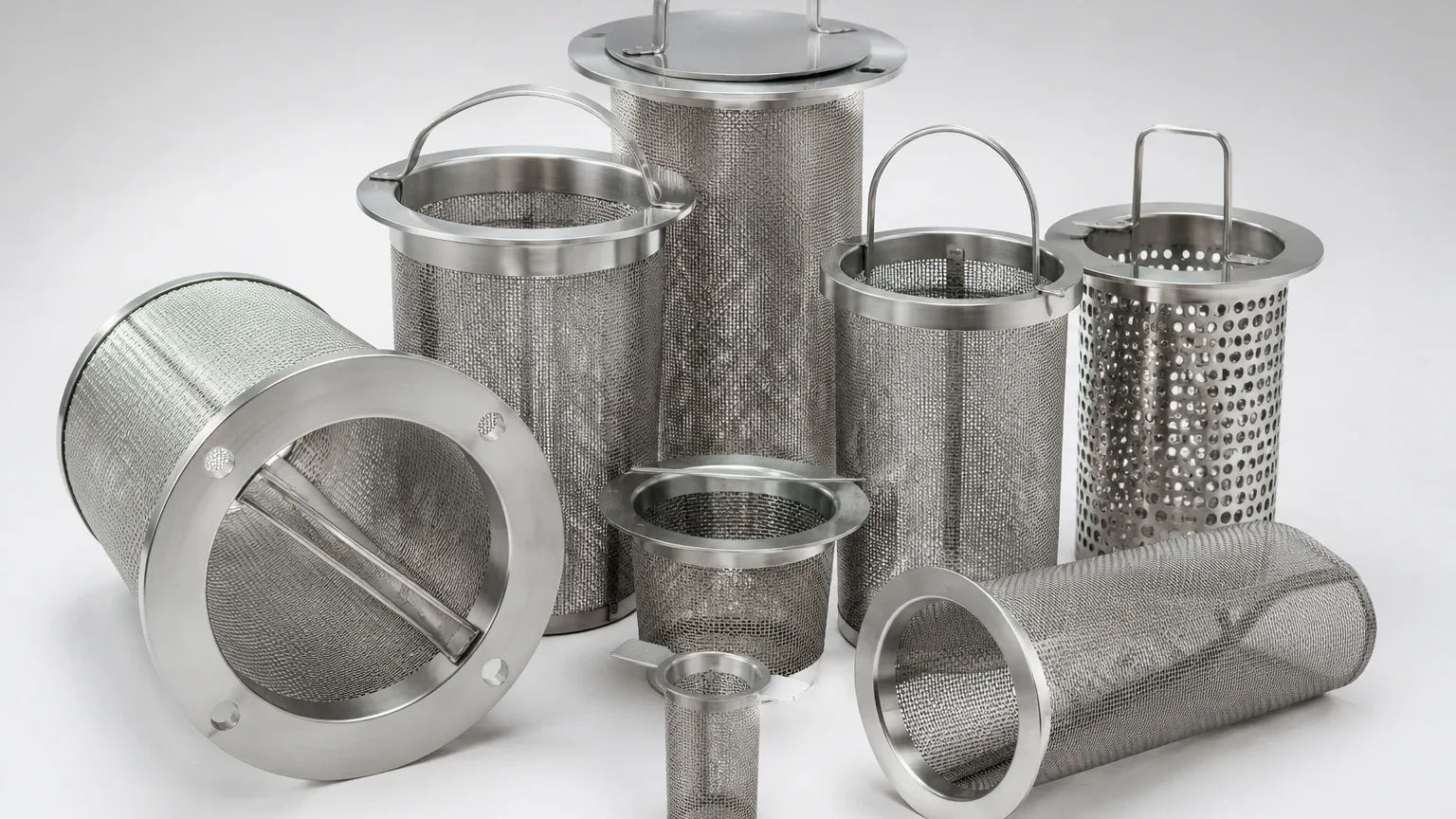
Basket strainers feature a vertical cylinder that allows for a much larger filtration area. For an 8-inch line, a basket strainer is often preferred because it allows for easier cleaning and maintenance. The larger body size and the inclusion of a removable basket increase the material cost and, consequently, the price. The benefit is a longer service interval and lower operational costs due to reduced pressure loss.
Duplex Strainers
If the application requires continuous flow without shutdown for cleaning, a duplex strainer is required. This design consists of two separate strainer housings connected by a diversion valve. While highly efficient, the 8 strainer price for a duplex system is significantly higher—often double or triple the cost of a simplex unit—due to the complexity of the valve mechanism and the doubling of the housing material.
Pressure Ratings and Wall Thickness Requirements
Engineering standards, such as those set by ASME (American Society of Mechanical Engineers), dictate the minimum wall thickness for a strainer based on its intended pressure rating. An 8-inch strainer rated for ANSI Class 150 is designed for working pressures up to approximately 285 PSI (depending on temperature).
If the system operates at higher pressures, such as ANSI Class 300 (up to 740 PSI), the housing must be significantly thicker and the flanges much heavier. This increase in metal volume directly correlates to a higher price. Furthermore, high-pressure units often require more rigorous non-destructive testing (NDT), such as X-ray or ultrasonic testing of welds, which adds to the final cost of the component.
Filtration Precision and Mesh Configuration
The internal element—the basket or screen—is the heart of the strainer. The complexity of this component influences the overall 8 strainer price.
Perforated Plate vs. Wire Mesh
A basic strainer might use a perforated stainless steel plate with holes ranging from 1/16" to 1/4". These are relatively inexpensive to manufacture. However, if the application requires fine filtration (measured in microns), a fine wire mesh must be lined inside the perforated basket.
Multi-layer Sintered Mesh
For demanding hydraulic or pharmaceutical applications, engineers may specify multi-layer sintered wire mesh. This involves bonding multiple layers of mesh together through a heat-treatment process to provide both high filtration precision and structural rigidity. While sintered elements offer superior performance and can be cleaned and reused many times, they represent a higher initial investment compared to standard single-layer mesh baskets.
Customization and OEM Requirements
Standard off-the-shelf strainers may not meet the specific needs of a complex industrial installation. Customization is a core strength of manufacturers like Kaifil, but it does influence the pricing structure.
Custom features that affect the 8 strainer price include:
- Specialized Flange Facings: Such as Ring Type Joint (RTJ) or Flat Face (FF) instead of the standard Raised Face (RF).
- Additional Ports: Adding differential pressure gauge taps, vent valves, or drain plugs.
- Surface Finishes: Electropolishing for food and beverage applications or specialized coatings for chemical resistance.
- Quick-Opening Covers: Replacing standard bolted covers with swing-bolt or clamp-style covers to reduce maintenance time.
When requesting a quote for Strainers & Baskets, providing detailed drawings or specific operational parameters allows the manufacturer to optimize the design for both performance and cost-efficiency.
Total Cost of Ownership: Beyond the Initial Quote
A common mistake in procurement is focusing solely on the 8 strainer price at the point of sale. To achieve true cost-efficiency, technical teams must consider the Total Cost of Ownership (TCO).
Maintenance and Cleaning
An 8-inch line carries a significant volume of fluid. If a strainer is difficult to clean, the resulting downtime can cost thousands of dollars per hour. Investing in a basket strainer with a quick-release cover may have a higher purchase price but can save significant labor costs over the life of the equipment.
Pressure Drop and Energy Consumption
Every strainer creates a restriction in the flow, leading to a pressure drop. Pumps must work harder to overcome this resistance, consuming more electricity. A well-engineered strainer with a high open-area ratio (the ratio of the total area of the holes to the total area of the screen) minimizes this pressure drop. Over several years of operation, the energy savings from a high-performance strainer can often pay for the initial price difference between a standard and a premium unit.
Durability and Replacement Cycles
Inexpensive strainers often use thinner materials or lower-quality welds. In high-vibration or high-flow environments, these units are prone to structural failure or bypass (where fluid leaks around the filter element). Choosing a manufacturer with advanced manufacturing capabilities and a commitment to quality ensures that the strainer will last for the intended lifecycle of the plant, preventing the need for costly emergency replacements.
Technical Checklist for Quoting 8-Inch Strainers
To receive an accurate and competitive 8 strainer price, engineers should confirm the following technical details before contacting a supplier:
1. Fluid Properties: What is the viscosity, temperature, and chemical composition of the fluid?
2. Flow Rate: What is the maximum and minimum flow rate (GPM or m³/h)?
3. Maximum Allowable Pressure Drop: What is the limit for a clean screen and a dirty screen?
4. Filtration Goal: What is the smallest particle size that must be removed (microns or mesh size)?
5. Connection Standards: Does the system use ANSI, DIN, or JIS flange standards?
6. Space Constraints: Are there limitations on the physical footprint or orientation (horizontal vs. vertical) of the strainer?
Conclusion: Making an Informed Procurement Decision
The 8 strainer price is a composite of material quality, engineering precision, and application-specific requirements. While it may be tempting to select the lowest bid, industrial professionals recognize that the reliability of the filtration system is paramount. By understanding how material grades, pressure ratings, and design types influence cost, purchasing teams can better align their budgets with the technical needs of their operations.
Kaifil specializes in providing custom stainless steel filtration solutions that meet the rigorous demands of global industries. From material selection and filtration accuracy to customized designs, our focus is on delivering dependable components that offer long-term value. When evaluating your next project involving Strainers & Baskets, consider the engineering expertise and manufacturing quality that ensure your filtration system performs as expected in even the most demanding environments.
