


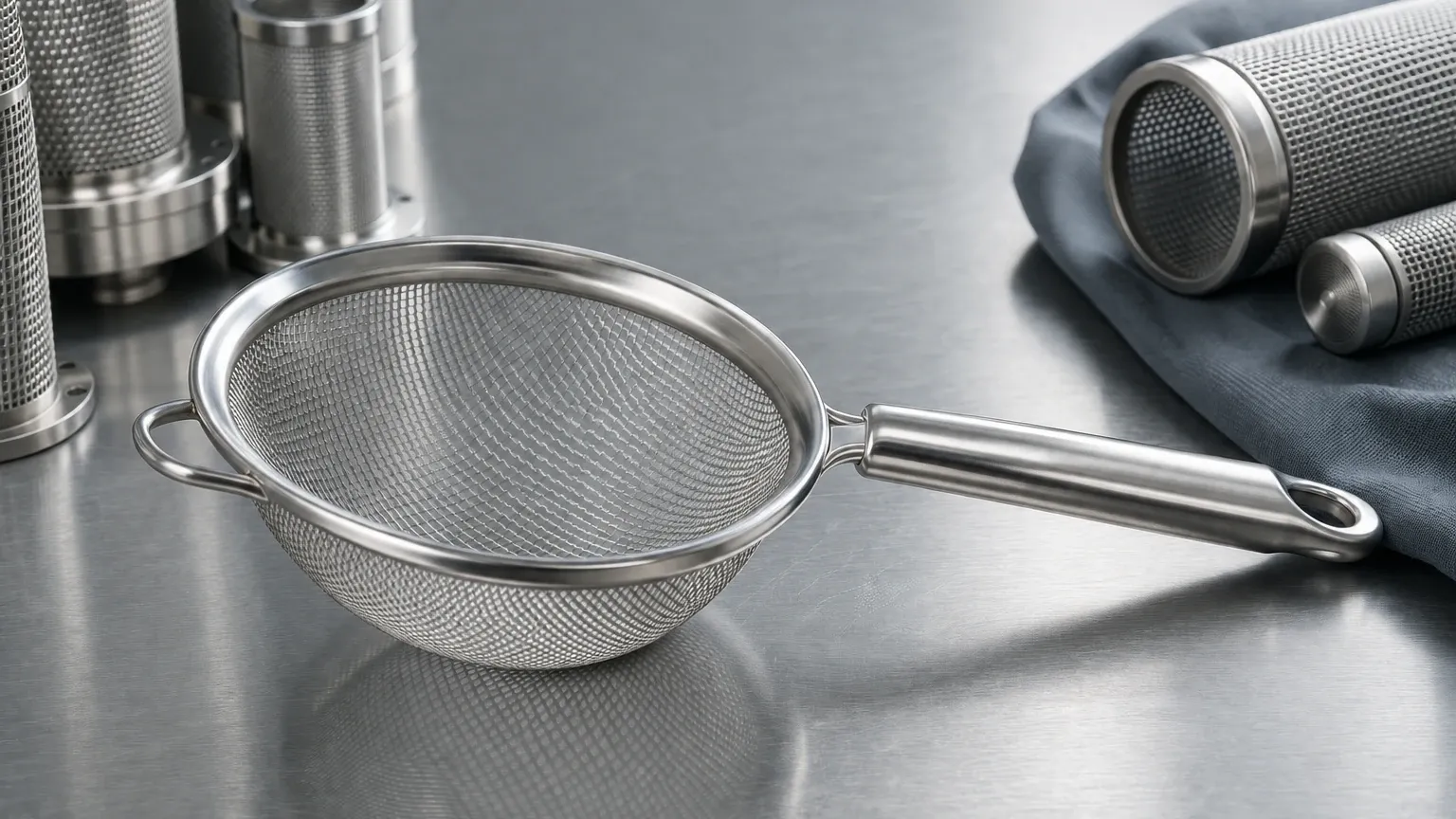
8 Strainer with Handle
In industrial filtration, the 8 strainer with handle serves as a critical component for batch processing, manual filtration tasks, and protecting downstream equipment from coarse particulates. While often perceived as a simple tool, the engineering behind a high-performance 8-inch strainer involves precise material selection, structural integrity considerations, and ergonomic design to ensure it meets the rigorous demands of chemical, food and beverage, and pharmaceutical environments. For engineers and procurement teams, selecting the right Strainers & Baskets requires an understanding of how physical dimensions, mesh specifications, and handle configurations impact overall process efficiency.
Understanding the Industrial Role of the 8 Strainer with Handle
The "8-inch" designation typically refers to the diameter of the strainer basket or the rim of the mesh cone. This size is a standard in medium-scale industrial applications where flow rates are significant but do not yet require the massive footprints of multi-bag housing systems. The addition of a handle transforms a standard filter element into a versatile tool for manual intervention.
In many industrial settings, these strainers are used for:
* Batch Filtering: Removing oversized particles or impurities during the transfer of liquids between tanks.
* Pump Protection: Acting as a primary barrier at the suction end of a hose or pipe to prevent debris from damaging expensive pumping equipment.
* Sampling and Quality Control: Capturing solid samples from a moving fluid stream for laboratory analysis.
* Safety Interventions: Providing a manual fail-safe in systems where automated filtration might be bypassed during maintenance.
Engineering Specifications and Material Selection
The performance of an 8 strainer with handle is fundamentally dictated by its materials. Kaifil utilizes high-grade stainless steel to ensure longevity and chemical compatibility. The two most common alloys used are SS304 and SS316L.
SS304 vs. SS316L
* SS304: Suitable for general industrial use, including water treatment and many food-grade applications. It offers excellent strength and basic corrosion resistance.
* SS316L: The preferred choice for pharmaceutical and chemical processing. The addition of molybdenum provides superior resistance to chlorides and acidic environments, preventing pitting and stress corrosion cracking.
Mesh and Perforation Options
The filtration media within the 8-inch frame can vary based on the required micron rating.
1. Perforated Metal: Used for coarse filtration (typically 1mm and larger). It provides the highest structural strength.
2. Wire Mesh: Available in various weaves (plain, twilled, or dutch weave) to achieve finer filtration, ranging from 20 mesh down to 400 mesh (approx. 37 microns).
3. Reinforced Construction: For high-pressure or high-viscosity fluids, a fine mesh is often backed by a perforated metal basket to prevent the mesh from collapsing or deforming under the force of the fluid.
Handle Design and Ergonomic Considerations for Industrial Safety
The "handle" component of an 8 strainer with handle is not merely an accessory; it is a functional interface that affects operator safety and process speed. In industrial environments, liquids may be at high temperatures, contain corrosive chemicals, or be under significant pressure.
Types of Handle Configurations
* Fixed Bail Handles: A semi-circular handle welded to the rim. This is the most common design for dipping or lowering strainers into tanks.
* Extended Side Handles: Often used when the strainer must rest across the top of a drum or vat. The handle length is engineered to provide stability and leverage.
* Dual Handles: For 8-inch strainers handling high-density materials (like heavy sludges or metal shavings), dual handles allow for two-handed operation, reducing the risk of spills or worker strain.
* T-Handles or Hook Handles: Designed for specific housing types where the strainer must be locked into place or retrieved using a reach tool.
Engineering for Durability
Handle attachment points are common failure zones. High-quality industrial strainers utilize reinforced welding techniques, such as TIG (Tungsten Inert Gas) welding, to ensure the handle can withstand the weight of a fully loaded basket without detaching. This is particularly vital when the strainer is used to lift heavy solids out of a liquid bath.
Application-Specific Requirements in Filtration
Different industries impose unique constraints on the design of an 8 strainer with handle. A strainer used in a chemical plant has different structural priorities than one used in a dairy facility.
Food and Beverage Industry
In food processing, the primary concern is hygiene and "cleanability." An 8-inch strainer must feature smooth, continuous welds to eliminate crevices where bacteria can grow. Electropolishing is often employed to achieve a mirror-like finish that resists protein buildup and facilitates easy cleaning.
Chemical and Petrochemical
Here, chemical compatibility is the priority. The strainer must resist the corrosive effects of the processed fluid. Furthermore, if the fluid is volatile, the strainer and handle must be designed to minimize splashing and ensure a secure fit within the containment vessel.
Pharmaceutical and Biotech
These applications require strict adherence to material certifications. Every 8 strainer with handle used in these sectors must be fully traceable, often requiring 3.1 material certificates to prove the chemical composition of the stainless steel. The filtration accuracy must be absolute to ensure product purity.
Evaluating Filtration Performance: Flow Rates and Pressure Drop
When integrating an 8 strainer with handle into a system, engineers must calculate the potential pressure drop (ΔP). The pressure drop is the difference in fluid pressure between the upstream and downstream sides of the strainer.
Factors affecting pressure drop include:
* Open Area Ratio: The percentage of the total area of the strainer that is open to fluid flow. A higher open area results in a lower pressure drop and longer intervals between cleanings.
* Fluid Viscosity: Thicker fluids require larger mesh openings or a larger total surface area to maintain flow rates.
* Contaminant Loading: As the strainer captures particles, the effective open area decreases, causing the pressure drop to rise. The handle allows operators to quickly remove the strainer for cleaning once the pressure drop reaches a critical threshold.
For an 8-inch diameter, the surface area is approximately 50 square inches for a flat disc, but significantly more for a basket or cone shape. Choosing a deeper basket design increases the dirt-holding capacity, which is essential for processes with high particulate loads.
Maintenance, Cleaning, and Longevity
One of the primary advantages of a stainless steel 8 strainer with handle is its reusability. Unlike disposable synthetic filters, metal strainers can be cleaned and returned to service, significantly reducing the total cost of ownership.
Cleaning Protocols
* Manual Cleaning: Using high-pressure water or air to dislodge trapped particles. The handle facilitates safe handling during this process.
* Ultrasonic Cleaning: For fine meshes where particles are lodged deep within the weave, ultrasonic baths can effectively vibrate the contaminants loose without damaging the wire structure.
* Chemical Soaking: Used to dissolve organic or mineral scale. The choice of cleaning agent must be compatible with the stainless steel grade (e.g., avoiding high concentrations of hydrochloric acid on SS304).
Inspection Cycles
Industrial strainers should be inspected regularly for:
* Mesh Integrity: Checking for tears, fraying, or enlarged openings.
* Structural Deformation: Ensuring the 8-inch rim remains perfectly circular to maintain a proper seal.
* Handle Security: Verifying that welds are intact and there are no signs of stress cracking.
Customization Options for Specialized Industrial Needs
Standard off-the-shelf strainers often fail to meet the specific nuances of a complex industrial process. As a professional manufacturer, Kaifil provides extensive customization for Strainers & Baskets, allowing engineers to specify the exact parameters needed for their application.
Customization options include:
* Non-Standard Diameters: While 8 inches is standard, custom rims can be fabricated to fit proprietary housings.
* Variable Handle Lengths: Adjusting the handle to accommodate specific tank depths or operator heights.
* Multi-Layer Mesh: Combining different mesh sizes to provide graduated filtration in a single unit.
* Magnetic Inserts: Adding magnetic bars to the strainer basket to capture fine ferrous particles that might otherwise pass through the mesh.
By focusing on these technical details, procurement teams can ensure that the 8 strainer with handle they purchase is not just a commodity, but a precision-engineered component that enhances the reliability and safety of their industrial operations. Whether the goal is to protect a high-pressure pump or ensure the purity of a food product, the right strainer design is foundational to success.
