


Strainer 90mm
In industrial fluid handling systems, the efficiency of downstream equipment—such as pumps, valves, and heat exchangers—depends heavily on the performance of coarse filtration components. Among these, the strainer 90mm configuration represents a specific dimensional standard often required in specialized chemical processing, water treatment, and hydraulic applications. Whether utilized as a replacement basket for an existing housing or integrated into a new OEM design, understanding the technical nuances of Strainers & Baskets is essential for maintaining system integrity and operational uptime.
Industrial strainers serve as the first line of defense, removing large particulate matter that could cause mechanical wear or blockages. When specifying a 90mm diameter strainer, engineers must look beyond simple dimensions to evaluate material compatibility, structural reinforcement, and filtration precision.
Technical Specifications and Material Selection for Strainer 90mm Components
The performance of a strainer 90mm is primarily dictated by its material of construction and the fabrication techniques used to ensure its durability under pressure. In B2B industrial environments, stainless steel is the gold standard due to its mechanical strength and resistance to various forms of corrosion.
Grade 304 vs. Grade 316L Stainless Steel
For most general industrial applications, Grade 304 stainless steel provides excellent durability and cost-effectiveness. However, in environments involving chlorides, high-salinity water, or aggressive chemical solvents, Grade 316L is preferred. The addition of molybdenum in 316L enhances its resistance to pitting and crevice corrosion, which is critical for the longevity of a 90mm strainer basket that may be submerged in corrosive media for extended periods.
Perforation and Mesh Linings
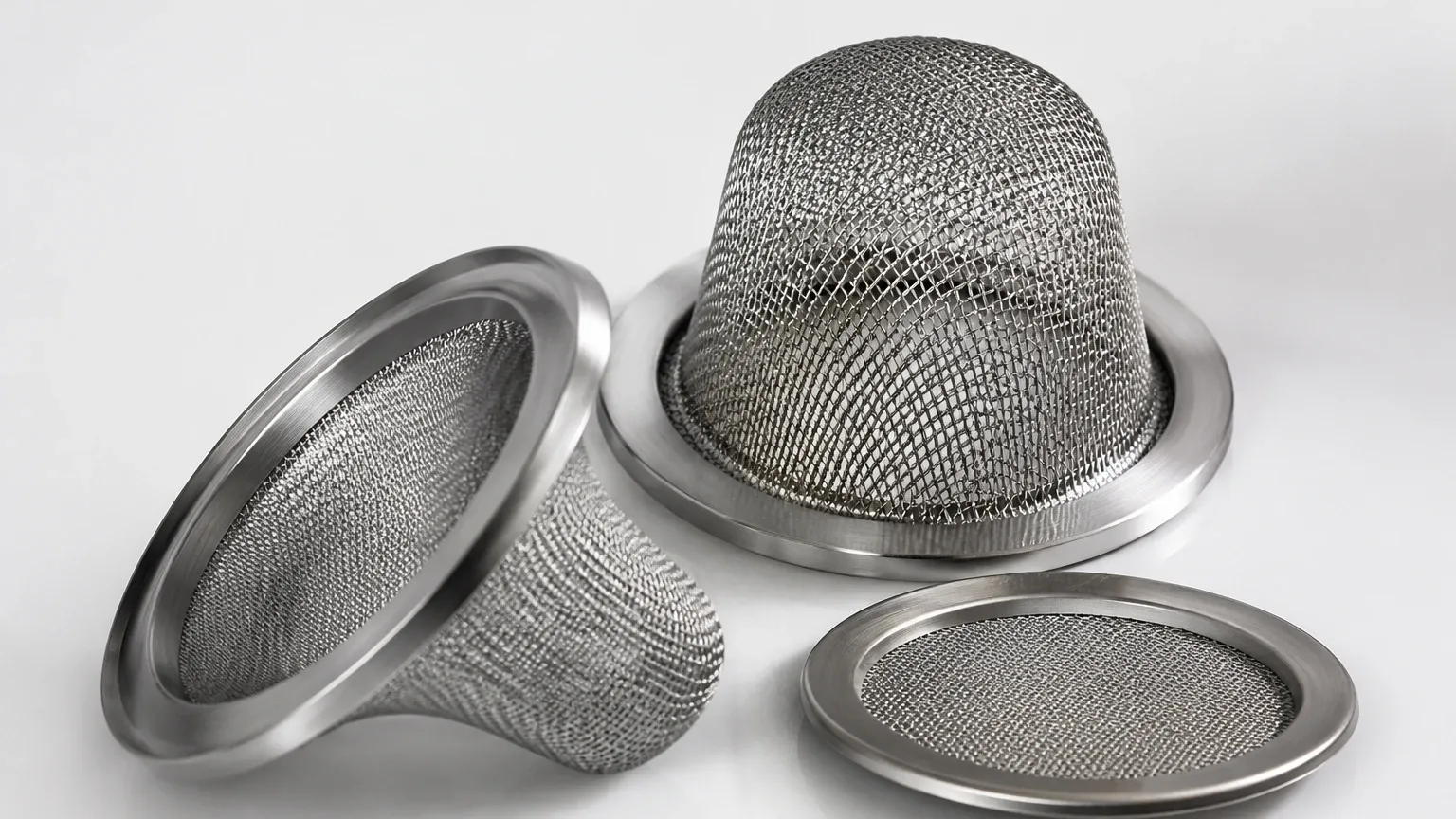
A standard 90mm strainer usually consists of a perforated metal body that provides structural support. Depending on the required filtration accuracy, this body may be lined with a fine stainless steel wire mesh.
* Perforated Support: Common hole patterns include staggered rounds or square holes, typically ranging from 1mm to 5mm in diameter. The open area percentage is a key metric here, as it directly impacts the flow rate and pressure drop.
* Wire Mesh Linings: For finer filtration (down to 5 microns), a woven wire mesh is sintered or spot-welded to the interior or exterior of the 90mm basket. Engineers must specify the mesh count or micron rating based on the smallest particle size that must be excluded from the system.
Engineering Considerations for Flow Dynamics and Pressure Drop
One of the most critical factors in selecting a strainer 90mm is the impact on system hydraulics. Every filtration component introduces a degree of resistance to the fluid flow, known as pressure drop (ΔP). For a 90mm basket, the ratio of the open area to the pipe inlet area (often referred to as the "burst ratio" or "open area ratio") should ideally be at least 6:1 to ensure minimal flow restriction and extended intervals between cleanings.
Calculating the Clean Pressure Drop
When a strainer is clean, the pressure drop is a function of the fluid's velocity, viscosity, and the effective open area of the mesh. High-viscosity fluids, such as heavy oils or syrups in food processing, require larger mesh openings or increased surface area to maintain an acceptable flow rate. If the pressure drop across a 90mm strainer exceeds the design limits of the pump, it can lead to cavitation, reduced flow, and potential mechanical failure.
Structural Integrity Under Differential Pressure
As the strainer captures debris, the differential pressure increases. A 90mm strainer must be engineered to withstand the maximum system pressure in the event of a total blockage. This is achieved through reinforced longitudinal seams, heavy-duty bottom plates, and sometimes internal support cages. Without proper structural reinforcement, the basket may collapse or "blow out," allowing contaminants to bypass the filter and damage downstream components.
Customization Options for Specialized Strainers & Baskets
Standard off-the-shelf components often fall short in specialized industrial applications. Customization is frequently required to ensure that a strainer 90mm fits perfectly within unique housing geometries or meets specific process requirements.
Dimensional Tailoring
While the 90mm diameter is a fixed requirement, the height, flange thickness, and handle configuration can be customized. For instance, a "slant-top" basket may be necessary for specific angled housings, or a multi-layered mesh construction might be required for high-pressure hydraulic return lines.
Handle and Lifting Mechanicals
In large-scale industrial operations, ease of maintenance is a priority. Custom Strainers & Baskets can be equipped with various handle types, including:
* Fixed Bail Handles: For manual removal in shallow housings.
* Clevis or Eye-Bolt Attachments: For heavy baskets that require mechanical lifting equipment.
* Spring-Loaded Handles: To ensure the basket remains seated firmly against the housing seal during high-velocity flow events.
Specialized Coatings and Finishes
Beyond the base metal, certain applications require surface treatments. Electropolishing is common in the pharmaceutical and food industries to remove surface imperfections where bacteria could proliferate. In highly abrasive environments, a tungsten carbide coating or specialized hard-facing might be applied to the leading edges of the 90mm strainer to prevent premature wear.
Application Scenarios for 90mm Filtration Components
The strainer 90mm is a versatile component found across multiple sectors. Its specific dimensions often align with mid-sized piping systems (typically 3-inch to 4-inch lines depending on the housing design).
Chemical and Petrochemical Processing
In these sectors, strainers are used to protect sensitive flow meters and control valves from pipe scale, welding slag, and other solid contaminants. The chemical compatibility of the 316L stainless steel ensures that the 90mm basket does not leach impurities into the process stream.
Food and Beverage Production
Sanitary strainers are essential for removing pulp, seeds, or incidental solids from liquid products. A 90mm strainer used in this context must feature smooth welds and a high degree of surface finish (often RA < 0.8 μm) to meet hygiene standards and facilitate Clean-in-Place (CIP) procedures.
Water Treatment and Desalination
Pre-filtration in water treatment plants often involves large baskets to remove organic matter and sand before the water reaches fine membrane filters. The durability of stainless steel 90mm strainers is particularly valued here for its resistance to the humid and often corrosive atmosphere of treatment facilities.
Maintenance Protocols and Service Life Optimization
The total cost of ownership for a strainer 90mm is heavily influenced by its maintenance requirements and service life. A well-designed basket should be easy to clean and robust enough to survive repeated handling.
Monitoring Differential Pressure
The most effective way to manage strainer maintenance is through the use of differential pressure gauges. By monitoring the pressure upstream and downstream of the 90mm strainer, operators can identify exactly when the basket is reaching its holding capacity. Cleaning should typically occur when the differential pressure reaches a pre-defined limit (e.g., 10-15 psi), well before the point of structural risk.
Cleaning Procedures
Depending on the contaminant, cleaning may involve:
* Backwashing: Reversing the flow to dislodge particles from the mesh.
* Ultrasonic Cleaning: For fine meshes where particles are deeply embedded.
* Chemical Soaking: To dissolve organic buildup or scale.
Manual cleaning with a soft brush is effective for coarse perforated baskets, but care must be taken not to damage fine wire mesh linings.
Identifying When to Replace
While stainless steel strainers are durable, they are not permanent. Signs that a strainer 90mm needs replacement include:
* Permanent Deformation: If the basket body has bowed or warped due to excessive pressure.
* Mesh Fraying: Broken wires in the mesh lining can allow bypass and may even introduce metal fragments into the process stream.
* Gasket Surface Wear: If the flange or sealing surface is pitted or worn, it will no longer provide a tight seal, leading to bypass around the basket.
Integration and Compatibility in Industrial Systems
When procuring a strainer 90mm, it is vital to confirm compatibility with the existing housing. Even if the diameter is a perfect 90mm, variations in the flange thickness or the seat design can lead to bypass. Engineers should verify the "crush" or the sealing mechanism—whether it relies on an O-ring, a flat gasket, or a metal-to-metal machined fit.
Furthermore, the orientation of the strainer matters. In horizontal pipelines, the basket is usually accessed from the top (Simplex or Duplex strainers), whereas in vertical lines, the flow direction must be clearly understood to ensure the strainer is capturing debris in the intended direction (inside-out or outside-in).
By focusing on these technical details—material grade, flow dynamics, structural reinforcement, and maintenance accessibility—purchasing teams and engineers can ensure that their selection of Strainers & Baskets provides the necessary protection for their industrial infrastructure. A precision-engineered 90mm strainer is more than just a metal basket; it is a critical component that ensures the purity of the product and the safety of the entire process line.
