


Strainer Basket Amazon
In the modern procurement landscape, the ease of digital marketplaces has led many maintenance, repair, and operations (MRO) professionals to search for "strainer basket amazon" when faced with urgent equipment needs. While consumer-facing platforms offer rapid shipping and a wide variety of domestic-grade products, industrial filtration requirements demand a level of precision, material traceability, and structural integrity that often exceeds the specifications of standard retail offerings. For engineers and facility managers, understanding the distinction between a generic consumer-grade basket and a high-performance industrial component is critical to maintaining system uptime and protecting downstream equipment.
Industrial Strainers & Baskets serve as the first line of defense in fluid handling systems. They are designed to remove coarse particles from liquids or gases, protecting pumps, valves, and nozzles from damage or clogging. When evaluating sourcing options, it is essential to look beyond the convenience of a quick purchase and consider the long-term engineering implications of the filtration component.
The Role of Strainer Baskets in Industrial Systems
A strainer basket is more than a simple mesh container; it is a precisely engineered component designed to handle specific flow rates, viscosities, and pressure differentials. In industries such as chemical processing, food and beverage production, and hydraulic systems, the failure of a strainer can lead to catastrophic pump cavitation or product contamination.
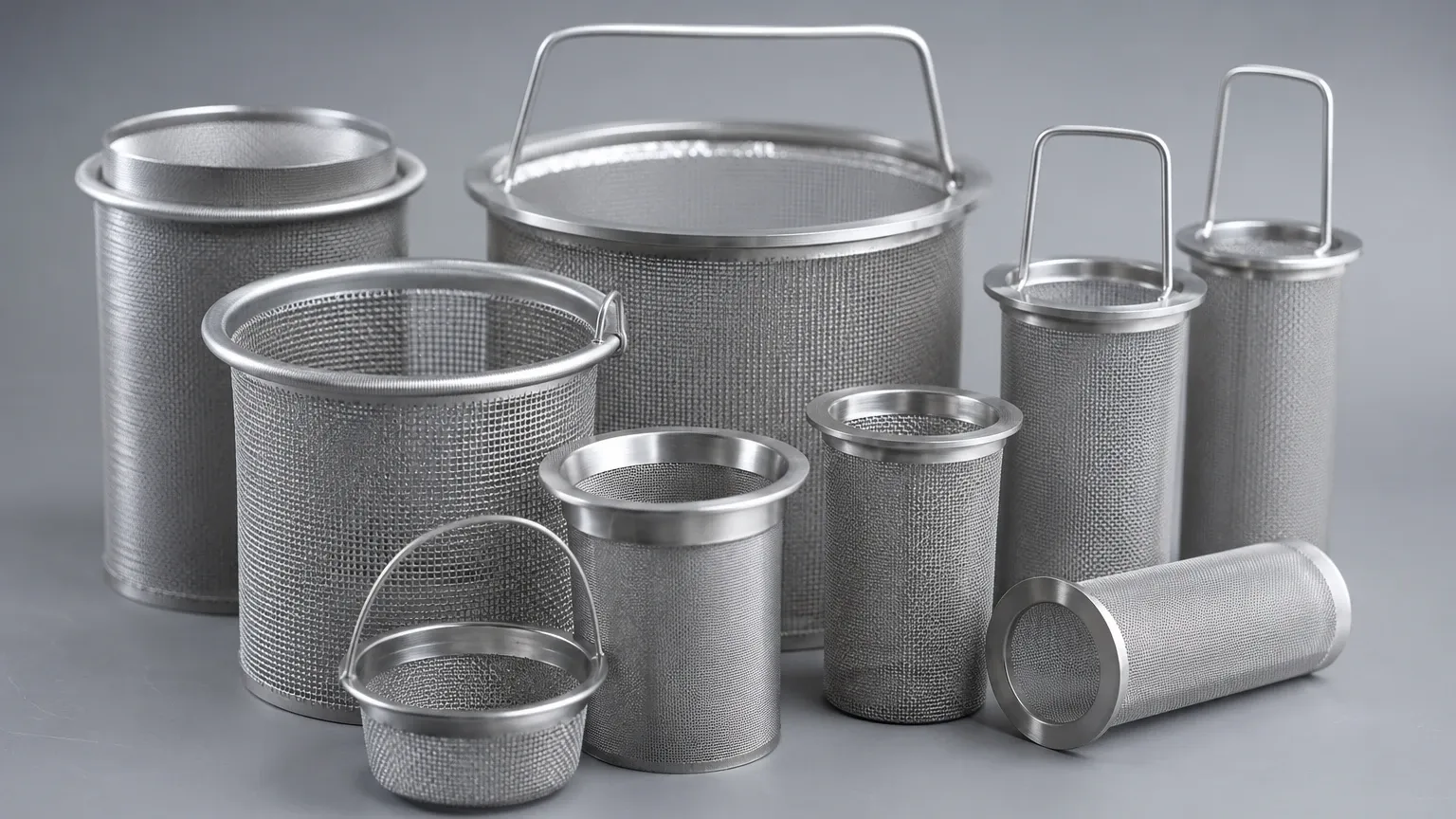
The primary function of these baskets is to provide a large surface area for filtration, which minimizes pressure drop across the system. Unlike temporary filters, strainer baskets are designed for repeated use, requiring a robust construction that can withstand frequent removal and cleaning. This is where the gap between a standard "strainer basket amazon" result and a custom-manufactured industrial solution becomes most apparent. Industrial baskets typically feature reinforced handles, heavy-duty support cages, and precision-welded seams to ensure they do not collapse under high-pressure surges.
Evaluating Strainer Basket Amazon Options vs. Industrial Sourcing
When a procurement team searches for a strainer basket on a retail platform, they are often presented with products designed for light commercial or residential use, such as pool filters or kitchen sink strainers. While these may appear similar in photos to industrial components, the engineering tolerances are significantly different.
Material Traceability
In industrial environments, material certification is often a regulatory or safety requirement. Industrial manufacturers like Kaifil provide Material Test Reports (MTRs) that verify the exact chemical composition of the stainless steel used. Retail-grade products often lack this documentation, posing a risk in applications involving corrosive chemicals or food-grade processing where specific grades like SS316L are mandatory to prevent leaching or pitting corrosion.
Structural Integrity
Industrial baskets are frequently subjected to "slug loading" or sudden spikes in pressure. A basket sourced from a general marketplace may use thin-gauge wire mesh without a perforated metal support backing. Under pressure, this mesh can balloon or tear, allowing contaminants to bypass the filter. Professional-grade Strainers & Baskets are engineered with a heavy-duty perforated metal inner or outer cage to provide the necessary mechanical strength.
Filtration Accuracy
Retail descriptions for strainer baskets often use vague terms like "fine mesh" or "extra fine." In contrast, industrial filtration requires specific micron ratings or mesh counts. An engineer needs to know exactly what size particle will be retained to ensure the protection of downstream components like high-pressure spray nozzles or sensitive heat exchangers.
Technical Specifications: Micron Ratings and Mesh Selection
Selecting the right mesh for a strainer basket is a balance between filtration efficiency and flow capacity. The mesh is typically defined by the number of openings per linear inch. For example, a 20-mesh screen has 20 openings per inch, while a 100-mesh screen has 100 openings, resulting in much finer filtration.
In industrial applications, the choice of weave also matters:
- Plain Weave: The most common type, where each warp wire crosses over and under each shute wire. It offers high flow rates and is easy to clean.
- Twill Weave: Used for finer filtration, where wires are woven over two and under two, allowing for a heavier wire diameter in a fine mesh.
- Dutch Weave: This provides a dense, strong mesh with very small triangular openings, ideal for high-pressure applications where fine particle retention is required.
When browsing a "strainer basket amazon" listing, these technical nuances are rarely detailed. For an industrial system, choosing the wrong weave or mesh count can result in either insufficient filtration (damaging equipment) or excessive pressure drop (reducing system efficiency and increasing energy costs).
Material Integrity and Chemical Compatibility
The environment in which the strainer operates dictates the material selection. Stainless steel is the industry standard due to its corrosion resistance and durability, but not all stainless steel is created equal.
1. Type 304 Stainless Steel: Suitable for water treatment, general industrial use, and some food processing applications. It offers good corrosion resistance but can be susceptible to chloride-induced pitting.
2. Type 316 Stainless Steel: Contains molybdenum, which significantly increases resistance to chlorides and acids. This is the preferred choice for marine environments, chemical processing, and pharmaceutical applications.
3. Specialty Alloys: For highly aggressive environments, materials like Monel, Hastelloy, or Duplex stainless steel may be required. These are almost never available through standard retail channels and must be custom-ordered from a specialist manufacturer.
Industrial procurement teams must ensure that the basket material is compatible with the process fluid at its maximum operating temperature. A failure to account for chemical compatibility can lead to rapid degradation of the basket, resulting in system contamination.
Engineering for High-Pressure and High-Flow Environments
One of the most critical factors in strainer design is the "Open Area Ratio." This is the ratio between the total area of the openings in the basket and the cross-sectional area of the inlet pipe. A high-quality industrial strainer basket typically aims for an open area ratio of at least 6:1 or 8:1. This ensures that even as the basket begins to fill with debris, the pressure drop remains within acceptable limits.
Generic baskets found via a "strainer basket amazon" search may have a much lower ratio, leading to frequent clogging and the need for constant maintenance. Furthermore, industrial baskets are designed with specific sealing surfaces—such as O-rings, gaskets, or precision-machined flanges—to ensure that fluid cannot bypass the basket. Without a proper seal, the strainer is effectively useless, as the smallest particles will always follow the path of least resistance around the edges of the basket.
Customization: Beyond the Standard Dimensions
Many industrial systems are legacy installations or specialized OEM equipment that require non-standard basket dimensions. This is perhaps the greatest limitation of sourcing through mass-market platforms. A search for "strainer basket amazon" will yield standard sizes that may not fit the unique housing of an older chemical reactor or a specialized hydraulic power unit.
Custom manufacturing allows for variations in:
- Flange and Handle Design: Custom handles (slotted, bar, or folding) ensure ease of removal in tight spaces.
- Multi-Stage Filtration: Baskets can be designed with multiple layers of mesh (e.g., a coarse outer mesh for strength and a fine inner mesh for precision) to handle high solids loading.
- Magnetic Inserts: For hydraulic and lubrication systems, magnetic rods can be added to the basket to capture fine ferrous particles that might pass through the mesh.
By working with a dedicated manufacturer, engineers can specify the exact height, diameter, and reinforcement required for their specific application, ensuring a perfect fit and optimal performance.
Total Cost of Ownership and Replacement Strategy
While the initial price of a strainer basket on a retail platform may be lower than a custom-engineered industrial component, the total cost of ownership (TCO) is often higher. Low-quality baskets fail more frequently, leading to:
- Increased Labor Costs: Frequent replacements and cleaning cycles require more man-hours.
- Downstream Damage: If a cheap basket fails, the cost of repairing a damaged centrifugal pump or replacing a clogged heat exchanger can be thousands of times the cost of a high-quality strainer.
- Production Downtime: Every time a system must be shut down to replace a failed strainer, the facility loses revenue.
A robust replacement strategy involves keeping high-quality spares on hand and establishing a regular inspection schedule. Industrial-grade Strainers & Baskets are designed to be cleaned and reused for years. Methods such as ultrasonic cleaning or backflushing can restore these baskets to near-original performance, a process that would likely destroy a flimsy, retail-grade mesh filter.
Conclusion: Making the Right Procurement Decision
For simple, non-critical applications, a "strainer basket amazon" search might provide a temporary fix. However, for industrial operations where safety, efficiency, and reliability are paramount, there is no substitute for a professionally engineered filtration solution. By focusing on material certification, structural reinforcement, and precise micron ratings, procurement teams can ensure their systems remain protected against the rigors of industrial processing.
When selecting a partner for filtration components, look for manufacturers who understand the engineering challenges of your specific industry. A custom-designed stainless steel strainer basket is an investment in the longevity of your equipment and the quality of your final product. For more information on technical specifications and custom design options, explore the range of professional Strainers & Baskets available for demanding industrial applications.
