


Strainer Basket and Lid
In industrial fluid handling, the efficiency of a filtration system is often determined by the synergy between its internal components and its containment vessel. The strainer basket and lid represent the two most critical interface points for operational reliability. While the basket performs the physical task of capturing debris, the lid ensures the integrity of the pressure vessel and facilitates maintenance access. For engineers and procurement teams, understanding the technical nuances of these components is essential for optimizing system uptime and ensuring the longevity of downstream equipment such as pumps, valves, and heat exchangers.
As a specialized manufacturer of Strainers & Baskets, Kaifil emphasizes that the selection of a strainer basket and lid must go beyond simple dimensional matching. It requires a deep dive into material science, fluid dynamics, and mechanical engineering to prevent common failure modes such as bypass, gasket erosion, or basket collapse.
The Role of the Strainer Basket and Lid in Industrial Filtration
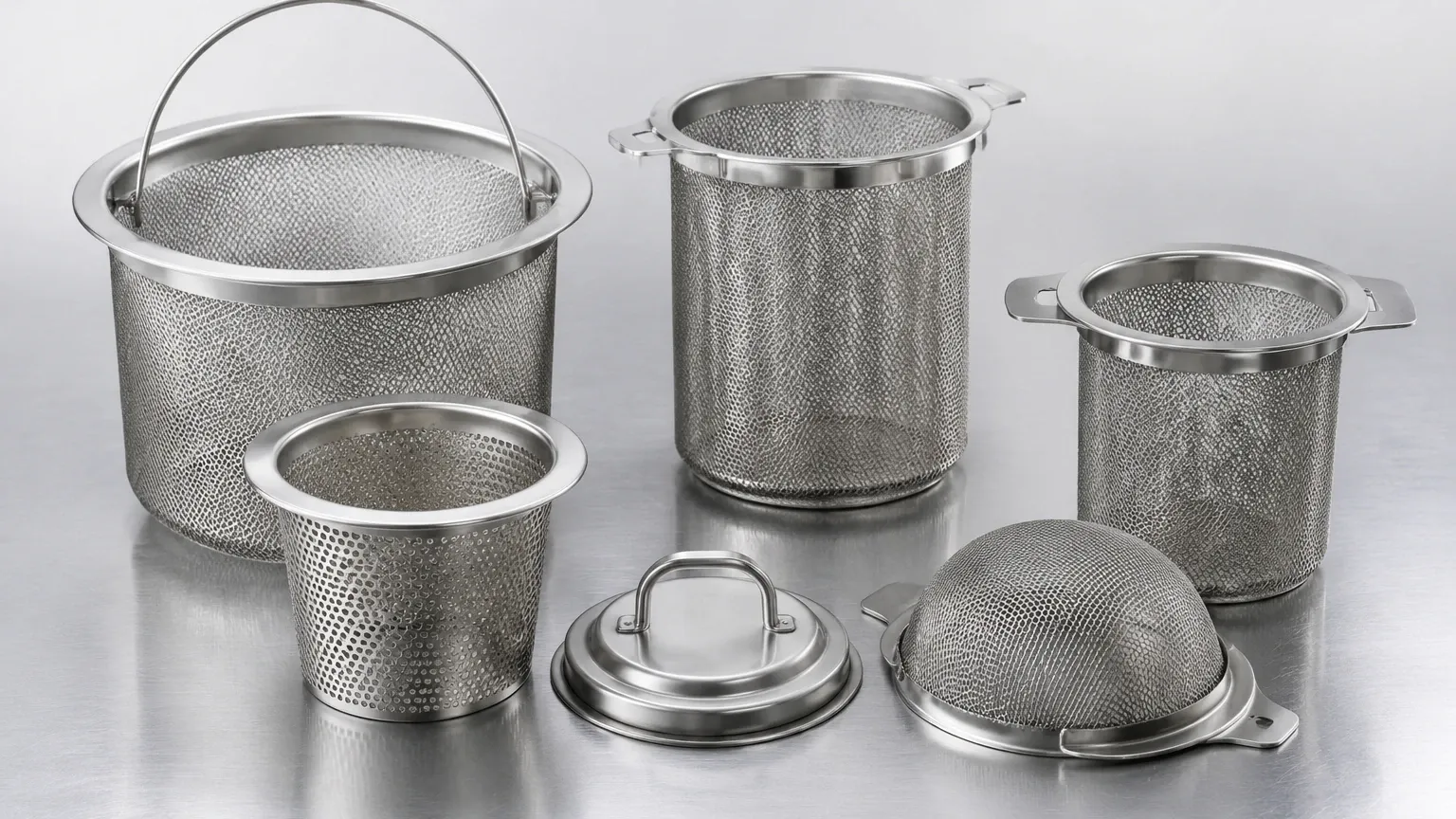
Industrial strainers are typically installed in piping systems to remove unwanted solids from liquids or gases. The strainer basket serves as the primary filter element, designed with specific perforation or mesh sizes to intercept particles while allowing the fluid to pass through with minimal resistance.
However, the basket cannot function in isolation. The lid (or cover) of the strainer housing provides the necessary seal to maintain system pressure and prevent leaks. The interaction between the strainer basket and lid is vital; the lid often exerts a downward force on the basket flange or a hold-down spring to ensure the basket is seated correctly. If this seating is compromised, fluid can "bypass" the filtration media, allowing contaminants to flow downstream and potentially damage sensitive instrumentation.
Engineering Specifications for Custom Strainer Baskets
The performance of a strainer basket is defined by its structural integrity and its open area ratio. When designing or selecting a basket, several engineering factors must be evaluated:
1. Material Selection
Stainless steel is the industry standard due to its corrosion resistance and mechanical strength.
* SS304: Suitable for general industrial applications, water treatment, and mildly corrosive environments.
* SS316/316L: Preferred for chemical processing, pharmaceutical, and marine applications where resistance to chlorides and organic acids is required.
* Specialty Alloys: For highly aggressive environments, materials like Monel or Hastelloy may be utilized.
2. Perforation and Mesh Lining
The base of most baskets is a perforated metal sheet which provides structural support. For finer filtration, a wire mesh lining is sintered or welded to the interior or exterior of the perforated metal. The choice of "mesh vs. perforation" depends on the target particle size.
3. Open Area Ratio
The open area ratio is the relationship between the total area of the holes in the basket and the cross-sectional area of the inlet pipe. A high-quality strainer basket and lid assembly should ideally provide an open area ratio of at least 6:1. This ensures that even as the basket begins to fill with debris, the pressure drop (delta P) remains within acceptable limits, extending the time between cleaning cycles.
4. Structural Reinforcement
In high-viscosity or high-flow applications, the pressure differential across a clogged basket can be significant. To prevent the basket from buckling or bursting, engineers often specify reinforcement bands, heavy-duty handles, and thickened bottom plates.
Closure Mechanisms and Lid Design Considerations
The lid of a strainer housing is the primary access point for maintenance. The design of the lid affects both safety and the speed of service. There are three common types of lid closures used in industrial settings:
Bolted Lids
Bolted covers are the most common for high-pressure applications. They utilize a series of studs and nuts to secure the lid to the housing flange. While they offer the highest pressure ratings, they require more time to open and close, making them less ideal for systems that require frequent cleaning.
Quick-Opening Lids (Swing Bolts)
For applications where the strainer basket must be cleaned often, quick-opening lids are preferred. These typically use swing bolts with eye nuts, allowing the operator to loosen the bolts without removing them entirely. This significantly reduces downtime during the maintenance of the strainer basket and lid assembly.
Threaded Lids
Common in smaller, low-pressure Y-strainers or T-strainers, threaded lids are simple to operate but are prone to galling if not properly lubricated or if manufactured from incompatible metals. They are generally restricted to pipe sizes under 2 inches.
Sealing and Gasket Integrity
The seal between the strainer basket and lid is a critical failure point. A leak at the lid not only results in product loss but can also create hazardous working conditions. Choosing the right gasket or O-ring material is paramount:
* EPDM: Excellent for water and steam but poor for oils.
* Viton (FKM): High temperature and chemical resistance, ideal for fuels and oils.
* PTFE: Near-universal chemical resistance but lacks the elasticity of elastomers, often requiring specialized groove designs.
* Buna-N (Nitrile): A cost-effective choice for general oil and water service.
Engineers must ensure that the lid design provides uniform compression across the gasket. Uneven torque on lid bolts can lead to "pinching" or gaps, resulting in bypass or external leakage.
Optimizing Performance: Differential Pressure and Flow Dynamics
To maintain the efficiency of a strainer basket and lid system, monitoring the differential pressure (ΔP) is essential. The ΔP is the difference in pressure between the inlet and the outlet of the strainer.
1. Clean Start: A newly installed basket should have a very low ΔP (typically 1-2 psi).
2. Loading Phase: As debris accumulates, the ΔP increases.
3. Cleaning Trigger: Most industrial protocols mandate cleaning the basket when the ΔP reaches 10-15 psi.
If the pressure differential becomes too high, the force exerted on the basket can lead to structural failure. Furthermore, high pressure can force soft contaminants through the mesh, a phenomenon known as "extrusive bypass."
Maintenance, Safety, and Operational Reliability
When servicing a strainer basket and lid, safety protocols are non-negotiable. Because strainers are often part of pressurized systems, the following steps should be standard practice:
* Depressurization: Before attempting to open the lid, the section of the piping must be isolated and the internal pressure vented. Many modern lids include a vent plug or a pressure relief valve for this purpose.
* Basket Inspection: During cleaning, the basket should be inspected for broken welds, distorted mesh, or signs of corrosion. A damaged basket must be replaced immediately to prevent downstream contamination.
* Lid Seating: Before closing the lid, the gasket seating surface must be cleaned of any grit or old gasket material. Even a small piece of debris on the flange can prevent a proper seal.
Why Customization Matters in Strainer Design
Off-the-shelf filtration components often fail to meet the specific demands of specialized industrial processes. Customization of the strainer basket and lid allows for optimizations that standard parts cannot provide:
* Variable Micron Ratings: Tailoring the mesh size to the specific particulate profile of the fluid.
* Magnetic Inserts: Adding magnetic rods to the basket to capture fine ferrous particles that might otherwise pass through the mesh.
* Specialized Handles: Designing handles that allow for easy removal in cramped or overhead piping configurations.
* Coating and Plating: Applying specialized coatings (like ETFE or Electropolishing) to improve the release of sticky contaminants or to enhance corrosion resistance.
Kaifil provides comprehensive OEM and customized filtration solutions, ensuring that every strainer basket and lid assembly is engineered to meet the specific flow rates, pressure ratings, and chemical compatibility requirements of the application.
Key Considerations for Procurement and Engineering Teams
When sourcing a strainer basket and lid, it is important to confirm the following technical details with the manufacturer:
1. Design Pressure and Temperature: Ensure the lid closure and gasket material are rated for the maximum operating conditions, including potential surges.
2. Fluid Characteristics: Confirm material compatibility with the fluid's pH, viscosity, and chemical composition.
3. Filtration Target: Define the largest allowable particle size to determine the correct mesh or perforation.
4. Flow Direction: Baskets can be designed for "in-to-out" or "out-to-in" flow. Installing a basket in the wrong orientation can lead to immediate failure.
5. Total Cost of Ownership (TCO): While a cheaper basket may save money upfront, a more durable, high-capacity basket with a quick-opening lid often results in lower long-term costs due to reduced labor and fewer replacements.
By focusing on these engineering realities, facilities can ensure their filtration systems operate at peak efficiency. The Strainers & Baskets produced by Kaifil are designed with these rigorous industrial standards in mind, providing the reliability required for demanding chemical, food and beverage, and water treatment applications.
