


Strainer Basket Ace Hardware
In the world of fluid handling and industrial processing, the term "strainer basket" often appears in both residential and heavy-duty industrial contexts. For many maintenance professionals or small-scale operators, a search for a strainer basket ace hardware provides a quick solution for standard plumbing needs or light commercial applications. However, as fluid systems scale in complexity, pressure, and chemical aggressiveness, the requirements for these components shift from simple hardware store availability to precision-engineered industrial solutions.
Industrial Strainers & Baskets serve as the first line of defense for expensive downstream equipment, such as pumps, valves, and heat exchangers. While retail-grade baskets found at outlets like Ace Hardware are suitable for domestic sinks or basic pool filtration, industrial environments require a deeper understanding of metallurgy, filtration accuracy, and structural integrity. This article explores the technical distinctions between consumer-grade hardware and industrial-grade filtration components, helping engineers determine the right specifications for their specific applications.
Understanding the Limitations of Consumer-Grade Strainer Baskets
When searching for a strainer basket ace hardware, users typically find products designed for standard PVC or copper piping used in residential or light commercial plumbing. These products are usually mass-produced with a focus on cost-efficiency rather than extreme durability.
In industrial settings, the limitations of these retail components become apparent in several areas:
1. Material Grade: Retail baskets are often made from thin-gauge stainless steel (frequently 304 grade or lower) or plastics. Industrial processes involving corrosive chemicals or high-salinity fluids often require 316L stainless steel, Monel, or Hastelloy to prevent premature failure.
2. Pressure Ratings: A standard hardware store basket is designed for gravity-fed or low-pressure systems. Industrial strainers must withstand significant differential pressures (ΔP) without collapsing or bypassing contaminants.
3. Filtration Precision: Consumer products generally offer coarse filtration, often limited to capturing large debris like hair or food particles. Industrial baskets can be engineered with fine wire mesh linings to capture particles down to the micron level.
4. Connection Types: While retail baskets use standard NPT or slip-fit connections, industrial systems may require ANSI flanges, socket welds, or custom hygienic fittings for the food and pharmaceutical sectors.
Key Engineering Considerations for Industrial Strainers & Baskets
Selecting the correct strainer basket involves more than matching a diameter. Engineers must evaluate the mechanical and hydraulic demands of the system to ensure the component does not become a bottleneck or a point of failure.
Open Area Ratio
One of the most critical technical metrics is the "Open Area Ratio" (OAR). This is the ratio between the internal cross-sectional area of the inlet pipe and the total open area of the holes in the strainer basket. A well-designed industrial basket typically offers an OAR of at least 6:1 or 8:1. This high ratio ensures that even as the basket collects debris, the pressure drop remains minimal, and the time between cleaning cycles is maximized. Retail-grade options rarely provide this level of surface area, leading to frequent clogging in high-flow environments.
Micron Rating vs. Mesh Count
In industrial filtration, precision is paramount. While a strainer basket ace hardware might be described in general terms, industrial components are specified by mesh count (the number of wires per linear inch) or micron rating (the size of the smallest particle the mesh will intercept). High-performance baskets often feature a dual-layer construction: a heavy-duty perforated metal plate for structural support and a fine wire mesh lining for precise filtration.
Material Selection: Why Stainless Steel Matters
Kaifil specializes in stainless steel filtration solutions because of the material's versatility and resilience. In the context of Strainers & Baskets, the choice of material directly impacts the total cost of ownership.
* 304 Stainless Steel: Suitable for general-purpose applications, including water treatment and some food processing. It offers good corrosion resistance but may struggle in high-chloride environments.
* 316L Stainless Steel: The standard for chemical processing and marine applications. The addition of molybdenum provides superior resistance to pitting and crevice corrosion.
* Durability and Cleanability: Unlike plastic or low-grade metal baskets found in general hardware stores, high-quality stainless steel baskets can be cleaned and reused indefinitely. They withstand high-temperature sterilization (CIP/SIP processes), which is essential in the pharmaceutical and beverage industries.
Customization vs. Off-the-Shelf Solutions
For many B2B applications, an off-the-shelf strainer basket ace hardware simply will not fit the existing housing or meet the flow requirements of specialized machinery. Customization is often a necessity rather than a luxury.
Tailored Geometry
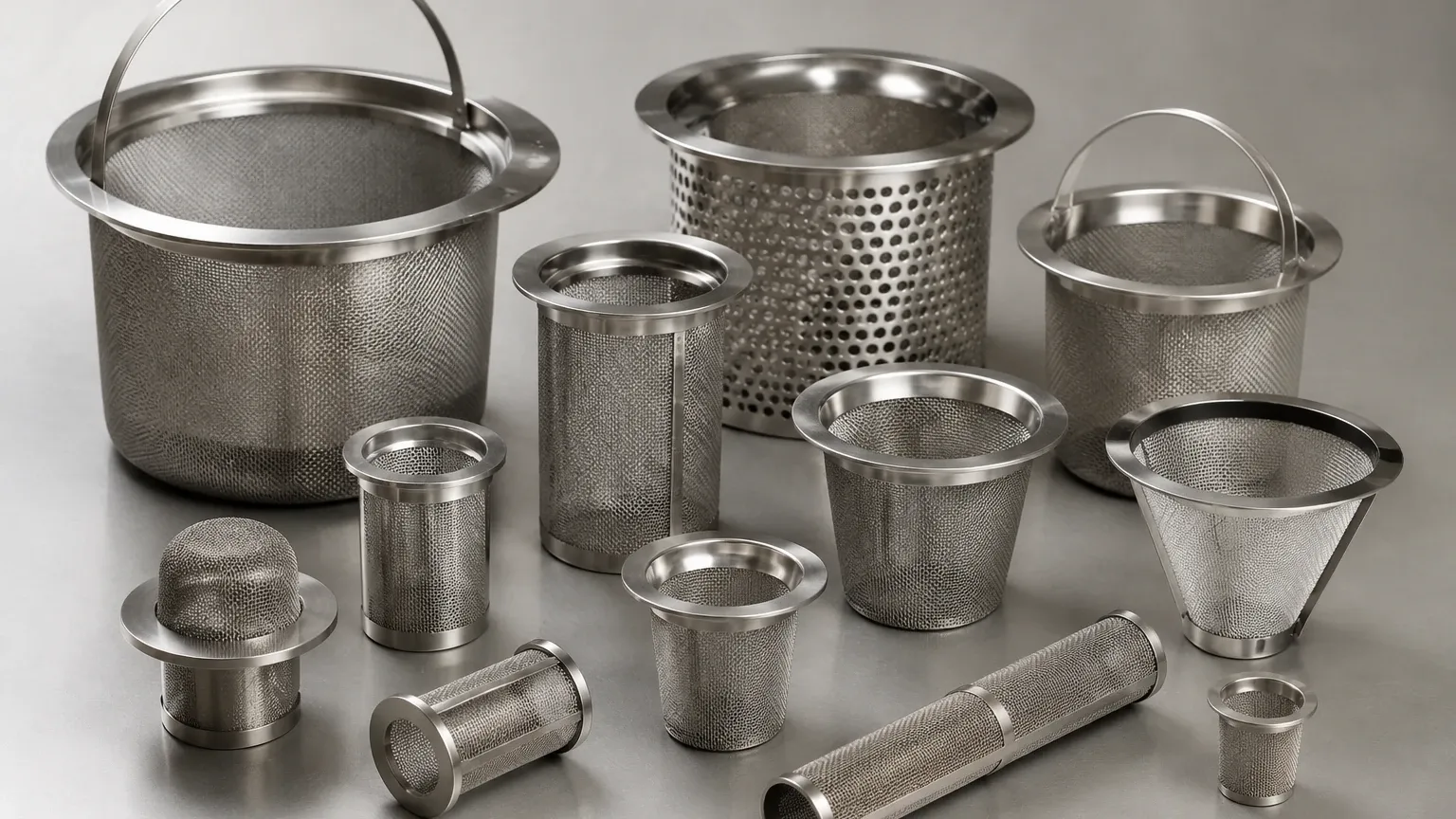
Industrial baskets can be manufactured in various shapes, including slanted tops for easier removal, truncated cones for specific flow patterns, or multi-basket configurations for high-volume systems. Custom handle designs, such as heavy-duty lifting bails, are also integrated to ensure that maintenance teams can safely extract heavy, debris-laden baskets during shutdowns.
Reinforced Construction
In high-viscosity fluid applications, such as oil or resin processing, the pressure exerted on the basket can be immense. Industrial manufacturers like Kaifil add reinforcement rings, longitudinal ribs, and heavy-duty mesh overlays to prevent the basket from deforming under pressure. This structural reinforcement is absent in consumer-grade products, which are prone to "blow-through"—a failure where the mesh tears and allows contaminants to pass into the system.
Maintenance and Longevity in Industrial Filtration
The true value of an industrial strainer basket is measured over its service life. While a retail-grade basket might be cheaper initially, the cost of a single hour of unplanned downtime in a chemical plant can far exceed the price of a precision-engineered component.
Cleaning Cycles
Industrial baskets are designed for rapid maintenance. Features like quick-release handles and smooth interior surfaces (often achieved through electropolishing) reduce the time required to wash away captured solids. In contrast, rougher finishes on lower-quality hardware can trap particles, leading to bacterial growth in food-grade applications or persistent flow restrictions.
Monitoring Performance
Engineers often install differential pressure gauges across the strainer housing. When the pressure drop reaches a predetermined limit, the basket must be cleaned. High-quality baskets maintain their structural integrity through thousands of these cycles, whereas cheaper alternatives may fatigue and crack at the weld points over time.
Selecting the Right Industrial Partner
When transitioning from basic hardware searches like strainer basket ace hardware to professional procurement, it is essential to partner with a manufacturer that understands the nuances of industrial filtration. A reliable partner like Kaifil provides more than just a product; they provide engineering support that includes:
* Material Certification: Ensuring the stainless steel used meets international standards (ASTM/AISI).
* OEM Compatibility: The ability to manufacture replacement baskets that fit perfectly into existing housings from major brands.
* Technical Consultation: Advising on the optimal mesh size and perforation pattern based on the specific fluid properties and particle characteristics of the application.
Conclusion
While a strainer basket ace hardware serves its purpose in the domestic and light-duty market, industrial operations demand a higher standard of performance, reliability, and precision. By focusing on high-quality Strainers & Baskets, facility managers and engineers can protect their infrastructure, reduce maintenance costs, and ensure consistent product quality. Whether you are dealing with water treatment, chemical processing, or food production, investing in a professionally manufactured stainless steel basket is a critical step in optimizing your filtration system's efficiency and longevity.
