


Basket Strainers at Lowe’s
In the world of fluid handling and debris management, the term "basket strainer" covers a broad spectrum of products, ranging from simple residential sink components to heavy-duty industrial filtration units. For maintenance managers, facility engineers, and procurement professionals, searching for basket strainers at Lowe's often serves as a starting point for immediate, localized needs. However, when transitioning from domestic plumbing to industrial process environments, the requirements for material integrity, pressure ratings, and filtration precision escalate significantly.
Industrial filtration requires a level of engineering that goes beyond the standard retail offering. While a retail outlet may provide excellent solutions for light-duty commercial or residential applications, industrial sectors—such as chemical processing, food and beverage production, and hydraulic systems—demand specialized Strainers & Baskets that can withstand rigorous operational stresses. This guide examines the technical distinctions between retail-grade and industrial-grade strainers, helping professionals make informed decisions for their specific applications.
Understanding the Scope of Retail vs. Industrial Basket Strainers
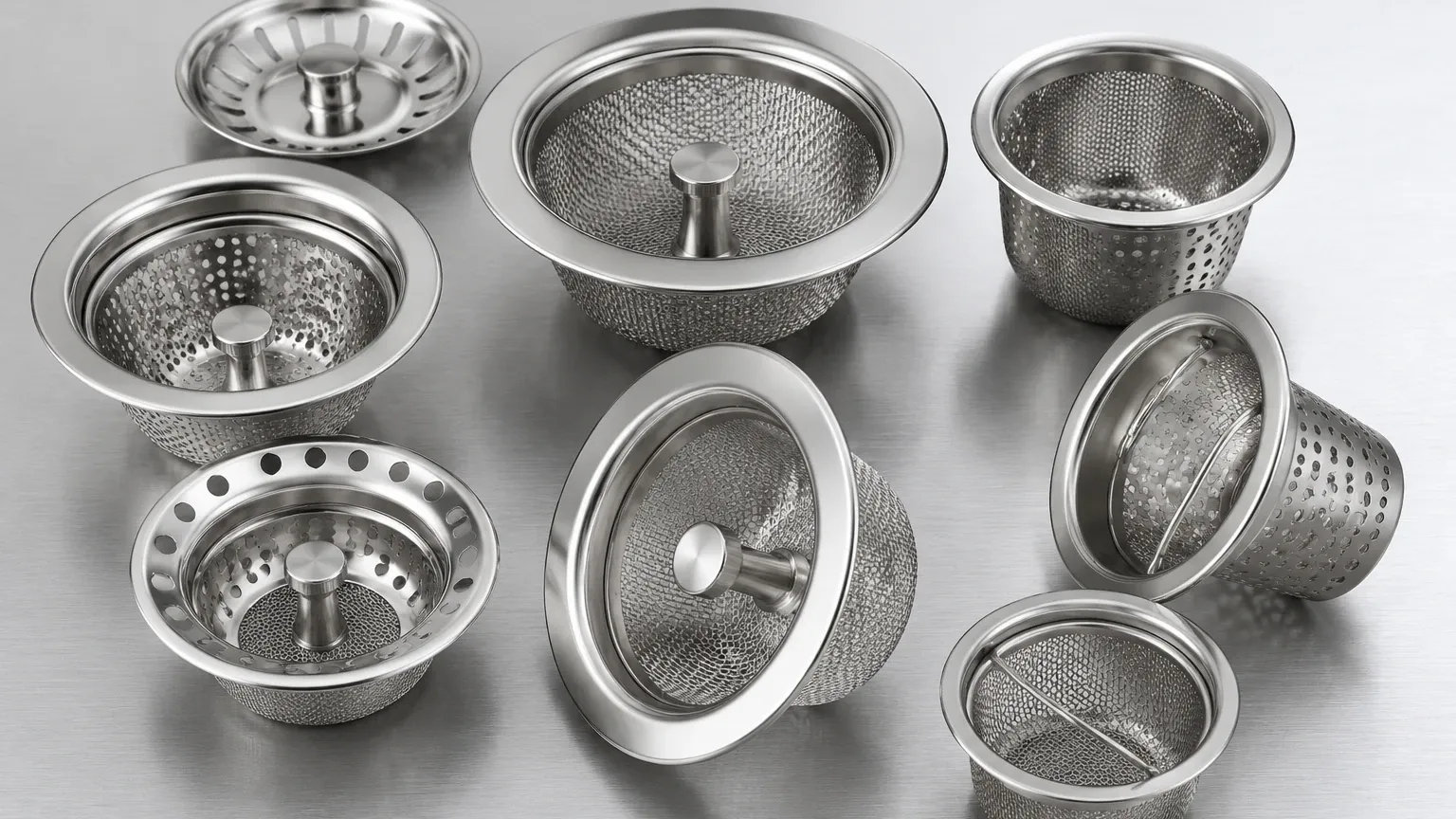
When a professional searches for basket strainers at Lowe's, they are typically encountering products designed for standard plumbing fixtures. These are essential for preventing large solids from entering drainage systems in kitchens, utility rooms, or small-scale commercial kitchens. They are usually characterized by standard sizes (such as 3.5-inch or 1.5-inch diameters) and are designed for atmospheric pressure or gravity-fed drainage.
In contrast, industrial basket strainers are pressure-vessel components integrated into piping systems to protect downstream equipment like pumps, valves, and heat exchangers. The scale of these components is vastly different, often ranging from 1-inch to 24-inch pipe sizes or larger. Furthermore, industrial units must manage specific flow rates (GPM), viscosity variations, and high-pressure environments that would cause a standard retail strainer to fail instantaneously.
Material Composition and Durability
Retail strainers are often constructed from stainless steel finishes, chrome-plated brass, or plastic. While these are suitable for water contact at room temperature, they lack the metallurgical certifications required for industrial use. Industrial-grade baskets are typically manufactured from high-grade AISI 304 or 316L stainless steel, or even exotic alloys like Monel or Hastelloy, to ensure resistance to corrosive chemicals and high-temperature sterilization processes.
Technical Evaluation Criteria for Industrial Filtration
For engineers, the selection of a basket strainer is a matter of fluid dynamics and mechanical engineering. If you are evaluating options beyond the basic basket strainers at Lowe's, several technical parameters must be confirmed to ensure system reliability.
1. Filtration Accuracy and Mesh Selection
Residential strainers usually feature simple perforated holes. Industrial baskets, however, utilize a combination of perforated metal for structural strength and fine wire mesh for precise filtration. The "mesh count" refers to the number of openings per linear inch. Choosing the correct mesh size is critical: too coarse, and contaminants pass through; too fine, and the strainer will clog prematurely, causing an excessive pressure drop.
2. Pressure Ratings and Flow Dynamics
Industrial systems operate under significant pressure, often measured in PSI (pounds per square inch). A strainer must be rated for the maximum operating pressure of the system. Additionally, the "Open Area Ratio" is a vital metric. A high-quality industrial basket should have an open area at least six times the cross-sectional area of the inlet pipe. This ensures that the fluid can pass through the strainer with minimal resistance, preventing cavitation in pumps.
3. Seal Integrity and Gasket Materials
While a retail strainer might use basic rubber washers or plumber's putty, industrial strainers require precision-engineered seals. Depending on the fluid being filtered, gaskets may be made of Viton, EPDM, PTFE, or Buna-N. These materials are selected based on their chemical compatibility and thermal stability to prevent leaks that could lead to environmental hazards or system downtime.
Common Risks of Using Residential-Grade Components in Industrial Systems
It can be tempting to source basket strainers at Lowe's for a quick fix in a factory setting, especially during an emergency shutdown. However, using consumer-grade components in a professional industrial environment carries several risks:
* Mechanical Failure: Consumer strainers are not designed to handle the "water hammer" effect or the vibrations common in industrial piping. This can lead to the basket collapsing or the housing cracking.
* Bypass Issues: In precision filtration, "bypass" occurs when fluid flows around the filter element rather than through it. Industrial baskets are designed with machined seats and spring-loaded mechanisms to ensure a tight seal. Retail versions often have loose tolerances that allow contaminants to bypass the filter.
* Corrosion and Contamination: In food or pharmaceutical applications, the material must be non-reactive. Lower-grade stainless steel found in retail products may pit or corrode when exposed to CIP (Clean-In-Place) chemicals, leading to batch contamination.
* Compliance Violations: Many industries must adhere to strict standards, such as ASME, FDA, or 3-A Sanitary Standards. Retail products rarely carry these certifications, which can lead to legal and safety liabilities during audits.
Customization Options for Demanding Applications
One of the primary advantages of working with a professional manufacturer like Kaifil is the ability to customize Strainers & Baskets to fit unique system geometries. Retail options are limited to "one size fits all" configurations, which rarely suffice in complex industrial layouts.
Custom Handle Configurations
In deep-well strainers or large pits, standard baskets are difficult to retrieve. Custom baskets can be fitted with T-handles, slanted handles, or even magnetic inserts to capture ferrous particles that are too small for the mesh to catch.
Reinforced Structures
For high-viscosity fluids like resins or heavy oils, the pressure exerted on the basket is immense. Industrial manufacturers can add internal support frames or external reinforcement bands to the basket to prevent deformation under high differential pressure (Delta P).
Specialized Coatings
In highly abrasive environments, such as mining or wastewater treatment, baskets can be treated with specialized coatings to extend their service life. This level of engineering is simply not available when purchasing standard basket strainers at Lowe's.
Total Cost of Ownership: Maintenance and Replacement Cycles
When evaluating procurement options, it is essential to look beyond the initial purchase price. A retail strainer may be inexpensive, but its total cost of ownership (TCO) in an industrial setting is often much higher than a purpose-built component.
Durability and Longevity
An industrial-grade stainless steel basket is designed for years of service. It can be cleaned and reused thousands of times. Retail strainers, made of thinner gauge materials, often warp or break during the cleaning process, requiring frequent replacements. The labor cost of constantly replacing a cheap strainer quickly outpaces the investment in a high-quality industrial unit.
Impact on Downstream Equipment
The primary role of a strainer is to protect more expensive equipment. If a low-quality strainer fails and allows a metal shard to enter a high-pressure pump, the resulting repair costs and production downtime can reach tens of thousands of dollars. Investing in a robust industrial strainer is essentially an insurance policy for the entire production line.
Ease of Maintenance
Industrial strainers are designed for "quick-opening" access. Features like swing-bolt covers or pleated basket designs (which provide more surface area and longer run times between cleanings) are engineered to minimize the time maintenance crews spend on-site. This efficiency is a hallmark of professional-grade filtration solutions.
Critical Specifications to Confirm Before Procurement
Before moving forward with a purchase, whether you are looking at basket strainers at Lowe's for a small facility or sourcing from a global manufacturer, ensure you have confirmed the following data points with your engineering team:
1. Fluid Type: Is the fluid water-based, oil-based, or a corrosive chemical?
2. Operating Temperature: What are the minimum and maximum temperatures the strainer will encounter?
3. Maximum Flow Rate: What is the peak GPM (gallons per minute) the system must handle?
4. Allowable Pressure Drop: How much loss in pressure can the system tolerate when the basket is 50% clogged?
5. Particle Size: What is the smallest particle that must be removed (measured in microns or mesh size)?
6. Connection Type: Does the system require NPT threads, flanged connections (ANSI/DIN), or sanitary tri-clamp fittings?
Conclusion
While basket strainers at Lowe's provide a convenient and effective solution for residential and light commercial plumbing, they are rarely the correct choice for industrial process engineering. The demands of modern manufacturing—ranging from high-pressure hydraulics to sterile pharmaceutical environments—require the precision and durability of professional Strainers & Baskets.
By focusing on material certifications, mechanical design, and customization capabilities, engineers can ensure their filtration systems operate efficiently and protect their critical infrastructure. For those in need of reliable, high-performance filtration components, partnering with a manufacturer that understands the complexities of industrial applications is the most cost-effective and secure path forward. Whether you require a standard replacement or a fully customized filtration solution, prioritizing engineering quality over retail convenience is essential for long-term operational success.
