


Fritted Glass Filter
In the landscape of industrial and laboratory filtration, the fritted glass filter remains a fundamental component for high-purity separation processes. Characterized by its porous structure and exceptional chemical resistance, this component is widely utilized in analytical chemistry, pharmaceutical manufacturing, and specialized chemical processing. Understanding the technical nuances of glass frits—from porosity grades to mechanical limitations—is essential for engineers and procurement teams tasked with selecting the most effective filtration media for their specific applications.
While glass filters offer unique advantages in terms of visibility and inertness, industrial-scale operations often require a balance between chemical compatibility and mechanical durability. This guide examines the engineering principles of fritted glass filters and explores how they compare to advanced metal-based alternatives found on the Main Page of industrial filtration providers.
The Manufacturing and Composition of Fritted Glass
A fritted glass filter is produced through a process known as sintering. This involves taking finely ground glass particles (often borosilicate glass 3.3) and heating them to a temperature just below their melting point. At this stage, the particles fuse together at their contact points without completely liquefying. The result is a solid, rigid structure containing a network of interconnected pores.
Borosilicate glass is the material of choice for these filters due to its low coefficient of thermal expansion and high resistance to chemical attack. The manufacturing process allows for precise control over the pore size by selecting specific particle sizes of the raw glass powder. Because the filtration occurs within the depth of the porous disc rather than just on the surface, fritted glass is considered a depth filtration medium, capable of trapping particles throughout its internal structure.
Porosity Grades and Filtration Efficiency
The performance of a fritted glass filter is primarily defined by its porosity grade. International standards, such as ISO 4793 or the ASTM equivalents, categorize these filters based on the maximum pore diameter. Selecting the correct grade is a critical engineering decision that impacts both the retention efficiency and the flow rate (permeability) of the system.
Common porosity grades include:
* Grade 0 (160–250 µm): Used for coarse filtration, gas dispersion, and supporting larger filter beds.
* Grade 1 (100–160 µm): Suitable for coarse precipitates and gas distribution in liquids.
* Grade 2 (40–100 µm): Often used for medium-fine precipitates and preparatory laboratory work.
* Grade 3 (16–40 µm): A standard grade for analytical filtration and fine precipitates.
* Grade 4 (10–16 µm): Designed for very fine precipitates and analytical work requiring high retention.
* Grade 5 (1.0–1.6 µm): Used for bacterial filtration and ultra-fine clarification.
Engineers must account for the "bubble point" of the filter, which is the pressure required to force air through a liquid-saturated pore. This value is inversely proportional to the pore size and serves as a key metric for verifying the integrity and grade of the filter.
Operational Advantages in Laboratory and Industrial Settings
The primary advantage of the fritted glass filter is its near-total chemical inertness. It is resistant to most water, saline solutions, organic solvents, and acids, with the notable exceptions of hydrofluoric acid and concentrated hot alkalis. This makes it an ideal choice for filtering highly corrosive substances that would degrade standard polymers or lower-grade metals.
Furthermore, the transparency of glass allows operators to visually monitor the filtration process. In pilot plant operations or laboratory scale-ups, being able to see the accumulation of the filter cake or changes in the color of the filtrate provides immediate feedback on the process efficiency. Additionally, glass frits do not shed fibers, ensuring that the filtrate remains free from media migration, which is a critical requirement in pharmaceutical and high-purity chemical applications.
Critical Engineering Limitations of Glass Frits
Despite their chemical advantages, fritted glass filters possess inherent mechanical limitations that must be addressed during the system design phase.
1. Mechanical Fragility
Glass is a brittle material. Unlike stainless steel wire mesh or sintered metal cartridges, a glass frit cannot withstand significant mechanical impact or high-pressure differentials. In industrial environments where vibration or hydraulic shock is present, the risk of catastrophic failure (cracking or shattering) is high.
2. Thermal Shock Sensitivity
While borosilicate glass has excellent thermal resistance, it is still susceptible to thermal shock. Rapid temperature changes can cause uneven expansion between the porous disc and its housing, leading to fractures. Engineers must implement controlled heating and cooling cycles when using glass filters in high-temperature processes.
3. Pressure Constraints
Fritted glass filters are typically designed for vacuum filtration or low-pressure gravity-fed systems. They are generally unsuitable for high-pressure industrial filtration. Exceeding the recommended pressure differential can lead to the structural failure of the sintered disc.
Comparing Fritted Glass with Sintered Metal Filters
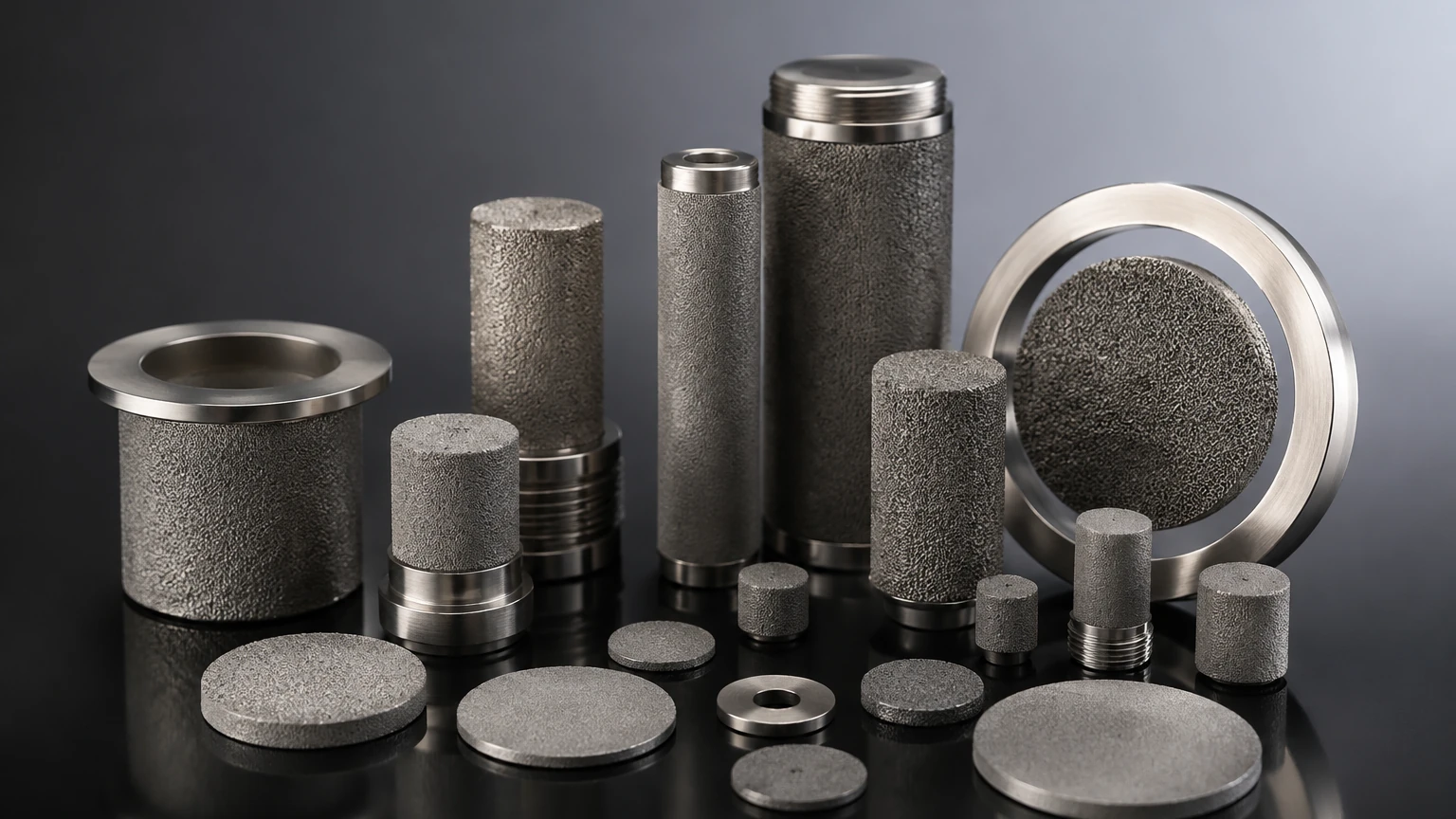
For many B2B applications, engineers must decide between a fritted glass filter and a sintered metal filter (such as those made from 316L stainless steel). The choice often depends on the scale of production and the physical demands of the environment.
* Durability: Sintered stainless steel filters are significantly more robust. They can handle high-pressure differentials, back-pulsing (cleaning with reverse flow), and mechanical stresses that would destroy a glass frit.
* Cleanability: While glass is easy to clean with acids, metal filters offer the advantage of being able to withstand ultrasonic cleaning and high-temperature sterilization (SIP/CIP) without the risk of thermal shock.
* Scalability: For large-scale industrial flows, metal filtration components are easier to manufacture in large formats or complex geometries. Glass frits are typically limited to smaller diameters due to the risks of structural instability in larger sizes.
In scenarios where the chemical environment allows for it, transitioning from glass to a custom stainless steel filtration solution can significantly reduce the total cost of ownership by extending the replacement cycle and reducing downtime caused by breakage.
Applications in Chemical and Pharmaceutical Industries
Fritted glass filters are indispensable in specific niches. In the pharmaceutical industry, they are used for the sterile filtration of small batches of reagents where the absence of extractables is paramount. In analytical laboratories, they are used for gravimetric analysis, where the filter must be dried to a constant weight without losing mass.
In chemical processing, they serve as gas spargers or diffusers. By forcing gas through the fine pores of a glass frit, engineers can create very small bubbles, maximizing the surface area for gas-liquid reactions. However, in larger industrial reactors, these glass spargers are often replaced by sintered metal equivalents to prevent damage during reactor cleaning or agitation.
Maintenance, Cleaning, and Longevity
The lifespan of a fritted glass filter is largely determined by the effectiveness of the cleaning protocol. Because it is a depth medium, particles can become lodged deep within the pore structure, leading to a permanent increase in flow resistance (pressure drop).
Standard cleaning procedures include:
1. Back-flushing: Immediately after use, flushing the filter from the clean side with a suitable solvent.
2. Chemical Digestion: Using oxidizing agents like hot nitric acid or piranha solution to dissolve organic contaminants. It is vital to avoid using thick brushes or scrapers on the surface of the frit, as this can abrade the glass and alter the pore size.
3. Drying: Filters should be dried in an oven at temperatures not exceeding 150°C to prevent stress within the glass structure.
If a filter remains clogged after multiple cleaning cycles, it must be decommissioned. In high-volume industrial settings, the labor costs associated with cleaning fragile glass components often lead companies to seek more durable, cleanable alternatives like stainless steel wire mesh.
Selection Criteria for Industrial Filtration Systems
When evaluating whether to implement a fritted glass filter or a metal alternative, engineering teams should confirm the following data points:
* Fluid Compatibility: Does the process involve hydrofluoric acid or strong bases that would etch glass?
* Operating Pressure: Is the system operating under vacuum or positive pressure? If the latter, what is the maximum expected differential?
* Temperature Range: What is the maximum operating temperature, and how quickly will the temperature change?
* Particle Loading: How much solid material needs to be removed? High solids loading may require a more robust, back-washable metal filter.
* Regulatory Requirements: Does the application require FDA or USP Class VI compliance for contact materials?
For organizations requiring high-performance filtration that exceeds the physical limits of glass, exploring professional manufacturing capabilities for custom stainless steel components is the next logical step. These solutions provide the precision of a controlled pore size with the structural integrity required for heavy-duty industrial use.
Conclusion: Making an Informed Selection
The fritted glass filter remains a gold standard for chemical purity and laboratory-scale precision. However, as processes scale and mechanical demands increase, the limitations of glass—specifically its fragility and pressure sensitivity—become more apparent. By understanding the porosity grades and the specific chemical interactions involved, engineers can determine if glass is the appropriate medium or if a more durable material is required.
For those seeking reliable, high-strength filtration components designed for demanding industrial environments, specialized manufacturers offer a range of stainless steel and alloy solutions. To explore technical specifications for durable metal filtration media, visit the Main Page of Kaifil to review product options and application support tailored to your specific industrial requirements.
