


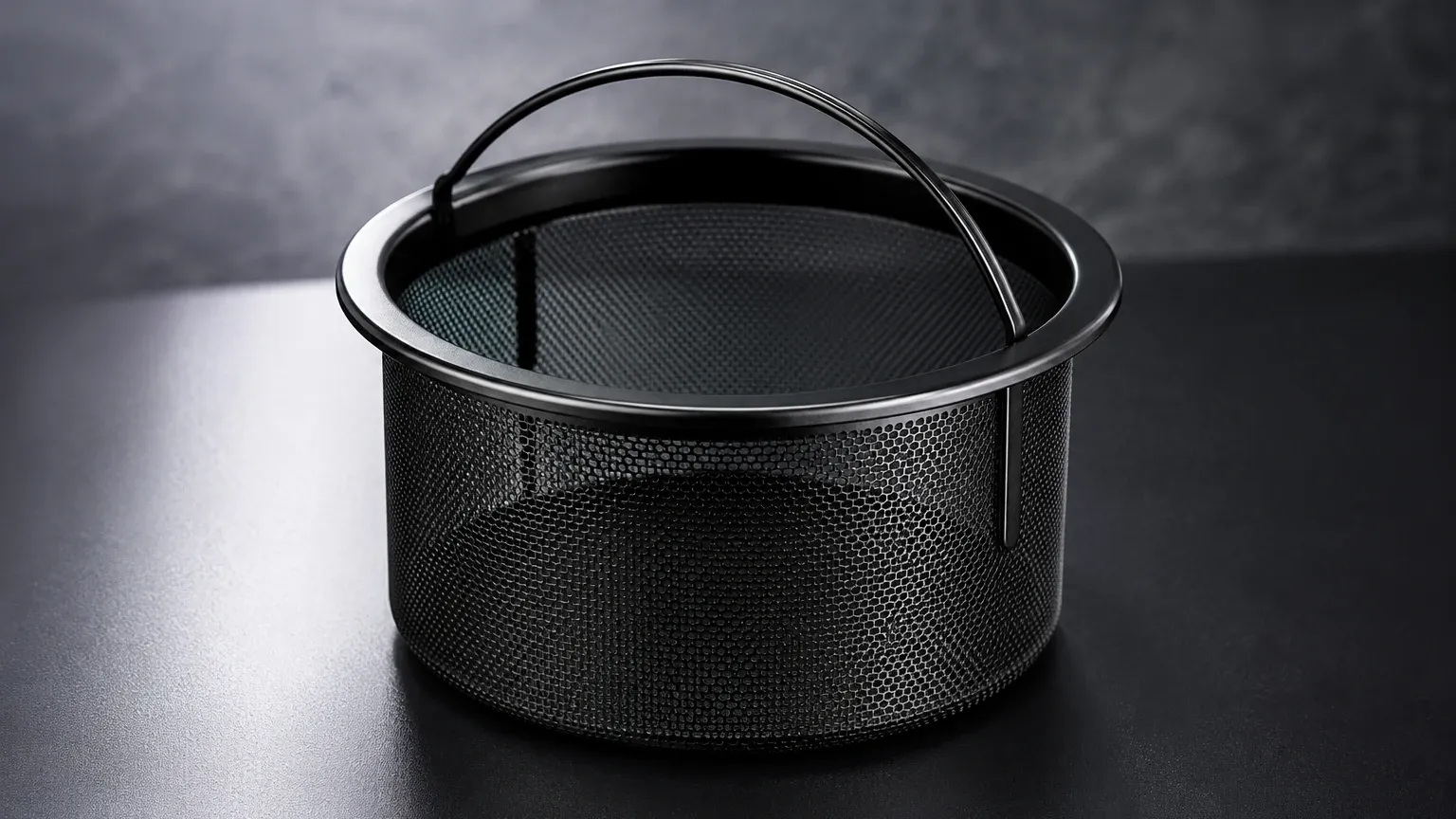
Strainer Basket Black
In industrial fluid handling, the efficiency of a process often hinges on the reliability of its primary filtration stage. Basket strainers serve as the first line of defense, protecting expensive downstream equipment such as pumps, flow meters, and control valves from particulate damage. While standard stainless steel finishes are common, specific applications require specialized surface treatments. The specification of a strainer basket black finish is frequently driven by technical requirements involving chemical resistance, non-stick properties, or specific environmental protection. Understanding the engineering rationale behind these choices is essential for procurement teams and process engineers looking to optimize system longevity.
Industrial Strainers & Baskets are engineered to handle high flow rates with minimal pressure drop. When these components are modified with black coatings or treatments, they are typically designed to solve specific operational challenges that standard metallic surfaces cannot address. This guide explores the technical specifications, material science, and selection criteria for industrial strainer baskets with specialized black finishes.
Understanding the Industrial Role of Strainers & Baskets
Before addressing the specifics of surface treatments, it is vital to define the mechanical role of the basket strainer. Unlike fine filters meant to remove sub-micron particles, strainers are designed for coarse filtration—typically removing particles larger than 40 microns. The basket design is preferred in many industrial settings because of its high dirt-holding capacity and the ease with which it can be removed for cleaning.
The Mechanics of Basket Filtration
Fluid enters the strainer housing and is directed into the center of the basket. As the fluid passes through the mesh or perforated metal walls, solids are trapped inside the basket. This "inside-out" flow pattern ensures that debris is contained within the basket, preventing it from falling back into the pipeline during maintenance.
The performance of these components is measured by the ratio of the open area of the basket to the cross-sectional area of the inlet pipe. A standard engineering benchmark is an Open Area Ratio (OAR) of at least 6:1. This ensures that even as the basket begins to load with debris, the pressure drop (ΔP) remains within acceptable limits, preventing cavitation in pumps or system-wide flow restrictions.
Technical Drivers for a Strainer Basket Black Finish
The term "strainer basket black" usually refers to a stainless steel or carbon steel basket that has undergone a specific surface modification. These treatments are not aesthetic; they are functional engineering choices. The most common reasons for specifying a black finish include:
1. Fluoropolymer Coatings (PTFE/Teflon)
Black PTFE or Xylan coatings are frequently applied to strainer baskets used in the chemical and food processing industries. These coatings provide a non-stick surface, which is critical when handling viscous fluids, resins, or food products that tend to adhere to metal surfaces. A black PTFE-coated basket allows for easier cleaning and reduces the frequency of manual scrubbing, which can damage the underlying wire mesh.
2. Black Oxide Treatment
Black oxide is a conversion coating used primarily on stainless steel or carbon steel to provide mild corrosion resistance and to reduce light reflection. In specific optical or sensor-heavy industrial environments, minimizing glare from metallic components is necessary for the accurate operation of laser-based monitoring systems.
3. E-Coating and Powder Coating
For water treatment and general industrial applications where the fluid is non-corrosive but the external environment is harsh, an epoxy-based black E-coating (electrophoretic deposition) provides a durable, uniform barrier. This prevents atmospheric corrosion and provides a layer of insulation against galvanic corrosion if the basket is used in a housing made of a dissimilar metal.
4. Chemical Compatibility and Resistance
Certain black finishes are formulated to withstand specific pH ranges. For instance, in wastewater treatment where hydrogen sulfide (H2S) gas is present, standard stainless steel may undergo surface pitting. A specialized black protective coating can extend the service life of the basket by acting as a sacrificial or barrier layer against acidic or alkaline attack.
Engineering Specifications: Mesh, Perforation, and Flow Dynamics
When specifying a strainer basket black component, the underlying structure must be robust enough to support the coating and the operational load. The construction typically involves a two-stage design:
* The Support Cylinder: Usually made from perforated metal (SS304 or SS316). The hole size and pattern (staggered vs. straight) determine the structural integrity. For high-pressure applications, the thickness of this cylinder is a critical calculation to prevent collapsing under differential pressure.
* The Filter Media: A fine wire mesh is often lined inside the perforated cylinder. The mesh count (wires per inch) defines the filtration accuracy. When a black coating is applied, engineers must account for the reduction in hole size. A thick coating can significantly reduce the effective open area, leading to an unexpected increase in pressure drop.
Calculating Effective Open Area
Engineers must verify the "as-coated" open area. If a mesh has a 40% open area and a 2-mil (50-micron) coating is applied to every wire, the remaining open area may drop to 30% or less. This reduction must be factored into the initial flow calculations to ensure the system pump can handle the increased resistance.
Material Compatibility and Chemical Resistance
Selecting the correct base metal and coating combination is the most critical step in procurement. While the finish may be black, the performance is dictated by the chemistry of the material.
| Feature | PTFE Coating (Black) | Black Oxide | Epoxy E-Coating |
| :— | :— | :— | :— |
| Primary Benefit | Non-stick / Chemical Resistance | Anti-glare / Mild Protection | Corrosion Barrier |
| Max Temperature | Up to 260°C (500°F) | Up to 400°C (750°F) | Up to 120°C (250°F) |
| Chemical Resistance | Excellent (Acids/Bases) | Limited | Moderate |
| Typical Industry | Chemical, Food & Beverage | Optical, Aerospace | Water Treatment, HVAC |
For hydraulic systems, compatibility with synthetic oils and fire-resistant fluids is paramount. Some black coatings may swell or degrade when exposed to specific hydraulic esters. Always consult a chemical compatibility chart or provide the fluid MSDS to the manufacturer during the design phase.
Maintenance Protocols for Coated Filtration Components
A strainer basket black finish requires specific maintenance considerations to ensure the coating remains intact. If a coating is chipped or abraded, it can lead to localized corrosion (pitting) or the introduction of coating fragments into the downstream fluid—a major risk in pharmaceutical and food production.
Cleaning Procedures
1. Pressure Monitoring: The basket should be cleaned when the differential pressure reaches a pre-set limit (typically 5-10 psi over the clean pressure drop). Allowing the ΔP to rise too high can stress the coating bond.
2. Soft Cleaning Tools: Never use wire brushes or metal scrapers on coated baskets. Use nylon brushes or high-pressure water sprays (within the coating's pressure rating).
3. Chemical Cleaning: If using solvents to degrease the basket, ensure the solvent is compatible with the black coating. For example, certain chlorinated solvents can degrade epoxy coatings.
Inspection for Wear
During every cleaning cycle, the basket should be inspected for "holidays" (tiny gaps in the coating). In critical applications, a spark test or a simple visual inspection under high-intensity light can identify areas where the base metal is exposed.
Selection Guide: Confirming Requirements Before Procurement
To ensure the successful integration of a strainer basket into an industrial process, purchasing teams and engineers should confirm the following technical details with the manufacturer:
1. Fluid Characteristics: What is the viscosity, temperature, and chemical composition? This determines if a black PTFE coating or a different treatment is necessary.
2. Flow Rate and Pressure Drop: What is the maximum allowable ΔP? This influences the size of the basket and the required mesh open area.
3. Micron Rating: What is the smallest particle that must be captured? Ensure the mesh size is appropriate for the task without being so fine that it clogs prematurely.
4. Mechanical Loading: Will the basket be subject to pressure surges (water hammer)? If so, a reinforced basket design with a heavier perforated support is required.
5. Certification Needs: Does the application require FDA-compliant materials, 3.1 Material Certificates, or specific pressure vessel codes (like ASME Section VIII)?
Kaifil specializes in the production of high-performance Strainers & Baskets tailored to demanding industrial environments. By focusing on precision manufacturing and material expertise, we help engineers select the right filtration components that balance initial cost with long-term operational reliability. Whether your application requires standard stainless steel or a specialized strainer basket black solution for chemical resistance, understanding these technical boundaries ensures a more efficient and durable filtration process.
