


Basket Strainer Dimensions PDF
In industrial fluid handling, the precision of component integration determines the overall efficiency and safety of a processing line. For engineers and procurement specialists, a basket strainer dimensions pdf is more than just a technical document; it is a critical blueprint used to ensure that filtration hardware fits within the physical constraints of a piping system while meeting hydraulic performance requirements. Whether you are designing a new chemical processing plant or replacing legacy equipment in a food and beverage facility, understanding the nuances of these dimensions is essential for preventing installation delays and operational failures.
Strainers & Baskets serve as the primary defense for downstream equipment, such as pumps, valves, and meters, by removing unwanted solids from the liquid stream. However, the effectiveness of these components is heavily dependent on their physical configuration. This guide explores the technical parameters found in dimensional specifications, the engineering considerations behind them, and how to evaluate these factors to optimize your filtration process.
The Role of Dimensional Data in System Design
When an engineer requests a basket strainer dimensions pdf, they are typically looking for the "footprint" of the unit. In a B2B industrial context, space is often at a premium. Piping layouts are tightly packed, and adding a strainer requires precise knowledge of the face-to-face lengths and the clearance required for maintenance.
Integration and Alignment
If the dimensions of a replacement strainer deviate even by a few millimeters from the original specification, it can lead to significant piping stress or the need for costly modifications to the existing infrastructure. Standardized dimensions, often governed by ASME or DIN standards, allow for a degree of interchangeability, but custom-engineered solutions from manufacturers like Kaifil often provide optimized dimensions for specific flow rates that standard off-the-shelf units cannot match.
Hydraulic Performance
The internal volume of the strainer housing, dictated by its dimensions, directly impacts the pressure drop ($ΔP$). A larger housing generally allows for a larger basket, which provides more surface area and a higher "open area ratio." This ratio is the relationship between the total area of the basket openings and the cross-sectional area of the inlet pipe. A well-dimensioned strainer ensures that the fluid velocity remains within acceptable limits to prevent cavitation or excessive turbulence.
Key Parameters Found in a Basket Strainer Dimensions PDF
To effectively use a technical specification sheet, it is necessary to understand the standard terminology used to describe the physical attributes of the strainer. Most technical PDFs will include a detailed schematic with labeled dimensions corresponding to a data table.
1. Inlet and Outlet Size (NPS/DN)
The Nominal Pipe Size (NPS) or Diameter Nominal (DN) defines the connection size. This is the first point of verification. While the connection size is standard, the outer diameter of the flanges and the bolt circle diameter must be confirmed to ensure compatibility with existing gaskets and fasteners.
2. Face-to-Face (F-F) Dimensions
This is the total length of the strainer from the inlet flange face to the outlet flange face. In a "Simplex" basket strainer, this dimension is critical for determining how much of a pipe section must be removed to accommodate the unit. For "Duplex" strainers, which allow for continuous flow during cleaning, the F-F dimension is usually much larger due to the valve manifold system.
3. Center-to-Bottom (C-B) and Center-to-Top (C-T)
* Center-to-Bottom: This measurement indicates how far the strainer body extends below the centerline of the pipe. This is vital for ensuring there is enough floor clearance or support structure space.
* Center-to-Top: This indicates the height above the pipe centerline. This dimension is particularly important when considering the "Basket Removal Clearance."
4. Basket Removal Clearance
A common mistake in system design is failing to account for the space needed to lift the basket out of the housing for cleaning. A basket strainer dimensions pdf should specify the minimum vertical distance required above the unit to facilitate maintenance. If a facility has low overhead clearance, engineers may need to specify a side-entry or slanted-basket design.
5. Drain and Vent Connections
Most industrial strainers include NPT or flanged drain and vent ports. The dimensions and locations of these ports are necessary for planning the drainage piping that will handle the effluent during basket cleaning cycles.
Engineering Considerations for Material and Pressure Ratings
Dimensions cannot be viewed in isolation from the material of construction and the pressure-temperature ratings. A stainless steel basket strainer designed for a high-pressure hydraulic system will have thicker walls and heavier flanges than a unit designed for low-pressure water treatment, even if the F-F dimensions are identical.
Material Selection
At Kaifil, we focus on high-grade stainless steel (such as 304 and 316L) for its superior corrosion resistance and durability. In chemical processing or pharmaceutical applications, the material thickness—often detailed in the technical PDF—is a factor in calculating the pressure vessel's integrity according to ASME Section VIII standards.
Pressure Class (ANSI/ASME)
The dimensions of the flanges are dictated by the pressure class (e.g., Class 150, 300, or 600). A Class 300 flange is thicker and has a larger bolt circle than a Class 150 flange for the same pipe size. Ensuring the PDF reflects the correct pressure class is a fundamental step in the procurement process.
Evaluating the Open Area Ratio
One of the most important technical metrics derived from basket dimensions is the Open Area Ratio (OAR). The OAR is a measure of the strainer's capacity to operate for extended periods before the pressure drop becomes unacceptable due to clogging.
* Calculation: $OAR = (Total Area of Basket Openings) / (Area of Inlet Pipe)$
* Benchmark: For most industrial applications, an OAR of 6:1 or 8:1 is preferred. A higher ratio means less frequent maintenance and lower energy costs for pumps.
When reviewing a basket strainer dimensions pdf, look for the internal basket dimensions (diameter and length). A manufacturer like Kaifil can customize the wire mesh or perforated plate within these dimensions to maximize the OAR while maintaining the required filtration accuracy (measured in microns or mesh size).
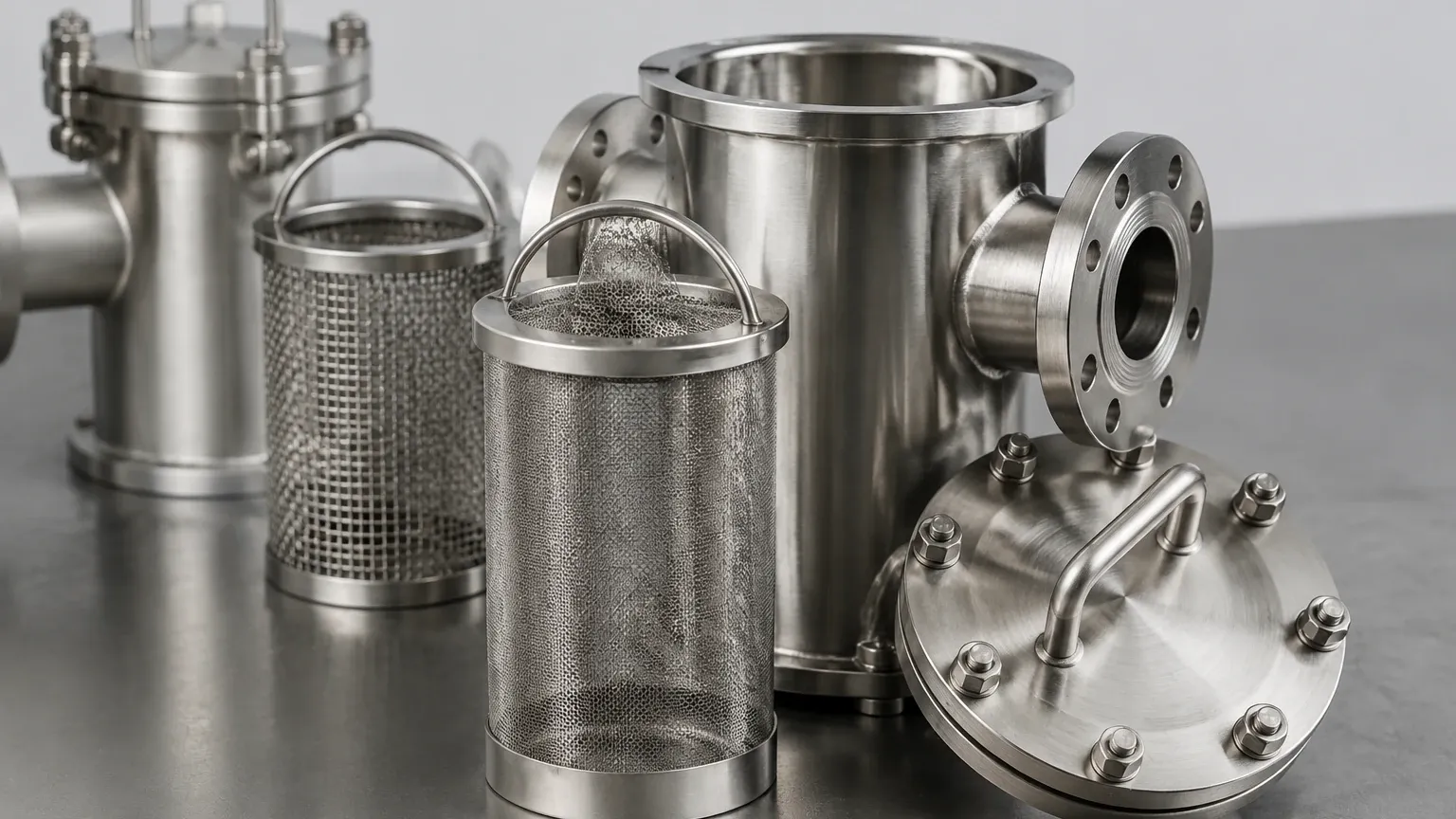
Customization and OEM Capabilities
Standardized PDFs provide a baseline, but many industrial environments require bespoke solutions. Customization often involves altering the standard dimensions to solve specific engineering challenges:
1. Offset Connections: In some cases, the inlet and outlet may need to be at different heights to accommodate existing piping offsets.
2. Extended Housings: To increase the dirt-holding capacity without changing the pipe size, the housing can be elongated to fit a deeper basket.
3. Specialty Coatings and Finishes: For food and beverage applications, the internal and external dimensions might be affected by sanitary polishing or specialized coatings required for hygiene compliance.
As a professional manufacturer, Kaifil works closely with global customers to develop Strainers & Baskets that meet these specific application requirements. Our engineering team provides detailed dimensional drawings that serve as the authoritative reference for your project's installation phase.
Maintenance and Total Cost of Ownership (TCO)
Selecting a strainer based solely on the initial purchase price and standard dimensions can lead to higher long-term costs. Engineers must consider the ease of maintenance, which is directly tied to the unit's design dimensions.
* Cover Design: Quick-opening covers (such as swing-bolt or clamp-style) may change the Center-to-Top dimension compared to a standard bolted cover but significantly reduce downtime during cleaning.
* Basket Weight: For very large strainers, the dimensions of the basket may require the use of a davit arm or crane. The PDF should indicate the dry weight and the weight of the basket when full of debris to help plan for safety equipment.
* Seal Compatibility: The dimensions of the O-ring or gasket grooves must be precisely maintained to prevent leaks, especially in high-temperature or hazardous chemical applications.
Conclusion: Confirming Facts Before Procurement
Before finalizing a purchase or integrating a design into a CAD model, technical professionals should confirm several key points with their supplier:
1. Verify the Revision Date: Ensure the basket strainer dimensions pdf is the most current version, as manufacturers may update designs for improved performance.
2. Confirm Compliance: Does the dimensional data align with local and international standards (ASME, PED, etc.) required for your specific region?
3. Request 3D Models: While a PDF is excellent for quick reference, many modern engineering workflows require STEP or IGES files for accurate 3D spatial coordination.
4. Evaluate Customization Needs: If the standard dimensions do not fit your envelope, ask the manufacturer about OEM capabilities to modify the housing or basket design.
Kaifil provides reliable, high-performance filtration components tailored to demanding industrial environments. By focusing on precision manufacturing and technical expertise, we ensure that every strainer and basket we produce meets the exact dimensional and performance specifications required by our clients in the chemical, pharmaceutical, and water treatment sectors.
For detailed specifications, technical drawings, or to discuss a customized filtration solution for your next project, explore our full range of Strainers & Baskets and connect with our engineering team for expert selection advice.
