


Strainer Basket for 5 Gallon Bucket
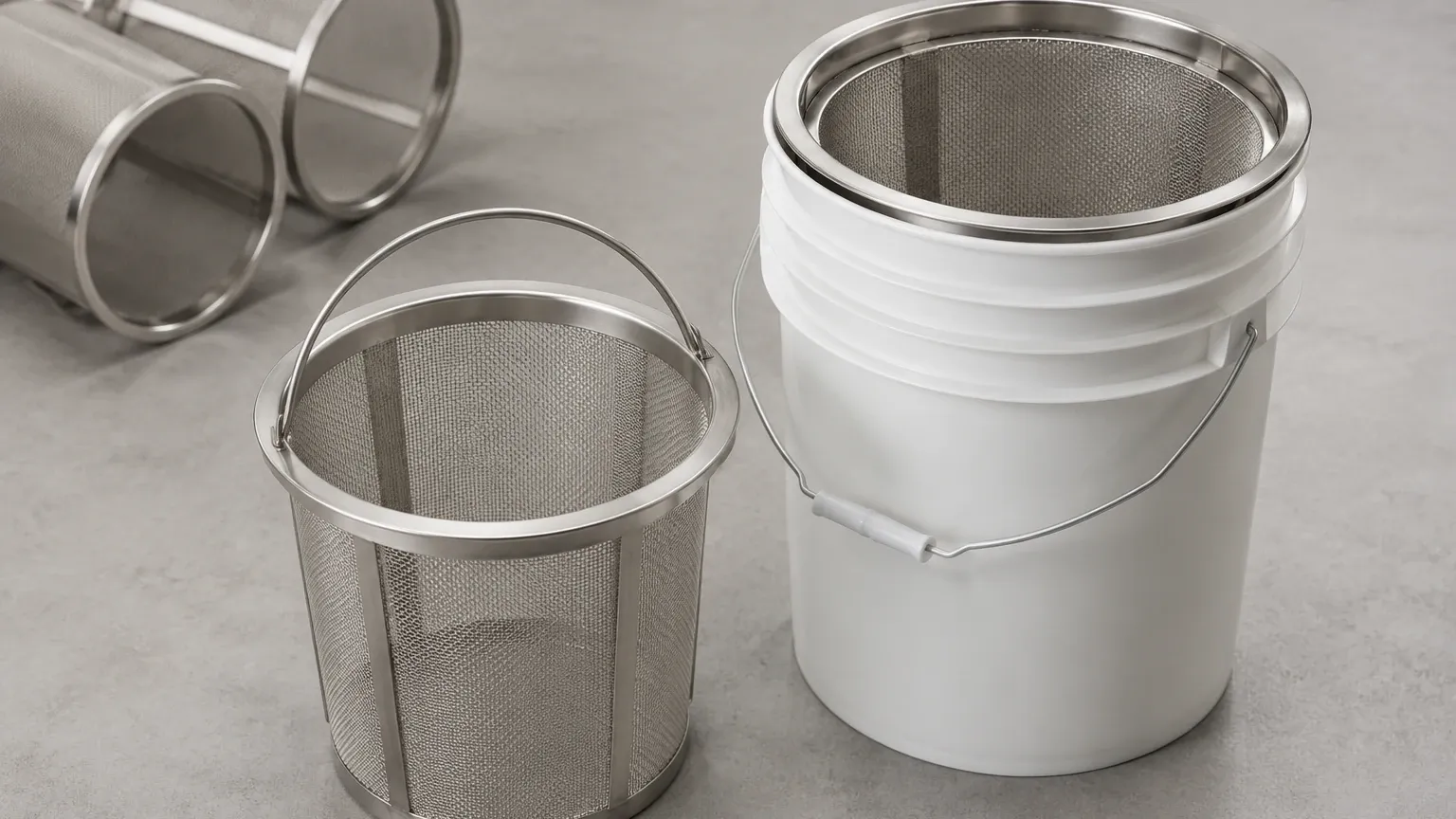
In industrial batch processing, the 5-gallon bucket remains a ubiquitous vessel for transporting, mixing, and storing liquids. However, ensuring the purity of the contents within these containers requires specialized filtration hardware. A high-quality strainer basket for 5 gallon bucket applications is not merely a peripheral accessory; it is a critical component designed to protect downstream equipment, ensure product consistency, and facilitate efficient material handling.
For engineers and procurement professionals, selecting the right filtration insert involves understanding the intersection of material science, fluid dynamics, and mechanical design. While plastic or nylon alternatives exist for light-duty consumer use, industrial environments demand the durability and precision of stainless steel Strainers & Baskets to withstand corrosive chemicals, high temperatures, and rigorous cleaning cycles.
Engineering Fundamentals of Bucket Strainers
The primary function of a strainer basket for 5 gallon bucket use is the removal of oversized particles from a liquid stream via mechanical straining. Unlike depth filtration, which traps particles within a thick medium, these baskets utilize surface filtration. This allows for easier cleaning and reuse, which is a significant factor in reducing the total cost of ownership in industrial settings.
Dimensional Precision and Fit
Standard 5-gallon buckets typically feature an inner top diameter of approximately 11.25 to 11.8 inches. An industrial-grade strainer must be engineered with a precise flange or rim that rests securely on the bucket's edge. If the fit is too loose, the basket may slip under the weight of the fluid or during agitation; if it is too tight, it becomes difficult to remove for cleaning. Engineering considerations for the rim include:
* Flange Width: A wider flange provides better stability and can accommodate variations in bucket wall thickness.
* Reinforcement: For heavy-duty applications, the rim is often reinforced with a solid stainless steel ring to prevent deformation under heavy loads.
* Depth Ratios: The depth of the basket determines the available filtration surface area. A deeper basket allows for higher flow rates and longer intervals between cleaning but must leave enough clearance at the bottom of the bucket to prevent the filtered solids from being re-entrained in the liquid.
Material Selection: Why Stainless Steel Dominates
When specifying a strainer basket for 5 gallon bucket tasks, material selection is the most influential factor in performance and longevity. Industrial applications generally bypass polymers in favor of stainless steel alloys, specifically AISI 304 and AISI 316.
AISI 304 Stainless Steel
Grade 304 is the standard choice for most general-purpose industrial applications. It offers excellent corrosion resistance to a wide range of chemicals and is highly durable. It is commonly used in paint processing, lubricant filtration, and general manufacturing where extreme chemical resistance is not required.
AISI 316 Stainless Steel
For environments involving high salt concentrations, organic acids, or pharmaceutical-grade requirements, AISI 316 is the preferred material. The addition of molybdenum enhances its resistance to pitting and crevice corrosion. In food and beverage or pharmaceutical batching, 316 stainless steel is often mandatory to meet hygiene and safety standards.
Comparison with Synthetic Media
While nylon or polyester mesh bags are inexpensive, they are prone to tearing, stretching, and chemical degradation. A stainless steel strainer basket provides a rigid structure that maintains its shape and filtration accuracy even under the pressure of high-viscosity fluids. Furthermore, metal baskets are easily sterilized via autoclaving or high-pressure steam, which is critical in sterile processing environments.
Filtration Accuracy and Mesh Specifications
The performance of a strainer basket for 5 gallon bucket applications is measured by its ability to capture specific particle sizes. This is determined by the mesh count or micron rating of the stainless steel wire cloth used in the basket's construction.
Understanding Mesh vs. Micron
* Mesh Count: Refers to the number of openings per linear inch. A higher mesh count indicates a finer filter. For example, a 100-mesh screen has 100 openings per inch.
* Micron Rating: Refers to the actual size of the openings. A 100-mesh screen typically correlates to approximately 149 microns. Engineers must select the micron rating based on the smallest particle that needs to be removed without causing excessive flow restriction.
Perforated Metal vs. Wire Mesh
Industrial baskets often utilize a dual-layer design. The outer structure may consist of perforated stainless steel to provide mechanical strength, while an inner lining of fine wire mesh performs the actual filtration. This "supported mesh" design is essential when filtering dense or viscous liquids that would otherwise burst a standalone mesh screen.
Flow Dynamics and Pressure Considerations
In most 5-gallon bucket applications, filtration is gravity-fed. However, the viscosity of the fluid and the percentage of solids can significantly impact the flow rate. When designing or selecting a strainer basket, engineers must consider the "open area" percentage.
Open Area Calculation
The open area is the ratio of the total area of the holes to the total area of the mesh or perforated sheet. A higher open area results in a lower pressure drop and higher flow rates. However, increasing the open area often requires thinner wires, which can compromise the structural integrity of the basket. Finding the balance between flow efficiency and durability is a hallmark of professional Strainers & Baskets manufacturing.
Viscosity Management
For high-viscosity fluids like resins, heavy oils, or syrups, a standard gravity-fed strainer may be too slow. In these cases, the basket design might include a larger surface area (deeper pleats or larger diameters) to compensate for the slow movement of the fluid through the mesh.
Key Applications in Industrial Sectors
The versatility of the strainer basket for 5 gallon bucket use makes it a staple across various industries. Each sector has unique requirements for filtration accuracy and material compatibility.
Chemical and Petrochemical
In chemical processing, these strainers are used to remove catalysts, undissolved salts, or debris from raw materials before they are introduced into larger reactors. The chemical compatibility of the stainless steel ensures that the filter does not leach contaminants into the batch.
Food and Beverage
Batch-scale food production utilizes bucket strainers for filtering juices, oils, and honey. These baskets must be designed with "sanitary" features, such as smooth welds and polished surfaces, to prevent bacterial growth in crevices. Electropolishing is often applied to the stainless steel to achieve a mirror-like finish that is easy to sanitize.
Paint and Coatings
One of the most common uses for a strainer basket for 5 gallon bucket systems is in the paint industry. It removes skins, coagulated resins, and foreign particles that could clog spray nozzles or ruin the finish of a coating. Typically, a 60 to 100 mesh is used for base coats, while finer meshes are used for clear coats and lacquers.
Pharmaceuticals
In pharmaceutical manufacturing, precision is paramount. Strainers are used to recover expensive solids or to ensure that liquid intermediates are free of particulate matter. The traceability of the stainless steel material and the accuracy of the micron rating are critical for regulatory compliance.
Maintenance, Cleaning, and Replacement Cycles
One of the primary advantages of a stainless steel strainer basket for 5 gallon bucket use is its reusability. However, improper maintenance can lead to "blinding"—a condition where particles become permanently lodged in the mesh, reducing the effective filtration area.
Cleaning Protocols
* Backwashing: Directing a high-pressure stream of water or solvent from the outside of the basket inward to dislodge trapped particles.
* Ultrasonic Cleaning: For very fine meshes (200 mesh and above), ultrasonic baths are highly effective at removing microscopic debris without damaging the wire cloth.
* Chemical Soaking: Using compatible solvents to dissolve resins or oils that have hardened on the mesh.
Identifying the Need for Replacement
While durable, stainless steel strainers are not infinite. Engineers should inspect baskets regularly for:
* Mesh Distortion: Stretching or sagging of the wire cloth, which changes the micron rating.
* Broken Wires: Even a single broken wire can allow oversized particles to pass through, compromising the entire batch.
* Corrosion: Pitting or discoloration, especially in the weld zones, indicates that the material is being attacked by the process fluid.
Customization and OEM Solutions
Off-the-shelf strainers often fail to meet the specific needs of specialized industrial processes. Customization allows for the optimization of the strainer basket for 5 gallon bucket applications to match exact operational parameters.
Professional manufacturers like Kaifil provide OEM services that include:
* Custom Micron Ratings: Engineering mesh combinations that are not available in standard retail products.
* Reinforced Handles: Adding heavy-duty handles for easier lifting of baskets filled with heavy solids.
* Specialty Coatings: Applying PTFE or other non-stick coatings to facilitate the removal of sticky or tacky materials.
* Multi-Stage Filtration: Designing nested baskets where a coarse outer basket protects a fine inner mesh, extending the time between cleanings.
Conclusion: Making an Informed Procurement Decision
Selecting a strainer basket for 5 gallon bucket applications requires a move away from "commodity" thinking toward an engineering-focused approach. By prioritizing high-grade stainless steel, precise mesh ratings, and robust structural design, facilities can significantly improve their process reliability and product quality.
When evaluating suppliers for Strainers & Baskets, it is essential to confirm material certifications, welding standards, and the manufacturer's ability to provide customized solutions. A well-engineered strainer is an investment in process stability, reducing the risks of equipment downtime and batch contamination in demanding industrial environments.
