


Basket Strainer Grease Trap
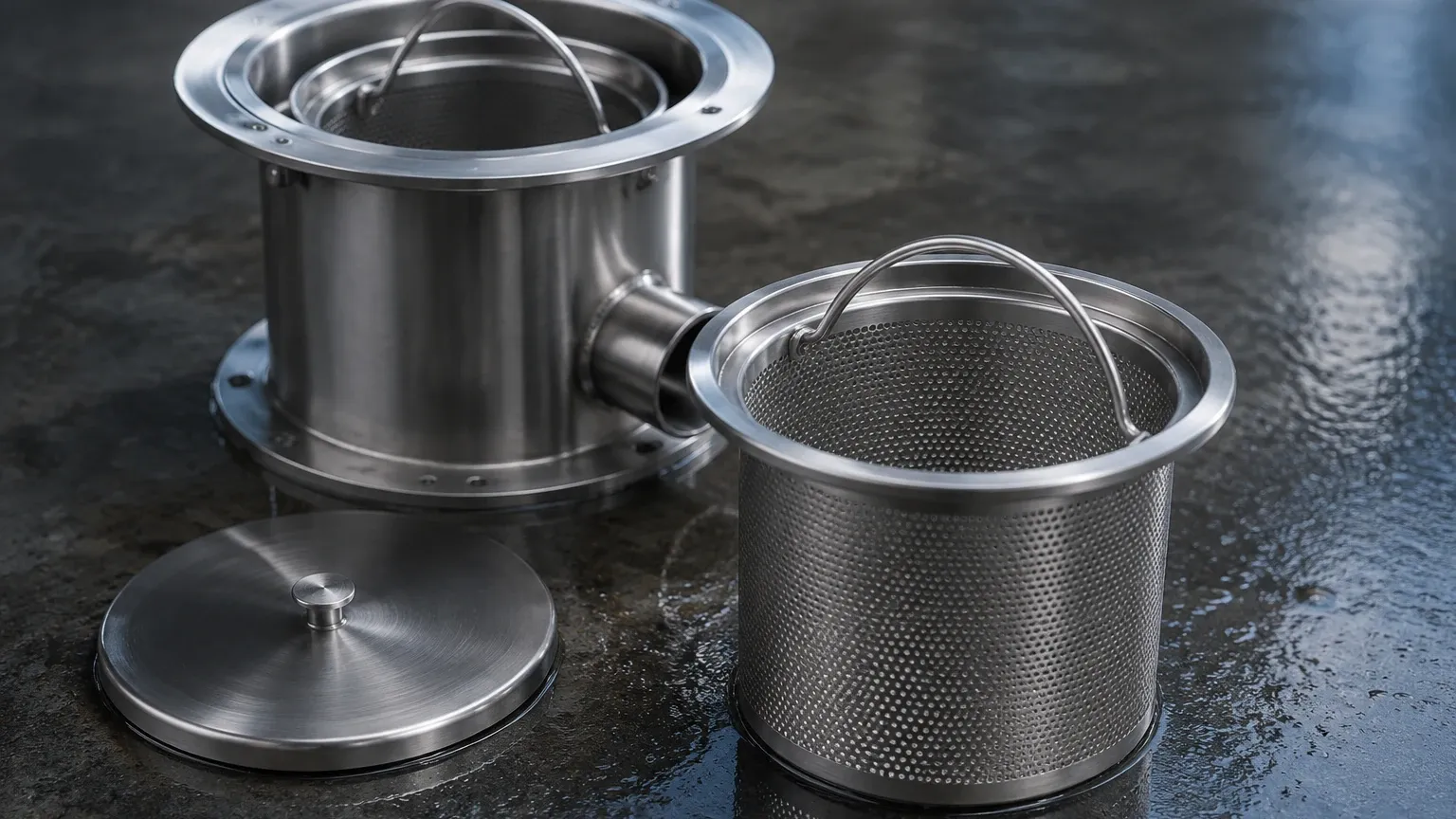
In industrial and commercial wastewater management, the efficient separation of solids from liquid waste is a critical prerequisite for protecting downstream plumbing and treatment systems. A basket strainer grease trap configuration serves as the primary mechanical barrier in this process. By capturing food particles, debris, and larger organic solids before they enter the main separation chamber of a grease interceptor, these components prevent clogs, reduce maintenance frequency, and ensure the longevity of the entire filtration assembly. For engineers and facility managers, selecting the correct basket strainer is not merely a matter of sizing but involves a detailed understanding of material science, flow dynamics, and mechanical durability.
The Role of Basket Strainers in Grease Management Systems
A grease trap, or grease interceptor, operates on the principle of gravity separation. Fats, oils, and grease (FOG) are lighter than water and rise to the surface, while heavier solids sink to the bottom. However, the presence of large solid waste can disrupt this process. Solids occupy valuable volume within the trap, reducing the retention time necessary for effective grease separation. Furthermore, organic solids can decompose, leading to foul odors and the production of corrosive acids.
The integration of Strainers & Baskets at the inlet or within the primary compartment of the grease trap mitigates these issues. By providing a high-surface-area mechanical filter, the basket captures solids while allowing water and liquefied grease to pass through. This initial stage of filtration is essential for maintaining the hydraulic efficiency of the system. Without a robust basket strainer grease trap setup, the accumulation of solids can lead to frequent backups, costly hydro-jetting of pipes, and potential regulatory fines for non-compliance with local wastewater standards.
Engineering Considerations: Material Selection and Durability
Industrial environments demand materials that can withstand constant exposure to moisture, fluctuating temperatures, and chemical cleaning agents. At Kaifil, the emphasis is placed on high-grade stainless steel for the construction of filtration components. The choice between Stainless Steel 304 and 316 is often the first technical decision an engineer must make when specifying a basket strainer for grease management.
Stainless Steel 304 vs. 316
Stainless Steel 304 is the standard choice for most commercial kitchen and light industrial applications. It offers excellent corrosion resistance and structural integrity. However, in environments where the wastewater contains high concentrations of chlorides or where aggressive chemical degreasers are used, Stainless Steel 316 is preferred. The addition of molybdenum in 316 stainless steel provides superior resistance to pitting and crevice corrosion, which is vital for long-term performance in harsh industrial effluent.
Structural Integrity and Load Bearing
A basket strainer grease trap is often subjected to significant weight from accumulated solids and the force of high-volume water flow. Engineering the basket requires a balance between the percentage of open area (for flow efficiency) and the structural thickness of the metal. Precision welding and reinforced rims are necessary to prevent the basket from deforming under load or during the manual extraction process for cleaning.
Design Parameters for Optimal Flow and Filtration
The performance of a basket strainer is defined by its ability to capture specific particle sizes without causing excessive pressure drop or flow restriction. When designing or selecting a basket for a grease trap, several geometric and technical factors must be evaluated.
Perforation and Mesh Sizes
The filtration media of the basket can consist of perforated plate, woven wire mesh, or a combination of both. Perforated plates provide high mechanical strength and are suitable for capturing large debris. For applications requiring finer filtration—such as capturing coffee grounds or small vegetable fragments—a secondary lining of stainless steel wire mesh can be integrated. The hole diameter and the pitch (the distance between holes) determine the "open area" percentage. A higher open area reduces the frequency of cleaning but may compromise the structural strength if not engineered correctly.
Basket Geometry and Capacity
The volume of the basket must be proportional to the expected solids loading of the facility. In high-volume industrial food processing, a deep-draw basket design may be required to maximize the time between maintenance cycles. Additionally, the handle design is a critical ergonomic consideration. Handles must be robust enough to support the weight of a full basket and designed to allow for easy removal even when submerged in greasy water.
Operational Maintenance and Replacement Cycles
No filtration system is "set and forget." The efficiency of a basket strainer grease trap is directly tied to its maintenance schedule. A clogged basket leads to reduced flow rates, which can cause upstream flooding. Conversely, a damaged basket allows solids to bypass the trap, leading to the very clogs the system was designed to prevent.
Cleaning Protocols
In most commercial settings, baskets should be inspected and emptied daily. In industrial processing, this may occur multiple times per shift. Because Kaifil utilizes high-quality stainless steel, these baskets can be cleaned using high-pressure water or steam without risk of degradation. It is essential to inspect the mesh or perforations for signs of wear or "blinding" (permanent clogging of the openings) during each cleaning cycle.
Identifying the Need for Replacement
While stainless steel baskets are designed for longevity, they are considered wear parts in a high-intensity environment. Signs that a replacement is necessary include:
* Deformation: If the basket no longer sits flush within its housing, solids can bypass the filter.
* Corrosion: Any signs of rust or thinning of the metal indicate that the material grade is insufficient for the chemical environment.
* Broken Welds: Structural failure at the seams or handle attachments poses a safety risk and compromises filtration.
Customization and OEM Solutions for Industrial Applications
Standard off-the-shelf strainers often fail to meet the specific requirements of complex industrial grease management systems. Customization is frequently required to accommodate unique flow rates, specific housing dimensions, or specialized filtration needs. As a professional manufacturer, Kaifil provides OEM services to develop bespoke filtration components that integrate seamlessly into existing infrastructure.
Tailored Dimensions
Industrial grease interceptors come in various shapes and sizes. A custom-fabricated basket ensures a precision fit, which is vital for preventing bypass. Engineers can specify the exact diameter, depth, and flange configuration required for their specific grease trap model.
Specialized Filtration Media
Depending on the nature of the solids being processed, the basket can be engineered with varying layers of wire mesh. For example, a multi-stage basket might feature a coarse outer perforated shell for strength and a fine inner mesh for precision filtration. This "dual-stage" approach is highly effective in protecting downstream pumps and sensitive sensors in automated grease recovery devices.
Technical Verification Before Procurement
Before finalizing a purchase for a basket strainer grease trap, procurement teams and engineers should confirm several technical details to ensure the product is fit for purpose. This due diligence reduces the total cost of ownership by preventing premature failures and operational downtime.
1. Chemical Compatibility: Confirm that the stainless steel grade (304 or 316) is compatible with the pH levels of the effluent and the cleaning chemicals used on-site.
2. Flow Rate Requirements: Ensure the basket's open area can handle the peak flow rate of the system without causing backup.
3. Micron/Perforation Rating: Define the smallest particle size that needs to be captured to protect downstream components.
4. Mechanical Interface: Verify the dimensions of the seating ledge or housing where the basket will rest to ensure a bypass-free seal.
Conclusion: The Value of Precision Filtration
The basket strainer is a relatively small component of an industrial grease management system, but its role in operational reliability is significant. By effectively capturing solids at the point of entry, a high-quality basket strainer grease trap setup protects the integrity of the grease interceptor, reduces maintenance costs, and ensures compliance with environmental regulations. Investing in precision-engineered stainless steel components from a specialized manufacturer like Kaifil ensures that these critical barriers perform reliably in the most demanding industrial environments.
For more information on technical specifications or to discuss custom filtration designs, engineers and purchasing managers are encouraged to Review product options and application support to find the optimal solution for their specific industrial needs.
