


Basket Strainer Grainger
In the complex landscape of industrial fluid handling, the protection of downstream assets—such as high-pressure pumps, sensitive control valves, and precision flow meters—is a fundamental operational requirement. For many maintenance, repair, and operations (MRO) professionals, a search for a basket strainer grainger serves as a common starting point for identifying standard replacement components or immediate off-the-shelf solutions. However, for engineers tasked with designing new systems or optimizing existing processes in the chemical, pharmaceutical, or food and beverage sectors, the selection process requires a deeper technical evaluation that transcends simple catalog availability.
Understanding the engineering nuances of Strainers & Baskets is essential for ensuring system longevity, maintaining product purity, and preventing costly unscheduled downtime. This guide explores the technical parameters, material science, and selection criteria that bridge the gap between general procurement and high-performance industrial filtration solutions.
Fundamental Mechanics and Design of Basket Strainers
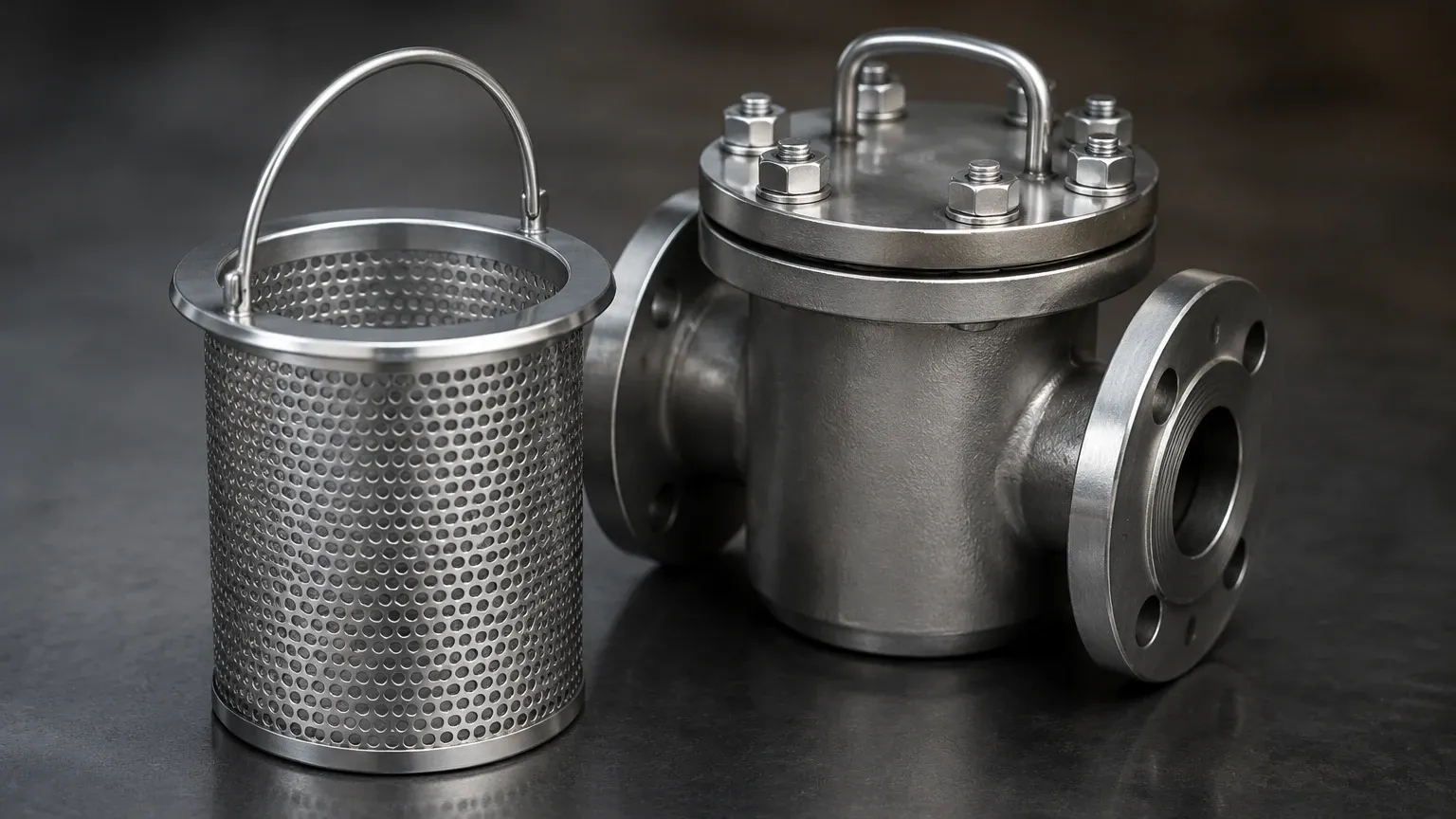
A basket strainer is a closed vessel featuring a removable, cleanable screen element (the basket) designed to intercept and remove foreign particles from a process fluid. Unlike Y-strainers, which are typically utilized for smaller amounts of debris in steam or gas lines where space is at a premium, basket strainers are the preferred choice for liquid applications characterized by high flow rates and significant solids loading.
The primary advantage of the basket design is its internal volume. Because the basket is oriented vertically or in a "bucket" configuration, it offers a much larger surface area for filtration than a standard Y-strainer. This increased surface area allows for a higher dirt-holding capacity, which directly translates to longer intervals between cleaning cycles. When an engineer searches for a basket strainer grainger option, they are often looking for a standard Simplex or Duplex configuration. While these are effective for general-purpose utility water or low-stakes applications, critical industrial processes often demand custom-engineered internal geometries to manage specific flow velocities and particle characteristics.
Evaluating Material Selection for Industrial Durability
Material integrity is non-negotiable in high-stakes industrial environments. While a standard basket strainer grainger search might highlight cast iron or carbon steel housings for general plumbing, industrial-grade filtration often necessitates more robust alloys to combat corrosion and erosion.
Stainless Steel Grades (304 and 316L)
Most high-performance Strainers & Baskets are manufactured from 304 or 316L stainless steel. 304 stainless steel provides excellent resistance to atmospheric corrosion and many organic and inorganic chemicals. However, for environments involving chlorides or high-salinity fluids, 316L is the industry standard due to its molybdenum content, which provides superior pitting resistance. In pharmaceutical and food applications, 316L is also preferred for its ability to withstand rigorous Clean-in-Place (CIP) chemicals and high-temperature sterilization.
Specialized Alloys for Corrosive Media
In chemical processing plants dealing with aggressive acids or bases, even standard stainless steels may fail prematurely. In these instances, engineers must specify specialized materials such as Hastelloy, Monel, or Titanium. These materials ensure that the strainer housing and the internal mesh do not become a source of contamination through metallic leaching or structural degradation.
Critical Engineering Specifications: Beyond Pipe Size
Selecting the correct strainer involves a detailed analysis of the fluid dynamics within the system. Simply matching the pipe size (e.g., a 4-inch strainer for a 4-inch line) is insufficient for professional engineering standards. The following parameters must be confirmed:
1. The Open Area Ratio (OAR)
The Open Area Ratio is the ratio of the total open area of the strainer basket to the internal cross-sectional area of the inlet pipe. A common engineering benchmark is an OAR of at least 6:1. For highly viscous fluids like oils or resins, an OAR of 8:1 or 10:1 may be required. A higher OAR ensures that even as the basket begins to collect debris, the pressure drop remains within acceptable limits, preventing pump cavitation and system strain.
2. Filtration Accuracy and Mesh Support
The internal element can consist of a perforated metal plate for coarse filtration or a fine wire mesh for precision tasks. In many industrial designs, a fine mesh (ranging from 20 to 400 mesh) is lined inside a heavier perforated metal basket. This "dual-layer" construction is vital; the perforated plate provides the structural rigidity to withstand the differential pressure, while the mesh provides the necessary filtration accuracy. Without this support, fine mesh can easily collapse or tear under the force of the fluid flow.
3. Clean and Dirty Pressure Drop (ΔP)
Engineers must calculate the expected pressure drop across the strainer in both clean and partially clogged states. If the initial pressure drop is too high, it reduces the overall efficiency of the system. Conversely, if the system cannot tolerate a significant pressure increase as the basket fills, a Duplex strainer (which allows for cleaning without stopping the flow) may be necessary instead of a Simplex model.
Operational Considerations: Maintenance and Total Cost of Ownership
When evaluating the procurement of Strainers & Baskets, the initial purchase price is only one component of the Total Cost of Ownership (TCO). Operational efficiency is largely determined by how easily the unit can be maintained.
Quick-Opening Covers
Standard industrial strainers often feature bolted covers, which require tools and significant time to remove. In high-volume production environments, this downtime is costly. Options such as swing-bolt closures, clamp covers, or threaded caps allow for rapid access to the basket. This reduces the labor cost associated with maintenance and ensures that the system returns to operation as quickly as possible.
Sealing Mechanisms
The integrity of the seal between the basket and the housing is critical. If the seal is poor, fluid will "bypass" the filtration media, allowing contaminants to move downstream. High-quality strainers utilize precision-machined seats and high-performance O-rings (made of Viton, EPDM, or PTFE) to ensure that 100% of the fluid passes through the basket. This is a level of detail that may be overlooked when purchasing a generic basket strainer grainger component without reviewing the specific seal compatibility for the process fluid.
When to Choose Custom OEM Solutions over Standard Distribution
While industrial distributors provide essential access to standardized parts, there are several scenarios where a custom-manufactured solution from a specialist like Kaifil is required:
* Non-Standard Dimensions: In retrofit projects, the available space may not accommodate the face-to-face dimensions of a standard cast strainer. Custom-fabricated strainers can be built to fit exact piping footprints.
* High-Pressure Ratings: Standard cast strainers often have pressure limits dictated by the casting thickness. Fabricated strainers can be engineered to meet specific ASME Section VIII pressure vessel codes for high-pressure applications.
* Integrated Features: Custom solutions allow for the integration of differential pressure taps, vent valves, and drain ports at specific orientations to suit the facility's layout.
* Sanitary Requirements: For the food, beverage, and pharmaceutical industries, strainers must have smooth internal surfaces (often measured by Ra values) and be free of crevices where bacteria can grow. Custom-fabricated stainless steel strainers can be electropolished to meet these stringent sanitary standards.
Application-Specific Requirements in High-Stakes Industries
Different industries impose unique demands on Strainers & Baskets, necessitating a tailored approach to selection:
* Chemical Processing: Focuses on chemical compatibility and the prevention of hazardous leaks. High-alloy materials and robust sealing are the priorities.
* Food and Beverage: Priorities include ease of cleaning and compliance with FDA or 3A standards. The design must ensure no "dead zones" exist where product can stagnate.
* Water Treatment: Often involves high flow rates and the removal of abrasive sand or scale. Durability of the mesh against erosion is key.
* Hydraulic Systems: Focuses on removing fine metallic particulates that can damage high-precision pumps. Magnetic inserts are often added to the basket to capture ferrous debris that might pass through a standard mesh.
Conclusion: Strategic Procurement for Industrial Reliability
Whether an organization is sourcing a quick replacement via a basket strainer grainger search or specifying a complex filtration system for a new facility, the focus must remain on technical validation. A basket strainer is more than a simple plumbing fixture; it is a critical safeguard for the entire process infrastructure.
By prioritizing factors such as the Open Area Ratio, material metallurgy, and ease of maintenance, engineers can ensure that their Strainers & Baskets deliver consistent performance over a long service life. For applications that demand precision beyond standard catalog specifications, partnering with a manufacturer capable of providing custom OEM designs ensures that the filtration solution is perfectly matched to the operational challenges of the environment. Ultimately, an informed selection process reduces risk, optimizes flow efficiency, and protects the bottom line from the high costs of equipment failure and process contamination.
