


Industrial Engineering Guide: Transitioning from Retail Metal Mesh to Precision Wire Mesh Filter Cylinders & Tubes
In industrial maintenance and engineering, the procurement of filtration components often begins with a search for immediate availability. For basic ventilation or residential-grade screening, a search for a metal mesh filter home depot might yield a temporary fix. However, in professional B2B environments—such as chemical processing, pharmaceutical manufacturing, and high-pressure hydraulic systems—the performance requirements far exceed the specifications of retail-grade hardware.
For engineers and procurement specialists, understanding the technical boundary between consumer-grade mesh and industrial Wire Mesh Filter Cylinders & Tubes is critical for ensuring process safety, equipment longevity, and filtration efficiency. This guide examines the engineering considerations, material properties, and selection criteria necessary for specifying high-performance industrial filtration components.
1. Material Integrity: Beyond Basic Stainless Steel
When evaluating a "metal mesh filter home depot" option, the material is often listed generically as "stainless steel" or "galvanized steel." In industrial applications, generic labeling is insufficient. The chemical composition of the alloy directly impacts the filter's resistance to corrosion and its structural stability under thermal stress.
Grade 304 vs. 316L Stainless Steel
Most retail-grade filters utilize Grade 304 stainless steel, which is suitable for standard atmospheric conditions. However, industrial environments often involve chloride-rich environments or acidic process fluids. In these cases, Grade 316L (low carbon) is the engineering standard. The addition of molybdenum in 316L provides superior resistance to pitting and crevice corrosion, which is essential for long-term immersion in industrial solvents or salt-water applications.
Specialty Alloys
For extreme conditions, such as high-temperature exhaust filtration or highly corrosive chemical catalysts, standard stainless steel may fail. Industrial manufacturers like Kaifil provide customized solutions using Monel, Inconel, or Hastelloy. These materials maintain their mechanical properties at temperatures exceeding 600°C, where a standard retail filter would suffer from oxidation and structural collapse.
2. Structural Engineering of Wire Mesh Filter Cylinders & Tubes
The primary difference between a consumer-grade screen and an industrial filter cylinder lies in the structural reinforcement and the precision of the weave. Industrial filtration requires the component to withstand significant differential pressure (ΔP) without deforming.
Weave Types and Filtration Precision
Industrial wire mesh is categorized by its weave pattern, which determines the pore size and flow characteristics:
* Plain Weave: The most common type, offering a straightforward aperture for high-flow, low-pressure applications.
* Twill Weave: Allows for a heavier wire diameter in a given mesh count, increasing the strength of the filter.
* Dutch Weave: Utilizes a higher density of smaller diameter wires in the shute direction, creating a "tortuous path" for particles. This is ideal for fine filtration (down to 5-10 microns) where high pressure is present.
Reinforcement Layers
Unlike a simple retail mesh, industrial Wire Mesh Filter Cylinders & Tubes often feature multi-layer constructions. This may include a fine filtration layer protected by a coarser support mesh on both the upstream and downstream sides. In high-pressure hydraulic systems, these layers are often sintered together—a process of heat and pressure that fuses the wire contact points—to ensure the mesh cannot shift or migrate under flow surges.
3. Performance Metrics: Micron Rating and Flow Dynamics
A common pitfall in searching for a metal mesh filter home depot is the lack of certified micron ratings. In a B2B context, filtration is a science of probability and precision. Engineers must consider the following metrics when selecting a filter cylinder:
Absolute vs. Nominal Filtration
* Nominal Rating: Refers to the ability of the filter to retain a certain percentage (e.g., 90%) of particles of a specific size. Many retail filters are only nominally rated.
* Absolute Rating: Refers to the diameter of the largest hard spherical particle that will pass through the filter under specified test conditions. For critical pharmaceutical or food-grade processes, absolute ratings are mandatory to prevent batch contamination.
Effective Filtration Area (EFA)
The EFA determines the service life and cleaning frequency of the filter. By utilizing pleated designs or specific cylinder diameters, industrial manufacturers maximize the surface area within a compact footprint. A higher EFA results in a lower face velocity, which reduces the rate of particle impingement and extends the time between maintenance cycles.
4. Why "Off-the-Shelf" Solutions Fail in Industrial Systems
While a retail outlet offers convenience, it cannot provide the dimensional accuracy required for industrial housings. A mismatch of even 0.5mm in the diameter of a filter tube can lead to "bypass"—where the fluid takes the path of least resistance around the filter rather than through it.
Custom End Fittings and Sealing
Industrial filter cylinders require specific end-cap configurations to interface with existing machinery. Common configurations include:
* DOE (Double Open End): Requires flat gaskets for sealing.
* SOE (Single Open End): Often features an O-ring (e.g., 222 or 226 style) to ensure a leak-proof bypass-free seal.
* Threaded Connections: NPT or BSP threads for high-pressure screw-in applications.
Retail filters rarely offer these specialized fittings, forcing engineers to use makeshift adapters that introduce potential points of failure into the system.
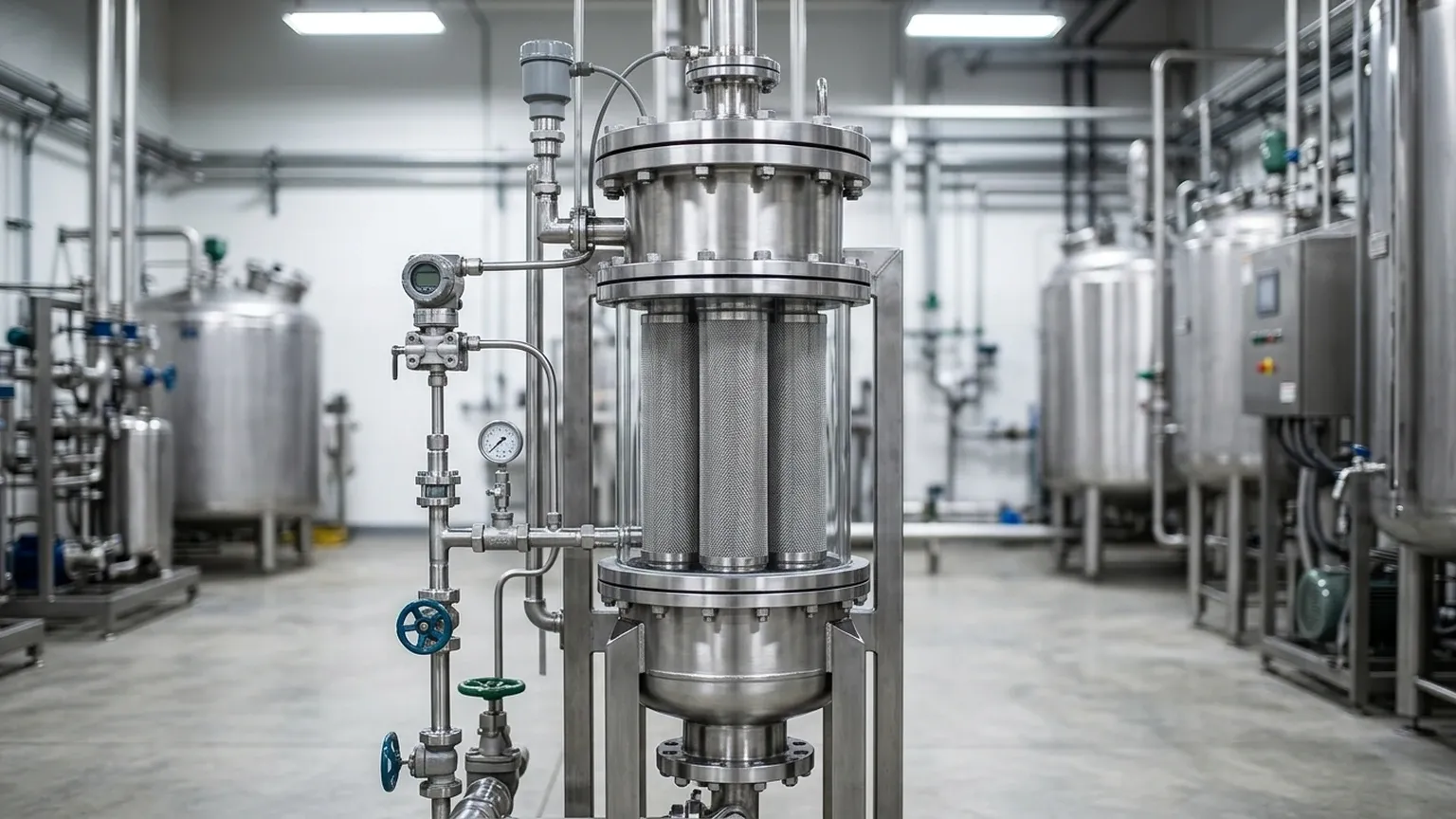
5. Applications Requiring Engineering-Grade Filtration
To illustrate the necessity of professional-grade Wire Mesh Filter Cylinders & Tubes, consider the following demanding sectors:
Chemical and Petrochemical Processing
In these industries, filters are exposed to aggressive solvents and high-velocity flows. A standard metal mesh filter home depot would likely experience rapid corrosion or mechanical fatigue. Industrial cylinders are engineered to handle the specific viscosity of the fluid, ensuring that the pressure drop remains within the pump's operating curve.
Food and Beverage Production
Filtration in the food industry must comply with stringent hygienic standards (such as FDA or 3A). This requires smooth weld seams (often achieved via plasma or TIG welding) and materials that can withstand CIP (Clean-In-Place) procedures involving caustic chemicals and high-pressure steam sterilization.
Hydraulic and Lubrication Systems
Protecting sensitive valves and pumps requires filters that can handle high-viscosity oils and sudden pressure spikes. Sintered wire mesh tubes are preferred here because they offer the highest mechanical strength and can be cleaned and reused multiple times, reducing the total cost of ownership compared to disposable retail alternatives.
6. Total Cost of Ownership (TCO) Analysis
At first glance, a retail metal mesh filter may appear cost-effective. However, a professional TCO analysis usually favors custom-manufactured industrial filters for several reasons:
1. Durability: Industrial stainless steel filters can be ultrasonically cleaned or backwashed, extending their lifespan to several years, whereas retail-grade mesh often requires frequent replacement due to clogging or structural failure.
2. Process Protection: The cost of a single hour of downtime in a manufacturing plant far exceeds the price difference between a retail filter and a precision-engineered cylinder.
3. Efficiency: Higher quality mesh allows for better flow rates, reducing the energy consumption of the pumps required to move fluid through the system.
7. Specifying Your Requirements for Custom Manufacturing
When moving away from a "metal mesh filter home depot" mindset and toward a professional B2B solution, engineers should be prepared to provide the following data to the manufacturer:
* Fluid Characteristics: Temperature, pH level, viscosity, and chemical composition.
* Contaminant Profile: Particle size distribution and the nature of the solids (e.g., hard, slimy, or fibrous).
* Operating Conditions: Maximum operating pressure, allowable pressure drop (ΔP), and flow rate (GPM or L/min).
* Mechanical Interface: Exact outer diameter (OD), inner diameter (ID), total length, and end-cap style.
Conclusion: The Path to Optimized Filtration
While retail hardware stores serve an important role in general maintenance, they are not equipped to support the complex needs of industrial engineering. Selecting the right Wire Mesh Filter Cylinders & Tubes is a strategic decision that impacts the safety and efficiency of an entire production line. By focusing on material science, weave precision, and structural integrity, engineers can move beyond the limitations of generic "metal mesh filter home depot" options and implement solutions that offer long-term reliability.
For those looking to optimize their filtration processes, it is essential to partner with a manufacturer that understands the nuances of industrial applications. We invite you to Review product options and application support to find a solution tailored to your specific engineering requirements.
