


Basket Strainer Jr
In industrial piping and fluid handling systems, the protection of downstream equipment is a critical engineering priority. While large-scale filtration systems handle high-volume primary processing, many applications require localized, compact protection for sensitive components like pumps, spray nozzles, and flow meters. The term "basket strainer jr" typically refers to these smaller-form-factor strainers designed for lower flow rates or space-restricted installations. Despite their smaller size, these components must meet the same rigorous mechanical and chemical resistance standards as their larger counterparts.
For engineers and procurement professionals, selecting the right compact strainer involves more than just matching pipe sizes. It requires a deep understanding of material compatibility, pressure drop (delta P) calculations, and the specific nature of the contaminants being removed. As a specialized manufacturer of Strainers & Baskets, Kaifil provides the technical expertise necessary to integrate these smaller units into complex industrial environments.
Understanding the Engineering of Compact Basket Strainers
The "Jr" designation in the context of industrial strainers usually signifies a compact housing design, often tailored for pipe sizes ranging from 1/2 inch to 2 inches. Unlike standard Y-strainers, which are often used for steam or gas, a basket strainer jr is specifically engineered for liquid applications where a higher dirt-holding capacity is required. The basket design allows for the collection of a larger volume of solids before the pressure drop necessitates cleaning.
Housing and Structural Integrity
In industrial settings, the housing of a basket strainer must withstand both the internal operating pressure and external environmental stressors. For compact units, the housing is typically investment cast or fabricated from high-grade stainless steel. This ensures a pore-free structure that is resistant to cracking under thermal cycling or mechanical vibration.
The Internal Basket Assembly
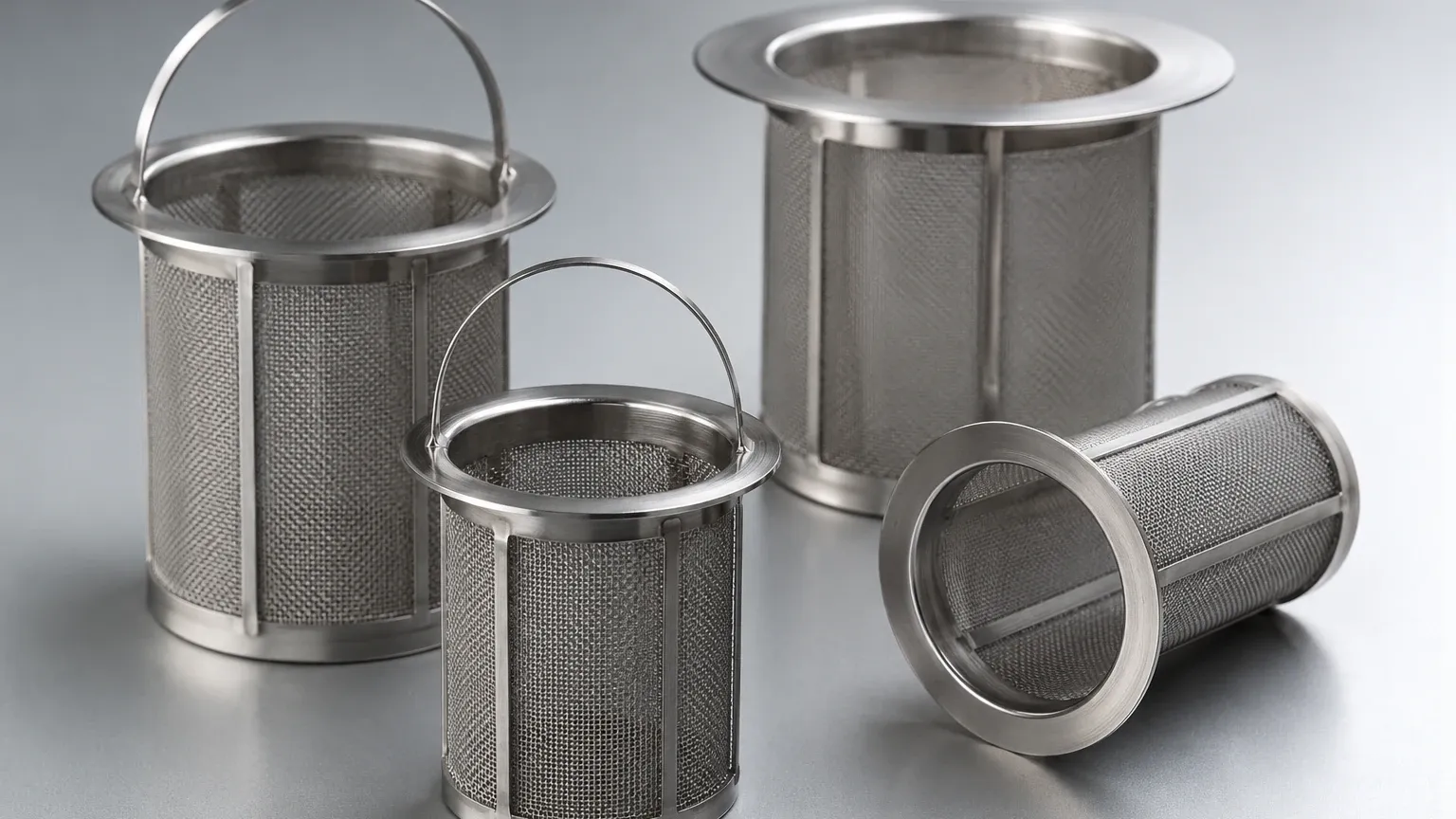
The core of the strainer is the basket itself. In a compact unit, the ratio of the basket's open area to the pipe's cross-sectional area is a key performance indicator. A well-engineered basket strainer jr should ideally offer an open area ratio of at least 6:1. This high ratio ensures that even as the basket begins to fill with debris, the flow remains relatively unimpeded, extending the intervals between manual cleanings.
Material Selection and Chemical Compatibility
Material selection is perhaps the most critical factor in ensuring the longevity of a basket strainer jr. Because these units are frequently used in chemical processing, pharmaceutical manufacturing, and food production, the metallurgy must be precisely matched to the fluid properties.
Stainless Steel Grades: 304 vs. 316
* Type 304 Stainless Steel: Suitable for general industrial applications, water treatment, and some food-grade processes where corrosion risks are moderate.
* Type 316/316L Stainless Steel: The preferred choice for more aggressive environments. The addition of molybdenum provides superior resistance to chlorides and pitting, making it essential for pharmaceutical and marine-adjacent chemical processing.
Gasket and Seal Considerations
The effectiveness of a basket strainer jr also depends on its sealing mechanism. Depending on the fluid temperature and chemical composition, engineers must specify the correct elastomer for the cover gasket. Common options include:
* Buna-N (Nitrile): Good for general water and oil applications.
* EPDM: Excellent for steam and polar solvents, though unsuitable for petroleum-based fluids.
* Viton (FKM): High-temperature resistance and broad chemical compatibility, often used in harsh chemical processing.
* PTFE (Teflon): Used where near-universal chemical inertness is required, though it lacks the elasticity of true elastomers.
Performance Evaluation: Flow Rate and Pressure Drop
One common mistake in selecting a basket strainer jr is undersizing the unit based solely on pipe diameter. Engineers must evaluate the Cv factor (flow coefficient) to determine the pressure drop across the strainer when it is clean.
Calculating Delta P
The pressure drop is influenced by the fluid's viscosity, the specific gravity, the flow rate, and the micron rating of the basket mesh. For high-viscosity liquids, such as heavy oils or syrups, a larger strainer body may be required even if the piping is small, to prevent excessive energy loss and potential cavitation in downstream pumps.
Micron Ratings and Filtration Accuracy
The basket in a basket strainer jr can be lined with fine wire mesh or constructed from perforated plate.
* Perforated Plate: Provides robust mechanical strength for removing large particles (e.g., 1/16" or 1/8" perforations).
* Wire Mesh Liners: Used for finer filtration, ranging from 20 mesh down to 400 mesh (approx. 37 microns). When using fine mesh, the structural support of a perforated metal backup is often necessary to prevent the mesh from collapsing under high differential pressure.
Industrial Applications for Compact Strainers
Compact basket strainers are versatile components found in various specialized sectors. Their small footprint makes them ideal for skid-mounted equipment and modular processing units.
Chemical and Petrochemical Processing
In these industries, a basket strainer jr is often installed before expensive instrumentation or dosing pumps. They protect against "tramp" solids—bits of scale, weld slag, or gasket material—that can migrate through the system during startup or after maintenance.
Food and Beverage Production
For food-grade applications, the strainer must feature smooth internal surfaces and be free of crevices where bacteria can grow. Stainless steel basket strainers are preferred here due to their ability to withstand Clean-in-Place (CIP) chemicals and high-temperature sterilization cycles.
Pharmaceutical Manufacturing
Precision is paramount in pharmaceutical lines. Compact strainers are used to ensure that raw material inputs are free of particulate matter before entering reactors or filling machines. The use of 316L stainless steel with high-polish finishes is standard to meet stringent regulatory requirements.
Installation and Maintenance Best Practices
To ensure the optimal performance of a basket strainer jr, proper installation and a consistent maintenance schedule are required.
Proper Orientation
Basket strainers must be installed in horizontal lines. The "Jr" models often feature a top-entry design, allowing the basket to be lifted out vertically. It is essential to leave enough overhead clearance for the basket to be fully removed for cleaning. If space is extremely tight, engineers might consider a side-entry or quick-opening cover design to facilitate faster servicing.
Monitoring Differential Pressure
Installing pressure gauges upstream and downstream of the strainer is the most effective way to monitor its condition. A significant increase in differential pressure indicates that the basket is reaching its capacity. In automated systems, a differential pressure switch can be used to trigger an alarm or shut down the pump to prevent damage.
Cleaning Procedures
Unlike self-cleaning filters, a basket strainer jr requires manual intervention. The process involves:
1. Isolating the strainer using upstream and downstream valves.
2. Venting the pressure from the housing.
3. Opening the cover and removing the basket.
4. Cleaning the basket via back-flushing or ultrasonic cleaning, depending on the contaminant.
5. Inspecting the gasket for wear and reassembling the unit.
Customization and OEM Solutions
While off-the-shelf units are available, many industrial projects require customized solutions to meet specific engineering constraints. This is where a manufacturer like Kaifil adds value. Customization options for a basket strainer jr include:
* Non-Standard Connections: Flanged (ANSI, DIN, JIS), NPT threaded, or socket weld connections to match existing piping.
* Specialty Coatings: For extremely corrosive environments where even 316 stainless steel may struggle, specialized coatings or exotic alloys can be utilized.
* Magnetic Inserts: For applications involving metal wear particles (common in hydraulic systems), magnetic rods can be added to the basket to capture fine ferrous debris that might otherwise pass through the mesh.
* Jacketed Housings: For fluids that must be maintained at a specific temperature to remain pumpable (like resins or waxes), a steam or hot water jacket can be integrated into the strainer design.
Total Cost of Ownership (TCO) Considerations
When evaluating a basket strainer jr, the initial purchase price is only one component of the total cost. Engineers should also consider:
* Maintenance Labor: How easy is it to access and clean the basket? Features like swing-bolt covers can significantly reduce downtime compared to standard bolted covers.
* Replacement Parts: The availability and cost of replacement baskets and gaskets. Standardizing on common sizes can reduce inventory costs.
* Energy Costs: A poorly designed strainer with a high permanent pressure drop will increase the energy consumption of the system's pumps over the life of the installation.
By selecting a high-quality stainless steel unit from a reputable manufacturer, companies can minimize these long-term costs and ensure reliable system operation.
Conclusion: Selecting the Right Partner
Choosing a basket strainer jr involves balancing technical requirements with operational realities. Whether you are protecting a high-pressure spray system in a chemical plant or ensuring the purity of a beverage line, the quality of the filtration component is paramount.
Kaifil specializes in providing these high-performance, customized filtration solutions. Our expertise in stainless steel fabrication and industrial engineering allows us to support customers from the initial design phase through to production and implementation. For more information on our full range of industrial filtration components, including detailed specifications and customization options, visit our section on Strainers & Baskets. By focusing on durability, precision, and application-specific design, we help engineers achieve efficient and cost-effective filtration performance in the most demanding environments.
