


Basket Strainer Jaman
In industrial fluid handling, the integrity of downstream equipment such as pumps, valves, and heat exchangers depends heavily on the efficiency of primary filtration components. The term basket strainer jaman often appears in procurement and engineering discussions regarding high-durability filtration units designed for rigorous industrial environments. These components serve as the first line of defense, capturing large-scale debris and suspended solids that could otherwise cause mechanical failure or process contamination.
Selecting the correct filtration solution requires a deep understanding of fluid dynamics, material compatibility, and the specific mechanical requirements of the piping system. This guide examines the technical parameters, engineering considerations, and maintenance protocols essential for professionals evaluating Strainers & Baskets for industrial applications.
Understanding the Role of Basket Strainers in Industrial Systems
A basket strainer is a closed vessel with a removable screen or basket that intercepts particles from a flowing liquid. Unlike Y-strainers, which are often used for smaller amounts of debris in high-pressure steam or gas lines, basket strainers are designed for liquid systems where a larger storage capacity for solids is required.
The "basket" design allows for a significantly larger surface area compared to other strainer types. This is a critical engineering advantage because it reduces the frequency of cleaning cycles and minimizes the pressure drop across the unit. In many industrial contexts, particularly those involving high-flow rates or high-viscosity fluids, the basket strainer is the preferred choice for protecting expensive machinery.
The Importance of the Open Area Ratio
One of the most critical metrics in basket strainer engineering is the Open Area Ratio (OAR). This is the ratio between the total open area of the strainer screen and the cross-sectional area of the inlet pipe. A high-quality basket strainer typically maintains an OAR of at least 6:1.
A higher OAR ensures that even as the basket begins to fill with debris, the fluid can still pass through the remaining open mesh with minimal resistance. This prevents sudden spikes in backpressure that could damage pump seals or disrupt process flow. When evaluating a basket strainer jaman specification, engineers must confirm that the OAR meets the specific flow requirements of their system.
Key Technical Specifications for Basket Strainer Jaman Selection
Selecting a basket strainer is not a one-size-fits-all process. It involves a detailed analysis of the fluid properties and the environmental conditions of the installation site.
Material Selection and Corrosion Resistance
The choice of material is perhaps the most significant factor in determining the lifespan of the strainer. Stainless steel is the industry standard for most demanding applications due to its inherent resistance to corrosion and oxidation.
1. 304 Stainless Steel: Suitable for general industrial use, water treatment, and non-corrosive chemical processing. It offers excellent durability and cost-effectiveness.
2. 316/316L Stainless Steel: Contains molybdenum, which provides superior resistance to chlorides and pitting. This is essential for pharmaceutical, food and beverage, and marine applications where sanitation and chemical stability are paramount.
3. Specialty Alloys: In highly aggressive environments, such as those involving concentrated acids or high temperatures, exotic alloys like Monel or Hastelloy may be required to prevent premature failure.
Filtration Accuracy: Mesh vs. Perforation
The internal basket can be constructed using perforated metal, wire mesh, or a combination of both.
* Perforated Baskets: These are used for coarse filtration, typically removing particles larger than 1/32 of an inch. They provide high structural strength and are easy to clean.
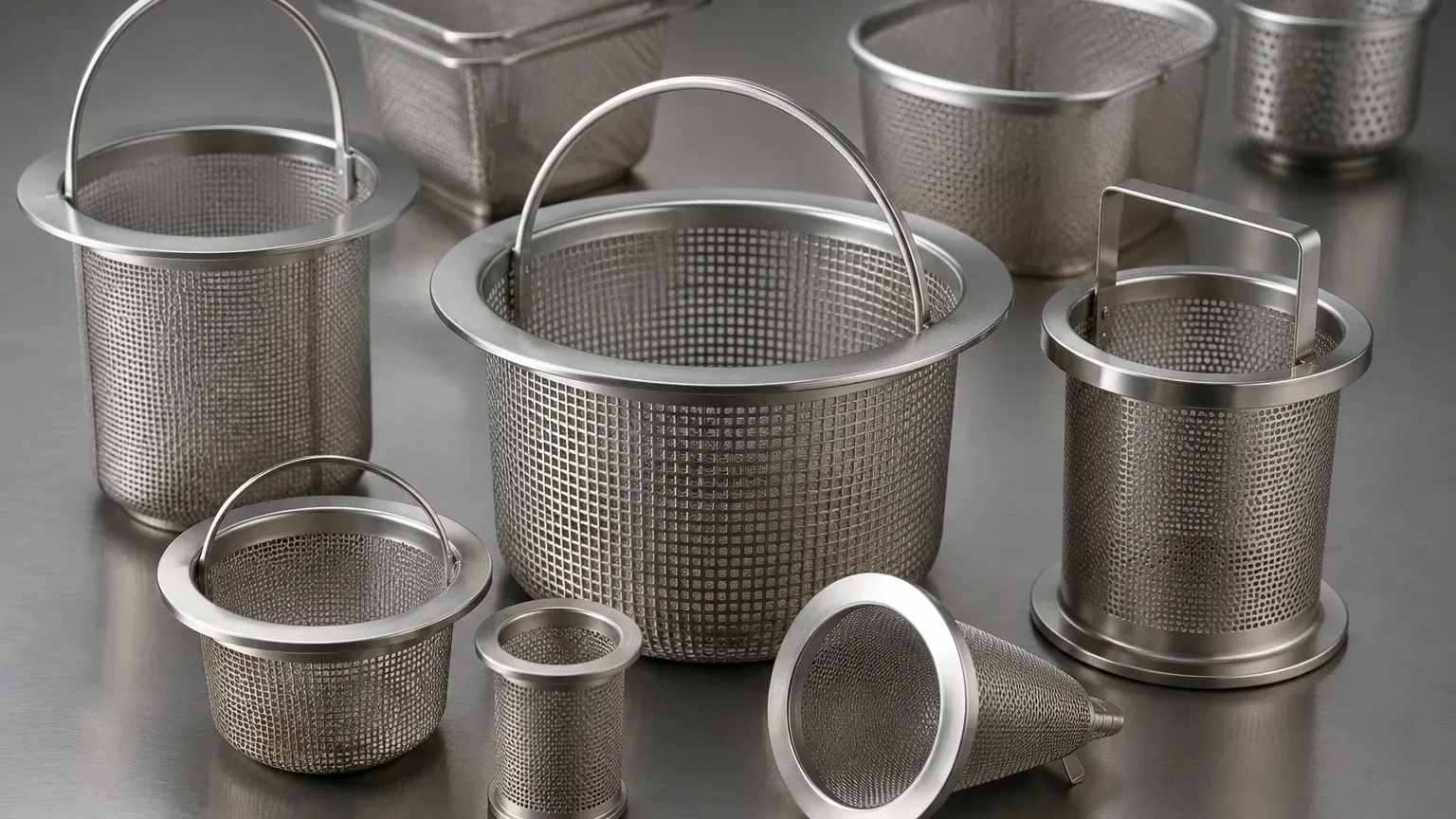
* Mesh-Lined Baskets: For finer filtration requirements, a stainless steel wire mesh is lined inside a perforated metal basket. This allows for filtration down to the micron level while maintaining the structural integrity needed to withstand high differential pressures.
Performance Evaluation: Flow Rate and Pressure Drop
Every filtration component introduces some level of resistance to the flow. Engineers must calculate the "clean pressure drop"—the pressure lost when the fluid passes through a brand-new or freshly cleaned basket.
Factors Influencing Pressure Drop
Several variables influence the pressure drop across a basket strainer:
* Fluid Viscosity: Thicker fluids require more energy to pass through the mesh, leading to higher pressure drops.
* Velocity: As flow velocity increases, the pressure drop increases exponentially.
* Mesh Size: Finer mesh sizes create more resistance than coarse perforations.
In a professional B2B procurement process, it is standard practice to request a pressure drop curve from the manufacturer. This data allows the engineering team to size the pumps correctly and ensure that the system operates within its designed parameters even as the basket accumulates debris.
Maintenance Protocols for Industrial Strainers & Baskets
The reliability of a basket strainer jaman installation is only as good as the maintenance program supporting it. Because these units are designed to collect waste, they must be cleaned regularly to prevent flow restriction.
Differential Pressure Monitoring
The most effective way to determine when a basket requires cleaning is by monitoring the differential pressure (DP) between the inlet and outlet ports. Many industrial strainers are equipped with DP gauges or electronic sensors.
* Baseline: Record the DP when the strainer is clean.
* Threshold: A common industry standard is to clean the basket when the DP reaches 5 to 10 psi above the clean baseline.
* Risk of Delay: Allowing the DP to rise too high can cause the basket to collapse or force debris through the mesh, defeating the purpose of the strainer.
Cleaning and Inspection Steps
When maintenance is required, the system (or the specific line) must be depressurized. The quick-opening cover of the basket strainer allows for rapid access. During cleaning, the following should be inspected:
* Gasket/O-Ring Integrity: Ensure the seal is not cracked or compressed, as this can lead to external leaks.
* Basket Structural Integrity: Check for broken welds or distorted mesh that could allow bypass.
* Debris Analysis: Inspecting the captured material can provide early warning signs of upstream equipment wear, such as metal shavings from a failing pump impeller.
Customization and OEM Solutions for Specialized Applications
Standard off-the-shelf strainers may not satisfy the requirements of unique industrial processes. In such cases, customized engineering becomes necessary. Manufacturers like Kaifil specialize in developing tailored filtration components that address specific spatial constraints or extreme operating conditions.
Engineering Considerations for Custom Designs
When requesting a custom basket strainer, engineers should provide the following data points:
* Connection Type: Flanged, threaded, or socket-weld connections based on piping standards (ANSI, DIN, JIS).
* Cover Design: Bolted covers for high-pressure safety or quick-release swing bolts for frequent cleaning cycles.
* Internal Support: For high-pressure applications, the basket may require internal reinforcements or heavy-duty perforated backing to prevent deformation.
* Coatings: Specialized coatings like PTFE or epoxy can be applied to the housing for added chemical resistance.
By working with a manufacturer that understands the nuances of material science and fluid dynamics, purchasing teams can ensure that their Strainers & Baskets are optimized for the total cost of ownership, balancing initial investment with long-term durability and ease of maintenance.
Total Cost of Ownership and Procurement Strategy
For B2B buyers, the purchase price of a basket strainer is only one part of the equation. The Total Cost of Ownership (TCO) includes installation, maintenance labor, replacement parts (baskets and seals), and the potential cost of downtime.
A low-quality strainer may have a lower upfront cost but can lead to higher expenses through frequent basket failures or excessive pressure drops that increase pump energy consumption. Investing in high-grade stainless steel components and precision-engineered baskets ensures that the filtration system remains a reliable asset rather than a maintenance bottleneck.
When sourcing a basket strainer jaman solution, it is essential to verify the manufacturer's quality control processes. This includes material certification (MTRs), pressure testing, and adherence to international manufacturing standards. These steps provide the factual assurance required for critical infrastructure and high-stakes industrial processes.
Conclusion
Basket strainers are indispensable components in modern industrial piping systems. Whether the application involves chemical processing, water treatment, or food production, the selection of these units must be guided by technical data and engineering requirements. By focusing on material compatibility, open area ratios, and robust maintenance protocols, engineers can protect their equipment and optimize process efficiency for years to come.
