


Strainer Basket Meaning
In the context of industrial fluid handling and process engineering, the term "strainer basket" refers to a specific type of removable, cleanable component designed to mechanically remove solids from a flowing liquid. While the term might appear simple, the engineering reality behind the strainer basket meaning involves complex considerations of fluid dynamics, material science, and mechanical structural integrity. For engineers and procurement professionals, understanding the technical nuances of these components is essential for protecting downstream equipment such as pumps, valves, and heat exchangers from damage caused by debris.
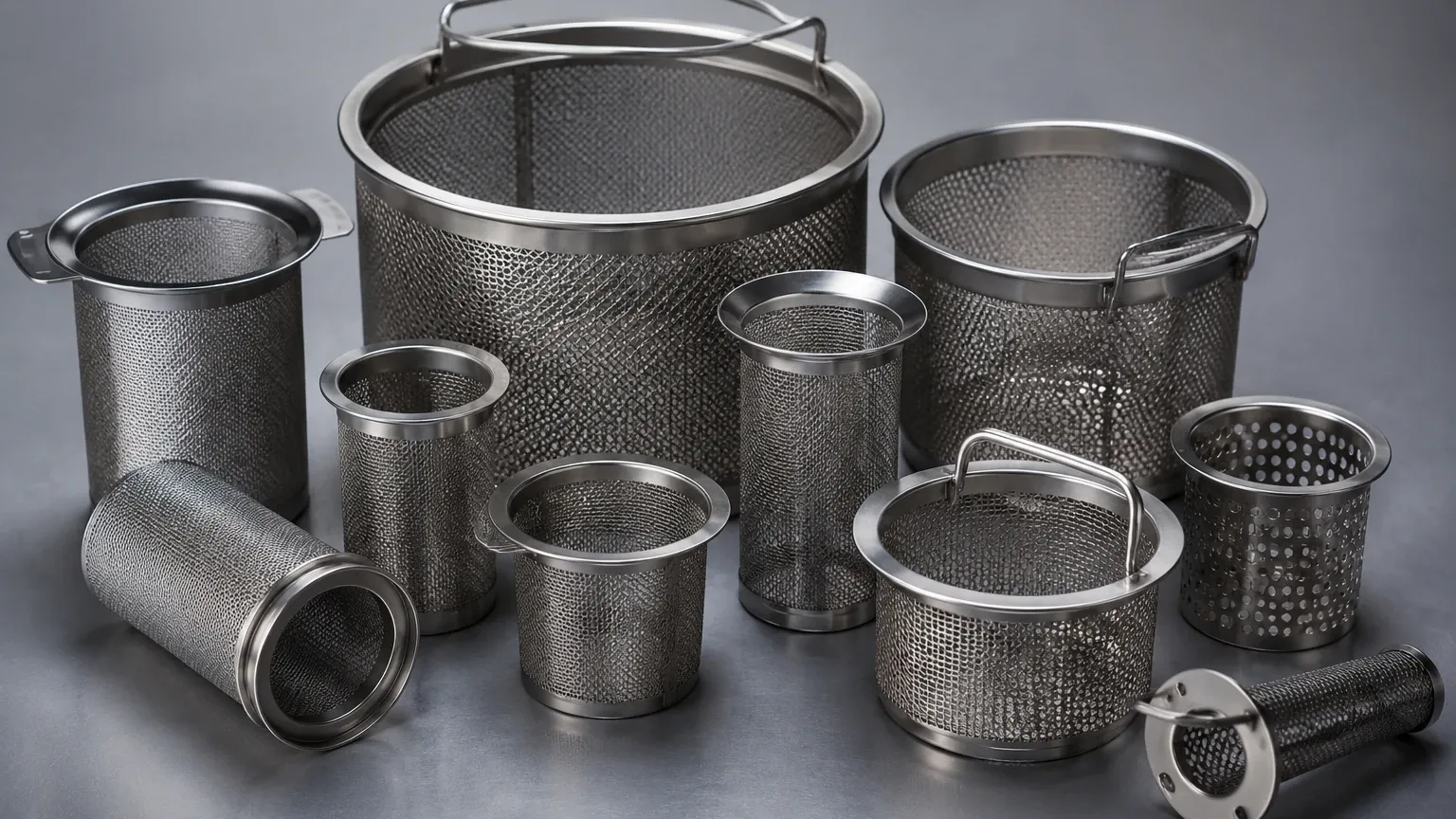
At its core, a strainer basket is the internal element of a basket strainer housing. Unlike disposable filter cartridges, these baskets are typically designed for heavy-duty service and multiple cleaning cycles. They serve as a sacrificial barrier, capturing contaminants while allowing the process fluid to pass through with minimal resistance. This article explores the technical definitions, design variables, and selection criteria that define the modern industrial strainer basket.
Defining the Strainer Basket in Industrial Systems
To fully grasp the strainer basket meaning, one must distinguish it from other filtration media. In industrial terminology, a "strainer" is generally used for the removal of larger particles—typically those visible to the eye—whereas a "filter" often refers to the removal of microscopic particles. However, the line between the two is often blurred by the use of fine wire mesh linings within the basket structure.
An industrial strainer basket is characterized by its high dirt-holding capacity and its ability to be serviced without necessarily replacing the media. The basket configuration is preferred in many piping systems because it offers a larger surface area compared to Y-strainers, leading to a lower pressure drop and longer intervals between cleaning. In a typical installation, the fluid enters the basket from the top or side, passes through the perforated or mesh walls, and exits through the outlet of the housing, leaving the debris trapped inside the basket for easy removal.
Structural Components of Industrial Strainers & Baskets
The performance of a strainer basket is dictated by its construction. A professional-grade basket is rarely a single piece of material; rather, it is a precision-engineered assembly designed to withstand the differential pressure of a clogged system without collapsing.
1. The Perforated Support Body
The foundation of most industrial baskets is a perforated metal sheet. This provides the mechanical strength required to resist the forces exerted by the fluid flow. The size and spacing of the perforations determine the "open area" of the basket. In many coarse straining applications, the perforated body itself acts as the filtration medium.
2. Wire Mesh Lining
When finer filtration is required, a stainless steel wire mesh is welded or mechanically fastened to the inside or outside of the perforated support. This mesh can range from relatively coarse weaves to very fine Dutch weaves capable of capturing particles down to the micron level. The perforated body protects the delicate mesh from being torn by the pressure of the process flow.
3. Reinforcement and Sealing Rings
To ensure that no fluid bypasses the basket, the top of the unit usually features a machined flange or a heavy-duty ring. This ring seats against the strainer housing, often utilizing an O-ring or gasket to create a positive seal. Handles are also integrated into the design to facilitate the safe removal of the basket during maintenance intervals.
Engineering the Open Area Ratio
A critical aspect of the strainer basket meaning in an engineering context is the "Open Area Ratio." This is the ratio between the total area of the holes in the basket and the cross-sectional area of the inlet pipe.
For a strainer to function efficiently, the open area of the basket must be significantly larger than the area of the pipe. A common industry standard is a 6:1 ratio, although 4:1 or 8:1 ratios are specified depending on the viscosity of the fluid and the nature of the contaminants. A high open area ratio ensures that as the basket begins to fill with debris, the pressure drop (ΔP) across the strainer does not increase so rapidly that it starves downstream equipment or causes the basket to fail structurally.
Engineers must calculate the "Clean Pressure Drop" during the design phase. This represents the resistance to flow when the basket is completely clean. If the strainer basket is undersized or has an insufficient open area, the system will experience high energy costs and frequent maintenance shutdowns.
Material Selection and Chemical Compatibility
Because strainer baskets are often used in aggressive environments, material selection is paramount. Stainless steel is the industry standard due to its balance of strength, temperature resistance, and corrosion resistance.
* 304 Stainless Steel: The most common material, suitable for water, oils, and mild chemicals. It offers excellent durability for general industrial use.
* 316/316L Stainless Steel: Contains molybdenum, which provides superior resistance to chlorides and pitting. This is essential for marine environments, pharmaceutical production, and chemical processing.
* Specialty Alloys: In highly corrosive or high-temperature applications, baskets may be manufactured from Monel, Hastelloy, or Titanium to ensure a long service life.
The choice of material also extends to the welding techniques used. For B2B applications where hygiene or structural integrity is critical, TIG (Tungsten Inert Gas) welding is often preferred to ensure smooth, crevice-free joints that do not harbor bacteria or create weak points in the assembly.
Operational Considerations: Pressure Drop and Dirt-Holding Capacity
Understanding the strainer basket meaning also involves understanding how it behaves during its service life. The two most important operational metrics are differential pressure and dirt-holding capacity.
Differential Pressure (ΔP)
As a strainer basket captures solids, the available flow area decreases, causing the pressure on the upstream side to rise relative to the downstream side. Most industrial systems are equipped with differential pressure gauges. A common rule of thumb is that a basket should be cleaned when the pressure drop reaches 5-10 psi over the clean pressure drop. If the ΔP is allowed to climb too high, the basket may deform or "blow through," allowing contaminants to bypass the filtration stage.
Dirt-Holding Capacity
This refers to the volume of solids a basket can retain before the pressure drop becomes unacceptable. Baskets with a deeper profile or pleated mesh designs offer a higher dirt-holding capacity. For processes with high solids loading, engineers may specify "high-capacity" baskets or switch from a Simplex (single) strainer to a Duplex (twin) strainer system, which allows for basket cleaning without stopping the flow of the process.
Customization for Specific Industrial Applications
Generic, off-the-shelf strainer baskets often fail to meet the specific demands of specialized industrial processes. Customization is frequently required to address unique challenges:
* Food and Beverage: Baskets must adhere to sanitary standards, featuring polished surfaces and specific mesh types that are easy to sterilize.
* Oil and Gas: High-pressure environments require heavy-gauge perforated metal and reinforced longitudinal seams to prevent collapse during pressure surges.
* Water Treatment: Large-scale intake strainers may require custom-sized baskets to handle high flow rates while protecting sensitive membrane filtration systems downstream.
Manufacturers like Kaifil specialize in providing these tailored solutions, working from engineering drawings or physical samples to produce baskets that fit perfectly into existing housings while optimizing filtration efficiency. Customization options include magnetic inserts to capture fine ferrous particles, specialized handle designs for ergonomic handling, and varying pleat depths to maximize surface area within a constrained footprint.
Maintenance and Replacement Cycles
While strainer baskets are designed to be permanent or semi-permanent components, they are not indestructible. Regular inspection is necessary to ensure the integrity of the mesh and the seals. Over time, the repeated stress of pressure cycles and the abrasive nature of some contaminants can cause "wire draw" (the thinning of mesh wires) or fatigue cracking at the weld points.
When evaluating a replacement cycle, engineers should consider the total cost of ownership. While a cheaper basket may save on initial procurement, a high-quality stainless steel basket with precision-welded reinforcements will last significantly longer and provide better protection for expensive downstream assets.
Conclusion
The strainer basket meaning extends far beyond a simple "bucket with holes." It is a sophisticated engineering component that serves as the first line of defense in industrial fluid systems. By selecting the correct material, optimizing the open area ratio, and ensuring high-quality manufacturing standards, facilities can significantly reduce downtime and maintenance costs. Whether for chemical processing, water treatment, or food production, the right Strainers & Baskets are essential for maintaining the reliability and efficiency of modern industrial infrastructure.
