


Basket Strainer Nut Stuck
In industrial filtration systems, the efficiency of a process often hinges on the ability to perform routine maintenance without delay. One of the most common yet frustrating mechanical failures encountered by maintenance engineers is a basket strainer nut stuck during a scheduled filter change or cleaning. While it may seem like a minor hardware issue, a seized nut on a high-pressure strainer assembly can lead to extended downtime, damaged housings, and safety risks for the operator.
Industrial Strainers & Baskets are designed to withstand significant pressure differentials and harsh chemical environments. However, the very materials that provide this durability—such as 304 or 316 stainless steel—are susceptible to specific mechanical phenomena like thread galling and chemical bonding. Understanding why these components seize and how to technically address the issue is essential for maintaining the integrity of the filtration system.
The Engineering Behind Seized Strainer Components
To effectively resolve a situation where a basket strainer nut is stuck, one must first understand the mechanical and chemical forces at play. In B2B industrial environments, these assemblies are rarely subjected to simple mechanical friction alone.
Thread Galling in Stainless Steel
Thread galling, often referred to as "cold welding," is a primary cause of seized nuts in stainless steel filtration equipment. When two stainless steel surfaces slide against each other under heavy load, the protective oxide layer is sheared off. The exposed metal high points then rub against each other, generating heat and causing the surfaces to fuse at a molecular level. This is particularly prevalent in fine-threaded nuts used to secure baskets in high-precision housings.
Galvanic and Chemical Corrosion
In chemical processing or water treatment applications, the presence of electrolytes can lead to galvanic corrosion if dissimilar metals are used in the strainer assembly. Even in all-stainless systems, chemical buildup or "scaling" within the thread interface can act as a powerful adhesive. Over time, minerals or process byproducts crystallize within the threads, effectively locking the nut in place.
Thermal Expansion and Contraction
Industrial strainers often operate at fluctuating temperatures. If a nut is tightened while the system is at ambient temperature and then subjected to high-heat process fluids, the metal expands. If the expansion coefficients of the nut and the bolt/housing differ slightly, or if the assembly was over-torqued initially, the resulting tension can exceed the material's yield strength, making manual removal impossible.
Diagnostic Steps for a Stuck Basket Strainer Nut
Before applying force, a technical assessment is required to prevent permanent damage to the strainer housing or the internal basket. As a manufacturer of precision filtration solutions, Kaifil emphasizes that the structural integrity of the housing must be the priority during any removal attempt.
1. Identify the Material: Confirm if the nut and housing are the same grade of stainless steel. If they are, galling is the most likely culprit. If they are different materials, look for signs of galvanic corrosion (white powdery residue or rust).
2. Clean the Interface: Use a wire brush to remove any external debris, scale, or paint from the exposed threads. This allows for a clearer view of the thread condition and ensures that any applied lubricants can penetrate the interface.
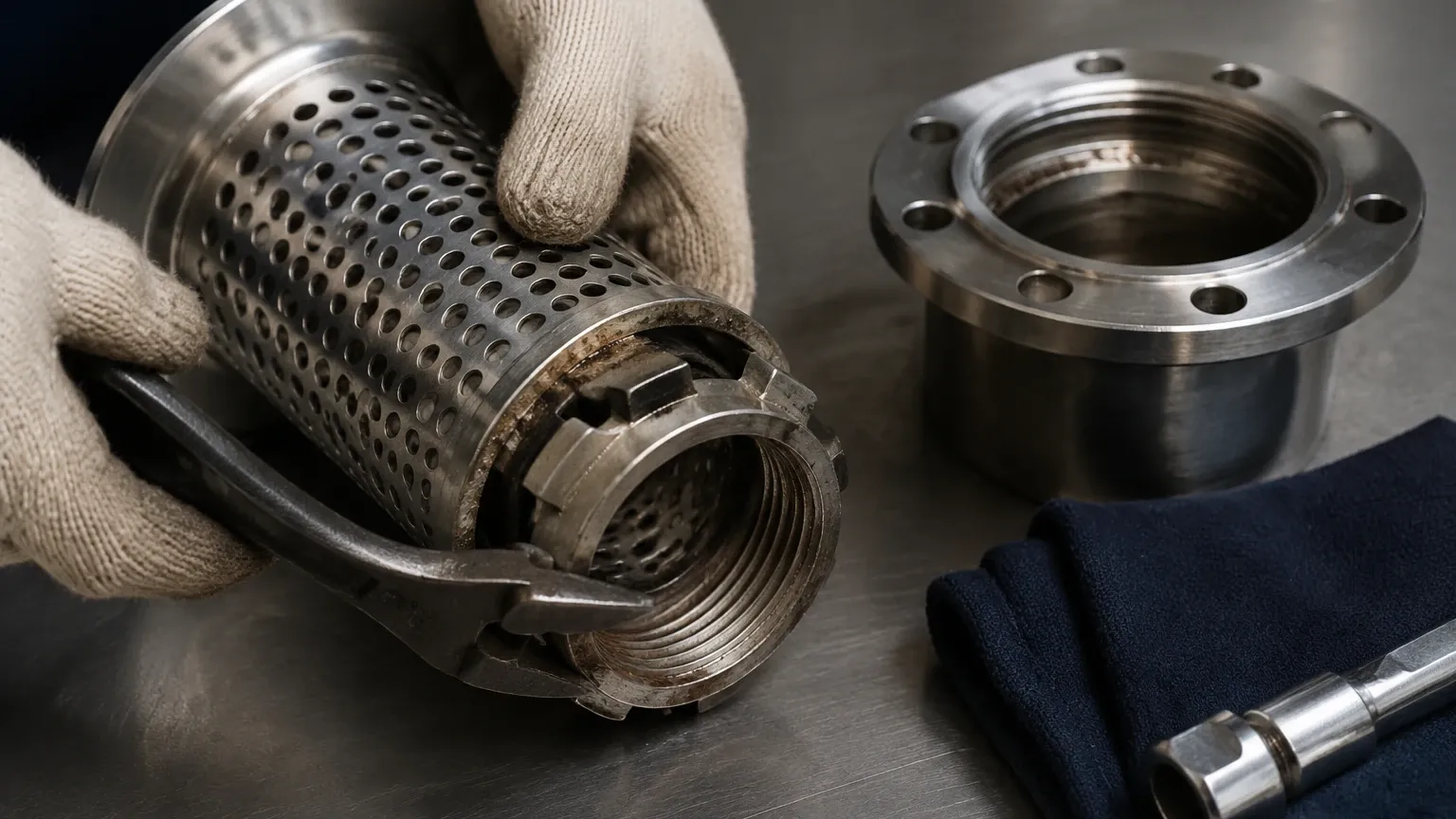
3. Check for Mechanical Deformation: Inspect the nut for signs of "rounding" or deformation from previous removal attempts. A deformed nut requires specialized extraction tools rather than standard wrenches.
4. Assess Pressure Status: Always verify that the system is fully depressurized and drained. A nut that feels "stuck" may actually be under extreme tension from internal hydraulic pressure, which poses a severe safety hazard if suddenly released.
Technical Solutions for Removal
When standard mechanical force fails, engineers must turn to more advanced techniques to free a basket strainer nut stuck in place. Each method has specific implications for the longevity of the equipment.
Chemical Penetrants and Solvents
Industrial-grade penetrating oils are designed to migrate into the microscopic gaps between threads. For filtration systems in the food and beverage or pharmaceutical sectors, ensure that any chemical used is compatible with the process requirements or can be thoroughly cleaned afterward. Allow the penetrant to sit for several hours, or even overnight, to break down oxidation and scale.
Thermal Manipulation
Applying controlled heat to the nut (not the bolt or housing) causes it to expand slightly, which can break the bond of galling or corrosion. An induction heater is preferred over an open flame in industrial environments to ensure precise heat application and avoid fire hazards. Conversely, using a freezing spray on the bolt or stud can cause it to contract, creating the necessary clearance for removal.
Vibration and Impact
Controlled vibration can help settle the penetrating oil deeper into the threads and break the crystalline structure of chemical deposits. An air impact wrench, used at a low setting with high frequency, is often more effective than a long breaker bar because the rapid pulses overcome static friction without applying the sustained torque that leads to shearing the bolt.
Risks of Improper Removal Techniques
In the urgency of restoring production, it is tempting to use excessive force. However, the risks associated with improper removal can be costly:
* Housing Distortion: Excessive torque can warp the strainer housing, preventing a proper seal even after the nut is replaced. This leads to bypass, where unfiltered fluid escapes the basket.
* Thread Stripping: If the threads are stripped during removal, the entire housing may need to be re-machined or replaced, leading to significant capital expenditure.
* Internal Component Damage: High-impact forces can damage the delicate wire mesh or perforated metal of the filter basket inside the housing.
Preventative Engineering: Avoiding Future Seizures
The most cost-effective way to handle a stuck nut is to prevent it from occurring through proper material selection and maintenance protocols. When sourcing Strainers & Baskets, engineering teams should consider the following preventative measures.
Material Pairing and Coatings
To prevent galling, engineers often specify different grades of stainless steel for the nut and the housing (e.g., a 316 stainless steel housing with a Nitronic 60 nut). Alternatively, applying a dry-film lubricant or a specialized anti-seize compound during assembly can provide a barrier that prevents metal-to-metal contact at the molecular level.
Precision Manufacturing Standards
Kaifil focuses on high-precision thread cutting and finishing. Rough thread surfaces increase the surface area for friction and corrosion. By ensuring a high-quality surface finish on all filtration components, the risk of mechanical bonding is significantly reduced.
Maintenance Schedules and Torque Specifications
Every industrial strainer should have a documented torque specification. Over-tightening is a leading cause of seized nuts. Implementing a "break-and-reset" schedule—where nuts are loosened and re-torqued during routine inspections—prevents chemical bonding from becoming permanent.
Selecting the Right Strainer for Serviceability
When evaluating new filtration equipment, serviceability should be a primary criterion. A well-designed strainer assembly considers the reality of the maintenance environment. Key features to look for include:
* Swing Bolt Closures: These allow for quick access without completely removing nuts, reducing the chance of losing hardware or dealing with seized threads.
* External Thread Protection: Housings that include caps or shields for exposed threads prevent environmental corrosion.
* Ergonomic Nut Designs: Large, heavy-duty hex nuts or wing-style nuts allow for better tool engagement and more controlled torque application.
Conclusion
A basket strainer nut stuck is a technical challenge that requires a measured, engineering-led response. By understanding the mechanisms of galling and corrosion, maintenance teams can employ the right tools—from induction heating to specialized penetrants—to resolve the issue without compromising the filtration system.
For long-term reliability, the focus must shift toward preventative design. Choosing high-quality Strainers & Baskets manufactured with precision tolerances and appropriate material pairings is the most effective strategy for ensuring efficient, durable, and cost-effective filtration performance. At Kaifil, we combine manufacturing expertise with deep engineering knowledge to support demanding industrial applications, ensuring that our filtration components remain serviceable throughout their operational life.
When purchasing new equipment, engineers should confirm material compatibility with their specific process fluids and establish clear maintenance protocols to mitigate the risks of component seizure. By prioritizing quality at the procurement stage, you protect your facility from the hidden costs of maintenance delays and equipment failure.
