


Basket Strainer No Overflow
In industrial fluid handling systems, the term "basket strainer no overflow" refers to a critical design and operational requirement where the filtration component must contain all captured solids without allowing fluid to bypass the filter media or backup into the system due to excessive resistance. Unlike residential plumbing where an overflow might refer to a secondary drain hole, in professional chemical processing, food production, and hydraulic applications, preventing overflow is about maintaining system integrity, protecting downstream equipment, and ensuring that 100% of the process fluid passes through the specified mesh or perforation.
As a professional manufacturer of custom stainless steel filtration solutions, Kaifil understands that the efficiency of Strainers & Baskets depends on precise engineering. When engineers specify a basket strainer with a "no overflow" or "zero-bypass" requirement, they are looking for a solution that manages pressure differentials effectively while providing a secure seal between the basket and the housing. This article explores the technical considerations, material selections, and design features necessary to achieve reliable filtration performance in demanding industrial environments.
Understanding the "No Overflow" Requirement in Industrial Filtration
In a B2B context, the concept of a basket strainer no overflow is intrinsically linked to the flow capacity and the structural design of the filtration element. When a strainer basket becomes clogged with debris, the resistance to flow increases, leading to a rise in differential pressure (ΔP). If the strainer is not designed to handle this pressure or if the basket does not seat correctly, several failure modes can occur:
1. Fluid Bypass: Fluid may force its way around the edges of the basket rather than through the mesh, allowing contaminants to reach sensitive downstream components like pumps, valves, and spray nozzles.
2. Structural Collapse: The pressure of the "overflowing" fluid against a clogged mesh can cause the basket to deform or burst, leading to catastrophic system contamination.
3. System Backup: If the strainer cannot process the incoming volume, the fluid may back up into the upstream piping, potentially causing process interruptions or safety hazards.
To prevent these issues, engineers must focus on the "Open Area Ratio" (OAR). A high-quality industrial basket strainer typically offers an OAR of at least 6:1, meaning the total area of the holes in the basket is six times the cross-sectional area of the inlet pipe. This ensures that even as the basket collects debris, there is sufficient surface area to prevent an immediate overflow condition.
Engineering Design Features for Zero-Bypass Performance
Achieving a basket strainer no overflow setup requires more than just a mesh bag in a canister. It requires precision-machined components that ensure a tight seal. At Kaifil, we focus on several key design elements to ensure that all fluid is directed through the filtration media.
Machined Seats and Sealing Surfaces
One of the most common causes of bypass (internal overflow) is a poor fit between the basket flange and the housing rim. In high-performance stainless steel strainers, the seating surface is often precision-machined to ensure flatness. For critical applications, O-rings or gaskets made from Viton, EPDM, or PTFE are integrated into the basket flange to create a positive seal that prevents fluid from escaping around the top of the basket.
Heavy-Duty Basket Construction
To withstand the forces associated with high flow rates and potential pressure spikes, the baskets must be structurally sound. This often involves a two-layer construction: a heavy-gauge perforated metal backup tube for strength and a fine stainless steel wire mesh liner for filtration accuracy. This "basket within a basket" design prevents the mesh from tearing or bulging, which is a primary cause of unfiltered fluid overflow.
Hold-Down Mechanisms
In high-velocity systems, the force of the fluid can actually lift the basket off its seat, creating a gap for overflow. Industrial strainers often include a hold-down spring or a bolted cover design that applies constant downward pressure on the basket, ensuring the seal remains intact even during turbulent flow conditions.
Material Selection for Durability and Compliance
The choice of material is paramount when designing a basket strainer no overflow solution. Stainless steel is the industry standard due to its corrosion resistance, thermal stability, and ease of cleaning. Kaifil specializes in utilizing specific grades of stainless steel to match the chemical compatibility of the process fluid.
* Grade 304 Stainless Steel: Suitable for general industrial applications, water treatment, and less corrosive chemical environments. It provides excellent strength and cost-effectiveness.
* Grade 316/316L Stainless Steel: The preferred choice for the pharmaceutical, food and beverage, and marine industries. The addition of molybdenum provides superior resistance to chlorides and organic acids, preventing pitting and corrosion that could lead to bypass leaks.
* Specialty Alloys: For highly aggressive environments, such as concentrated acids or high-temperature steam, specialty alloys may be required to ensure the strainer basket does not degrade over time.
Beyond the metal grade, the type of mesh weave—such as plain weave, twilled weave, or Dutch weave—impacts how the basket handles solids. A Dutch weave, for instance, provides a much higher strength-to-micron-rating ratio, which is essential for preventing "overflow" through mesh failure in high-pressure hydraulic systems.
Calculating Flow Rates and Pressure Drop
To avoid an overflow condition, engineers must accurately calculate the clean pressure drop and the terminal pressure drop. The pressure drop is the difference in pressure between the inlet and the outlet of the strainer.
When specifying Strainers & Baskets, the following formulaic considerations are applied:
1. Viscosity Impact: Higher viscosity fluids (like oils or syrups) move more slowly through the mesh, increasing the risk of backup or overflow. Designers must increase the size of the strainer housing or the surface area of the basket to compensate.
2. Specific Gravity: The density of the fluid affects the velocity and the force exerted on the basket walls.
3. Velocity Limits: For liquid service, it is generally recommended to keep the fluid velocity below 10 feet per second (fps) to minimize turbulence and pressure drop.
By ensuring the initial pressure drop is low (typically under 2 PSI), the system allows for a significant "dirt-holding capacity" before the differential pressure reaches a level where cleaning is required or overflow becomes a risk.
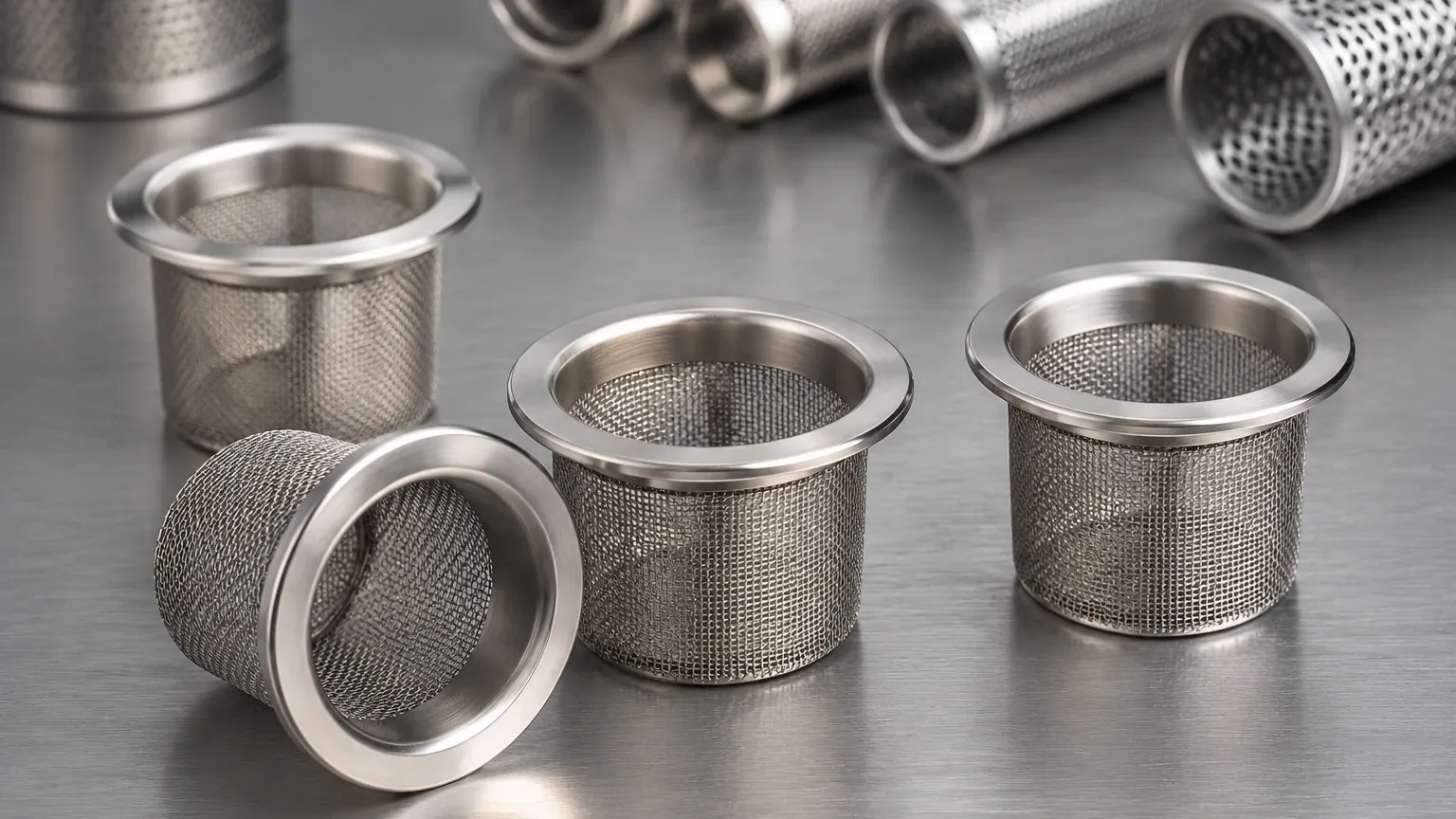
Customization for Specific Industrial Applications
Every industrial process has unique requirements, and a "one-size-fits-all" basket strainer rarely provides optimal performance. Customization is the key to ensuring a basket strainer no overflow operation across different sectors.
Food and Beverage Industry
In food processing, strainers must not only prevent overflow but also meet stringent sanitary standards. This involves using 316L stainless steel with a high-polish finish (Ra < 0.8 μm) to prevent bacterial growth. The baskets are often designed for quick removal and easy cleaning to minimize downtime during batch changes.
Chemical and Petrochemical Processing
In these environments, the focus is on chemical compatibility and high-pressure ratings. Custom baskets may feature reinforced handles and specialized coatings to resist aggressive solvents. The "no overflow" design here is critical for protecting expensive downstream catalysts and reactors.
Water Treatment and Desalination
Large-scale water systems require baskets that can handle high volumes of sand, silt, and organic matter. Multi-basket strainers are often used, allowing one basket to be cleaned while others remain in service, ensuring continuous flow without the risk of system overflow or bypass.
Maintenance Protocols to Prevent Overflow
Even the best-engineered basket strainer will eventually reach its capacity. A proactive maintenance schedule is the final piece of the puzzle in maintaining a basket strainer no overflow environment.
Differential Pressure Monitoring
The most effective way to prevent overflow is to install differential pressure gauges at the inlet and outlet of the strainer. By monitoring the ΔP, operators can identify exactly when the basket is reaching its saturation point. Most industrial systems are set to trigger an alarm or a cleaning cycle when the ΔP reaches 10-15 PSI.
Regular Inspection and Cleaning
Over time, even stainless steel mesh can suffer from fatigue or abrasion. Regular inspections should check for:
* Thinning of the wire mesh.
* Integrity of the weld points between the mesh and the flange.
* Condition of the gaskets or O-rings.
* Evidence of "tracking" or erosion on the seating surfaces, which indicates that bypass (internal overflow) has been occurring.
Total Cost of Ownership (TCO)
While a standard off-the-shelf strainer might have a lower initial cost, a custom-engineered solution from a manufacturer like Kaifil often results in a lower TCO. By optimizing the basket design for the specific debris load and flow characteristics of the application, the frequency of cleaning is reduced, the risk of downstream equipment damage is eliminated, and the lifespan of the filtration component is significantly extended.
Conclusion: Selecting the Right Filtration Partner
Specifying a basket strainer no overflow solution requires a deep understanding of fluid dynamics, material science, and mechanical engineering. For technical professionals and purchasing teams, the goal is to find a balance between filtration precision and system throughput.
Kaifil provides the technical expertise necessary to navigate these complexities. From initial material selection and micron rating determination to the manufacturing of precision metal filter components, we ensure that your Strainers & Baskets are built to the highest industrial standards. By focusing on robust construction, superior sealing mechanisms, and optimized open area ratios, we help our global customers achieve efficient, durable, and reliable filtration performance in even the most demanding environments.
When evaluating your next filtration project, consider the long-term benefits of a custom stainless steel solution. Ensuring that your system is equipped with a high-performance basket strainer is not just about keeping the fluid moving—it is about protecting your infrastructure, maintaining product quality, and optimizing your operational efficiency.
