


Strainer Basket Online
In industrial fluid handling systems, the protection of downstream equipment is a critical engineering priority. Pumps, valves, heat exchangers, and spray nozzles are highly susceptible to damage or clogging from particulate matter. To mitigate these risks, engineers rely on mechanical filtration components, specifically strainers and baskets. As procurement processes evolve, the ability to source a technical strainer basket online has become a streamlined method for maintenance, repair, and operations (MRO) teams to maintain system uptime. However, selecting the correct component requires a deep understanding of filtration physics, material compatibility, and structural integrity.
Industrial strainers are essentially coarse filters designed to remove larger solids from a liquid or gas stream. Unlike fine membrane filters, which may operate at the sub-micron level, strainers typically handle particles ranging from several millimeters down to approximately 40 microns. The efficiency of these components directly impacts the total cost of ownership (TCO) of a facility by preventing catastrophic equipment failure and reducing the frequency of unplanned maintenance cycles.
The Role of Strainers & Baskets in Industrial Process Protection
The primary function of Strainers & Baskets is to provide a sacrificial barrier that captures debris while allowing the process fluid to pass with minimal resistance. In a typical industrial setup, these components are installed in-line, often in Simplex, Duplex, or Y-strainer housings.
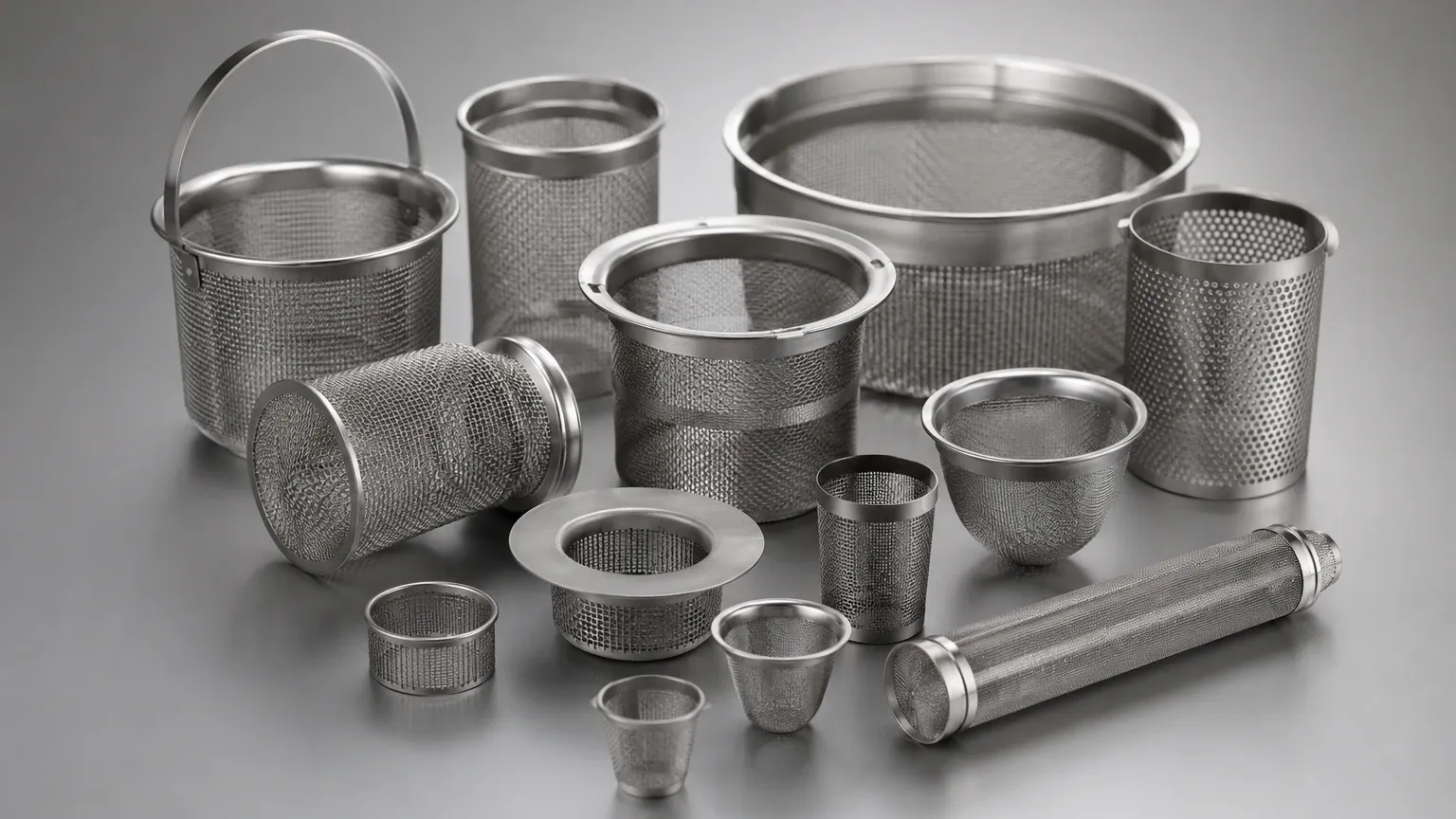
The "basket" refers to the removable, cleanable element within the strainer housing. Because these baskets are subjected to high flow velocities and varying pressure differentials, their design must account for both the mechanical load of the captured debris and the corrosive nature of the fluid. When searching for a strainer basket online, engineers must look beyond simple dimensions and focus on the structural reinforcements, such as heavy-duty perforated metal backings or external support cages, that ensure the basket does not collapse under high differential pressure ($ \Delta P $).
Technical Specifications for Industrial Strainer Baskets
To ensure a strainer basket performs effectively within a specific application, several technical parameters must be defined. These specifications go beyond the basic diameter and height of the basket.
Filtration Media: Perforated Metal vs. Wire Mesh
Strainer baskets are generally constructed using one of two types of media, or a combination of both:
1. Perforated Metal: This serves as the primary structural component. It is a sheet of stainless steel with punched holes. The hole size (e.g., 1/8", 1/16") determines the filtration grade. Perforated metal is robust but limited in how fine it can filter.
2. Wire Mesh Lining: For finer filtration requirements, a stainless steel wire mesh is lined inside or outside the perforated basket. This allows for filtration down to very fine mesh counts (e.g., 200 mesh or 74 microns). The mesh is typically spot-welded or seam-welded to the perforated metal to provide a balance of precision and strength.
Open Area Ratio
The open area ratio is the relationship between the total area of the holes in the basket and the total cross-sectional area of the inlet pipe. A common engineering standard is a 6:1 or 8:1 ratio. A higher ratio means the strainer can accumulate more debris before the pressure drop becomes significant, thereby extending the time between cleaning cycles. When evaluating a strainer basket online, verifying the open area ratio is essential for predicting performance in high-solids-loading applications.
Critical Selection Criteria for Sourcing Online
Sourcing industrial components digitally requires a rigorous verification of technical data sheets. Engineers should evaluate the following factors to ensure the replacement basket is compatible with existing housings and process conditions.
Dimensional Accuracy
Even minor deviations in the flange diameter, basket height, or handle configuration can lead to bypass. Bypass occurs when the fluid flows around the basket rather than through it, allowing contaminants to reach downstream equipment. Precise measurements of the O-ring or gasket seating area are mandatory. Many manufacturers provide detailed CAD drawings or technical diagrams for their strainer basket online listings to facilitate this verification.
Pressure Drop and Flow Rate
Every strainer basket introduces a degree of resistance to the flow. This is measured as the pressure drop ($ \Delta P $). As the basket fills with debris, the $ \Delta P $ increases. If the basket is not designed with sufficient surface area for the intended flow rate, the system may experience cavitation in pumps or reduced throughput in heat exchangers. Engineers must calculate the clean pressure drop and establish a limit for the terminal pressure drop, at which point the basket must be cleaned or replaced.
Handle and Lifting Configurations
In large-scale industrial applications, ease of maintenance is a safety and efficiency concern. Baskets may feature various handle designs, such as folding handles, fixed bars, or slanted handles, to accommodate different housing lid clearances. For heavy baskets used in high-viscosity fluids, reinforced handles or lifting lugs may be necessary to allow for mechanical assistance during removal.
Material Science and Chemical Compatibility
The longevity of a strainer basket is primarily determined by its material of construction. In the B2B sector, stainless steel is the industry standard due to its mechanical strength and resistance to oxidation.
* 304 Stainless Steel: The most common grade, suitable for water treatment, food and beverage, and general industrial use where mild corrosion resistance is required.
* 316 Stainless Steel: Contains molybdenum, which provides superior resistance to chlorides and acids. This is the preferred choice for chemical processing, pharmaceutical manufacturing, and marine environments.
* 316L Stainless Steel: A low-carbon version of 316 that is less susceptible to sensitization (carbide precipitation at grain boundaries) during welding. This is critical for maintaining corrosion resistance in the heat-affected zones of the basket’s seams.
When browsing for a strainer basket online, it is important to confirm that the supplier provides material certifications (MTRs). Using the wrong alloy in a corrosive environment can lead to pitting or stress corrosion cracking, resulting in premature failure and potential contamination of the process stream.
Custom Engineering vs. Off-the-Shelf Components
While many standard sizes are available for immediate purchase, many industrial applications require customized Strainers & Baskets to meet unique process demands. Customization options often include:
* Multi-Layer Construction: Combining multiple layers of mesh to achieve specific flow characteristics or to provide extra support for fine mesh in high-pressure systems.
* Magnetic Inserts: Adding magnetic rods to the center of the basket to capture fine ferrous particles that might otherwise pass through the mesh.
* Reinforced Bottoms: For applications where heavy debris accumulates at the base of the basket, a reinforced or double-bottom design prevents deformation.
* Specialty Coatings: In some cases, stainless steel baskets may be coated with PTFE or other polymers to enhance chemical resistance or to make the basket easier to clean when handling sticky substances.
Working with a manufacturer that offers OEM capabilities allows for these modifications. Even when a buyer starts their search for a strainer basket online, the ability to consult with an engineering team to tweak the design ensures the final product is optimized for the specific application environment.
Maintenance, Cleaning, and Longevity
The total cost of a strainer basket is not just the purchase price but also the labor and downtime associated with its maintenance. A well-designed basket should be easy to clean and durable enough to withstand repeated cleaning cycles.
Cleaning Protocols
Most industrial baskets are designed to be reusable. Cleaning methods vary depending on the contaminant:
* Backwashing: Using fluid flow in the opposite direction to dislodge particles.
* Ultrasonic Cleaning: Using high-frequency sound waves in a solvent bath to remove fine particles trapped in the mesh crevices.
* Chemical Soaking: Using acids or bases to dissolve organic or mineral scale, provided the basket material is compatible with the cleaning agent.
Signs of Wear
During routine inspections, maintenance teams should look for signs of wire fraying, seam separation, or "blinding" (permanent clogging of the mesh). If the perforated metal shows signs of bowing or denting, it indicates that the basket has been subjected to pressure differentials exceeding its design limit. Replacing these components before they fail is a critical aspect of predictive maintenance.
Conclusion: Navigating the Online Procurement Process
The availability of technical information for a strainer basket online has empowered engineers to make more informed decisions. By focusing on the engineering fundamentals—material grade, open area ratio, micron rating, and structural reinforcement—purchasing teams can ensure they select a component that protects their infrastructure and optimizes process efficiency.
When sourcing Strainers & Baskets, it is vital to partner with a manufacturer that understands the rigors of industrial filtration. Whether the requirement is for a standard replacement or a custom-engineered solution for a high-pressure chemical line, the quality of the filtration element is the first line of defense in maintaining the integrity of the entire industrial system. By prioritizing technical specifications over generic marketing claims, facilities can achieve longer service lives, lower maintenance costs, and consistent product quality.
