


Strainer Basket Pump
In industrial fluid handling, the integrity of a pumping system is heavily dependent on the quality of pre-filtration. A strainer basket pump setup—where a high-performance basket strainer is installed on the suction side of the pump—serves as the primary defense against mechanical failure. For engineers and maintenance professionals, understanding the technical nuances of these components is essential for minimizing downtime and extending the service life of expensive rotating equipment.
Industrial pumps, whether centrifugal, positive displacement, or turbine-based, are designed to move fluids, not solids. The introduction of even small amounts of debris can lead to impeller erosion, seal failure, or catastrophic pump seizure. By integrating specialized Strainers & Baskets, facilities can ensure that only clean media reaches the pump internals, maintaining hydraulic efficiency and process consistency.
Understanding the Role of Strainer Baskets in Pump Protection
The primary function of a strainer basket pump configuration is the removal of large particulates, scale, and foreign objects from the process stream before they enter the pump volute. Unlike fine polishing filters, which may be located downstream, the suction-side strainer is designed for high flow capacity and relatively low pressure drop.
When a pump operates, it creates a low-pressure zone at the inlet. If a strainer is improperly sized or becomes excessively clogged, the resulting pressure drop can lead to cavitation. Cavitation occurs when the fluid pressure falls below its vapor pressure, forming bubbles that collapse violently against the impeller. High-quality basket strainers are engineered with a high open-area ratio to prevent this phenomenon, ensuring that the pump receives a steady, laminar flow of fluid.
Engineering Specifications for Industrial Strainer Baskets
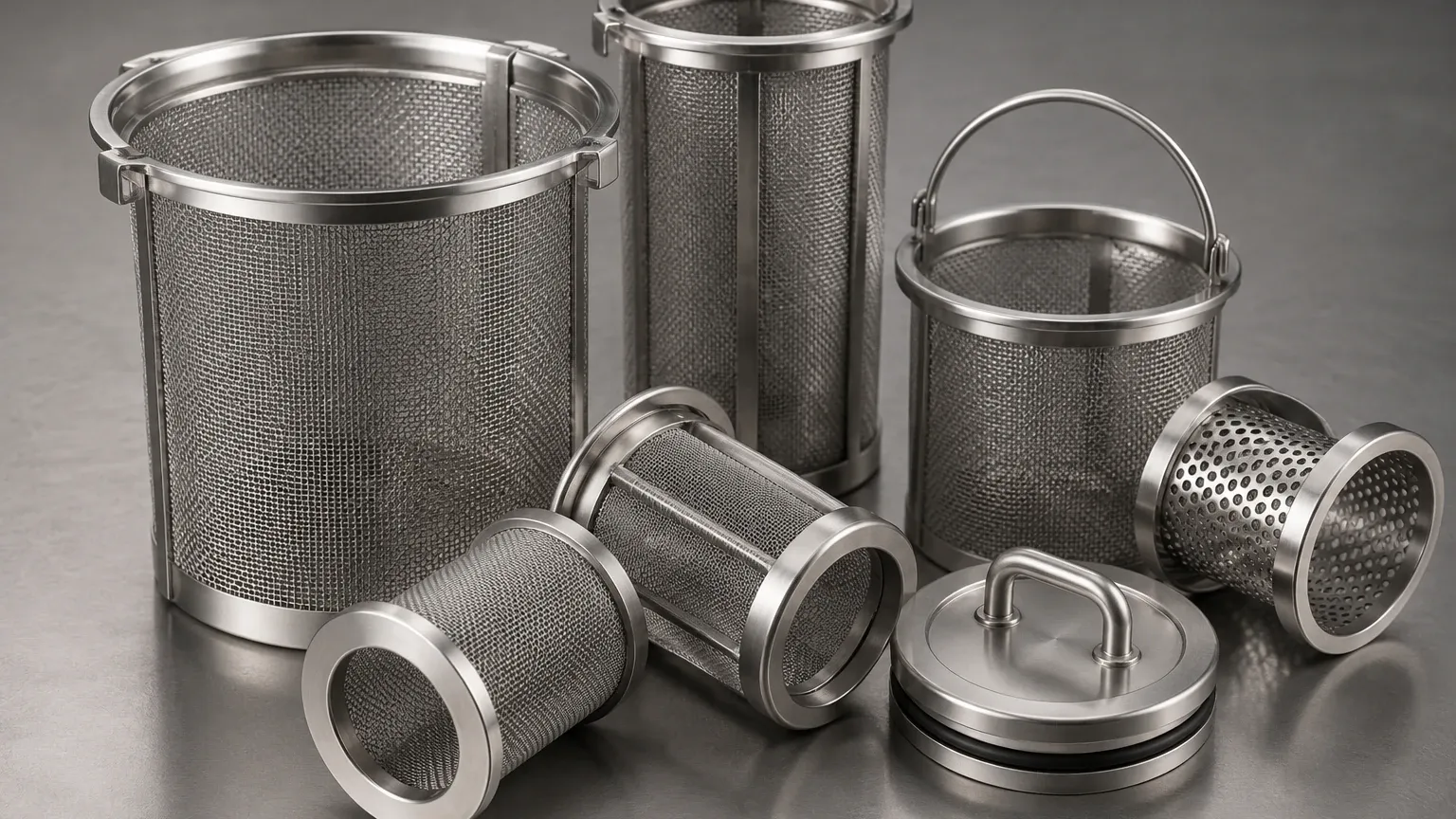
When selecting a basket for a strainer basket pump application, several engineering parameters must be evaluated to ensure compatibility with the specific industrial environment. These specifications go beyond simple pipe size and encompass the physical and chemical demands of the application.
Filtration Accuracy and Micron Ratings
Filtration requirements are typically defined by the smallest particle size that must be removed to protect the pump. This is achieved through either perforated metal or wire mesh linings. Perforated baskets are suitable for coarse straining (e.g., 1/8" or 1/16" holes), while wire mesh liners can achieve much finer filtration, often down to 40 microns or less. Engineers must balance the need for fine filtration with the risk of rapid clogging.
Pressure Ratings and Structural Integrity
Industrial strainers must withstand the maximum operating pressure of the system, as well as potential pressure surges. In suction-side applications, the basket must also be structurally sound enough to resist collapsing under the vacuum pressure created by the pump if the basket becomes blinded by debris. Heavy-duty reinforcement frames are often required for high-flow industrial baskets.
Open Area Ratio
The "open area ratio" is the relationship between the total area of the openings in the basket and the cross-sectional area of the inlet pipe. A standard industrial guideline is a 6:1 or 8:1 ratio. A higher ratio ensures that even as the basket collects debris, the pressure drop remains negligible for a longer period, extending the interval between cleaning cycles.
Material Selection: Stainless Steel vs. Alternatives
Material compatibility is a critical factor in the longevity of a strainer basket pump system. While various materials exist, stainless steel remains the industry standard for demanding B2B applications due to its mechanical strength and chemical resistance.
1. SS304 Stainless Steel: This is the most common material for general-purpose industrial applications. It offers excellent strength and good corrosion resistance for water treatment, food and beverage, and light chemical processes.
2. SS316/316L Stainless Steel: For environments involving chlorides, acids, or high temperatures—such as pharmaceutical manufacturing or marine applications—SS316 is preferred. The addition of molybdenum enhances its resistance to pitting and crevice corrosion.
3. Specialty Alloys: In highly corrosive chemical processing, alloys like Monel or Hastelloy may be used for the basket construction to prevent premature failure.
Using stainless steel also facilitates easier cleaning. Unlike plastic or lower-grade metal components, stainless steel baskets can be chemically cleaned or high-pressure washed without compromising their structural integrity or filtration accuracy.
Calculating Flow Rates and Pressure Drop
One of the most frequent challenges engineers face is calculating the "clean pressure drop" across the strainer. A strainer basket pump system must be designed so that the initial pressure drop ($ΔP$) is as low as possible.
Total pressure drop is influenced by:
* Fluid Viscosity: Thicker fluids require larger basket surface areas to maintain flow.
* Flow Velocity: Higher velocities increase turbulence and pressure loss.
* Mesh Density: Finer mesh increases resistance to flow.
To optimize performance, it is often recommended to oversize the strainer housing and basket. This reduces the frequency of maintenance and ensures that the pump is never "starved" of fluid. If the pressure drop across the strainer exceeds 5-10 psi, the risk of pump damage increases significantly, signaling that the basket requires immediate cleaning or replacement.
Maintenance Protocols for Optimal Pump Performance
A strainer is only effective if it is maintained. In a strainer basket pump setup, the maintenance cycle is determined by the sediment load in the process fluid.
Monitoring Differential Pressure
The most effective way to manage maintenance is through the installation of differential pressure gauges across the strainer. By monitoring the pressure difference between the inlet and outlet, operators can precisely identify when the basket is reaching its holding capacity.
Cleaning Procedures
Most industrial basket strainers feature a top-entry design, allowing the basket to be removed without disconnecting the piping. For continuous processes, a "duplex" strainer arrangement is often utilized. This allows the flow to be diverted to a second, clean basket while the first is being serviced, ensuring zero downtime for the pump.
Inspection for Wear
During cleaning, the basket should be inspected for signs of "wire draw" or bypass. If the mesh is torn or the gasket surfaces are pitted, the strainer will no longer protect the pump. Regular replacement of seals and gaskets is a low-cost preventive measure that prevents air ingress on the suction side, which is a common cause of pump priming issues.
Customization and OEM Solutions for Specialized Applications
Standard off-the-shelf strainers do not always meet the unique requirements of complex industrial systems. This is where custom-engineered solutions become necessary. Manufacturers like Kaifil specialize in developing bespoke filtration components that integrate seamlessly into existing pump housings or specialized machinery.
Customization options include:
* Unique Dimensions: Tailoring the height and diameter of the basket to fit non-standard housings.
* Reinforced Construction: Adding internal supports or outer perforated shrouds to handle high-differential pressures.
* Multi-Stage Filtration: Designing baskets with multiple layers of different mesh sizes to capture a range of particle sizes in a single pass.
* Handle and Lifting Options: For large-scale industrial baskets, adding heavy-duty handles or lifting lugs ensures safe removal by maintenance personnel.
For OEM pump manufacturers, partnering with a specialist in stainless steel filtration allows for the development of proprietary strainer designs that enhance the overall reliability of their equipment packages.
Key Considerations for Procurement Teams
When sourcing components for a strainer basket pump application, purchasing teams should confirm several technical details with the manufacturer to ensure the product is fit for purpose:
* Certification Requirements: Does the application require FDA-compliant materials for food safety or specific pressure vessel certifications (like ASME)?
* Total Cost of Ownership: While a lower-grade mesh or thinner housing may reduce initial costs, the long-term expense of frequent replacements and potential pump repairs far outweighs the savings.
* Lead Times and Scalability: For large projects or OEM partnerships, the manufacturer’s ability to provide consistent quality across high volumes is paramount.
* Technical Support: Access to engineering expertise for calculating flow rates and selecting the appropriate mesh size is a value-added service that prevents costly design errors.
By focusing on these technical and operational factors, engineers can select the most effective Strainers & Baskets to protect their infrastructure. Whether it is a simple water intake or a complex chemical refinery, the right strainer basket pump configuration is the foundation of a reliable, efficient fluid handling system.
