


Basket Strainers for Pumps
In industrial fluid handling, the pump is often the most critical and expensive component of a process loop. Whether it is a centrifugal pump in a chemical processing plant or a positive displacement pump in a food production line, the presence of solid contaminants can lead to catastrophic mechanical failure, unplanned downtime, and significant repair costs. Basket strainers serve as the primary mechanical defense mechanism, designed to remove large-scale debris and particulate matter before it reaches the pump’s internal components.
Selecting the correct Strainers & Baskets involves more than simply matching a pipe size. It requires a deep understanding of fluid dynamics, material compatibility, and the specific mechanical requirements of the pump being protected. For engineers and procurement teams, the goal is to balance effective filtration with minimal impact on system pressure and flow efficiency.
Understanding the Role of Basket Strainers in Pump Protection
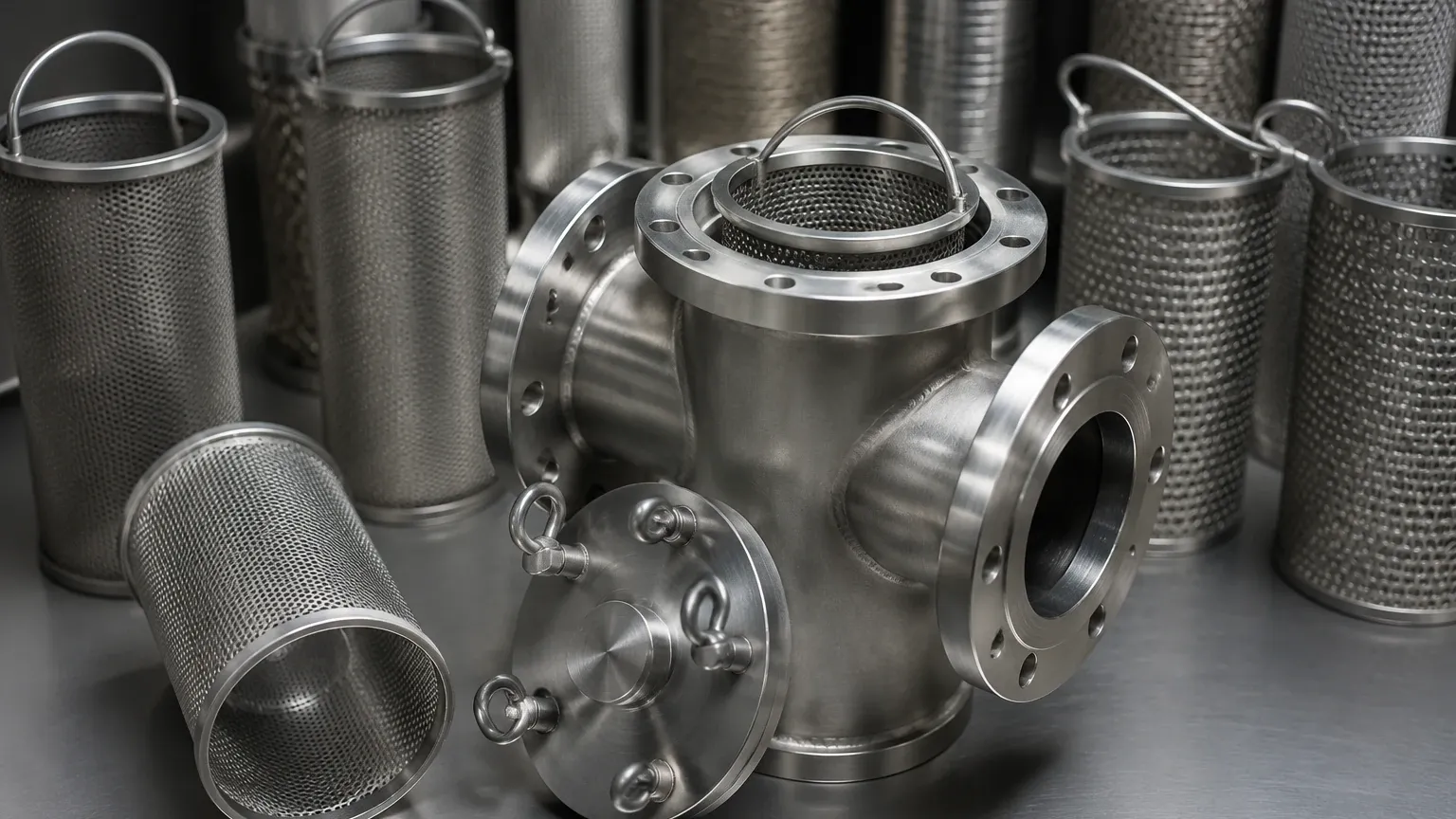
Basket strainers are closed vessels with a removable screen or basket that intercepts solids from a flowing liquid. Unlike Y-strainers, which are typically used for smaller amounts of debris in high-pressure steam or gas lines, basket strainers are designed for liquid systems where a higher debris load is expected. They offer a much larger internal volume, which allows for a greater dirt-holding capacity and a lower frequency of cleaning.
In the context of pump protection, basket strainers for pumps are usually installed on the suction side (the inlet). Their primary function is to prevent "tramp" material—such as welding slag, pipe scale, stones, or forgotten tools—from entering the pump casing. If these solids reach the pump, they can damage impellers, score mechanical seals, and erode internal clearances. By capturing these particles, the strainer ensures that the fluid entering the pump meets the required cleanliness standards for the specific pump design.
Key Engineering Specifications: Sizing and Flow Dynamics
Properly sizing a basket strainer is critical to maintaining system health. A strainer that is too small will create excessive resistance, while one that is incorrectly specified for the mesh size may allow harmful particles to pass through. Engineers must evaluate several technical parameters during the selection process:
Open Area Ratio (OAR)
One of the most important metrics in strainer design is the Open Area Ratio. This is the ratio of the total open area of the basket mesh to the internal cross-sectional area of the inlet pipe. For industrial applications, a ratio of 6:1 or 8:1 is often preferred. A high OAR ensures that even as the basket begins to fill with debris, there remains enough open surface area to allow fluid to pass through without creating a significant pressure drop. This is particularly vital for suction-side applications where maintaining the Net Positive Suction Head (NPSH) is mandatory.
Micron Rating and Mesh Selection
The "tightness" of the filtration is determined by the mesh size or micron rating. Engineers must select a mesh that is fine enough to protect the pump’s internal clearances but coarse enough to avoid rapid clogging. If the mesh is too fine, the strainer will act as a secondary filter rather than a protective guard, leading to frequent maintenance cycles and potential pump starvation.
Flow Velocity
Flow velocity through the strainer housing should generally be kept within 5 to 10 feet per second (fps) for liquid service. Higher velocities increase the risk of turbulence and significantly raise the pressure drop across the unit. In many cases, it is advisable to use a strainer that is one pipe size larger than the pump inlet to reduce velocity and improve the longevity of the basket.
Material Selection for Industrial Environments
The durability of a basket strainer depends heavily on the materials used for both the housing and the internal basket. Industrial environments often involve corrosive fluids, high temperatures, and fluctuating pressures, making material selection a primary engineering concern.
Stainless Steel (304 and 316)
Stainless steel is the industry standard for high-performance basket strainers. Type 304 stainless steel offers excellent strength and basic corrosion resistance suitable for water treatment and general industrial use. However, for more demanding applications—such as chemical processing, pharmaceutical manufacturing, or food and beverage production—Type 316 stainless steel is preferred. The addition of molybdenum in 316 stainless steel provides superior resistance to chlorides and acidic environments.
Gasket and Seal Compatibility
While the metal components handle the structural load, the gaskets and seals ensure the integrity of the system. Depending on the fluid being pumped, seals may be made of EPDM, Viton (FKM), or PTFE. Engineers must confirm that these materials are chemically compatible with the process fluid to prevent leaks or contamination.
Structural Reinforcement
For large-diameter strainers or those operating under high flow rates, the basket itself may require structural reinforcement. This often involves a perforated metal backup layer that supports a finer wire mesh. This "layered" construction prevents the mesh from collapsing or deforming under the force of the fluid flow, especially when the basket becomes partially blinded by debris.
Impact on Pump Performance: Cavitation and Pressure Drop
The relationship between the strainer and the pump is most visible in the system’s pressure profile. Every component in a piping system creates a pressure drop (Delta P), and the basket strainer is no exception.
Preventing Cavitation
For centrifugal pumps, the pressure at the suction inlet must remain above the vapor pressure of the liquid to prevent cavitation. Cavitation occurs when vapor bubbles form in the low-pressure areas of the pump and then collapse violently against the impeller, causing pitting and mechanical failure. If a basket strainer is incorrectly sized or allowed to clog, the pressure drop across it will increase, potentially dropping the inlet pressure below the required NPSH. Monitoring the differential pressure across the strainer is the most effective way to prevent this scenario.
Calculating Delta P
Manufacturers provide flow coefficient (Cv) values for their strainers, which allow engineers to calculate the expected pressure drop at a given flow rate. When selecting basket strainers for pumps, the "clean" pressure drop should ideally be less than 2 psi. If the calculated drop is higher, a larger housing or a coarser mesh may be required to ensure the pump operates within its efficient range.
Maintenance Protocols and Serviceability
A basket strainer is a manual component that requires regular intervention to remain effective. The ease of maintenance is a major factor in the total cost of ownership.
Differential Pressure Monitoring
The most reliable method for determining when a basket needs cleaning is the use of differential pressure gauges. By measuring the pressure before and after the strainer, operators can see exactly how much resistance the debris is creating. A common rule of thumb is to clean the basket when the pressure drop reaches 5 to 10 psi above the clean reading.
Cover Designs
For applications requiring frequent cleaning, the design of the strainer cover is essential. Bolted covers provide a secure seal for high-pressure applications but require more time and tools to open. Quick-opening covers, such as those using swing bolts or clamp-style closures, allow for rapid basket removal without the need for specialized tools, significantly reducing downtime during maintenance cycles.
Cleaning Procedures
When a basket is removed, it should be inspected for signs of damage or fatigue. Cleaning typically involves backwashing with water or using compressed air, depending on the nature of the debris. In some industries, such as food processing, the baskets may need to undergo ultrasonic cleaning to ensure all organic residues are removed.
Customization and OEM Integration Requirements
Standard off-the-shelf strainers do not always meet the unique constraints of specialized industrial equipment. This is where custom manufacturing and OEM capabilities become vital. Customization allows for the optimization of the strainer to fit specific spatial footprints, flow requirements, or specialized filtration levels.
Bespoke Basket Designs
In many cases, the standard basket geometry may not be ideal for the specific type of solids being captured. Custom baskets can be engineered with varying heights, diameters, and handle configurations to facilitate easier handling in cramped industrial environments. Furthermore, multi-stage baskets—combining different mesh sizes within a single unit—can be designed to capture a range of particle sizes in a single pass.
Connection Types
While flanged connections are standard for most industrial pumps, some systems may require NPT threaded, socket weld, or sanitary tri-clamp connections. Ensuring the strainer housing matches the existing piping standards is essential for a leak-free installation. Custom manufacturers like Kaifil can provide these varied connection types to ensure seamless integration into the customer's existing infrastructure.
Quality Assurance and Standards
For critical B2B applications, the quality of the welds and the precision of the mesh are non-negotiable. High-quality basket strainers should be manufactured following rigorous quality control processes, ensuring that the filtration accuracy remains consistent across production batches. This is particularly important in the pharmaceutical and food sectors, where material traceability and surface finish (such as electropolishing) are often mandated by regulatory bodies.
Final Evaluation Checklist for Engineers
Before finalizing the procurement of basket strainers for pumps, technical teams should confirm the following data points:
1. Fluid Characteristics: Confirm viscosity, temperature, and chemical composition to ensure material compatibility for both the housing and the seals.
2. Particle Load: Estimate the type and volume of debris expected. This determines whether a standard basket or a high-capacity custom design is necessary.
3. Pressure Constraints: Verify the maximum operating pressure and the allowable pressure drop (Delta P) to avoid pump cavitation.
4. Maintenance Access: Ensure there is sufficient clearance around the pump skid to remove the basket and that the cover design aligns with the facility's maintenance capabilities.
5. Regulatory Compliance: Check if the application requires specific certifications (e.g., FDA compliance for food contact or ASME pressure vessel codes).
By addressing these factors during the design and selection phase, engineers can ensure that their pumping systems remain protected, efficient, and reliable over a long service life. Investing in high-quality, well-engineered filtration components is a proactive strategy that pays dividends in reduced maintenance and extended equipment longevity.
