


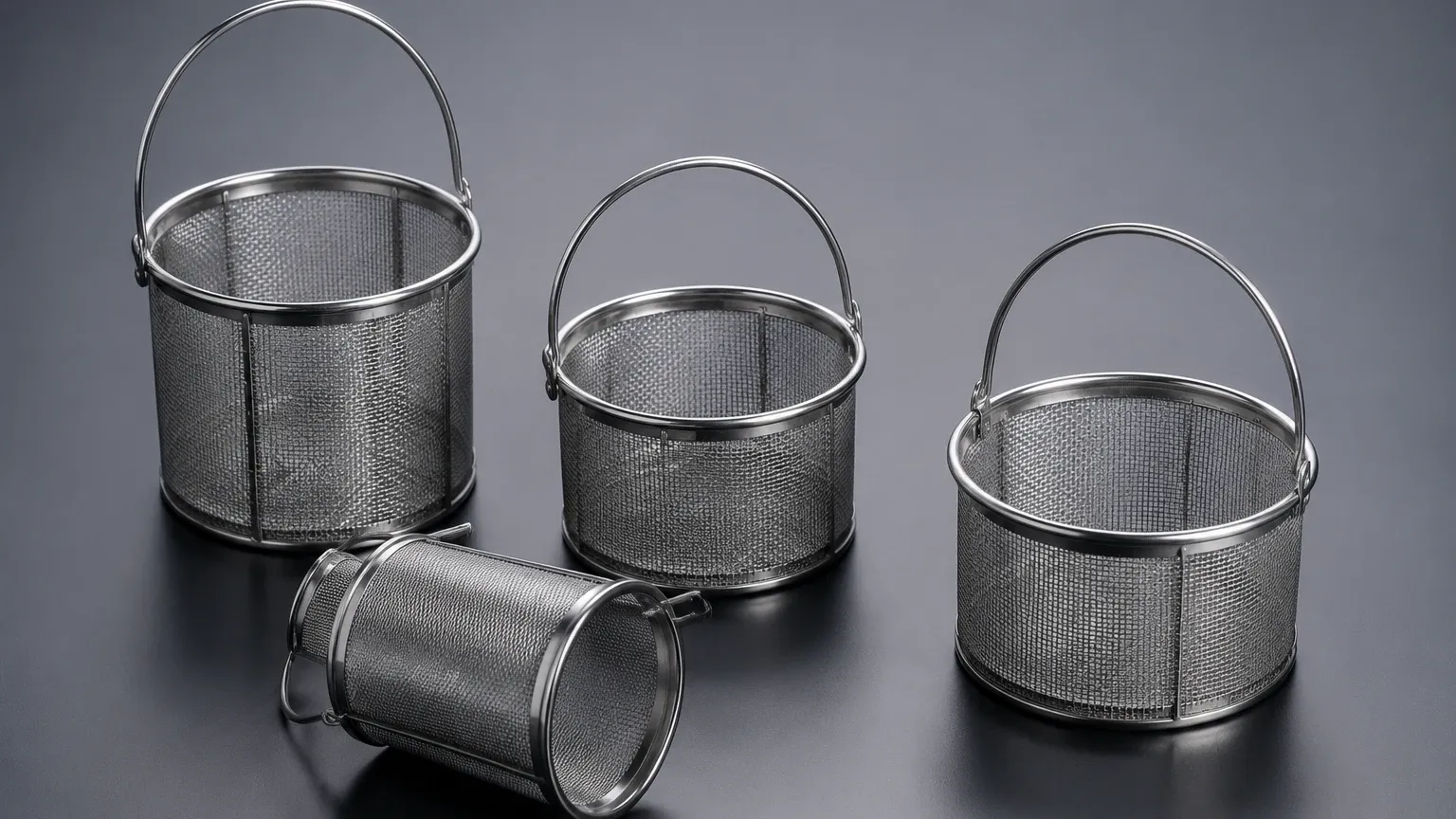
Strainer Basket with Handle
In industrial fluid handling systems, the protection of downstream equipment such as pumps, valves, and heat exchangers is paramount. Industrial filtration components, specifically Strainers & Baskets, serve as the primary mechanical barrier against particulate contamination. While the filtration media determines the efficiency of the process, the mechanical design of the basket—particularly the inclusion of a strainer basket with handle—significantly impacts the operational efficiency, safety, and maintenance lifecycle of the entire system.
For engineers and procurement teams, selecting the right strainer basket involves more than just matching a pipe size. It requires a deep understanding of material compatibility, structural integrity under pressure, and the ergonomic requirements of the maintenance staff who must service these components regularly.
Engineering Fundamentals of Industrial Strainer Baskets
Industrial strainer baskets are designed to remove solids from liquids or gases. Unlike temporary start-up strainers, these are permanent fixtures designed for high-capacity debris retention and long-term durability. The core construction typically involves a perforated metal body which may be lined with a finer wire mesh depending on the required filtration accuracy.
The structural design must account for the "open area ratio," which is the relationship between the total area of the holes in the basket and the cross-sectional area of the inlet pipe. A higher open area ratio results in a lower initial pressure drop and longer intervals between cleanings. When a strainer basket with handle is integrated into a duplex or simplex strainer housing, the handle design must be robust enough to withstand the weight of the basket when it is fully loaded with heavy debris or sludge.
The Role of the Handle in Maintenance and Safety
The addition of a handle to a strainer basket is a critical engineering feature rather than a secondary accessory. In high-flow industrial environments, baskets can become extremely heavy when filled with captured solids. Furthermore, in applications involving high temperatures or aggressive chemicals, direct contact with the basket body poses a significant safety risk to operators.
Types of Handle Configurations
There are several common handle designs used in industrial filtration:
* Bail Handles: A semi-circular wire handle that can be folded down. This is the most common design for a strainer basket with handle, providing a balance between ease of extraction and space efficiency within the housing.
* Fixed Bar Handles: A rigid bar welded across the top of the basket. These are typically used in larger, heavier baskets where maximum structural strength is required for mechanical lifting equipment.
* Drop-In / Swing Handles: These allow for a flush fit within the strainer housing, ensuring that the handle does not interfere with the flow path or the seating of the housing cover.
From a maintenance perspective, a well-designed handle allows for rapid removal and replacement during scheduled shutdowns, directly reducing the Total Cost of Ownership (TCO) by minimizing labor time and system downtime.
Material Selection and Chemical Compatibility
Material selection is the most critical factor in ensuring the longevity of a strainer basket. Kaifil specializes in stainless steel solutions, primarily utilizing Grade 304 and Grade 316L.
Grade 304 Stainless Steel
304 stainless steel is the standard for general-purpose industrial applications. It offers excellent strength and good corrosion resistance for water treatment, hydraulic oils, and non-corrosive chemical processing. It is a cost-effective choice for environments where extreme acidity or salinity is not a concern.
Grade 316L Stainless Steel
For more demanding environments, Grade 316L is the preferred material. The addition of molybdenum provides superior resistance to pitting and crevice corrosion, particularly in chloride-rich environments. This makes a 316L strainer basket with handle the industry standard for pharmaceutical manufacturing, food and beverage processing, and marine applications where hygiene and corrosion resistance are non-negotiable.
Technical Specifications: Mesh, Perforation, and Micron Ratings
Selecting the correct filtration level is a balance between protecting equipment and maintaining flow rates. Industrial baskets generally utilize two layers of media:
1. The Support Layer: A perforated metal cylinder that provides the mechanical strength to withstand differential pressure. Common perforation sizes range from 1/32" to 1/2".
2. The Filtration Layer: A fine wire mesh lining that determines the actual micron rating. This can range from coarse 20 mesh (approx. 840 microns) down to 400 mesh (approx. 37 microns) or finer.
When specifying a strainer basket with handle, engineers must confirm the maximum allowable pressure drop (ΔP). As the basket collects debris, the pressure drop increases. If the basket is not cleaned in time, the structural integrity of the mesh or the perforated metal may be compromised, leading to "blow-by" where contaminants bypass the filter and damage downstream pumps.
Customization for Demanding Industrial Applications
Standard off-the-shelf strainer baskets often fail to meet the specific requirements of complex industrial systems. Customization is frequently necessary to accommodate unique flow patterns, unconventional housing dimensions, or specific debris types.
Kaifil provides OEM and customized filtration solutions that allow for modifications in:
* Dimensional Accuracy: Custom heights and diameters to fit existing non-standard housings.
* Reinforcement: Adding internal or external support rings to prevent basket collapse in high-pressure hydraulic systems.
* Handle Customization: Designing specialized handles for use with overhead cranes or automated retrieval systems in large-scale water treatment plants.
* Multi-Stage Filtration: Incorporating multiple layers of varying mesh sizes within a single basket to capture a wide range of particle sizes simultaneously.
Evaluating Pressure Drop and Flow Efficiency
One of the most common mistakes in filter selection is over-specifying the filtration fineness. A mesh that is too fine will clog rapidly, leading to frequent maintenance and high pressure drops. Conversely, a mesh that is too coarse will allow damaging particles to pass through.
Engineers should calculate the "Clean Pressure Drop" using the fluid's viscosity and flow rate. A strainer basket with handle should ideally operate with a clean pressure drop of less than 2 PSI. Once the pressure drop reaches 10-15 PSI, the basket must be removed for cleaning. The handle facilitates this frequent transition, ensuring that the basket can be pulled, cleaned, and re-inserted without the need for specialized tools or excessive force.
Maintenance Best Practices and Replacement Cycles
The durability of a stainless steel strainer basket is one of its primary advantages over disposable filters. However, proper maintenance is required to ensure a long service life.
Cleaning Methods
* Manual Cleaning: For coarse debris, high-pressure water or air can be used to dislodge particles from the mesh.
* Ultrasonic Cleaning: For baskets used in the pharmaceutical or food industries, ultrasonic cleaning is recommended to remove fine particulates trapped within the wire mesh weave.
* Chemical Cleaning: In applications involving resins or polymers, chemical solvents may be required to dissolve build-up without damaging the stainless steel substrate.
When to Replace
While stainless steel baskets are reusable, they are not infinite. Signs that a basket requires replacement include:
* Mesh Blinding: Permanent clogging that cannot be removed by cleaning.
* Structural Deformation: Any signs of buckling in the perforated support or the handle attachment points.
* Corrosion: Evidence of pitting or thinning of the metal walls, which can lead to sudden failure under pressure.
Conclusion: Selecting the Right Partner for Filtration Solutions
Choosing the correct Strainers & Baskets is a critical decision that affects the reliability of an entire industrial facility. A strainer basket with handle provides the necessary balance of filtration performance and operational practicality. By focusing on high-quality materials like 304 and 316L stainless steel and insisting on precise manufacturing standards, engineers can ensure their systems remain protected against the costly effects of contamination.
When evaluating suppliers, it is essential to confirm their ability to provide technical documentation, material certifications, and customization support. A manufacturer like Kaifil, with extensive experience in precision metal filtration, can help technical teams navigate the complexities of material selection and design to achieve optimized filtration performance and a lower total cost of ownership.
