


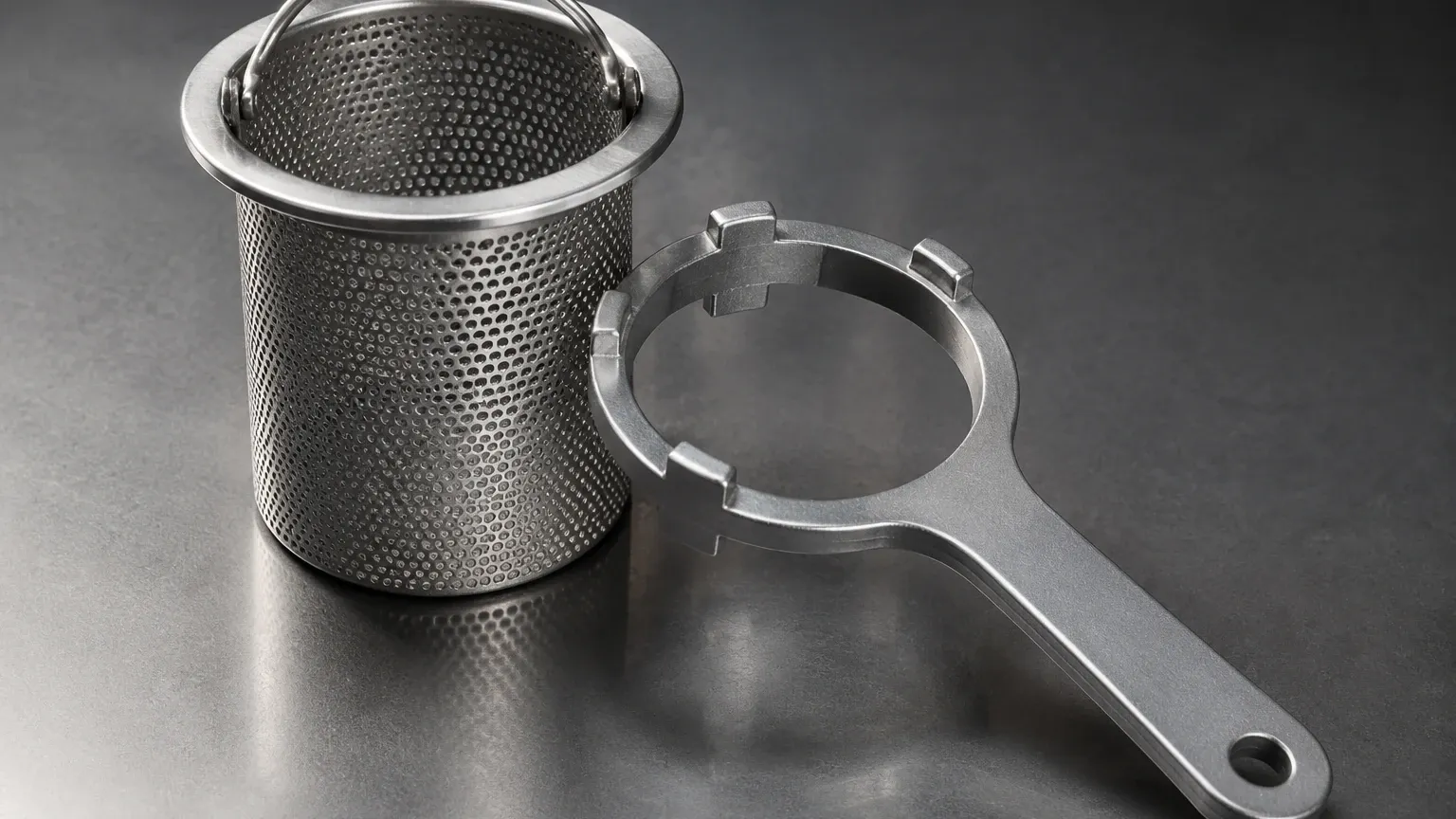
Strainer Basket Wrench
In industrial fluid handling and chemical processing, the integrity of a filtration system depends not only on the quality of the filter media but also on the precision of the assembly and maintenance processes. Industrial strainers and baskets are designed to remove unwanted solids from liquid streams, protecting sensitive downstream equipment such as pumps, valves, and heat exchangers. However, to maintain these systems effectively, engineers and maintenance teams must utilize specialized tools, such as the strainer basket wrench, to ensure that components are seated correctly and seals remain leak-proof under high-pressure conditions.
Selecting the right tools and understanding the mechanical requirements of Strainers & Baskets is essential for minimizing downtime and extending the service life of the filtration hardware. This guide examines the technical considerations surrounding strainer maintenance, the role of specialized wrenches, and the engineering criteria for selecting high-performance filtration components.
The Integral Role of Strainers & Baskets in Industrial Fluid Systems
Industrial strainers are coarse filters used to remove larger particles from a process flow. Unlike fine membrane filters, strainers are typically designed for high-flow applications where the primary goal is the protection of mechanical equipment. The core of these systems is the basket, a perforated or wire mesh component that captures debris while allowing the fluid to pass through with minimal resistance.
Types of Industrial Strainers
1. Simplex Strainers: Used in batch processes where the flow can be interrupted to clean the basket. These are common in chemical processing and water treatment where periodic maintenance is scheduled.
2. Duplex Strainers: Feature two separate basket chambers with a diversion valve. This allows one side to be cleaned while the other remains in operation, making them ideal for continuous flow applications like oil lubrication systems or cooling water loops.
3. Y-Strainers: Characterized by their compact, "Y" shaped design, these are typically used for steam or gas lines where the amount of debris is relatively low.
In each of these designs, the basket must be securely held in place to prevent "bypass," where fluid flows around the filter media rather than through it. This is where the precision of the seating mechanism and the tools used to secure it, such as a specialized strainer basket wrench, become critical.
Technical Functionality of the Strainer Basket Wrench
In an industrial context, a strainer basket wrench is a specialized tool designed to interface with the retaining nuts, cover bolts, or internal seating rings of a strainer housing. Unlike standard pipe wrenches, which can mar the surface of stainless steel components or apply uneven torque, a dedicated wrench is engineered to fit the specific geometry of the strainer assembly.
Preventing Component Deformation
Industrial filter housings are often manufactured from high-grade stainless steel (SS304 or SS316L). While these materials are durable, the threads and sealing surfaces can be damaged by improper tools. A strainer basket wrench provides a distributed load across the contact points, ensuring that the retaining ring is tightened to the manufacturer's specification without cross-threading or deforming the basket rim.
Achieving Proper Seal Compression
Most industrial strainers rely on O-rings or flat gaskets to achieve a pressure-tight seal. If the basket is not seated with uniform pressure, the seal may fail, leading to leaks or pressure drops. The use of a dedicated wrench allows maintenance personnel to apply the precise amount of torque required to compress the gasket sufficiently for the operating pressure of the system, which can often exceed 150 PSI (10 bar) in standard industrial applications.
Engineering Specifications and Material Selection
When specifying Strainers & Baskets for a project, engineers must look beyond the tool and focus on the metallurgy and construction of the filtration elements themselves. Kaifil specializes in custom stainless steel solutions that address the specific chemical and thermal demands of various industries.
Material Compatibility
* Stainless Steel 304: Suitable for general-purpose applications, including water treatment and food processing where corrosion resistance is required but chemical aggression is limited.
* Stainless Steel 316/316L: The preferred choice for pharmaceutical and chemical processing. The addition of molybdenum provides superior resistance to chlorides and acidic environments, preventing pitting and crevice corrosion.
* Specialty Alloys: For highly aggressive environments, such as seawater or high-temperature petrochemical processing, materials like Monel or Hastelloy may be required for the basket construction.
Filtration Accuracy and Mesh Selection
Selection of the mesh size is a balance between protection and flow efficiency. A mesh that is too fine will clog rapidly, increasing the frequency of maintenance and the need for the strainer basket wrench. Conversely, a mesh that is too coarse will allow damaging particles to pass through. Engineers typically specify the "micron rating" or "mesh count" based on the smallest particle size that must be removed to protect downstream components.
Operational Maintenance: Ensuring Seal Integrity and System Longevity
The maintenance cycle of an industrial strainer is usually dictated by the differential pressure ($ΔP$) across the unit. As the basket accumulates debris, the resistance to flow increases. When the pressure drop reaches a predetermined limit—often between 5 and 10 PSI—the basket must be removed and cleaned.
Step-by-Step Maintenance Protocol
1. System Isolation: Close the inlet and outlet valves to isolate the strainer housing. In duplex systems, switch the flow to the standby chamber.
2. Depressurization: Slowly open the vent valve to release internal pressure. This is a critical safety step to prevent the forceful ejection of the cover or fluid.
3. Cover Removal: Use the appropriate strainer basket wrench or spanner to loosen the cover bolts or retaining ring. This ensures the hardware remains in good condition for re-installation.
4. Basket Inspection: Remove the basket and inspect for signs of structural fatigue, such as broken wires or a distorted frame. Cleaning should be performed using ultrasonic baths or high-pressure air/water, depending on the contaminant.
5. Re-installation: Inspect the O-ring for nicks or flat spots. Re-seat the basket, ensuring it is flush with the housing's internal ledge. Use the wrench to secure the assembly, following a star pattern for bolted covers to ensure even pressure.
Customization Strategies for High-Performance Filtration
Off-the-shelf filtration solutions often fail to meet the specific geometric or performance requirements of complex industrial plants. Customization is a core strength of Kaifil’s manufacturing process, allowing for the development of filtration components that fit perfectly within existing infrastructure.
Customized Basket Designs
Baskets can be reinforced with perforated metal backings to withstand high differential pressures without collapsing. For applications involving high-viscosity fluids, the pleating of the wire mesh can significantly increase the surface area, extending the time between cleaning cycles. Furthermore, the handles and seating rings can be customized to interface with specific maintenance tools, simplifying the work for onsite technicians.
OEM and Precision Engineering
For equipment manufacturers (OEMs), having a reliable source for precision-engineered filter components is vital. Custom Strainers & Baskets can be designed to meet specific flow coefficients ($Cv$) and space constraints, ensuring that the filtration stage does not become a bottleneck in the system design.
Total Cost of Ownership and Selection Logic
When evaluating filtration solutions, purchasing teams should consider the Total Cost of Ownership (TCO) rather than the initial purchase price alone. A high-quality stainless steel basket, maintained with the correct strainer basket wrench, will far outlast cheaper alternatives that may corrode or fail under pressure.
Factors Influencing TCO:
* Durability: High-grade materials and robust welding techniques reduce the frequency of replacement.
* Cleaning Efficiency: Well-designed baskets are easier to clean, reducing labor costs and solvent use.
* System Protection: Reliable filtration prevents expensive repairs to pumps and turbines, which can cost thousands of dollars in parts and lost production time.
* Tooling Investment: Investing in the correct maintenance tools prevents damage to the housing threads, which can be the most expensive part of the strainer assembly to replace.
Conclusion
Effective industrial filtration is a combination of high-quality hardware and disciplined maintenance practices. The use of a strainer basket wrench is a small but vital part of a larger strategy to ensure system reliability and efficiency. By selecting the right materials, such as those provided by Kaifil, and adhering to rigorous engineering standards for installation and upkeep, industrial facilities can achieve optimal fluid purity and protect their critical infrastructure from the damaging effects of particulate contamination.
For engineers looking to optimize their filtration processes, understanding the interplay between basket design, material selection, and maintenance tooling is the first step toward a more resilient and cost-effective operation.
