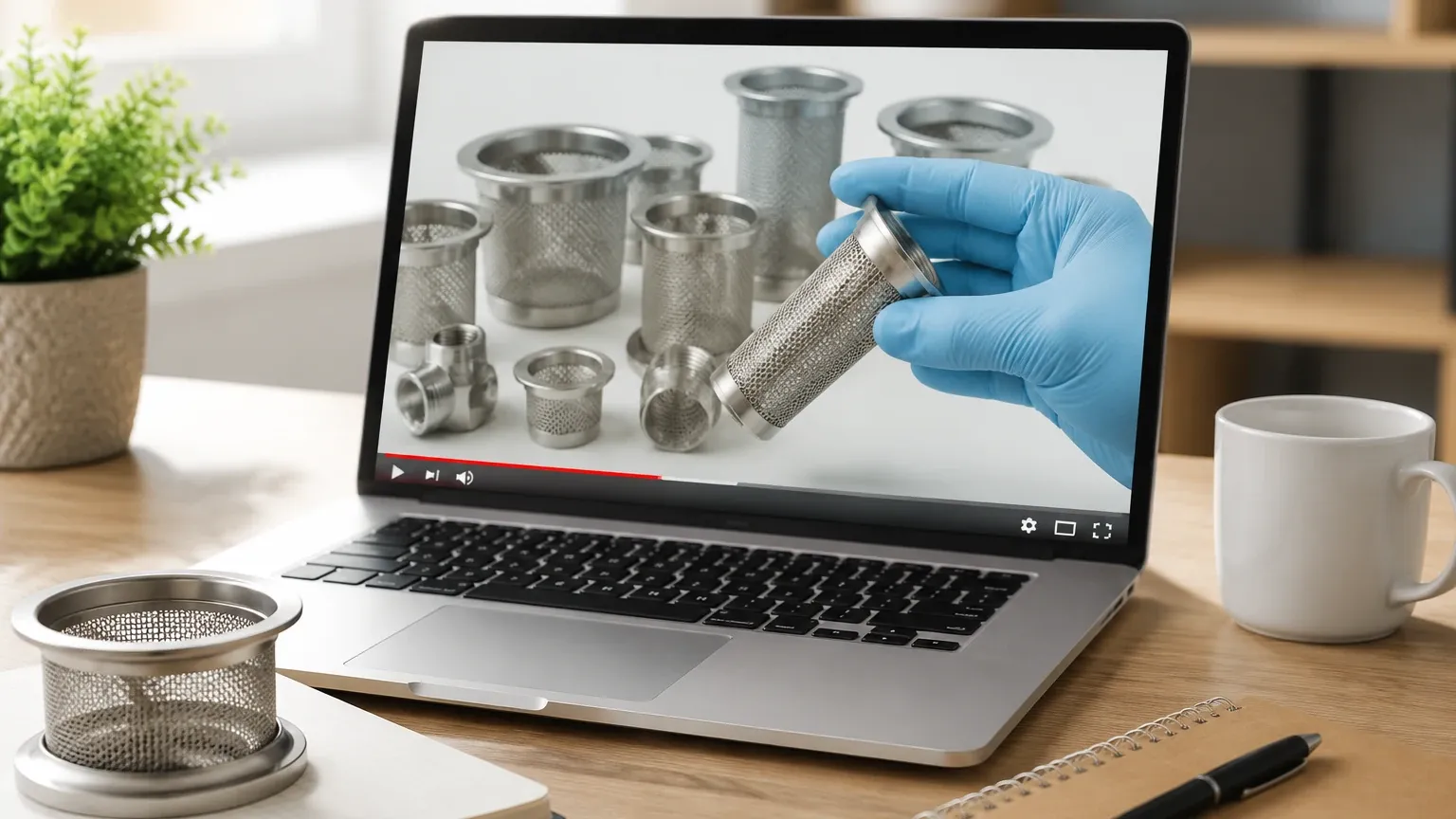
Basket Strainer Youtube
In the modern industrial landscape, technical professionals and procurement officers often turn to digital platforms to visualize equipment before integration. Searching for a "basket strainer youtube" demonstration provides a foundational understanding of how these components function within a piping system. However, while a video can illustrate the physical assembly and basic flow path, the engineering nuances required for high-performance industrial filtration demand a deeper technical analysis. For engineers tasked with maintaining system integrity in chemical processing, food and beverage production, or hydraulic systems, selecting the right Strainers & Baskets involves evaluating material compatibility, pressure thresholds, and filtration precision beyond what a simple visual guide can offer.
Understanding Industrial Basket Strainers: Beyond the Visual Guide
A basket strainer is a closed vessel with a removable screen element that intercepts and removes particulate matter from a flowing liquid. When users search for "basket strainer youtube" content, they are typically looking for installation tutorials, seal replacement procedures, or a visual representation of how the basket captures debris. While these resources are excellent for training maintenance staff, they often overlook the critical engineering specifications that prevent system failure.
Industrial basket strainers are designed to protect downstream equipment—such as pumps, valves, and heat exchangers—from damage caused by scale, weld beads, or foreign particles. Unlike simple Y-strainers, basket strainers are designed for applications where high flow rates and high dirt-holding capacities are required. The "basket" design allows for a larger surface area relative to the pipe diameter, which results in a lower initial pressure drop and longer intervals between cleaning cycles.
At Kaifil, we emphasize that the visual simplicity of a strainer belies the complex fluid dynamics at play. The internal geometry must be optimized to minimize turbulence, and the basket itself must be structurally reinforced to withstand the differential pressure that builds up as the screen becomes loaded with contaminants.
Key Engineering Specifications for Strainers & Baskets
When transitioning from a general search for "basket strainer youtube" videos to a professional procurement phase, several technical parameters must be defined. These specifications ensure the filtration solution is fit for purpose in demanding environments.
1. Material Selection and Corrosion Resistance
The choice of material is the most significant factor in the longevity of a strainer. While a video might show a generic metal unit, industrial applications require specific alloys:
* 304 Stainless Steel: Suitable for general industrial use, water treatment, and less corrosive chemical environments.
* 316L Stainless Steel: Essential for food and beverage, pharmaceutical, and marine applications due to its superior resistance to chlorides and organic acids.
* Specialty Alloys: For highly aggressive chemical processing, materials like Hastelloy or Monel may be required to prevent pitting and stress corrosion cracking.
2. Filtration Accuracy (Micron Rating vs. Mesh Count)
Filtration precision is determined by the basket's lining. A standard basket may use a perforated metal sheet for coarse straining, but for finer particles, a wire mesh lining is added. Engineers must distinguish between mesh count (the number of openings per linear inch) and the actual micron rating (the size of the smallest particle the mesh will reliably trap). Selecting a mesh that is too fine will lead to rapid clogging and excessive pressure drop, while a mesh that is too coarse will allow damaging particles to pass through to sensitive equipment.
Evaluating Performance: Flow Rate and Pressure Drop
One of the most common questions engineers ask after watching a "basket strainer youtube" demonstration is how the unit will affect system pressure. Every strainer introduces a degree of resistance to the flow, known as pressure drop (ΔP).
In a clean state, the pressure drop is influenced by the fluid's viscosity, velocity, and the open area ratio of the basket. The open area ratio is the relationship between the total area of the holes in the basket and the cross-sectional area of the inlet pipe. A high-quality industrial basket strainer should ideally offer an open area ratio of at least 6:1. This ensures that even when the basket is 50% clogged, the pressure drop remains within acceptable limits, preventing cavitation in pumps or reduced efficiency in heat transfer processes.
Calculations for total cost of ownership must include the energy costs associated with the pressure drop. A poorly designed strainer with a restricted flow path may be cheaper upfront but will result in higher electrical consumption for the pumps over the equipment's lifecycle.
Maintenance and Operational Longevity
Maintenance tutorials found via "basket strainer youtube" often demonstrate the removal of the basket for cleaning. While the process is straightforward, industrial best practices involve several critical steps to ensure safety and equipment durability:
1. Venting and Draining: Before opening the strainer cover, the unit must be isolated from the flow and depressurized. High-performance strainers include dedicated vent and drain ports to facilitate this process safely, especially when handling hazardous chemicals or high-temperature fluids.
2. Seal Inspection: The O-ring or gasket that seals the cover is a common point of failure. During every cleaning cycle, the seal should be inspected for compression set, chemical degradation, or physical tears.
3. Basket Integrity: Over time, the constant flow of fluid and the impact of large particles can fatigue the basket. Engineers should look for signs of "blinded" mesh (where particles are permanently lodged in the openings) or broken welds at the handle and base.
4. Differential Pressure Monitoring: Relying on a fixed schedule for cleaning is inefficient. Installing differential pressure gauges across the inlet and outlet allows for "on-demand" cleaning, which reduces unnecessary labor and prevents the risk of basket collapse due to extreme pressure buildup.
Customization Options for Demanding Industrial Applications
Off-the-shelf filtration components rarely meet the specific needs of complex industrial systems. This is where the expertise of a manufacturer like Kaifil becomes invaluable. While a "basket strainer youtube" video might show a standard T-type or U-type configuration, many applications require custom engineering.
* Custom Dimensions: In retrofit scenarios, the face-to-face dimensions of the strainer may need to be adjusted to fit existing piping without costly modifications.
* Reinforced Baskets: For high-viscosity fluids or high-pressure systems, baskets can be reinforced with heavy-duty perforated plates or internal supports to prevent deformation.
* Multi-Basket Designs: For very large flow rates, a single basket becomes too heavy for manual handling. Multi-basket strainers distribute the flow across several smaller baskets, making maintenance safer and more manageable for a single operator.
* Heating Jackets: In applications involving resins, chocolate, or heavy oils, the fluid must be kept at a specific temperature to maintain flow. Steam or electric heating jackets can be integrated into the strainer body to prevent the product from solidifying.
Selecting the Right Filtration Partner
Choosing a supplier for Strainers & Baskets is a decision that impacts the reliability of an entire production line. While digital resources like YouTube provide a useful starting point for visual familiarization, they cannot replace the technical support provided by an experienced manufacturer.
At Kaifil, we bridge the gap between visual concepts and engineering reality. Our manufacturing process focuses on precision welding, high-grade material sourcing, and rigorous quality control. We understand that a strainer is not just a metal basket in a box; it is a critical safeguard for your capital equipment.
When evaluating a potential filtration solution, engineers should confirm the following with their supplier:
* Material Certification: Can the manufacturer provide MTRs (Material Test Reports) to verify the grade of stainless steel?
* Pressure Ratings: Is the housing designed and tested to withstand the maximum operating pressure of the system, including potential surges?
* Chemical Compatibility: Has the seal material (EPDM, Viton, PTFE) been verified against the specific chemicals in the process?
* Lead Times and Support: In the event of a process change, how quickly can custom replacement baskets be manufactured and shipped?
Conclusion
Visual tools and searches for "basket strainer youtube" content are excellent for initial research and staff training. They provide a clear view of the mechanical simplicity that makes basket strainers so effective. However, the successful implementation of industrial filtration requires a deep dive into the technical specifications that govern performance, safety, and durability.
By focusing on high-quality materials, optimized flow dynamics, and customized engineering, Kaifil provides filtration solutions that go beyond the basics. Whether you are protecting a high-pressure hydraulic system or ensuring the purity of a pharmaceutical batch, the right basket strainer is an investment in the long-term health of your industrial infrastructure. For detailed technical specifications and to explore our range of customizable filtration components, we invite you to Review product options and application support on our official product page.