


Basket Strainer Yoshitake
In industrial fluid handling systems, the protection of sensitive downstream equipment—such as pumps, flow meters, control valves, and heat exchangers—is a primary engineering concern. Debris, scale, and particulate matter can cause catastrophic failure or significant efficiency losses if not properly managed. Among the various solutions available, the basket strainer yoshitake is a recognized component in many Japanese and international piping systems, particularly those adhering to JIS (Japanese Industrial Standards).
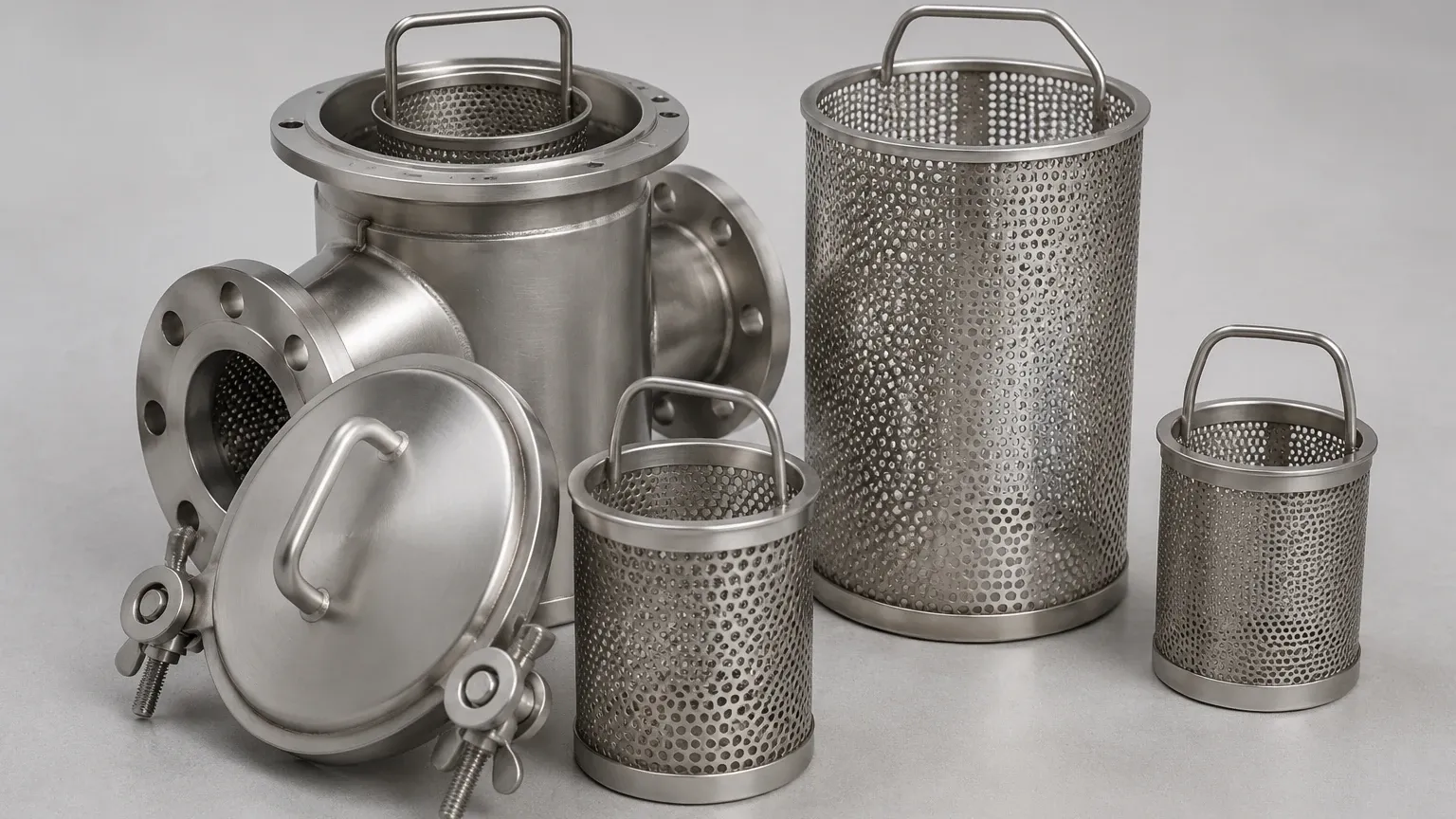
For engineers and procurement professionals, understanding the technical nuances of these strainers, alongside the selection of high-quality Strainers & Baskets, is essential for maintaining system integrity and optimizing the total cost of ownership. This guide explores the engineering principles, material considerations, and maintenance protocols associated with industrial basket strainers.
The Engineering Role of Basket Strainers in Industrial Piping
Unlike Y-strainers, which are typically used for smaller-diameter pipes or applications with lower debris concentrations, basket strainers are designed for high-flow systems where a larger dirt-holding capacity is required. The "basket" design allows for a significantly greater surface area for filtration relative to the pipe diameter. This results in a lower initial pressure drop and longer intervals between cleaning cycles.
In the context of a basket strainer yoshitake, these units are frequently employed in steam, air, water, and oil lines. Their upright configuration allows for top-entry access, meaning the filter element can be serviced without draining the entire piping system in many configurations. This is a critical advantage in continuous process industries where downtime must be minimized.
Flow Dynamics and Pressure Drop
A primary consideration for any filtration component is the pressure drop ($ΔP$). An excessively high pressure drop forces pumps to work harder, increasing energy consumption and potentially leading to cavitation. The internal geometry of a basket strainer is engineered to transition the fluid flow from the inlet pipe into the larger chamber of the strainer body, through the mesh basket, and back into the outlet pipe with minimal turbulence.
Engineers typically look for a "Ratio of Open Area" (the total area of the holes in the basket divided by the cross-sectional area of the inlet pipe). A high-performance basket strainer often maintains a ratio of 6:1 or higher, ensuring that even as the basket begins to collect debris, the system flow remains stable.
Technical Evaluation of Yoshitake Basket Strainer Designs
When evaluating a basket strainer yoshitake, technical teams must consider the specific model series—such as the SY-40 or SY-20—which are common in various industrial sectors. These models are defined by their body material, pressure rating, and connection type.
Material Selection
Material compatibility is the cornerstone of industrial filtration. Common materials for the strainer body include:
* Ductile Iron (FCD450): Suitable for general water and oil applications where moderate pressure and temperature resistance are required.
* Cast Carbon Steel: Used for higher pressure ratings and steam applications.
* Stainless Steel (SCS13/SCS14): Essential for corrosive environments, chemical processing, and food-grade applications where contamination must be avoided.
While the body provides the structural housing, the internal basket is the functional heart of the unit. These are almost exclusively manufactured from stainless steel (typically SUS304 or SUS316) to ensure durability against erosion and corrosion.
Connection Standards
Given the brand's origins, many Yoshitake components follow JIS flange standards (e.g., JIS 10K, 20K). However, for global integration, many models are available with ANSI or DIN flange configurations. Ensuring the correct connection standard is vital to prevent installation delays and ensure leak-proof seals in high-pressure environments.
Key Engineering Considerations for Strainer Selection
Selecting the right Strainers & Baskets involves more than matching pipe sizes. To ensure long-term performance, several technical variables must be confirmed during the specification phase.
Filtration Accuracy: Mesh vs. Micron
The filtration requirement is determined by the smallest particle that could damage downstream equipment. This is measured in either mesh count (the number of openings per linear inch) or microns (the actual size of the opening).
For a basket strainer yoshitake, standard baskets often come with a perforated metal support lined with a finer wire mesh. For example, a 40-mesh liner might be used for general water service, while a 100-mesh or 200-mesh liner might be required for protecting precision lubricating oil systems. It is important to note that as the mesh count increases, the available open area decreases, which may necessitate a larger strainer size to maintain an acceptable pressure drop.
Viscosity and Fluid Type
The viscosity of the fluid significantly impacts the pressure drop across the basket. High-viscosity fluids, such as heavy oils or resins, require larger mesh openings or a larger strainer body to compensate for the increased resistance to flow. If the fluid is non-Newtonian or contains fibrous material, a standard basket might clog rapidly, requiring a custom-designed internal element with a specific weave pattern.
The Importance of High-Quality Replacement Baskets
The filter basket is a consumable component. Over time, the constant impact of debris and the stress of differential pressure can lead to mesh fatigue, tearing, or structural collapse. When replacing a basket in a basket strainer yoshitake, it is not always necessary to source a branded replacement if a custom manufacturer can provide a component that meets or exceeds the original specifications.
Customization of Internal Elements
Advanced manufacturing allows for the creation of custom baskets that optimize filtration for specific process conditions. Key customization options include:
1. Reinforced Structures: For high-pressure differential applications, the mesh can be sandwiched between layers of perforated metal or supported by a heavy-duty cage to prevent deformation.
2. Magnetic Inserts: In systems where fine iron or steel particles (from pipe wear) are a concern, magnetic rods can be installed inside the basket to capture sub-micron metallic debris that would otherwise pass through the mesh.
3. Multi-Stage Filtration: Baskets can be designed with multiple layers of varying mesh sizes to provide graduated filtration, extending the life of the finest inner mesh layer.
Using high-quality, precision-engineered Strainers & Baskets ensures that the filtration system remains a reliable barrier rather than a point of failure.
Maintenance Protocols and Operational Safety
Proper maintenance of a basket strainer yoshitake is essential for both system performance and operator safety. Because basket strainers are often used in high-flow or high-pressure lines, specific protocols must be followed.
Differential Pressure Monitoring
The most effective way to determine when a basket needs cleaning is by monitoring the differential pressure ($ΔP$) across the inlet and outlet. Many industrial installations include pressure gauges on both sides of the strainer. A "clean" $ΔP$ is established at startup; once the pressure drop reaches a predetermined limit (often 10-15 psi or 0.1 MPa, depending on the system), the basket must be cleaned.
Ignoring a high $ΔP$ can lead to:
* Basket Collapse: The pressure force becomes high enough to physically crush the stainless steel mesh.
* Bypass: Debris may be forced through the seals or through the mesh itself.
* Pump Damage: Increased resistance can lead to motor overheating or pump cavitation.
Cleaning and Inspection
When servicing a basket strainer yoshitake, the system must be depressurized and drained. The top cover (often held by bolts or a quick-release clamp) is removed, and the basket is lifted out.
During cleaning, the mesh should be inspected for:
* Pitting or Corrosion: Indicating that the current material (e.g., 304 SS) may not be sufficient for the chemical environment.
* Broken Wires: Which can allow oversized particles to pass through.
* Gasket Integrity: The seal between the basket and the strainer body must be intact to prevent fluid from bypassing the filter element.
Optimizing Filtration Performance for Specific Applications
Different industries have unique requirements that influence how a basket strainer yoshitake is utilized.
Chemical and Pharmaceutical Processing
In these sectors, purity is paramount. Stainless steel strainers are standard, often requiring high-polish finishes to prevent bacterial growth and ensure easy cleaning. The use of 316L stainless steel is common due to its superior resistance to chloride-induced pitting.
Food and Beverage
Filtration in the food industry requires compliance with sanitary standards. Basket strainers used here must be designed without "dead zones" where organic material could collect and decay. The baskets themselves are often manufactured with smooth, burr-free perforated metal and high-grade mesh to ensure no metal fragments enter the product stream.
Steam and Thermal Systems
Yoshitake is particularly well-known for steam applications. In steam lines, basket strainers must handle high temperatures and the potential for water hammer. The baskets must be robustly constructed to withstand the thermal cycling and the high velocity of steam flow. Proper insulation of the strainer body is also recommended to prevent heat loss and protect personnel.
Conclusion: Making Informed Procurement Decisions
When integrating or maintaining a basket strainer yoshitake, engineers must look beyond the initial purchase price. The total cost of ownership is determined by the durability of the internal components, the ease of maintenance, and the effectiveness of the filtration in protecting more expensive downstream assets.
By focusing on technical specifications—such as the material grade of the Strainers & Baskets, the open area ratio, and the precision of the mesh weave—facilities can ensure their fluid systems operate at peak efficiency. Whether you are replacing an existing unit or designing a new process line, selecting filtration components that offer the right balance of flow capacity and particle retention is the key to industrial reliability.
For specialized applications where standard off-the-shelf baskets do not meet the required micron rating or structural strength, partnering with a manufacturer capable of producing custom stainless steel filtration solutions provides the necessary flexibility to solve complex industrial challenges.
