


Basket Strainer 12 Inch
In large-scale industrial fluid handling, the efficiency of a piping system is often determined by the reliability of its protection components. A basket strainer 12 inch is a critical asset for high-flow applications, designed to remove unwanted solids from liquids to protect downstream equipment such as pumps, valves, and heat exchangers. At this scale, the engineering requirements shift from simple filtration to complex fluid dynamics, structural integrity, and long-term maintenance planning.
As a specialized manufacturer of industrial filtration solutions, Kaifil understands that selecting a 12-inch strainer is not merely a matter of matching pipe diameters. It requires a deep dive into flow rates, pressure drop tolerances, and material compatibility to ensure the longevity of the entire process line. This guide examines the technical considerations essential for engineers and procurement teams when evaluating Strainers & Baskets for heavy-duty industrial service.
Engineering Fundamentals of Large-Diameter Strainers
A 12-inch basket strainer is typically utilized in main headers or high-volume intake systems where flow rates are substantial. Unlike smaller Y-strainers, the basket configuration offers a larger surface area, which is vital for maintaining a low pressure drop (Delta P) across the filter element.
Flow Velocity and Pressure Drop
One of the primary concerns with a basket strainer 12 inch is the velocity of the fluid. In a 12-inch pipe, high velocities can lead to significant turbulence and energy loss if the strainer is not correctly sized. Engineers must calculate the clean pressure drop based on the fluid’s viscosity and specific gravity. A well-designed 12-inch unit should maintain an Open Area Ratio (OAR) of at least 6:1 or 8:1 relative to the cross-sectional area of the pipe. This ensures that even as the basket begins to collect debris, the system does not experience a sudden spike in backpressure that could damage pumps.
Structural Integrity and Housing Design
At the 12-inch scale, the housing must withstand significant mechanical stresses. Most industrial applications require housings rated for specific pressure classes, such as ASME Class 150, 300, or higher. The weight of the fluid contained within a 12-inch housing, combined with the pressure of the system, necessitates robust wall thicknesses and high-quality welding. Kaifil utilizes advanced manufacturing techniques to ensure that the housing and the internal basket support remain stable under the pulsating loads common in hydraulic and chemical processing environments.
Material Selection for Industrial Environments
The choice of material for a basket strainer 12 inch is dictated by the chemical nature of the fluid, the operating temperature, and the external environment.
Stainless Steel 304 and 316L
Stainless steel is the industry standard for high-performance filtration.
- Type 304: Suitable for water treatment, food and beverage, and general industrial applications where moderate corrosion resistance is required.
- Type 316L: The preferred choice for chemical processing, pharmaceutical, and marine environments. The addition of molybdenum provides superior resistance to pitting and crevice corrosion, especially in chloride-rich environments.
Gasket and Seal Compatibility
For a 12-inch strainer, the seal at the cover is a significant point of potential failure. Depending on the media, engineers must specify the correct elastomer. Common options include:
- EPDM: Excellent for water and steam.
- Viton (FKM): Required for high temperatures and aggressive chemicals.
- PTFE: Used for extreme chemical resistance, though it requires careful installation due to its lower elasticity.
Basket Design and Filtration Precision
The "basket" is the heart of the strainer. For a basket strainer 12 inch, the mechanical design of the basket is just as important as the filtration rating.
Perforated vs. Mesh-Lined Baskets
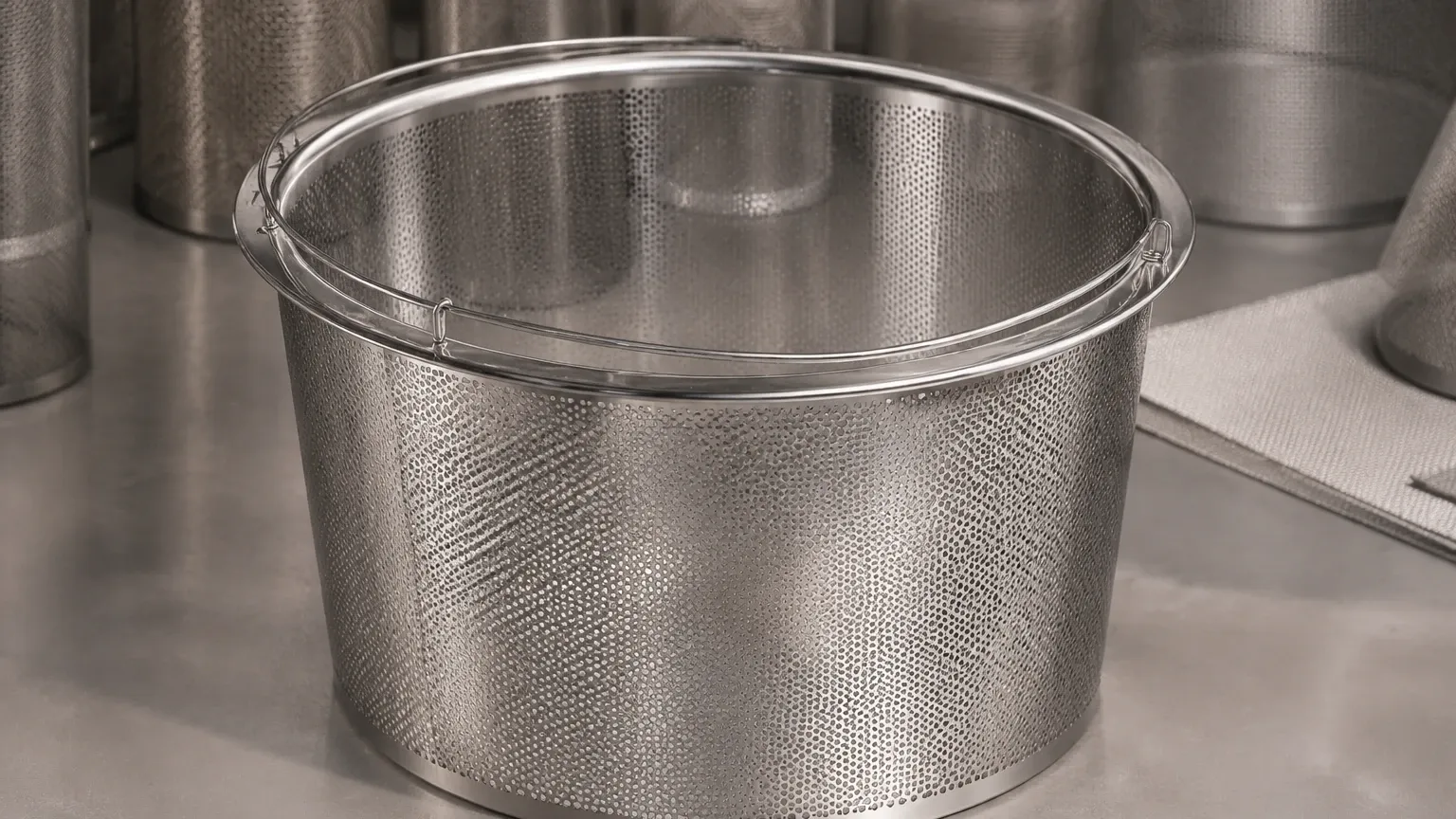
Standard baskets are usually constructed from perforated metal. However, for finer filtration, a stainless steel wire mesh is layered over the perforated metal. The perforated plate provides the structural strength to resist the differential pressure, while the mesh determines the filtration accuracy (measured in microns or mesh count).
In high-flow 12-inch systems, the basket must be reinforced with a support cage or longitudinal ribs. Without this reinforcement, the high pressure of the fluid can cause the basket to collapse or "blow out" if it becomes heavily fouled. Kaifil specializes in custom-engineered baskets that balance high flow capacity with the structural rigidity needed for demanding industrial cycles.
Filtration Levels
Filtration requirements can range from coarse straining (1/4" perforations) to fine filtration (down to 40 microns or less). It is important to note that the finer the filtration, the more frequently the basket will require cleaning. Engineers must balance the need for fluid purity with the operational cost of maintenance downtime.
Operational Efficiency and Maintenance Considerations
Maintenance of a basket strainer 12 inch presents unique challenges compared to smaller units. A 12-inch basket, when full of debris and saturated with fluid, can be quite heavy, requiring specific design features to facilitate safe and efficient servicing.
Handling and Accessibility
To minimize downtime, 12-inch strainers should be equipped with:
- Quick-Opening Covers: Rather than traditional bolted flanges, swing-bolt or clamp-style covers allow for faster access without the need for heavy power tools.
- Lifting Eyes: Both the housing cover and the internal basket should feature lifting eyes to allow for the use of overhead cranes or hoists.
- Drain and Vent Ports: These are essential for depressurizing and draining the housing before opening, ensuring operator safety and preventing environmental contamination.
Differential Pressure Monitoring
In a 12-inch line, guessing when to clean the strainer is inefficient. Installing differential pressure gauges (or transmitters) across the inlet and outlet allows for real-time monitoring. A common industry standard is to clean the basket when the differential pressure reaches 5-10 psi over the clean drop. Waiting longer can result in basket deformation or decreased flow to critical downstream components.
Customization and OEM Solutions
Every industrial facility has unique spatial and performance constraints. A standard off-the-shelf basket strainer 12 inch may not always meet the specific requirements of a complex skid or a retrofit project. This is where custom manufacturing becomes essential.
Tailored Flange Configurations
While ANSI/ASME B16.5 flanges are standard, some systems may require DIN, JIS, or custom bolt patterns. Additionally, the orientation of the inlet and outlet (e.g., offset, right-angle, or inline) can be customized to fit tight piping envelopes.
Specialized Coatings and Linings
For highly abrasive or corrosive slurries, the internal surfaces of the 12-inch strainer can be lined with specialized materials like rubber, ETFE, or epoxy coatings. These linings extend the service life of the housing by providing an additional barrier against wear.
Kaifil’s engineering team works closely with global customers to develop bespoke Strainers & Baskets that integrate seamlessly into existing infrastructures, ensuring that the final product meets both the technical specifications and the budgetary requirements of the project.
Total Cost of Ownership (TCO) for 12-Inch Systems
When procuring a basket strainer 12 inch, the initial purchase price is only one component of the total cost. Procurement teams should evaluate the following factors to determine the long-term value:
1. Energy Consumption: A strainer with a higher-than-necessary pressure drop forces pumps to work harder, leading to increased electricity costs over the life of the system.
2. Replacement Part Availability: Custom baskets and specialized gaskets should be easily sourcable. Working with a manufacturer like Kaifil ensures a reliable supply chain for consumable components.
3. Durability: A cheaper, thin-walled strainer may save money upfront but can lead to catastrophic failure or frequent repairs in high-pressure applications.
4. Cleaning Time: Features that shave 30 minutes off a cleaning cycle can save thousands of dollars in labor and lost production time over a year of operation.
Conclusion: Selecting the Right 12-Inch Strainer
The selection of a basket strainer 12 inch is a pivotal decision for any high-flow industrial process. By focusing on the technical realities of flow dynamics, material science, and ease of maintenance, engineers can ensure that their filtration system provides reliable protection without becoming a bottleneck.
Before finalizing a specification, it is recommended to confirm the maximum operating pressure, the desired micron rating, and the physical space available for the unit. Whether you require a standard stainless steel unit or a fully customized OEM solution, Kaifil provides the technical expertise and manufacturing precision necessary to deliver high-performance filtration components for the world’s most demanding industries.
