


Basket Strainer 14
In industrial fluid handling systems, the protection of downstream equipment—such as pumps, flow meters, and heat exchangers—is a critical engineering priority. Among the various mechanical separation tools available, the basket strainer remains a cornerstone for removing unwanted solids from liquid streams. When specifying a basket strainer 14, engineers are typically addressing large-scale flow requirements, often corresponding to a 14-inch nominal pipe size (NPS) or specific mesh configurations designed for high-capacity filtration.
Selecting the correct Strainers & Baskets involves more than simply matching a pipe diameter. It requires a comprehensive understanding of fluid dynamics, material science, and the specific mechanical stresses present in high-volume industrial environments. This guide examines the technical parameters, engineering considerations, and selection criteria essential for integrating large-diameter basket strainers into professional filtration systems.
Understanding the Role of Large-Scale Basket Strainers in Industrial Filtration
A basket strainer is a closed vessel with a removable screen or basket that intercepts particulate matter. Unlike Y-strainers, which are often used for smaller line sizes or applications with lower dirt-loading requirements, basket strainers are designed for systems where high flow rates and significant debris accumulation are expected.
The "14" designation in a basket strainer 14 usually refers to the nominal size of the inlet and outlet ports. At this scale, the strainer body is a substantial piece of industrial hardware, often weighing hundreds of pounds and requiring dedicated support structures. These units are prevalent in water treatment plants, cooling towers, chemical processing facilities, and large-scale irrigation systems.
The primary advantage of the basket design at this size is the large surface area of the internal element. This increased area allows for a higher "open area ratio" (the ratio of the total area of the holes in the screen to the area of the inlet pipe), which results in a lower initial pressure drop and longer intervals between cleaning cycles. For engineers, this translates to reduced operational downtime and lower energy costs for pumping systems.
Engineering Specifications for a Basket Strainer 14
When evaluating a basket strainer 14, technical professionals must focus on several key mechanical specifications to ensure the unit can withstand the operational environment.
Pressure Ratings and Construction Standards
Industrial strainers are typically built to meet specific pressure classes, such as ASME Class 150, 300, or 600. A 14-inch strainer operating in a high-pressure hydraulic or chemical line must have a wall thickness and flange rating capable of handling the maximum system pressure, including potential surges. Cast or fabricated stainless steel is the preferred material for these applications due to its high tensile strength and resistance to environmental degradation.
Flow Capacity and Velocity
At a 14-inch diameter, the flow velocity must be carefully managed. If the velocity is too high, it can lead to excessive turbulence, erosion of the strainer basket, and a significant pressure drop across the element. Engineers generally aim for a velocity between 5 to 10 feet per second for liquid service. The internal basket must be sized to accommodate these flow rates without causing a bottleneck in the process line.
Closure Types
Because of the size and weight of the cover on a 14-inch strainer, the method of access is a major safety and maintenance consideration. Common options include:
* Bolted Covers: Provide a secure seal for high-pressure applications but require more time and tools to open.
* Quick-Opening Covers: Utilize swing bolts or clamp-style closures, allowing maintenance teams to access the basket without specialized tools, which is essential for systems requiring frequent cleaning.
* Davit Arms: Due to the weight of a 14-inch cover, a davit assembly is often integrated to allow a single operator to lift and swing the cover aside safely.
Material Selection and Chemical Compatibility
The longevity of a basket strainer 14 is dictated by the compatibility of its materials with the process fluid. Kaifil specializes in stainless steel solutions, which offer superior performance in most industrial contexts.
Stainless Steel 304 vs. 316
* Type 304 Stainless Steel: Suitable for general-purpose applications, including water filtration and non-corrosive chemical processing. It provides excellent durability and structural integrity.
* Type 316 Stainless Steel: Contains molybdenum, which enhances resistance to pitting and crevice corrosion, particularly in chloride-rich environments or acidic chemical streams. For pharmaceutical or food-grade applications, 316L (low carbon) is often specified to prevent carbide precipitation during welding.
Gasket and Seal Materials
The choice of sealing material is as important as the metal itself. For a 14-inch vessel, the seal must maintain integrity under thermal expansion and contraction. Common materials include EPDM for water service, Viton (FKM) for high temperatures and oils, and PTFE for aggressive chemical environments. Engineers must verify that the seal material is rated for both the temperature and the chemical composition of the fluid to prevent premature failure and leaks.
Performance Evaluation: Flow Rates and Pressure Drop
One of the most critical metrics in filter selection is the "clean pressure drop." This is the loss in fluid pressure as it passes through a clean strainer. For a basket strainer 14, the pressure drop is influenced by the viscosity of the fluid, the flow rate, and the percentage of open area in the basket.
The Cv Factor
The flow coefficient (Cv) represents the volume of water at 60°F that will flow through the strainer with a pressure drop of 1 psi. A higher Cv indicates less resistance to flow. When specifying a large strainer, engineers use the Cv value to calculate the expected pressure drop at various flow rates. If the calculated drop is too high, it may indicate that a larger strainer or a different basket configuration is required.
Filtration Fineness (Micron vs. Mesh)
The internal element of the basket strainer 14 can be constructed from perforated metal, woven wire mesh, or a combination of both.
* Perforated Metal: Usually serves as the primary structural support for the basket, with hole sizes typically ranging from 1/32" to 1/2".
* Wire Mesh Liners: For finer filtration (down to 5 microns), a stainless steel wire mesh is lined inside the perforated basket.
It is vital to balance the need for fine filtration with the reality of pressure drop. A mesh that is too fine will clog rapidly, leading to frequent maintenance and potential pump cavitation if the pressure drop exceeds the system's limits.
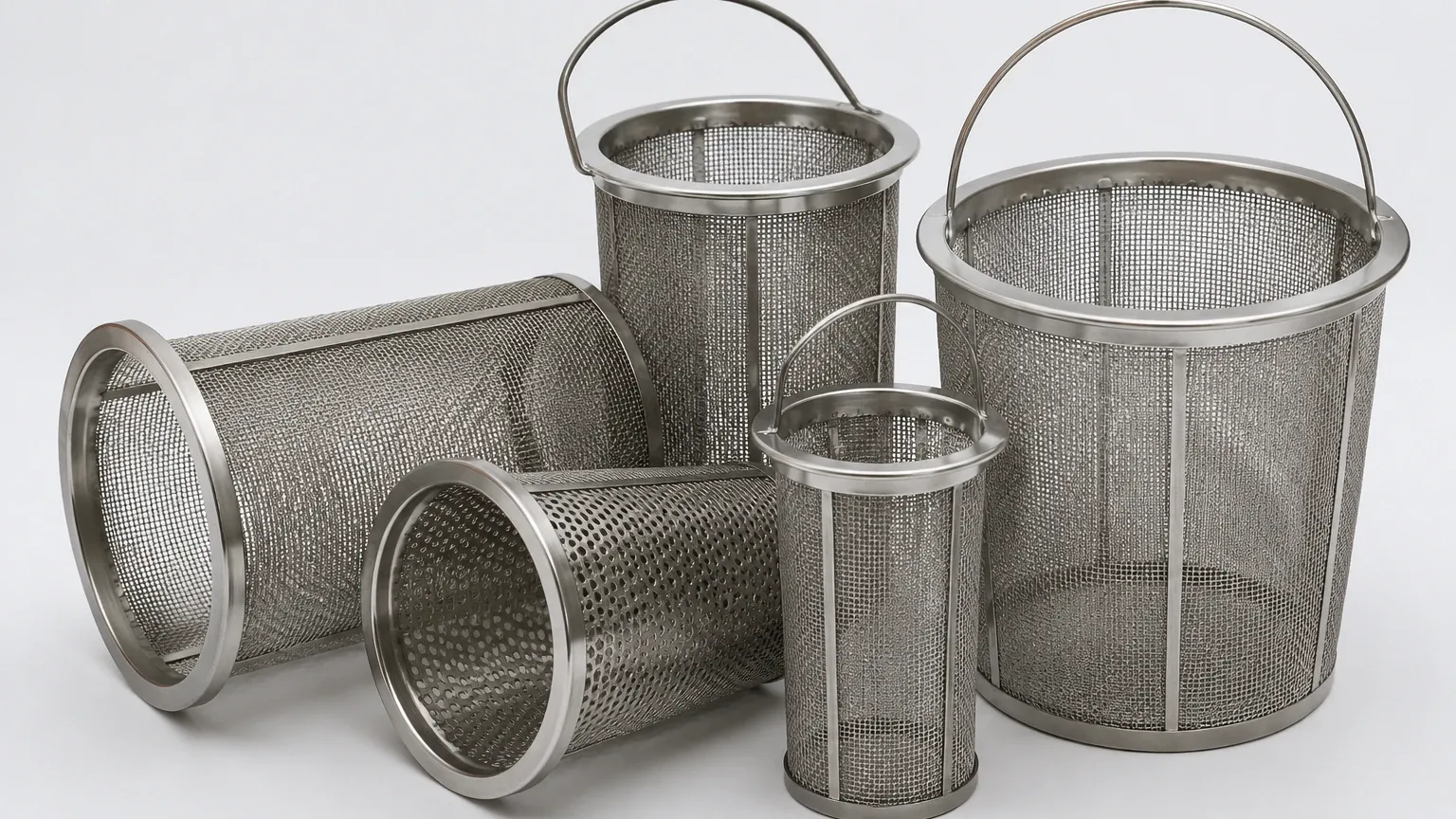
Customization Options for Specialized Industrial Applications
Standard off-the-shelf strainers often fail to meet the unique requirements of complex industrial processes. Customization is where manufacturers like Kaifil provide significant value to engineering teams.
Specialized Basket Designs
For high-viscosity fluids or heavy debris loads, baskets can be reinforced with internal pleats to increase surface area without increasing the overall footprint of the strainer. Additionally, magnetic inserts can be added to the basket to capture fine ferrous particles that might otherwise pass through the mesh.
Coating and Surface Treatments
In some cases, even stainless steel requires additional protection. Electropolishing can be used to create a smooth, easy-to-clean surface for food and beverage applications, reducing the risk of bacterial growth. For abrasive slurries, specialized coatings can be applied to the interior of the strainer body to extend its service life.
Instrumentation Integration
Modern industrial systems rely on data. A basket strainer 14 can be equipped with differential pressure gauges and transmitters. These sensors monitor the pressure difference between the inlet and outlet; when the pressure drop reaches a predetermined threshold, an alarm is triggered, notifying operators that the basket requires cleaning. This prevents "run-to-fail" scenarios that can damage the strainer element or downstream equipment.
Maintenance Protocols and Service Life Extension
The total cost of ownership for a basket strainer 14 is heavily influenced by its maintenance requirements. Because these units are large, maintenance must be planned and executed with precision.
Cleaning Cycles
Establishing a regular cleaning schedule is essential. If a basket is left to clog completely, the differential pressure can become high enough to collapse the basket (known as the "burst pressure"). During maintenance, the basket should be inspected for signs of mechanical fatigue, broken welds, or thinning of the wire mesh.
Spare Parts Management
For critical processes, maintaining a stock of replacement baskets and gaskets is a best practice. A damaged basket in a 14-inch line can halt an entire production facility. When ordering a basket strainer 14, it is advisable to procure at least one spare basket to ensure immediate swap-out during cleaning cycles, minimizing the time the system is offline.
Structural Integrity Checks
Due to the weight and potential for vibration in large-diameter piping, the support legs and flange connections of the strainer should be inspected periodically. Ensuring that the strainer is not subjected to excessive piping stress will prevent cracking and seal failures over the long term.
Conclusion: Selecting the Right Partner for Large-Scale Filtration
Specifying a basket strainer 14 involves a detailed analysis of flow, pressure, chemistry, and maintenance capabilities. It is a significant investment that serves as the first line of defense for expensive industrial machinery. By focusing on high-quality materials like stainless steel and ensuring the design is tailored to the specific needs of the application, engineers can achieve reliable, long-term performance.
Kaifil provides the technical expertise and manufacturing precision required to deliver high-performance Strainers & Baskets for the most demanding industrial environments. Whether you require a standard 14-inch unit or a fully customized filtration solution, understanding these engineering fundamentals ensures that your system remains efficient, safe, and cost-effective.
