


Basket Strainer 1
In industrial fluid handling, the protection of downstream equipment is a critical engineering priority. Whether the system involves chemical processing, food and beverage production, or hydraulic power, the presence of unwanted particulates can lead to catastrophic pump failure, clogged valves, and inaccurate flow meter readings. The basket strainer 1, often serving as the primary stage of mechanical filtration, acts as a robust barrier against these contaminants. Unlike simpler Y-strainers, basket strainers offer a larger surface area and a higher dirt-holding capacity, making them the preferred choice for high-flow applications where downtime must be minimized.
Selecting the correct Strainers & Baskets requires a deep understanding of fluid dynamics, material science, and the specific mechanical requirements of the process line. This guide examines the technical nuances of basket strainer engineering, focusing on the criteria that determine long-term reliability and filtration efficiency.
Engineering Fundamentals of Basket Strainer Design
A basket strainer is essentially a pressure vessel containing a removable, perforated metal or wire mesh basket. The fluid enters the inlet, passes through the basket where debris is trapped, and exits through the outlet. The design of the "basket strainer 1"—referring to the primary filtration unit in a series or a single-stage simplex configuration—is governed by several key physical parameters.
The Relationship Between Open Area and Pressure Drop
One of the most critical metrics in strainer design is the "Open Area Ratio" (OAR). This is the ratio of the total open area of the strainer basket to the internal cross-sectional area of the inlet pipe. A high-quality basket strainer 1 typically maintains an OAR of at least 6:1. This high ratio ensures that even as the basket begins to fill with debris, the pressure drop ($ΔP$) remains low, preventing cavitation in pumps and maintaining system flow rates.
When the OAR is too low, the fluid velocity through the mesh increases, which can lead to "particle bypass" or even structural failure of the basket under high differential pressure. Engineers must calculate the clean pressure drop using the fluid's viscosity and specific gravity to ensure the housing and internal components are sized correctly for the intended application.
Structural Integrity and Reinforcement
Industrial filtration environments are rarely static. Pressure surges, water hammer, and high-viscosity fluids exert significant mechanical stress on the filtration element. A standard basket strainer 1 may utilize a perforated metal backup for the fine wire mesh. This dual-layer construction provides the necessary rigidity to withstand high differential pressures without deforming the precision mesh that performs the actual filtration. For demanding hydraulic or chemical applications, Kaifil utilizes advanced welding techniques to ensure that the seams of the basket do not become points of failure.
Material Selection for Corrosive and High-Temperature Environments
The longevity of a basket strainer is directly tied to its material composition. In industrial B2B procurement, selecting a material based solely on initial cost often leads to higher total cost of ownership (TCO) due to premature corrosion or mechanical fatigue.
Stainless Steel Grades: 304 vs. 316L
Stainless steel is the industry standard for high-performance filtration. Grade 304 is suitable for many general-purpose applications, providing excellent strength and basic corrosion resistance. However, in chemical processing or marine environments, Grade 316L is often required. The addition of molybdenum in 316L significantly improves resistance to pitting and crevice corrosion, particularly in the presence of chlorides.
For the pharmaceutical and food and beverage sectors, the surface finish of the basket strainer 1 is as important as the alloy itself. Electropolishing is frequently employed to remove surface impurities and create a microscopic smoothness that prevents bacterial growth and facilitates easier cleaning during Maintenance, Repair, and Operations (MRO) cycles.
Gasket and Seal Compatibility
While the metal housing and basket are the primary components, the seals ensure the integrity of the system. Engineers must confirm that the gasket material is compatible with the process fluid. Common options include:
- EPDM: Excellent for water and steam applications but poor for oils.
- Viton (FKM): High resistance to chemicals and high temperatures, ideal for fuels and solvents.
- PTFE: Nearly universal chemical resistance, though it lacks the elasticity of elastomers, requiring specific housing designs to ensure a tight seal.
Critical Selection Criteria for the Basket Strainer 1
When specifying a basket strainer 1 for a new or existing system, technical teams must move beyond basic pipe size and look at the functional requirements of the filtration process.
Micron Rating vs. Mesh Count
There is often confusion between mesh count and micron rating. Mesh count refers to the number of openings per linear inch, while the micron rating refers to the actual size of the particles the mesh will trap. A 100-mesh screen has approximately 140-150 micron openings. In a basket strainer 1 application, it is vital to select a micron rating that protects downstream equipment without being so fine that the strainer requires cleaning every few hours.
If the goal is to protect a pump with internal clearances of 500 microns, a 40-mesh (approx. 400 microns) basket is appropriate. Using a 200-mesh basket in this scenario would unnecessarily increase pressure drop and maintenance frequency.
Flow Rate and Viscosity Considerations
The flow characteristics of the fluid significantly impact the performance of the basket strainer 1. High-viscosity fluids, such as heavy oils or syrups, move more slowly and create higher friction against the mesh. In these cases, engineers often specify a larger housing than the pipe size would suggest to increase the available surface area and reduce the velocity of the fluid as it passes through the basket.
Customization and OEM Capabilities in Industrial Filtration
Off-the-shelf solutions frequently fall short in specialized industrial environments. Customization allows for the optimization of the basket strainer 1 to meet specific spatial constraints or unique filtration challenges.
Tailored Basket Geometries
Depending on the debris load, a standard cylindrical basket may not be sufficient. Slanted baskets or multi-basket configurations can be engineered to increase the effective filtration area within the same footprint. For applications involving heavy particulate loads, Kaifil can design baskets with reinforced handles and lifting lugs to facilitate safe removal and cleaning by maintenance personnel.
Precision Metal Components
Beyond the mesh itself, the precision of the basket's seating surface is paramount. If the basket does not seat perfectly within the housing, "fluid bypass" occurs, allowing contaminants to move downstream. Precision-machined rings and flanges ensure a metal-to-metal or gasket-assisted seal that guarantees 100% of the fluid passes through the filtration media.
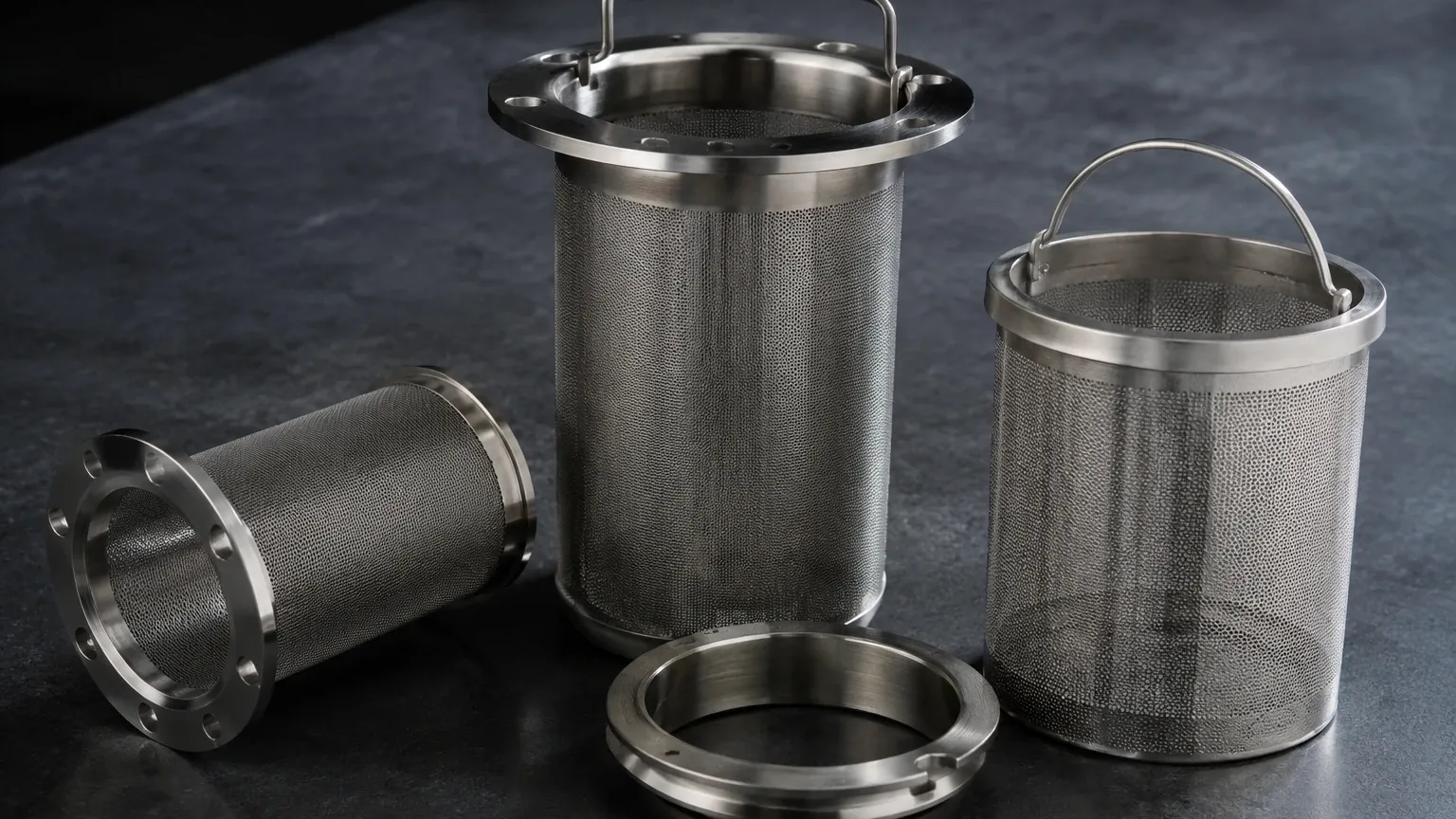
Operational Maintenance and Risk Mitigation
The reliability of a basket strainer 1 is not only a matter of design but also of operational discipline. Ignoring the maintenance requirements of a strainer can lead to system-wide failures.
Monitoring Differential Pressure
The most effective way to manage a basket strainer 1 is through the installation of differential pressure gauges. By measuring the pressure before and after the strainer, operators can see exactly how much debris has accumulated. A common rule of thumb is to clean the basket when the differential pressure reaches 5-10 psi above the clean pressure drop. Waiting until the pressure drop is significantly higher risks collapsing the basket or forcing contaminants through the mesh.
Cleaning Protocols and Replacement Cycles
In many B2B industrial settings, the ability to clean and reuse a basket is a major advantage over disposable cartridge filters. However, cleaning must be performed carefully. Using high-pressure water or air from the "clean side" (backwashing) is effective, but mechanical scrubbing with wire brushes should be avoided as it can damage the precision weave of the mesh.
Engineers should also maintain a stock of replacement baskets. Even the most durable stainless steel Strainers & Baskets will eventually succumb to fatigue or accidental damage during cleaning. Having a spare basket on hand allows for a quick swap, reducing system downtime to minutes rather than hours.
Common Risks in Basket Strainer Implementation
Despite their relative simplicity, several common errors can compromise the effectiveness of a basket strainer 1:
1. Incorrect Orientation: While most basket strainers are designed for horizontal lines, some can be adapted for vertical flow. Installing a standard horizontal strainer in a vertical line will prevent the basket from trapping debris effectively and make cleaning nearly impossible.
2. Undersizing for Future Capacity: Systems are often upgraded. If a pump's flow rate is increased, the existing basket strainer 1 may become a bottleneck. It is often prudent to size the strainer housing for the maximum possible flow rate of the system, even if the current flow is lower.
3. Ignoring Chemical Compatibility: Even "stainless steel" can fail if the wrong grade is used for aggressive chemicals like sulfuric acid or high-concentration chlorides. Always consult a compatibility chart and provide the manufacturer with the full chemical composition of the process fluid.
Conclusion
The basket strainer 1 is a foundational component in industrial fluid management. By providing a high-capacity, low-maintenance solution for removing solids, it ensures the longevity and efficiency of the entire process line. For engineers and purchasing teams, the key to success lies in detailed specification—moving beyond simple dimensions to consider metallurgy, open area ratios, and the specific rheological properties of the fluid being filtered.
When evaluating options for Strainers & Baskets, it is essential to partner with a manufacturer that understands these engineering nuances. Kaifil’s expertise in custom stainless steel filtration ensures that each basket is designed for structural integrity and precise performance. By confirming flow rates, pressure requirements, and chemical compatibility before procurement, industrial professionals can secure a filtration solution that delivers consistent results and a lower total cost of ownership.
