


Basket Strainer 200mm
In industrial fluid handling systems, the protection of downstream equipment such as pumps, flow meters, and control valves is a critical engineering priority. The basket strainer 200mm—typically corresponding to an 8-inch nominal pipe size (DN200)—serves as a high-capacity filtration component designed to remove large volumes of particulate matter from liquid streams. Unlike smaller inline Y-strainers, the basket configuration offers a larger surface area, which translates to a higher dirt-holding capacity and lower pressure drop across the system.
For engineers and procurement specialists, selecting a basket strainer 200mm requires a comprehensive understanding of hydraulic dynamics, material compatibility, and the specific filtration requirements of the process. As a professional manufacturer, Kaifil provides customized Strainers & Baskets that meet the rigorous demands of chemical processing, water treatment, and industrial manufacturing sectors.
Engineering Fundamentals of the 200mm Basket Strainer
The 200mm designation generally refers to the inlet and outlet connection size. In a standard piping layout, a DN200 line handles significant flow rates, often exceeding several hundred cubic meters per hour depending on the fluid velocity. The primary function of the basket strainer in this context is to intercept solids that could cause mechanical wear or blockage in sensitive downstream components.
Simplex vs. Duplex Configurations
When specifying a basket strainer 200mm, the first design consideration is whether the process can tolerate downtime.
1. Simplex Basket Strainers: These are used in batch processes or systems where the flow can be temporarily halted to clean or replace the basket. They are cost-effective and have a smaller footprint.
2. Duplex Basket Strainers: For continuous operations where shutdown is not an option, a duplex system consists of two separate strainer chambers connected by a diverter valve. This allows the operator to switch flow to a clean basket while the other is serviced, ensuring uninterrupted filtration.
Flow Dynamics and Housing Design
The internal geometry of a 200mm housing is engineered to minimize turbulence. As fluid enters the chamber, it expands, causing a localized reduction in velocity. This allows heavier particles to settle toward the bottom of the basket, while the fluid passes through the filtration media. Kaifil’s engineering approach ensures that the housing volume is optimized to maintain a favorable ratio between the pipe cross-section and the effective filtration area.
Material Science and Chemical Compatibility
The longevity of a basket strainer 200mm depends heavily on the materials used for the housing, the basket, and the seals. Industrial environments often involve corrosive fluids, high temperatures, or strict sanitary requirements.
Stainless Steel Grades
Stainless steel is the industry standard for high-performance filtration due to its mechanical strength and corrosion resistance.
* SS304: Suitable for general industrial applications, including cooling water systems and non-corrosive chemical processing. It offers good durability and cost-efficiency.
* SS316/316L: The preferred choice for pharmaceutical, food and beverage, and marine environments. The addition of molybdenum provides superior resistance to pitting and crevice corrosion, particularly in chloride-rich or acidic environments.
Gasket and Seal Selection
The integrity of the strainer cover is maintained by high-quality gaskets. Depending on the fluid and temperature, engineers may specify:
* EPDM: Excellent for water and steam applications.
* Viton (FKM): High-temperature resistance and compatibility with oils and chemicals.
* PTFE: Maximum chemical inertness for aggressive solvents and acids.
Filtration Media and Mesh Selection
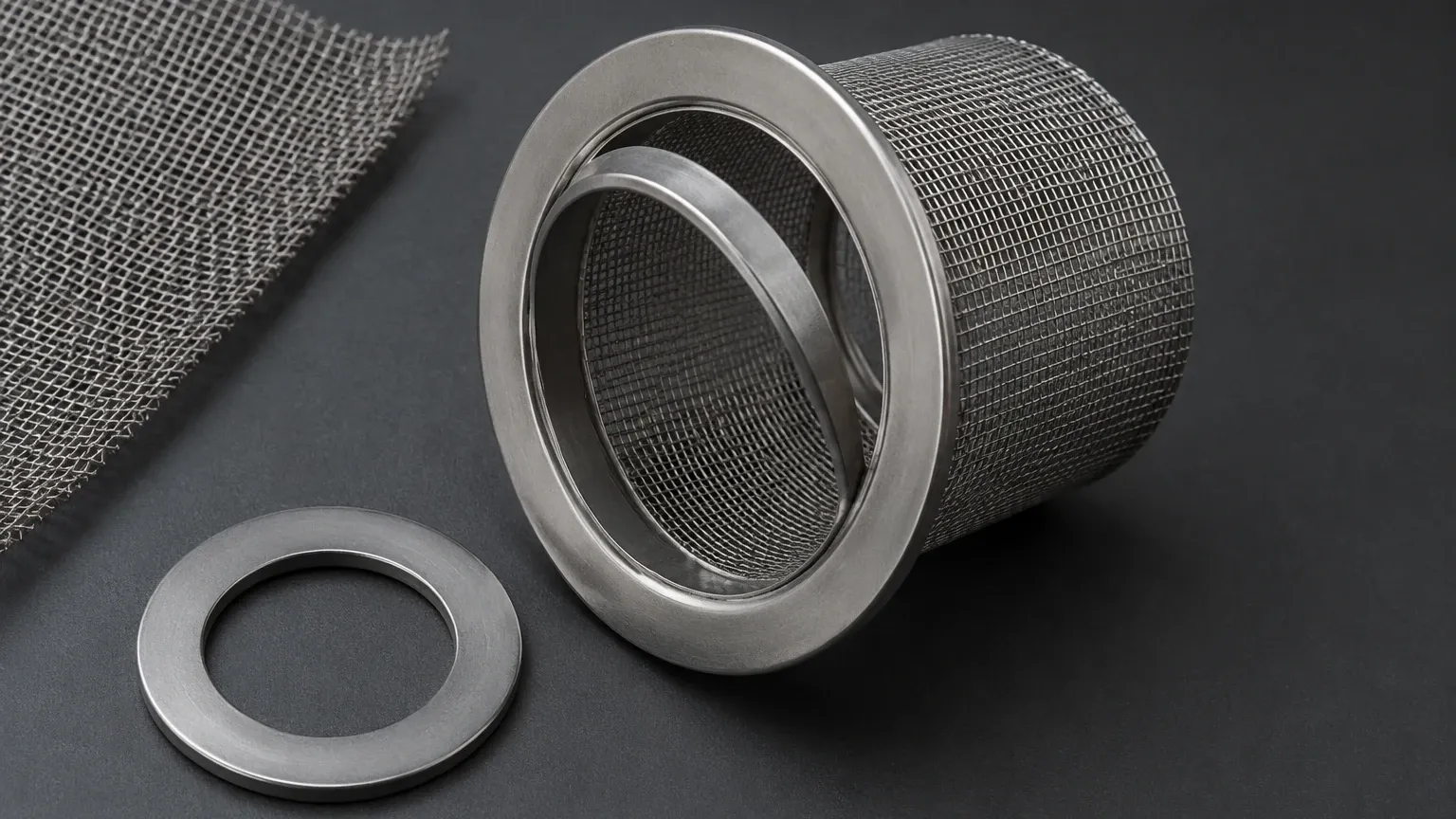
The internal basket is the heart of the filtration system. For a basket strainer 200mm, the media is typically a combination of a perforated metal support and a fine wire mesh liner.
Perforated Metal Supports
Because of the high flow rates in a 200mm line, the basket must withstand significant differential pressure. A perforated plate, usually with hole diameters ranging from 1mm to 5mm, provides the structural rigidity required to prevent the basket from collapsing under heavy debris loads.
Fine Wire Mesh Liners
When precision filtration is required, a stainless steel wire mesh is sintered or welded to the interior of the perforated basket. Mesh sizes are defined by the number of openings per linear inch or by micron ratings. For industrial applications, common requirements range from 20 mesh (approx. 840 microns) down to 400 mesh (approx. 37 microns).
Selecting the correct mesh involves a trade-off between filtration efficiency and maintenance frequency. A finer mesh captures smaller particles but will clog faster, requiring more frequent cleaning cycles. Engineers must analyze the particle size distribution (PSD) of the contaminants to determine the optimal micron rating.
Hydraulic Performance: Pressure Drop and Area Ratio
One of the most critical metrics for a basket strainer 200mm is the clean pressure drop ($ΔP$). Excessive pressure drop reduces system efficiency and increases the energy consumption of pumps.
The Open Area Ratio (OAR)
The Open Area Ratio is the ratio of the total open area of the strainer basket to the cross-sectional area of the inlet pipe. For a 200mm system, a high OAR (typically 6:1 or 8:1) is desirable. A higher ratio ensures that even as the basket begins to collect debris, there remains sufficient open area to maintain flow without a significant spike in pressure.
Calculating Flow Coefficient (Cv)
The Cv value represents the flow of water in gallons per minute at 60°F that will pass through the strainer with a pressure drop of 1 psi. For a basket strainer 200mm, the Cv is a vital data point for system modeling. Kaifil provides technical data to help engineers calculate the expected pressure drop based on fluid viscosity and specific gravity, ensuring the strainer does not become a bottleneck in the process.
Operational Maintenance and Lifecycle Management
To ensure the continued performance of a basket strainer 200mm, a structured maintenance protocol is necessary. Neglecting the cleaning cycle can lead to basket rupture or pump cavitation due to flow restriction.
Monitoring Differential Pressure
The most effective way to monitor a strainer's condition is through differential pressure gauges installed across the inlet and outlet. A standard rule of thumb is to clean the basket when the pressure drop reaches 5-10 psi above the clean state. Many modern industrial systems incorporate automated pressure sensors that trigger an alarm or switch the flow in duplex systems.
Cleaning Procedures
1. Isolation: Close the inlet and outlet valves.
2. Depressurization: Use the vent valve to release internal pressure and the drain valve to empty the fluid.
3. Removal: Open the cover (often secured by swing bolts or a quick-opening yoke) and lift the basket.
4. Inspection: Clean the basket using a high-pressure water jet or ultrasonic bath. Inspect the mesh for signs of fraying, corrosion, or mechanical deformation.
5. Reinstallation: Ensure the basket is seated correctly and the gasket is in good condition before resealing the cover.
Customization and OEM Solutions
Every industrial facility has unique constraints, ranging from space limitations to specific chemical exposure. Standard off-the-shelf components may not always suffice for complex 200mm piping systems.
Kaifil specializes in customized filtration solutions, offering flexibility in:
* Flange Standards: Manufacturing to ANSI, DIN, or JIS specifications to ensure seamless integration with existing piping.
* Specialty Coatings: Applying internal linings like rubber or epoxy for enhanced chemical resistance.
* Custom Basket Geometries: Designing baskets with increased depth or pleated mesh to maximize surface area within a restricted housing size.
* Magnetic Inserts: Adding magnetic rods to the basket to capture fine ferrous particles that might otherwise pass through the mesh.
By working closely with Kaifil during the design phase, engineers can ensure that their basket strainer 200mm is perfectly matched to the flow characteristics and contaminant profile of their specific application.
Conclusion: Selecting the Right Solution
The implementation of a basket strainer 200mm is a significant investment in the reliability of an industrial process. By focusing on high-quality materials, precise mesh selection, and optimized hydraulic design, facilities can significantly reduce maintenance costs and prevent catastrophic equipment failure.
When evaluating suppliers, it is essential to consider the manufacturer's ability to provide technical documentation, material certifications, and custom engineering support. Whether you require a standard stainless steel unit for water filtration or a highly specialized duplex system for chemical processing, the right Strainers & Baskets will provide the durability and performance needed to maintain operational excellence in demanding environments.
