


Basket Strainer 250mm
In industrial fluid handling systems, the protection of downstream equipment—such as pumps, valves, and heat exchangers—is a critical operational priority. The basket strainer 250mm represents a significant scale of filtration component, typically designed for high-flow piping systems where large volumes of liquid must be processed with minimal pressure loss. As a specialized manufacturer, Kaifil focuses on the engineering and production of Strainers & Baskets that meet the rigorous demands of chemical, pharmaceutical, and industrial water treatment sectors.
A 250mm basket strainer is not merely a larger version of a standard filter; it is a precision-engineered component that must balance structural integrity with filtration efficiency. At this diameter, the surface area of the basket allows for substantial dirt-holding capacity, which is essential for reducing the frequency of maintenance shutdowns in continuous processing environments.
Understanding the Role of 250mm Basket Strainers in Industrial Filtration
The primary function of a basket strainer is the removal of solid contaminants from a flowing liquid. Unlike Y-strainers, which are often used for smaller debris and steam applications, basket strainers are designed for larger capacities and are easier to clean. A 250mm diameter basket is typically integrated into piping systems ranging from 8 to 10 inches in nominal pipe size (NPS), depending on the housing configuration.
For engineers, the selection of a basket strainer 250mm involves evaluating the "Open Area Ratio" (OAR). This ratio compares the total open area of the basket's mesh or perforations to the cross-sectional area of the inlet pipe. A well-designed basket should offer an OAR of at least 6:1 to 8:1. This ensures that even as the basket begins to collect debris, the system does not experience a catastrophic drop in flow rate or an excessive increase in differential pressure.
Engineering Specifications and Material Selection
Material compatibility is the cornerstone of industrial filtration performance. At Kaifil, the production of a basket strainer 250mm utilizes high-grade stainless steel to ensure longevity and resistance to chemical degradation. The choice between different grades of stainless steel is dictated by the specific application environment:
* Stainless Steel 304: The standard choice for general industrial applications, offering excellent durability and resistance to oxidation. It is widely used in water treatment and food and beverage processing where corrosive elements are moderate.
* Stainless Steel 316L: Specified for environments involving high chloride concentrations or acidic chemicals. The "L" (low carbon) designation is particularly important for welded components, as it prevents sensitisation and intergranular corrosion at the weld sites, which is a common failure point in large-diameter baskets.
* Specialty Alloys: For highly aggressive chemical processing, materials such as Duplex stainless steel or Monel may be utilized to withstand extreme pH levels or high-temperature stressors.
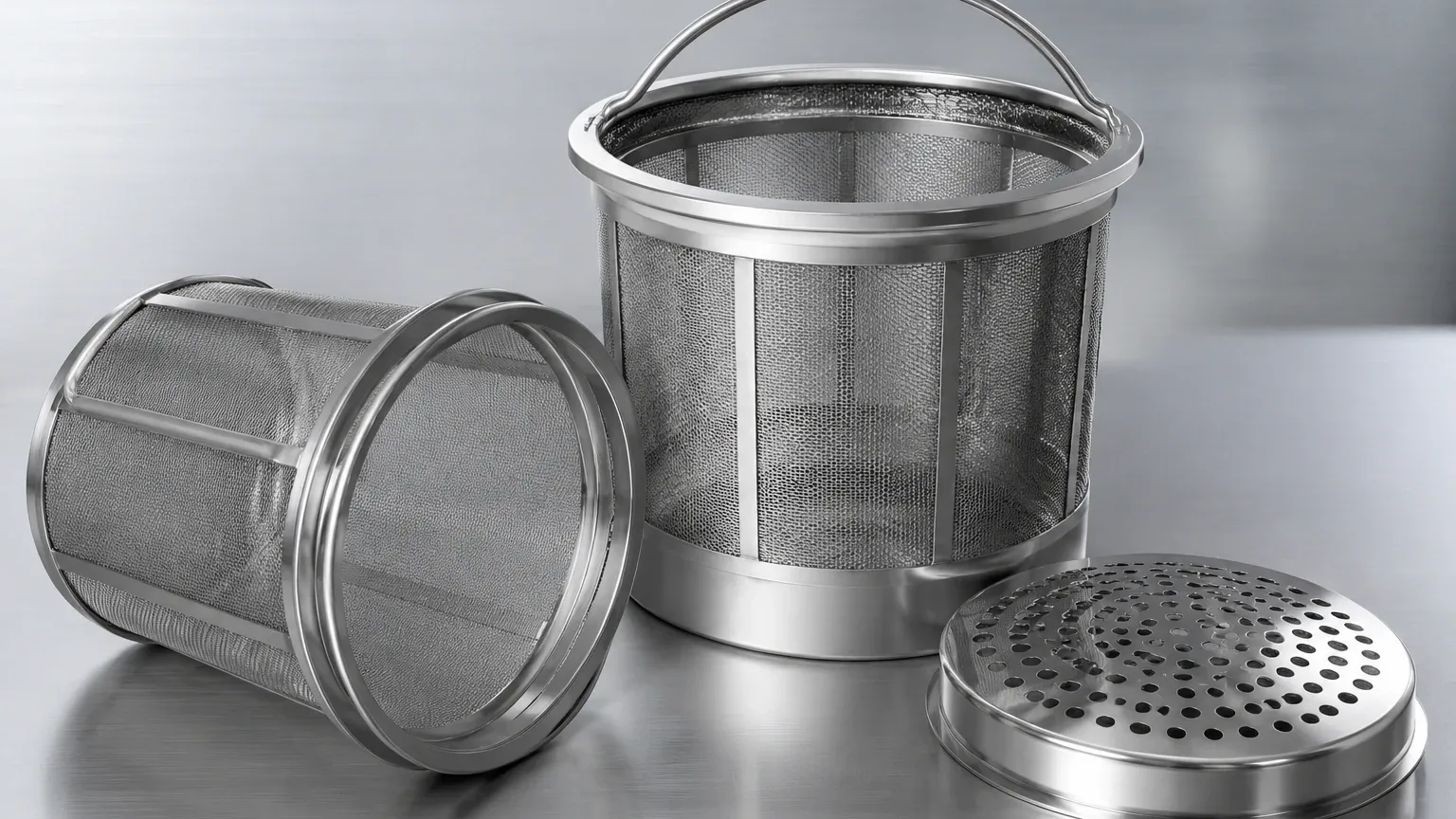
The construction of the basket usually involves a perforated metal support cylinder lined with a fine wire mesh. The perforated plate provides the structural strength required to withstand the force of the fluid flow, while the mesh determines the filtration accuracy, which can range from coarse 20 mesh (approx. 840 microns) to ultra-fine 500 mesh (approx. 25 microns).
Flow Dynamics and Pressure Drop Considerations
One of the most critical technical aspects of a basket strainer 250mm is the management of "Delta P" or differential pressure. In a B2B industrial context, energy efficiency is directly tied to the pressure drop across filtration components. A high initial pressure drop forces pumps to work harder, increasing electrical consumption and wear on mechanical seals.
When specifying a 250mm basket, engineers must consider the viscosity of the fluid. A basket designed for water (1 cP) will behave very differently when used with heavy oils or chemical resins. As viscosity increases, the pressure drop through the mesh pores increases exponentially. To mitigate this, the basket design may incorporate pleated mesh surfaces to maximize the available filtration area within the 250mm footprint.
Furthermore, the velocity of the fluid entering the basket housing must be controlled. If the velocity is too high, the kinetic energy of the particles can cause erosion of the mesh or even structural deformation of the basket frame. Proper sizing of the basket strainer 250mm ensures that the fluid velocity remains within the laminar or transitional flow regime, protecting the integrity of the filtration media.
Applications Across Demanding Industrial Sectors
The versatility of the basket strainer 250mm makes it a staple in various heavy industries. Its large size allows it to handle the high flow rates required in the following sectors:
Chemical and Petrochemical Processing
In these environments, strainers are used to protect sensitive instrumentation and catalyst beds. The 250mm basket is often employed in the filtration of cooling water loops or the removal of scale and particulates from process chemicals. The use of 316L stainless steel is standard here to prevent contamination of the chemical stream.
Food and Beverage Industry
Filtration in the food industry requires components that are easy to sanitize. 250mm baskets used in this sector often feature polished surfaces and specialized welding techniques to eliminate "dead zones" where bacteria could proliferate. They are commonly used for straining large batches of juices, syrups, or dairy products before final processing or packaging.
Water Treatment and Desalination
In municipal and industrial water treatment, these strainers serve as pre-filters for membrane systems (such as Reverse Osmosis). By removing larger suspended solids, the basket strainer 250mm prevents the premature fouling of expensive membranes, thereby extending the overall system life and reducing operational costs.
Customization Options for Optimized Performance
Standard off-the-shelf components rarely meet the exact needs of complex industrial systems. Kaifil provides extensive customization for Strainers & Baskets to ensure they integrate seamlessly into existing infrastructure. Customization options for a basket strainer 250mm include:
1. Reinforced Handles: Given the size and potential weight of a 250mm basket when full of debris, heavy-duty bail handles or lifting lugs are essential for safe manual or mechanical extraction.
2. Magnetic Inserts: For applications involving metal-on-metal wear (such as in hydraulic systems or machining coolant loops), magnetic rods can be integrated into the basket to capture fine ferrous particles that might otherwise pass through the mesh.
3. Custom Flange Interfaces: While many systems use standard ANSI or DIN flanges, some legacy systems require custom bolt patterns or non-standard heights. Custom fabrication allows the basket to seat perfectly within the housing, preventing "bypass"—the phenomenon where fluid leaks around the edges of the filter rather than passing through it.
4. Multi-Layer Sintered Mesh: For high-pressure applications, multiple layers of wire mesh can be sintered together. This creates a rigid, high-strength filter medium that maintains its pore size even under significant mechanical stress.
Maintenance Protocols and Service Life Extension
The total cost of ownership (TCO) for a basket strainer 250mm is largely determined by its maintenance requirements. A basket that is difficult to clean or prone to clogging will result in higher labor costs and more frequent downtime.
Effective maintenance starts with monitoring. Differential pressure gauges should be installed across the strainer housing. A common industry standard is to clean the basket when the pressure drop reaches 5-10 psi above the clean pressure drop. Waiting too long can lead to "blinding" of the mesh, where particles are forced so deeply into the pores that they cannot be removed by standard cleaning methods.
Cleaning a 250mm basket typically involves removal from the housing and pressure washing or ultrasonic cleaning. Because of the size, it is often recommended to have a spare basket on hand. This allows for a quick swap, enabling the system to return to operation immediately while the dirty basket is cleaned offline. Stainless steel construction is particularly advantageous here, as it can withstand aggressive cleaning agents and high-temperature steam sterilization (SIP) or clean-in-place (CIP) cycles.
Critical Factors for Procurement and Specification
When purchasing a basket strainer 250mm, procurement teams and engineers should confirm several technical details to ensure the component is fit for purpose:
* Filtration Rating: Define the smallest particle size that must be captured. Over-filtering (selecting a mesh that is too fine) leads to rapid clogging and unnecessary pressure drops.
* Operating Pressure and Temperature: Ensure the basket's structural welds and material gauge are rated for the maximum system pressure and temperature excursions.
* Fluid Characteristics: Provide the manufacturer with data on fluid viscosity, density, and chemical composition to ensure proper material and OAR selection.
* Housing Compatibility: Confirm the internal dimensions of the strainer housing, including the seat diameter and the depth, to ensure the 250mm basket fits securely without bypass.
By focusing on these technical boundaries, organizations can ensure they invest in a filtration solution that provides reliable performance and long-term durability. The basket strainer 250mm is a vital component in maintaining fluid purity and protecting the mechanical health of industrial systems worldwide.
