


Basket Strainer 3d
In modern industrial engineering, the integration of filtration components into complex piping systems requires more than just a basic understanding of flow rates and micron ratings. For engineers and project managers, the term basket strainer 3d represents the intersection of digital precision and physical durability. Whether you are utilizing 3D CAD models for plant layout design or evaluating the three-dimensional structural integrity of a custom-fabricated filter, understanding the technical nuances of these components is critical for operational efficiency.
At Kaifil, we recognize that the selection of Strainers & Baskets is a foundational decision in the design of chemical processing, food and beverage, and pharmaceutical systems. This guide explores the engineering considerations, material science, and design optimizations associated with industrial basket strainers, providing the technical depth required for informed procurement.
The Role of 3D Modeling in Filtration System Design
The transition from 2D schematics to 3D modeling has revolutionized how industrial filtration systems are planned and executed. When an engineer searches for a basket strainer 3d model, they are typically looking for a high-fidelity CAD file (such as STEP, IGES, or Revit formats) to ensure seamless integration into a larger assembly.
Spatial Accuracy and Interference Checking
In large-scale industrial plants, space is often at a premium. Using a precise 3D model allows designers to perform interference checks, ensuring that the strainer housing, its intake/outtake flanges, and the clearance required for basket removal do not conflict with nearby structural beams, electrical conduits, or other piping. A basket strainer requires significant vertical or horizontal clearance for maintenance; 3D modeling ensures this "service zone" is accounted for before a single pipe is cut.
Weight Distribution and Support Engineering
Industrial strainers, especially when filled with fluid and captured debris, can be remarkably heavy. 3D models provide accurate volume and surface area data, allowing structural engineers to calculate the exact load on pipe hangers and floor supports. This is particularly vital in high-pressure applications where the strainer body must be robust enough to handle surge pressures without compromising the integrity of the piping manifold.
Engineering Considerations for Basket Design
The "basket" is the heart of the strainer. Its three-dimensional geometry determines the effective filtration area (EFA), which directly impacts the pressure drop across the system and the frequency of cleaning cycles.
Perforated vs. Mesh Lined Baskets
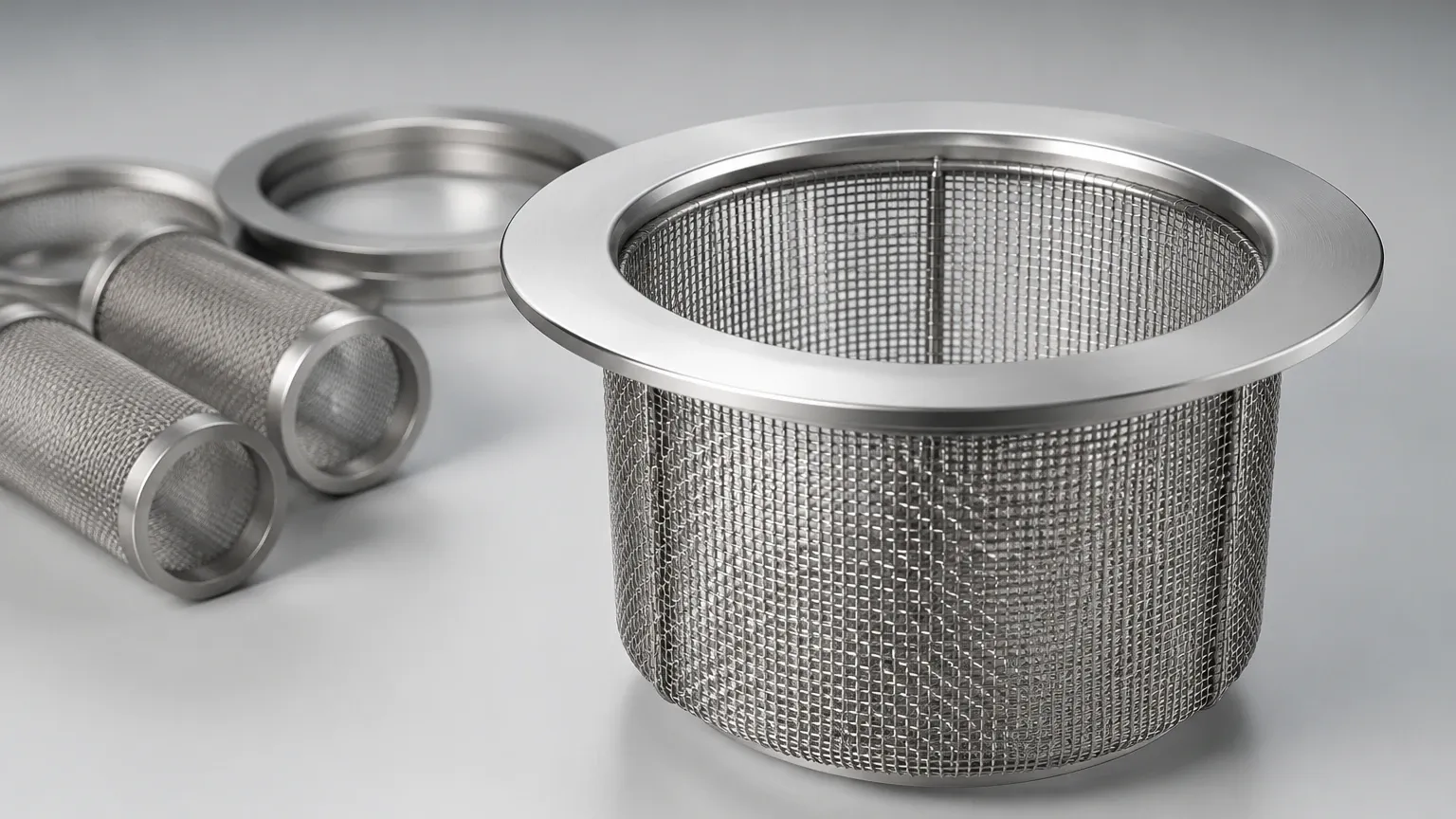
Most industrial baskets consist of a heavy-duty perforated metal sheet that provides structural support, often lined with a finer wire mesh to achieve the desired filtration accuracy.
1. Perforated Support: The hole size and staggered pattern of the perforation are engineered to maximize open area while maintaining the strength to resist collapsing under high differential pressure (ΔP).
2. Wire Mesh Lining: For fine filtration, stainless steel wire mesh is sintered or welded to the interior of the basket. The 3D arrangement of these wires—whether in a plain, twilled, or Dutch weave—dictates the particle retention capabilities.
The Importance of the Area Ratio
A well-designed basket strainer typically offers an open area ratio of at least 6:1 relative to the cross-sectional area of the inlet pipe. This high ratio ensures that even as the basket begins to collect debris, the flow remains relatively unimpeded, extending the time between manual cleanings. In a basket strainer 3d analysis, engineers calculate this ratio by evaluating the total surface area of the basket minus the area occupied by the metal structural components.
Material Selection for Demanding Environments
Material compatibility is a non-negotiable factor in industrial filtration. Kaifil specializes in stainless steel solutions because of the material's inherent resistance to corrosion, temperature extremes, and mechanical wear.
Stainless Steel 304 and 316L
* Type 304: The standard for general-purpose industrial applications, offering excellent durability and cost-effectiveness for water treatment and basic chemical processing.
* Type 316L: With the addition of molybdenum, 316L provides superior resistance to chlorides and pitting. This makes it the preferred choice for pharmaceutical and food-grade applications where aggressive cleaning agents or saline environments are present.
Specialized Alloys
For highly corrosive environments, such as those found in petrochemical refining or specialized chemical synthesis, duplex stainless steels or high-nickel alloys may be required. These materials ensure that the 3D structure of the mesh and the housing remains intact over years of continuous exposure to low-pH or high-salinity fluids.
Fluid Dynamics and Pressure Drop Optimization
One of the primary goals of using basket strainer 3d data in the design phase is to predict and minimize pressure drop. Every time a fluid is forced to change direction or pass through a restrictive medium, energy is lost in the form of a pressure decrease.
Computational Fluid Dynamics (CFD)
Advanced engineering teams often subject their strainer designs to CFD analysis. By importing a 3D model of the strainer into simulation software, they can visualize flow patterns. This helps in identifying "dead zones" where sediment might accumulate prematurely or areas of high turbulence that could lead to erosion of the strainer basket or housing walls.
Minimizing ΔP
To optimize the system, engineers look for:
* Streamlined Housing: Smooth internal transitions that reduce turbulence.
* Optimized Basket Geometry: Ensuring the fluid is distributed evenly across the entire surface of the mesh rather than concentrating at the bottom of the basket.
* Correct Sizing: Selecting a strainer body size that allows for a low velocity (typically under 10 feet per second for liquids) to prevent cavitation and excessive wear.
Customization and OEM Capabilities
No two industrial processes are identical, which is why customization is a core component of the Kaifil philosophy. When standard off-the-shelf components fail to meet specific spatial or performance requirements, custom-engineered Strainers & Baskets become necessary.
Tailored Connection Types
Depending on the existing infrastructure, a strainer may require specific connection interfaces:
* Flanged Connections: (ANSI, DIN, or JIS) for high-pressure and large-diameter piping.
* Threaded Ends: (NPT or BSP) for smaller, lower-pressure systems.
* Quick-Disconnect: For applications requiring frequent, tool-free maintenance.
Specialized Basket Features
Customization extends to the internal components as well. We can manufacture baskets with slanted bottoms for specialized drainage, reinforced handles for heavy-lift removal, or magnetic inserts designed to capture fine ferrous particles that might otherwise pass through the mesh.
Procurement Checklist: What Engineers Must Confirm
Before finalizing a purchase or integrating a basket strainer 3d model into a project, technical teams should verify the following parameters to ensure long-term reliability:
1. Micron Rating vs. Particle Distribution: Ensure the mesh size is small enough to catch harmful debris but large enough to avoid instant clogging. A common rule of thumb is to select a mesh size that is approximately 50% of the size of the smallest particle to be removed.
2. Maximum Allowable Working Pressure (MAWP): The housing must be rated for the maximum surge pressure of the system, not just the steady-state operating pressure.
3. Seal Material Compatibility: The O-rings or gaskets (Viton, EPDM, PTFE) must be compatible with the process fluid and the operating temperature.
4. Cleaning Mechanism: Determine if the application allows for system downtime (simplex strainer) or if continuous flow is required (duplex strainer, which allows one basket to be cleaned while the other remains in service).
5. Compliance Standards: Ensure the product meets relevant industry standards, such as ASME Section VIII for pressure vessels or FDA/3-A standards for sanitary applications.
Maintenance and Life Cycle Management
Even the most precisely engineered basket strainer 3d design requires a robust maintenance strategy. The total cost of ownership (TCO) of a filtration system is often dictated by how easily it can be serviced.
Monitoring Differential Pressure
The most effective way to manage a basket strainer is through the use of differential pressure gauges. By monitoring the pressure at the inlet versus the outlet, operators can identify exactly when a basket has reached its holding capacity. Cleaning the basket before the ΔP reaches a critical level prevents basket deformation and ensures the downstream equipment remains protected.
Replacement Cycles
While stainless steel baskets are designed for longevity, the mesh lining is a wear item. Over time, high-velocity particles can cause "wire thinning" or fatigue. Having a 3D-accurate spare basket on hand is essential for minimizing downtime. Because Kaifil maintains precise manufacturing records and 3D specifications, we can provide exact-fit replacement baskets that restore the system to its original performance specifications.
Conclusion
In the realm of industrial filtration, the basket strainer 3d is more than a digital file; it is a blueprint for system reliability. By focusing on precise 3D engineering, rigorous material selection, and optimized fluid dynamics, engineers can ensure that their filtration systems perform effectively under the most demanding conditions.
Whether you are in the early stages of plant design or looking to optimize an existing process, selecting high-quality Strainers & Baskets is a critical step toward operational excellence. At Kaifil, we combine manufacturing expertise with technical support to deliver filtration solutions that meet the exact needs of global industrial leaders.
