


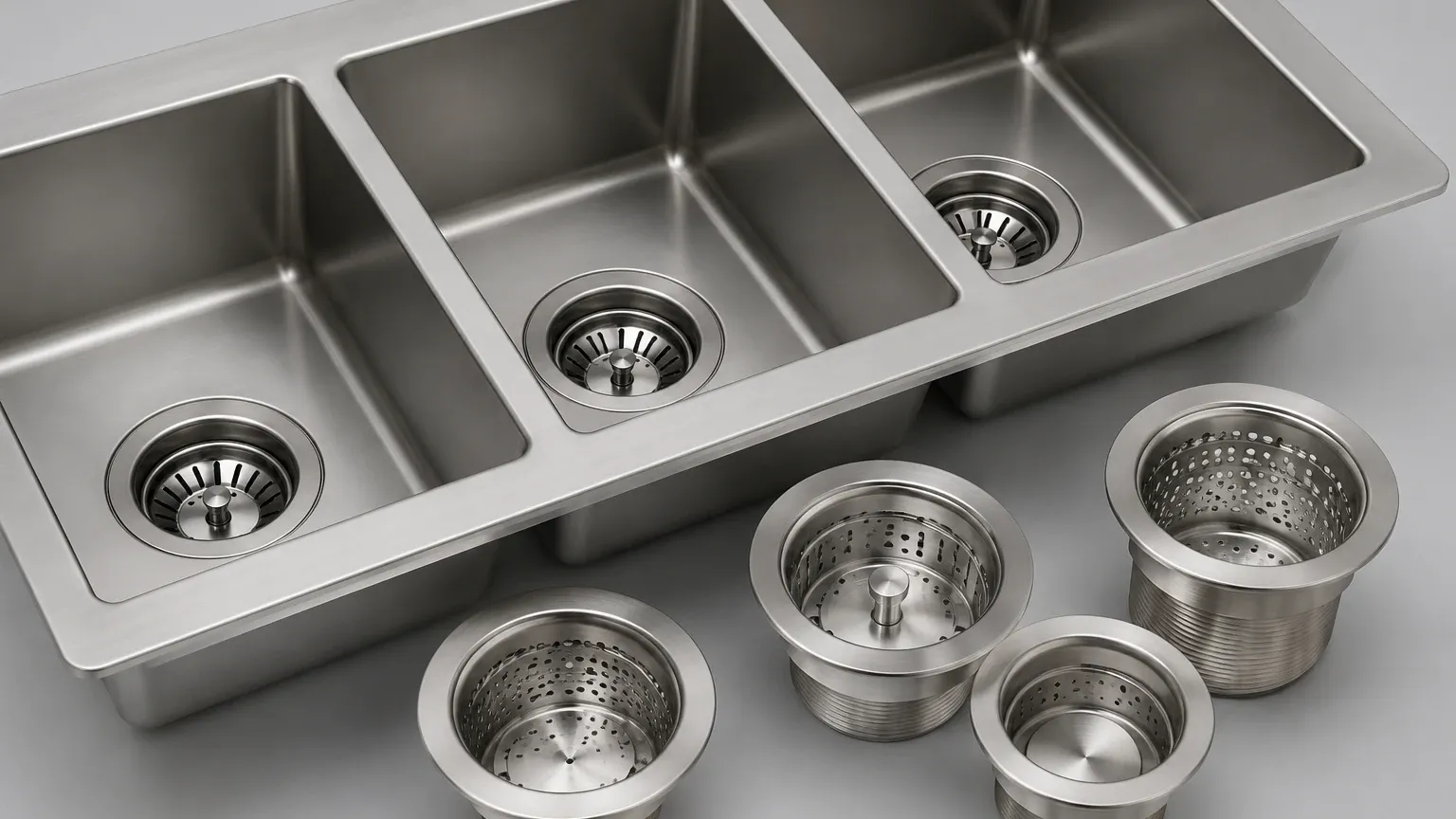
Basket Strainer 3 Comp Sink
In industrial and commercial environments, the 3-compartment sink serves as a critical infrastructure component for sanitation, material processing, and equipment maintenance. Whether utilized in a large-scale food processing facility, a pharmaceutical laboratory, or a chemical manufacturing plant, the efficiency of these sinks depends heavily on the performance of their drainage components. A high-quality basket strainer 3 comp sink assembly is not merely a plumbing fixture; it is the primary filtration stage that protects the facility’s wastewater system from debris, prevents costly blockages, and ensures compliance with environmental and health regulations.
Selecting the appropriate Strainers & Baskets requires a technical understanding of material compatibility, flow rates, and the specific nature of the waste being filtered. For engineers and facility managers, the goal is to implement a solution that offers durability, ease of maintenance, and precise filtration performance under demanding conditions.
Understanding the Role of Basket Strainers in 3-Compartment Sink Systems
The 3-compartment sink workflow typically follows a "Wash, Rinse, Sanitize" sequence. Each stage introduces different challenges to the drainage system:
1. The Wash Sink: This compartment handles the highest load of solids, fats, oils, and grease (FOG), or chemical residues. The basket strainer here must capture large particles while resisting the abrasive nature of scrubbing agents.
2. The Rinse Sink: While the load is lighter, this stage often involves high volumes of water. The strainer must facilitate rapid drainage to maintain the workflow speed without allowing smaller particulates to bypass the system.
3. The Sanitize Sink: This compartment often contains high concentrations of sanitizing chemicals, such as chlorine-based solutions or quaternary ammonium compounds. The basket strainer 3 comp sink components in this section must exhibit superior corrosion resistance to prevent pitting and structural failure.
By integrating robust basket strainers across all three compartments, industrial operators can ensure that the primary filtration layer is consistent, reducing the burden on downstream grease traps and wastewater treatment systems.
Material Selection: Why Stainless Steel is the Industrial Standard
When specifying a basket strainer 3 comp sink for industrial use, material selection is the most significant factor in determining the component's lifespan. While plastic or thin-gauge brass strainers may suffice for residential applications, they rapidly fail in B2B environments characterized by thermal shock, chemical exposure, and heavy mechanical use.
Stainless Steel 304 vs. 316
Most high-performance industrial strainers are manufactured from stainless steel. However, the specific grade of steel matters:
* Grade 304: This is the standard for most commercial food and beverage applications. It offers excellent durability and good resistance to common cleaning chemicals. It is the cost-effective choice for environments where high-acid or high-salt exposure is limited.
* Grade 316: For pharmaceutical, chemical, or marine-grade applications, Grade 316 is preferred. The addition of molybdenum provides enhanced resistance to chlorides and acidic environments. If the 3-compartment sink is used for cleaning equipment used in brine processing or harsh chemical synthesis, 316 stainless steel is essential to prevent stress corrosion cracking.
Durability and Mechanical Strength
Industrial basket strainers must withstand the physical impact of heavy utensils or equipment being dropped into the sink. Precision-manufactured stainless steel baskets maintain their shape and filtration integrity over thousands of cycles, whereas inferior materials may warp, leading to "bypass"—where debris escapes around the edges of the strainer and into the drain line.
Engineering Specifications for Basket Strainer 3 Comp Sink Applications
Evaluating a basket strainer involves more than checking the diameter of the drain hole. Engineers must consider the mechanical design and filtration capabilities of the basket itself.
Perforation and Mesh Size
The filtration efficiency of a basket strainer 3 comp sink is determined by its perforation pattern or mesh count.
* Perforated Metal: Most industrial sink baskets use perforated stainless steel. Common hole sizes range from 1/8 inch to 1/16 inch. Smaller perforations provide better protection but require more frequent cleaning to prevent drainage backup.
* Wire Mesh Liners: In specialized applications, such as fine chemical processing or laboratory settings where micro-solids must be captured, a secondary wire mesh liner may be integrated into the basket. This allows for filtration down to micron levels while maintaining the structural support of the perforated outer shell.
Flow Rate and Open Area Ratio
A critical engineering metric is the "Open Area Ratio." This is the percentage of the basket surface that consists of holes versus solid metal. A higher open area ratio allows for faster drainage, which is vital in high-volume industrial sinks. However, the design must balance this against the structural rigidity of the basket. If the open area is too high, the basket may become flimsy and prone to tearing under the weight of wet debris.
Seal and Lock Mechanisms
For a basket strainer 3 comp sink to function effectively as a plug (to hold water in the compartment), the seal must be absolute. Industrial-grade strainers often utilize high-temperature resistant gaskets (such as NBR or EPDM) and heavy-duty locking nuts to ensure a leak-proof fit against the sink basin. This prevents the gradual loss of water and chemicals during the soaking or sanitizing phases.
Operational Challenges and Performance Evaluation
In a B2B context, the total cost of ownership (TCO) is influenced by how well the strainer performs over time. Several operational challenges can impact this performance.
Clogging and Maintenance Cycles
If a basket strainer is too restrictive, it leads to standing water, which can halt production and create hygiene risks. Conversely, if it is too coarse, the downstream plumbing will eventually clog, leading to expensive hydro-jetting or pipe replacement. The ideal basket strainer 3 comp sink setup allows for easy removal and cleaning. Ergonomic handles and "lift-and-turn" mechanisms are preferred in fast-paced environments to ensure staff can clear the baskets quickly without specialized tools.
Resistance to Thermal Shock
Industrial sinks often transition from ice-cold rinse water to near-boiling sanitation cycles. This thermal cycling can cause low-quality materials to expand and contract at different rates, leading to seal failure. Precision-engineered stainless steel components are designed to handle these temperature swings without losing their dimensional stability.
Customization Options for Industrial Filtration Components
Standard off-the-shelf strainers often fail to meet the unique requirements of specialized industrial processes. This is where custom manufacturing becomes a necessity. Customization options for Strainers & Baskets include:
* Custom Dimensions: Non-standard drain diameters or extra-deep sink basins require bespoke basket heights and flange widths to ensure a flush fit.
* Specialized Coatings: In some chemical applications, even 316 stainless steel may require additional fluoropolymer coatings to resist extremely aggressive reagents.
* Reinforced Structures: For sinks that handle heavy metal parts or abrasive materials, baskets can be manufactured with reinforced bottom plates and thicker gauge side walls to prevent puncture.
* Integrated Overflow Protection: Custom designs can include overflow tubes integrated directly into the strainer assembly, ensuring that if a faucet is left running, the water is diverted safely even if the main basket is plugged.
By working with a manufacturer that specializes in OEM and customized filtration solutions, facilities can procure components that are exactly matched to their operational parameters.
Technical Procurement: Confirming Specifications Before Purchase
Before finalizing a purchase order for basket strainer 3 comp sink components, purchasing teams and engineers should confirm the following data points with their supplier:
1. Chemical Compatibility: Provide the supplier with a list of all detergents, sanitizers, and process chemicals that will pass through the sink to ensure the correct stainless steel grade and gasket material are selected.
2. Drainage Volume: Calculate the maximum flow rate required (GPM) to ensure the basket's open area ratio does not become a bottleneck.
3. Debris Profile: Identify the smallest particle size that needs to be captured. This determines whether a standard perforated basket or a fine wire mesh hybrid is required.
4. Installation Environment: Confirm the sink material (e.g., stainless steel, galvanized, or composite) to ensure the strainer’s mounting hardware is compatible and won't cause galvanic corrosion.
Conclusion
The humble basket strainer 3 comp sink is a linchpin in industrial sanitation and fluid management. By moving beyond generic hardware and focusing on engineering-grade Strainers & Baskets, organizations can significantly reduce maintenance costs, protect their plumbing infrastructure, and maintain the highest standards of operational efficiency. Whether you require a standard replacement or a custom-engineered filtration solution, prioritizing material quality and precise technical specifications is the only way to ensure long-term reliability in demanding industrial environments.
