


3 Strainer Basket
In industrial fluid handling, the efficiency of a piping system often depends on the smallest components. Among these, the 3-inch strainer basket—frequently referred to in procurement as a 3 strainer basket—serves as a critical line of defense for downstream equipment such as pumps, valves, and heat exchangers. These components are designed to remove unwanted solids from liquid or gas streams, ensuring that the process remains uninterrupted and the machinery protected from mechanical wear or clogging.
For engineers and procurement specialists, selecting a 3 strainer basket involves more than just matching a pipe size. It requires a deep understanding of material science, fluid dynamics, and the specific mechanical stresses of the application. As a specialized manufacturer of Strainers & Baskets, Kaifil provides precision-engineered solutions that address these technical requirements across various industrial sectors.
Technical Specifications and Engineering Considerations
A 3 strainer basket is typically housed within a 3-inch simplex or duplex strainer body. While the external housing provides the pressure vessel, the basket itself is the functional element that determines filtration efficiency. Several engineering factors must be evaluated to ensure the basket performs reliably under industrial conditions.
Material Selection
Stainless steel is the industry standard for industrial baskets due to its mechanical strength and resistance to corrosion. The two most common grades are:
* SS304: Suitable for general-purpose applications, including water treatment and non-corrosive chemical processing. It offers excellent durability and cost-effectiveness.
* SS316L: The preferred choice for pharmaceutical, food and beverage, and highly corrosive chemical environments. The addition of molybdenum provides superior resistance to chlorides and pitting, which is essential for maintaining the integrity of the 3 strainer basket in aggressive media.
Construction Methods
Industrial baskets are generally constructed using one of two methods, or a combination of both:
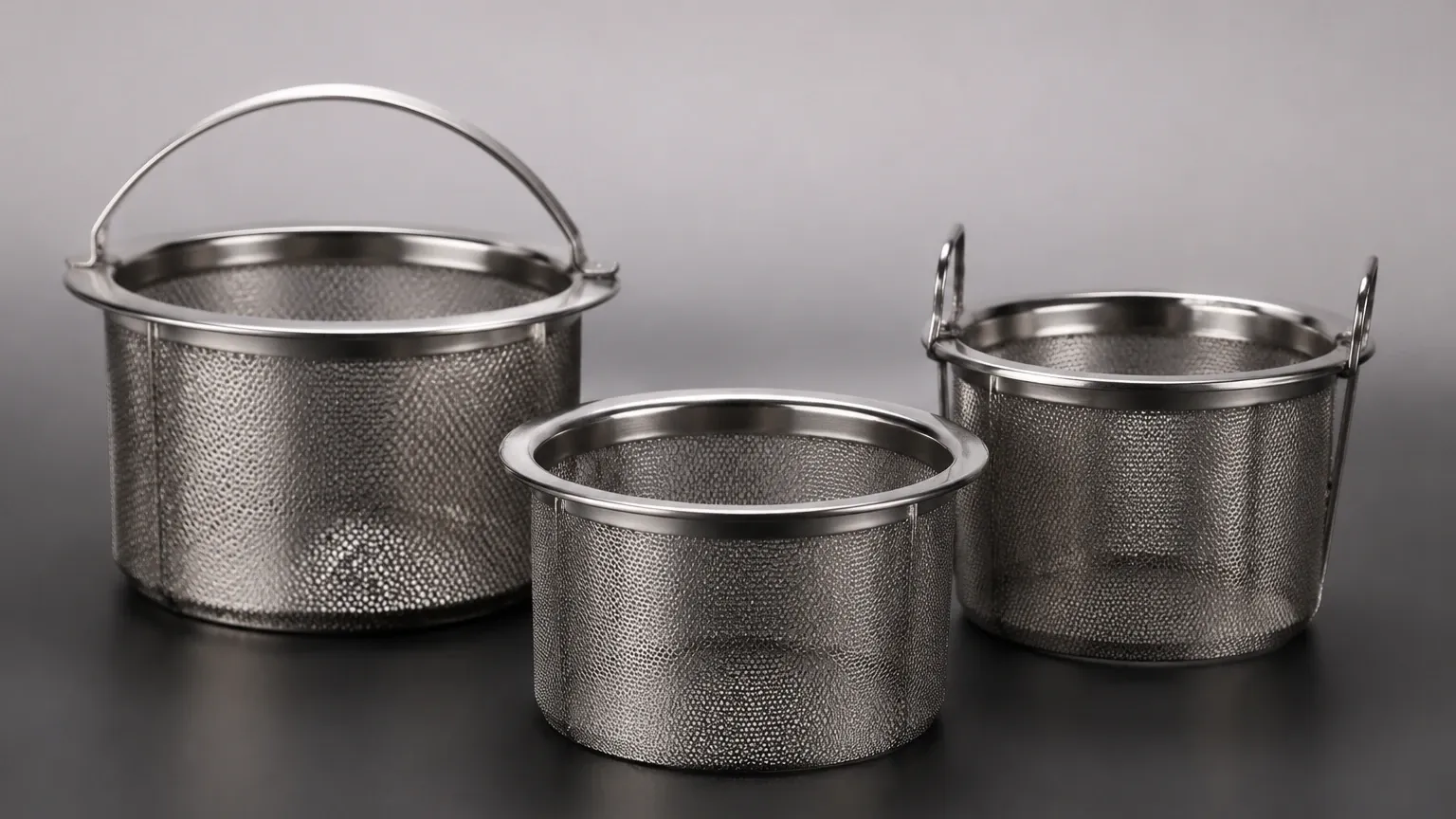
1. Perforated Metal: This provides the primary structural strength. The hole size and pattern (staggered vs. straight) affect both the filtration level and the structural integrity. Perforated baskets are typically used for coarse filtration or as a support structure for finer media.
2. Wire Mesh Lining: For applications requiring finer filtration (measured in microns), a stainless steel wire mesh is welded to the interior or exterior of the perforated basket. This allows for high-precision particle removal while maintaining the ability to withstand high differential pressures.
Performance Metrics: Flow Capacity and Pressure Management
One of the most critical aspects of designing or selecting a 3 strainer basket is the open area ratio. This is the ratio of the total area of the holes in the basket to the cross-sectional area of the inlet pipe. For a 3-inch system, a high open area ratio (typically 6:1 or higher) is desirable to minimize the initial pressure drop and extend the time between cleaning cycles.
Understanding Pressure Drop (ΔP)
As fluid passes through the basket, a natural drop in pressure occurs. If the basket is undersized or uses a mesh that is too fine for the fluid's viscosity, the pressure drop will be excessive, leading to cavitation in pumps or reduced system throughput. Engineers must calculate the clean pressure drop and establish a maximum allowable differential pressure before the basket must be removed for cleaning. In most industrial settings, a differential pressure of 10–15 psi indicates that the basket is nearing capacity.
Velocity Limits
To prevent erosion of the basket material and to ensure efficient particle capture, fluid velocity through the strainer should generally be kept between 5 to 8 feet per second for liquids. High-velocity streams can cause "blow-through," where particles are forced through the mesh, or can lead to mechanical fatigue of the basket's structural welds.
Design Variations for Specific Applications
Not all industrial processes are identical, and the design of the 3 strainer basket must reflect the unique challenges of the medium being filtered. Customization is often necessary to optimize performance.
Handle and Lift Configurations
In a 3-inch system, the basket can become heavy when filled with debris. Design options include:
* Bail Handles: Standard for easy manual removal.
* Slotted Handles: Allow for secure placement within the housing to prevent bypassing.
* Heavy-Duty Lifting Lugs: Required for automated or crane-assisted removal in larger or high-debris applications.
Bottom and Seal Designs
The bottom of the basket can be flat or pleated. Pleated designs increase the surface area, further reducing the pressure drop and increasing dirt-holding capacity. Additionally, the seal between the basket and the housing is paramount. A poor seal allows "bypass," where contaminated fluid skips the filtration media entirely. Precision-machined flanges or O-ring seals are often integrated into the basket top to ensure a zero-bypass fit.
Maintenance Protocols and Service Life Optimization
The longevity of a 3 strainer basket is directly tied to its maintenance regime. Because these components are designed for reuse, the cleaning process must be handled with care to avoid damaging the delicate wire mesh.
Cleaning Procedures
When the differential pressure reaches the designated limit, the basket should be removed and cleaned. For coarse debris, high-pressure water or air can be used. However, for baskets with fine mesh linings, ultrasonic cleaning or chemical baths may be necessary to remove particles lodged deep within the mesh weave. Mechanical scrubbing with abrasive tools should be avoided, as it can distort the mesh openings and compromise filtration accuracy.
Inspection Points
During every maintenance cycle, the basket should be inspected for:
* Deformation: Signs of crushing or bulging suggest that the basket was subjected to pressures exceeding its design limits.
* Broken Welds: Vibrations or hydraulic shocks can cause spot welds to fail, leading to potential bypass.
* Corrosion: Even stainless steel can succumb to stress corrosion cracking or pitting if the fluid chemistry changes or if the material grade was incorrectly specified.
Procurement Guide: Evaluating Suppliers for Industrial Filtration
When sourcing a 3 strainer basket, purchasing teams must look beyond the initial unit price and consider the total cost of ownership (TCO). A lower-quality basket may save money upfront but can lead to frequent replacements, increased downtime, and potential damage to expensive downstream equipment.
Quality Assurance and Certification
Reliable manufacturers like Kaifil adhere to strict quality control standards. When evaluating a supplier, confirm their ability to provide material test reports (MTRs) to verify the grade of stainless steel used. Furthermore, for specialized industries like food processing or pharmaceuticals, ensure the baskets meet relevant sanitary standards (such as 3-A or FDA compliance).
Customization and OEM Support
Off-the-shelf baskets may not always fit the specific nuances of an existing system. A supplier with strong OEM capabilities can provide customized dimensions, specialized mesh weaves, or reinforced structural components tailored to the specific flow rates and particle types of your operation. This level of customization ensures that the 3 strainer basket integrates seamlessly into the process, providing the highest possible level of protection.
Lead Times and Technical Support
In industrial operations, downtime is costly. Evaluating a supplier's ability to provide rapid technical support and maintain reasonable lead times for replacement baskets is essential. An experienced manufacturer will not only supply the part but also assist in troubleshooting filtration issues, such as premature clogging or bypass problems.
Conclusion
The 3 strainer basket is a fundamental component in the maintenance of industrial fluid integrity. By focusing on high-quality materials, precise engineering of the open area ratio, and robust construction techniques, facilities can significantly reduce the risk of equipment failure and process inefficiency. Whether you are managing a chemical plant, a water treatment facility, or a food production line, the selection of the right Strainers & Baskets is a critical decision that impacts the long-term reliability of the entire system.
Kaifil remains committed to providing the technical expertise and manufacturing precision required to meet these demanding industrial standards. By understanding the relationship between fluid dynamics and basket design, engineers can ensure their systems operate at peak performance, protected by filtration solutions that are built to last.
