


Basket Strainer 316
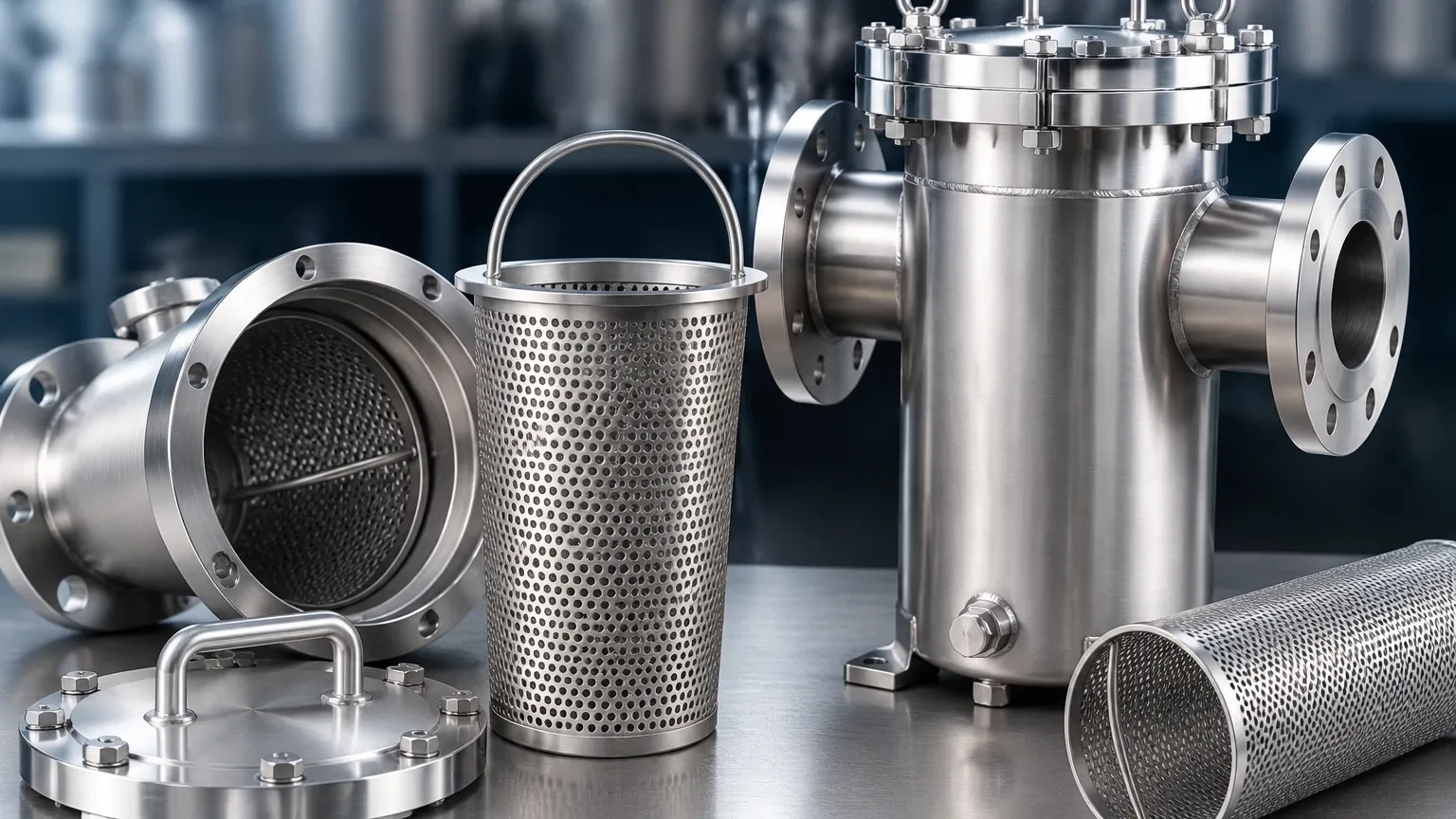
In industrial fluid handling, the protection of downstream equipment such as pumps, valves, and flow meters is a critical engineering priority. A basket strainer 316 serves as a high-performance filtration component designed to remove unwanted solids from liquid streams. Unlike Y-strainers, which are typically used for smaller amounts of debris, basket strainers are engineered for systems with higher flow rates and a greater concentration of particulates. By utilizing AISI 316 stainless steel, these components provide superior corrosion resistance and structural integrity in demanding chemical, pharmaceutical, and food-grade environments.
Selecting the correct Strainers & Baskets involves more than just matching pipe diameters. It requires a detailed understanding of material science, fluid dynamics, and the specific mechanical stresses of the application. For engineers and procurement teams, the choice of 316 stainless steel is often driven by the need for longevity and compliance with stringent industry standards.
Understanding the Technical Advantages of 316 Stainless Steel
The primary reason for specifying a basket strainer 316 over 304 stainless steel is the chemical composition of the alloy. While both are austenitic stainless steels, 316 contains approximately 2% to 3% molybdenum. This addition significantly enhances the material's resistance to pitting and crevice corrosion, particularly in environments containing chlorides or other halides.
In industrial water treatment or marine applications, where salt content is a factor, 304 stainless steel may suffer from localized corrosion that leads to structural failure. In contrast, the molybdenum in 316 stainless steel creates a more robust passive oxide layer. Furthermore, 316 stainless steel maintains its mechanical properties at higher temperatures and offers better resistance to organic and inorganic acids, making it the standard for chemical processing and pharmaceutical manufacturing.
From a manufacturing perspective, 316 stainless steel provides excellent weldability and formability. This allows for the production of complex basket geometries, including reinforced bottoms and custom handle configurations, without compromising the alloy's corrosion-resistant properties. For high-pressure systems, the mechanical strength of 316 ensures that the strainer basket can withstand significant differential pressures before requiring cleaning.
Design Variations in Industrial Basket Strainers
A basket strainer 316 is rarely a "one-size-fits-all" component. The design must be tailored to the specific debris profile and flow characteristics of the system. Industrial baskets generally fall into two categories: perforated metal and wire mesh.
Perforated Metal Baskets
Perforated baskets are constructed from heavy-gauge 316 stainless steel sheets with punched holes. These are typically used for coarse filtration where the goal is to remove large debris like scale, welding slag, or stones. The hole size, often ranging from 1/32" to 1/2", determines the filtration level. Perforated baskets are valued for their extreme durability and ability to handle high pressure drops without deforming.
Mesh-Lined Baskets
When finer filtration is required, a perforated 316 basket acts as a support structure for a fine wire mesh lining. This combination allows for filtration levels down to 20 microns or finer. The mesh is precision-woven from 316 stainless steel wire, ensuring that even under high flow velocities, the aperture size remains constant. This dual-layer construction provides both the mechanical strength of the perforated plate and the precision of the wire mesh.
Basket Geometry and Flow Area
The ratio of the open area of the basket to the cross-sectional area of the inlet pipe is a key performance indicator. A high-quality basket strainer 316 is designed with a high "open area ratio" (often 6:1 or higher). This minimizes the initial pressure drop across the strainer and extends the time between cleaning cycles, as the basket can accumulate a significant amount of debris before flow is restricted.
Key Engineering Considerations for Selection
When specifying a basket strainer 316, engineers must evaluate several technical parameters to ensure system compatibility and operational efficiency.
1. Micron Rating and Retention Requirements: The size of the smallest particle that must be removed dictates the mesh or perforation size. Specifying a mesh that is too fine can lead to rapid clogging and excessive pressure drops, while a mesh that is too coarse may allow damaging particles to pass through to sensitive equipment.
2. Differential Pressure (ΔP): This is the difference in pressure between the inlet and outlet of the strainer. As the basket fills with debris, the ΔP increases. It is essential to know the maximum allowable pressure drop for the system and to select a basket design that offers low clean-state resistance.
3. Flow Velocity and Viscosity: High-velocity fluids can cause erosion or vibration in the strainer basket. Similarly, high-viscosity fluids like oils or syrups require larger surface areas and potentially different basket geometries to maintain efficient flow rates.
4. Seal and Gasket Compatibility: While the basket itself is 316 stainless steel, the seals used in the strainer housing must be compatible with the process fluid. Options typically include EPDM, Viton, or PTFE, depending on the temperature and chemical nature of the liquid.
Application-Specific Requirements for 316 Strainers
The versatility of the basket strainer 316 makes it suitable for a wide range of specialized industries, each with its own set of technical requirements.
Food and Beverage Industry
In food processing, hygiene is paramount. A basket strainer 316 used in this sector must often meet sanitary standards (such as 3-A or FDA compliance). This requires smooth surface finishes (low Ra values) to prevent bacterial growth and designs that are easy to clean or compatible with Clean-In-Place (CIP) systems. The corrosion resistance of 316 is also vital for resisting the harsh caustic cleaners used in food plants.
Chemical and Petrochemical Processing
Chemical plants handle aggressive fluids that can quickly degrade lesser materials. The use of 316 stainless steel provides a necessary safety margin against corrosion-induced leaks. These applications often involve high pressures and temperatures, requiring the strainer baskets to be reinforced with heavy-duty rings or specialized welding techniques to ensure structural integrity under stress.
Pharmaceutical Manufacturing
Precision is the hallmark of pharmaceutical filtration. Basket strainers in this industry are used to protect high-cost chromatography columns and ultra-filtration membranes. The 316 stainless steel ensures that no metallic contaminants are leached into the product stream, maintaining the purity of the active pharmaceutical ingredients (APIs).
Maintenance and Operational Longevity
The total cost of ownership for a basket strainer 316 is heavily influenced by its maintenance requirements. Because these are "simplex" or "duplex" designs—meaning the flow must either be stopped or diverted to clean the basket—the ease of removal is a significant factor.
Proper maintenance involves monitoring the differential pressure. Many industrial systems utilize DP gauges with alarms to alert operators when the basket is 50% to 70% full. Cleaning a 316 stainless steel basket typically involves removing it from the housing and using a pressurized water spray or ultrasonic cleaning tank. Because 316 is highly durable, these baskets can be cleaned and reused hundreds of times, provided they are not mechanically damaged during handling.
Engineers should also look for signs of "blinded" mesh, where particles become permanently lodged in the wire openings. If cleaning does not return the differential pressure to near-original levels, the basket may need replacement. Using high-quality 316 wire mesh reduces the likelihood of particle entrapment compared to lower-grade materials.
Customization and OEM Manufacturing Capabilities
Standard off-the-shelf strainers may not always meet the unique constraints of a specific industrial layout or a specialized process. This is where custom manufacturing becomes essential. A manufacturer specializing in stainless steel filtration can provide tailored solutions that go beyond standard catalog items.
Customization options for a basket strainer 316 include:
* Custom Dimensions: Adjusting the height, diameter, or flange size to fit existing housing units.
* Reinforcement: Adding internal or external support cages for high-pressure applications.
* Handle Designs: Slotted handles, heavy-duty lifting lugs, or specialized grips for ergonomic removal.
* Multi-Stage Filtration: Designing baskets with multiple layers of different mesh sizes to capture a range of particle sizes in a single pass.
* Specialty Coatings: In rare cases where even 316 stainless steel needs extra protection, coatings like PTFE can be applied to the basket.
By working closely with a manufacturer like Kaifil, engineering teams can ensure that the filtration components are optimized for the specific flow dynamics and debris types of their system. This collaborative approach leads to higher system reliability, reduced downtime, and more efficient fluid processing. Whether for a new installation or the replacement of existing components, a well-engineered basket strainer 316 is a fundamental investment in industrial process stability.
