


Basket Strainer 5 Inch
In industrial fluid handling, the protection of downstream equipment—such as pumps, flow meters, heat exchangers, and control valves—is paramount to operational longevity and process integrity. The basket strainer 5 inch serves as a critical mechanical filtration component designed to remove unwanted solids from liquid or gas streams. Unlike Y-strainers, which are often used for smaller debris and steam applications, basket strainers offer a larger holding capacity and a lower pressure drop, making them the preferred choice for high-flow industrial processes.
Selecting a 5-inch basket strainer requires a deep understanding of fluid dynamics, material compatibility, and the specific filtration requirements of the application. This guide examines the technical engineering considerations, material science, and operational parameters that define high-performance Strainers & Baskets in modern industrial environments.
Technical Engineering of 5-Inch Basket Strainers
A basket strainer 5 inch is sized according to the Nominal Pipe Size (NPS) of the system. While the connection size is fixed, the internal geometry and the design of the strainer basket significantly influence the efficiency of the entire system. Engineers must evaluate several technical factors to ensure the strainer does not become a bottleneck in the process.
Flow Coefficient (Cv) and Pressure Drop
The Flow Coefficient (Cv) represents the volume of water (in gallons per minute) that will flow through the strainer with a pressure drop of 1 psi. For a 5-inch basket strainer, the Cv value is a primary indicator of its efficiency. A well-engineered strainer housing minimizes turbulence and maximizes the effective filtration area, resulting in a higher Cv.
Pressure drop (ΔP) is the difference in pressure between the inlet and the outlet of the strainer. It is influenced by the fluid's velocity, viscosity, and the cleanliness of the basket. In a typical industrial setup, the initial clean pressure drop should not exceed 2 psi. As the basket collects debris, the ΔP increases. Monitoring this differential pressure is essential to prevent system strain and potential basket collapse.
Open Area Ratio (OAR)
The Open Area Ratio is the ratio of the total open area of the strainer basket to the internal cross-sectional area of the inlet pipe. For a basket strainer 5 inch, an OAR of 6:1 or higher is generally recommended for most industrial applications. A high OAR ensures that the strainer can operate for longer periods between cleaning cycles without causing significant pressure loss. This is particularly important in systems handling fluids with a high concentration of suspended solids.
Material Selection and Corrosion Resistance
The durability of a 5-inch basket strainer is largely determined by the materials used in its construction. Industrial environments often involve corrosive chemicals, high temperatures, and abrasive particulates, necessitating the use of high-grade alloys.
Stainless Steel 304 and 316L
Stainless steel is the industry standard for high-performance filtration components.
* SS304: Offers excellent strength and general corrosion resistance. It is suitable for water treatment, food processing, and many chemical applications where the environment is not excessively aggressive.
* SS316L: Contains molybdenum, which provides superior resistance to chlorides and pitting corrosion. This makes it the preferred choice for pharmaceutical manufacturing, marine environments, and high-purity chemical processing.
At Kaifil, we focus on precision manufacturing using these materials to ensure that every basket strainer 5 inch meets the rigorous demands of industrial service. In addition to the housing, the internal basket must be constructed from compatible materials to prevent galvanic corrosion.
Sealing and Gasket Materials
The integrity of the strainer seal is vital for preventing leaks and maintaining system pressure. Depending on the fluid being processed, engineers may specify different gasket materials:
* Buna-N (Nitrile): Common for water and oil applications.
* EPDM: Preferred for steam, water, and some acids/alkalis.
* Viton (FKM): Required for high-temperature applications and aggressive chemicals.
* PTFE: Offers near-universal chemical resistance but requires specific mechanical design to ensure a tight seal.
Filtration Media: Perforated Metal vs. Wire Mesh
The internal element of a basket strainer 5 inch can be designed in various configurations depending on the required level of filtration. The choice between perforated plate and wire mesh linings is driven by the particle size that needs to be captured.
Perforated Baskets
Perforated metal baskets are typically used for coarse filtration, often referred to as "straining." They are robust and can withstand higher differential pressures than fine mesh. Common perforation sizes range from 1/32" to 1/4". These are ideal for removing large debris like scale, welding slag, and stones from the fluid stream.
Mesh-Lined Baskets
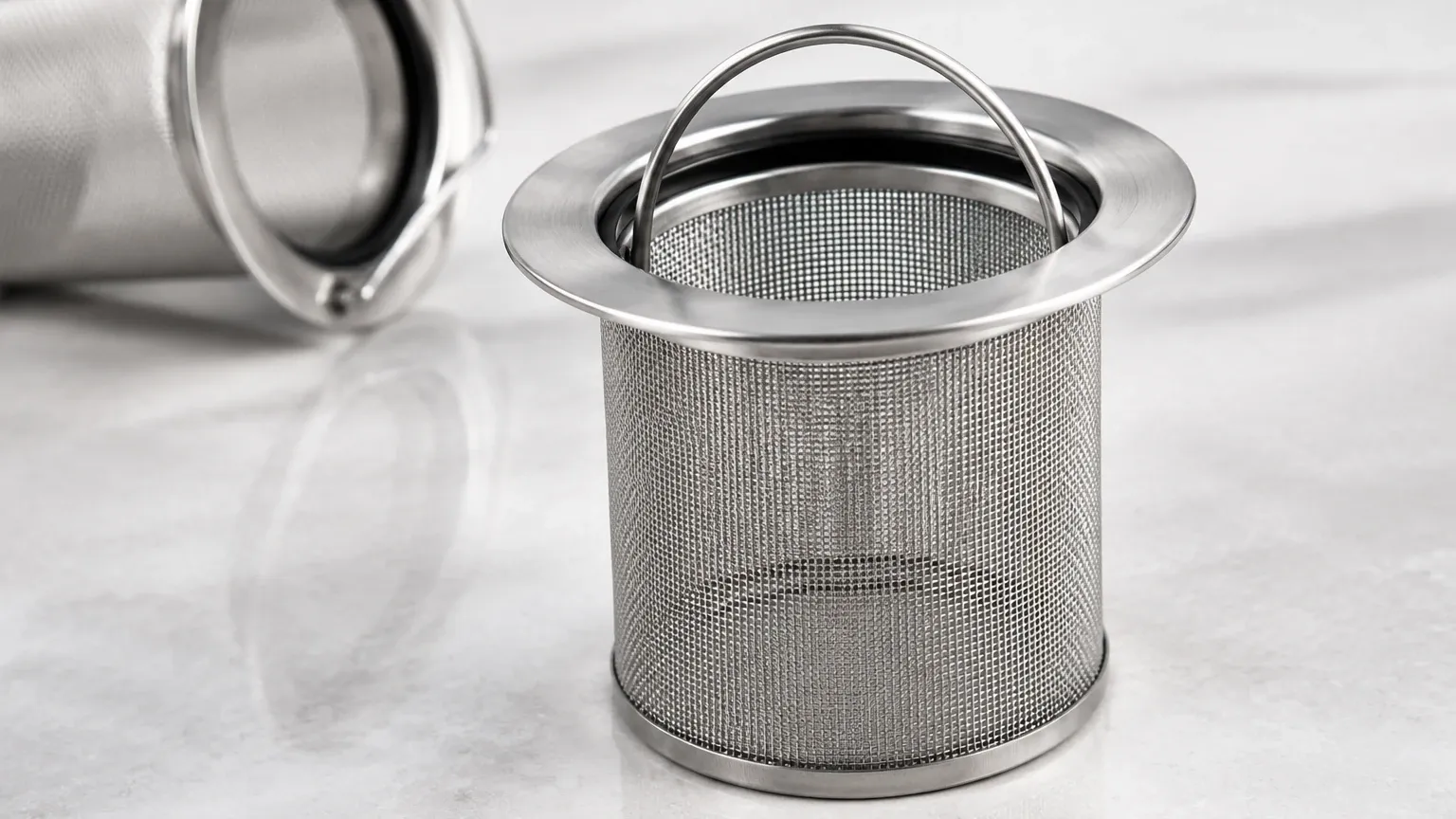
When finer filtration is required, a wire mesh lining is added to the perforated basket. The perforated plate provides the structural support, while the mesh determines the filtration accuracy. Mesh sizes can range from 20 mesh (approximately 840 microns) down to 400 mesh (37 microns) or even finer.
For a basket strainer 5 inch, selecting the correct mesh involves a balance between the desired cleanliness of the fluid and the frequency of maintenance. Using a mesh that is too fine for the application will lead to rapid clogging and excessive downtime.
Operational Considerations and Maintenance
To maintain the efficiency of a basket strainer 5 inch, proper installation and a regular maintenance schedule are required. Because basket strainers are designed for easy access, they are typically installed in horizontal pipelines where the "basket" can be lifted out vertically.
Closure Types
The method of accessing the basket is a key operational consideration:
* Bolted Cover: The most common and cost-effective design. It is suitable for applications where the basket does not need to be cleaned frequently.
* Quick-Opening Cover: Utilizes swing bolts, clamps, or threaded caps to allow for tool-free access. This is essential for systems where downtime must be minimized and the basket requires frequent cleaning.
Differential Pressure Monitoring
Installing pressure gauges on the inlet and outlet sides of the basket strainer 5 inch is highly recommended. By monitoring the differential pressure, operators can determine exactly when the basket needs to be cleaned. A common industry standard is to clean or replace the basket when the differential pressure reaches 5 to 10 psi above the clean pressure drop.
Cleaning Procedures
When cleaning a stainless steel basket, it is important to avoid abrasive tools that could damage the wire mesh or the passivated surface of the steel. High-pressure water or ultrasonic cleaning are often the most effective methods for removing trapped particles without compromising the integrity of the filtration media.
Customization and OEM Solutions
Standard off-the-shelf strainers may not always meet the unique requirements of specialized industrial processes. Customization is often necessary to address specific space constraints, flow rates, or material requirements.
As a professional manufacturer, Kaifil provides comprehensive OEM services for Strainers & Baskets. Our engineering team works with clients to develop custom basket designs, including:
* Reinforced Baskets: For high-pressure applications where standard baskets might deform.
* Magnetic Inserts: To capture fine iron and steel particles that might pass through a standard mesh.
* Specialized Coatings: Such as PTFE lining for extreme chemical resistance.
* Custom Dimensions: Adjusting the height or diameter of the basket to fit existing housings or to increase the holding capacity.
Total Cost of Ownership (TCO)
When purchasing a basket strainer 5 inch, engineers and procurement teams should look beyond the initial purchase price. The Total Cost of Ownership includes maintenance labor, replacement parts, and the cost of system downtime.
A high-quality stainless steel strainer from a reputable manufacturer like Kaifil may have a higher upfront cost but offers significant savings over its lifecycle through:
1. Reduced Downtime: Durable construction and high OAR lead to longer service intervals.
2. Lower Maintenance Costs: Easy-to-clean designs and high-grade materials reduce the need for frequent basket replacements.
3. Equipment Protection: Reliable filtration prevents expensive repairs to downstream pumps and valves.
4. Energy Efficiency: Maintaining a low pressure drop reduces the energy required by the system's pumps to move fluid through the strainer.
Conclusion
The basket strainer 5 inch is a fundamental component in industrial fluid systems, providing essential protection and ensuring process consistency. By focusing on technical specifications such as Cv, OAR, and material compatibility, engineers can select a filtration solution that optimizes performance and minimizes operational risks. Whether utilizing standard perforated baskets or precision-engineered wire mesh linings, the quality of the strainer directly impacts the reliability of the entire industrial process. For organizations seeking high-performance, customized filtration components, partnering with an experienced manufacturer ensures that these critical requirements are met with precision and expertise.
