


5 Strainer Basket
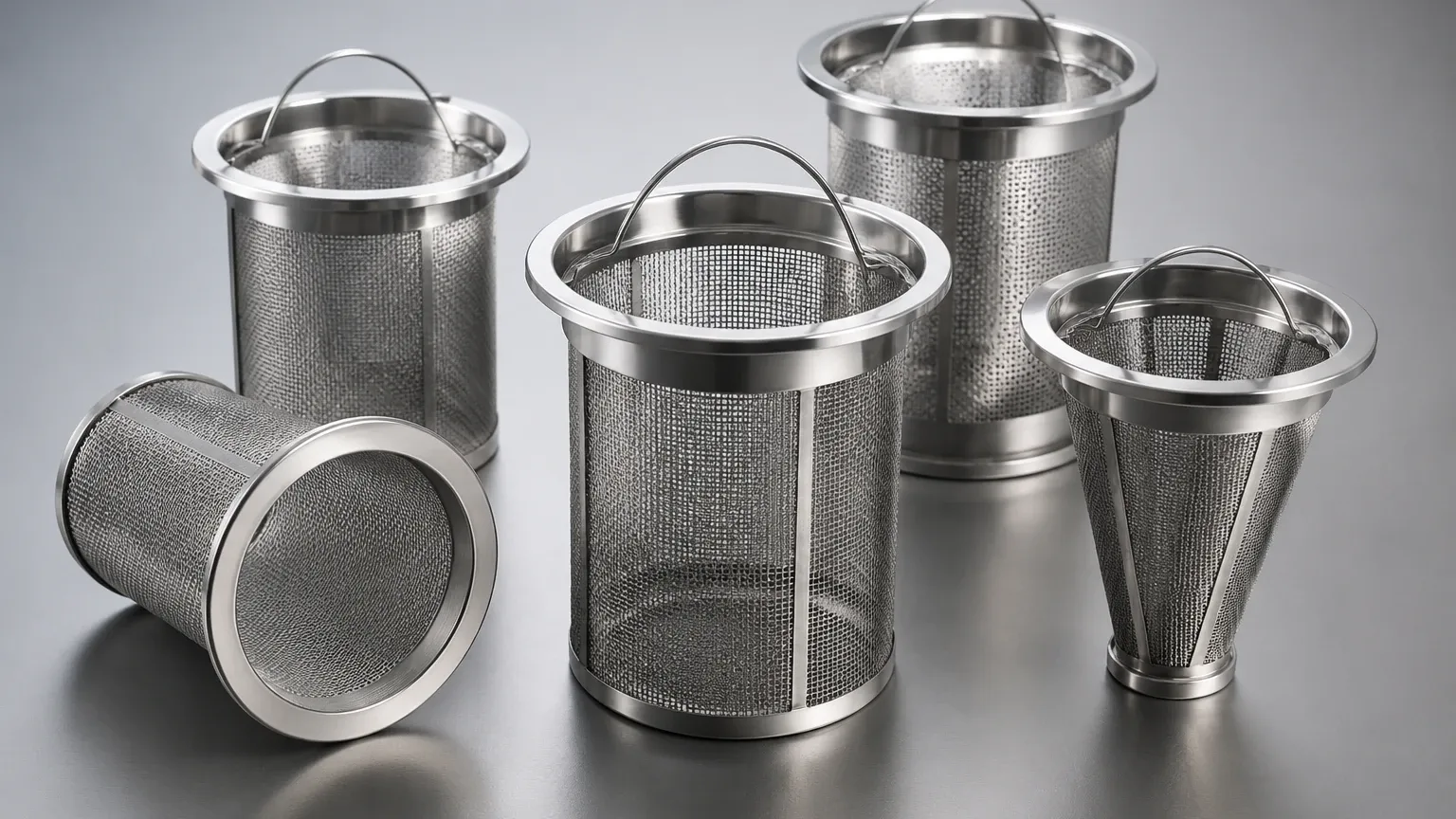
In industrial fluid handling, the efficiency of a system often depends on the reliability of its primary filtration components. Among these, the 5 strainer basket—referring either to a 5-inch diameter basket or a standard Size 5 trade designation—serves as a critical line of defense for pumps, valves, and heat exchangers. These components are designed to remove large-scale debris and particulate matter from liquid streams, preventing downstream damage and ensuring process continuity.
Selecting the correct Strainers & Baskets involves more than simply matching a diameter. Engineers must evaluate material compatibility, hydraulic capacity, and the physical stresses of the application. As a manufacturer specializing in custom stainless steel filtration solutions, Kaifil provides the technical expertise necessary to navigate these specifications, ensuring that every basket is optimized for its specific industrial environment.
Technical Specifications of the 5 Strainer Basket
The designation "5" in the context of strainer baskets typically refers to one of two things: the physical diameter of the basket or a standardized "Size 5" industry format used in specific housing models. In both cases, the basket acts as a high-capacity reservoir for captured solids. Unlike flat screens, the basket shape provides a significantly larger surface area, which is essential for managing pressure drop and extending the time between cleaning cycles.
Dimensional Accuracy and Housing Fit
For a 5 strainer basket to function effectively, the fit within the strainer housing must be precise. Any gap between the basket flange and the housing seat allows for "bypass," where unfiltered fluid escapes around the edges of the basket. This is particularly dangerous in high-velocity systems where even small particles can cause erosive wear on downstream components. Engineering teams must confirm the flange thickness, the overall height, and the outer diameter (OD) to ensure a liquid-tight seal.
Material Selection: SS304 vs. SS316L
Material selection is the most critical factor in determining the lifespan of a strainer basket.
* Stainless Steel 304: Suitable for general-purpose applications, including water treatment and mild chemical processing. It offers excellent strength and basic corrosion resistance.
* Stainless Steel 316L: Recommended for more aggressive environments, such as marine applications, pharmaceutical processing, and high-chloride solutions. The addition of molybdenum provides superior resistance to pitting and crevice corrosion.
* Specialty Alloys: For extreme conditions involving high temperatures or highly acidic fluids, alloys like Monel or Hastelloy may be required, though 316L remains the industry standard for the majority of stainless steel filtration needs.
Engineering Considerations for Filtration Media
The performance of a 5 strainer basket is dictated by the type of media used in its construction. This media can range from coarse perforated metal to fine multi-layered wire mesh.
Perforated Metal Bases
Most industrial baskets utilize a perforated metal cylinder as the structural base. The hole size in the perforation determines the "rough" filtration level. Common perforation patterns include staggered holes with diameters ranging from 1/32" to 1/2". The "open area ratio" is a key metric here; a higher open area reduces initial pressure drop but may compromise the structural integrity of the basket under high differential pressure.
Wire Mesh Linings
When finer filtration is required, the perforated metal base is lined with stainless steel wire mesh. This allows the 5 strainer basket to capture particles as small as 20 microns.
* Plain Weave: The most common mesh type, providing a clear opening and consistent performance.
* Dutch Weave: Offers higher strength and finer filtration ratings by using a denser packing of wires, which is ideal for high-pressure applications where mesh deformation is a concern.
* Sintered Mesh: For the most demanding applications, multiple layers of mesh can be sintered together to create a rigid, high-strength filter element that resists fraying and can withstand rigorous backwashing.
Hydraulic Performance and Pressure Drop
One of the most common questions engineers face is how a 5 strainer basket will affect system pressure. The "Clean Pressure Drop" (Delta P) is the resistance the fluid encounters when passing through a clean basket. As the basket collects debris, this resistance increases.
The Importance of the Area Ratio
To maintain efficient flow, the "total open area" of the strainer basket should ideally be at least six times the cross-sectional area of the inlet pipe. This 6:1 ratio ensures that even when the basket is 50% clogged, the pressure drop remains within acceptable limits. For a 5-inch system, calculating this ratio is vital to prevent pump cavitation and ensure that the system does not exceed its maximum operating pressure.
Flow Velocity and Turbulence
High flow velocities can lead to turbulence within the basket, which may cause captured debris to break apart or bypass the mesh. By utilizing a 5-inch diameter basket, the velocity of the fluid is slowed as it enters the larger volume of the basket, allowing for more effective gravitational settling and mechanical entrapment of solids.
Customization Options for Industrial Applications
Standard off-the-shelf baskets often fail to meet the unique requirements of specialized industrial processes. Customization allows engineers to address specific operational challenges.
Handle and Lifting Configurations
Ease of maintenance is a major factor in the total cost of ownership. Custom handle designs include:
* Bail Handles: Standard pivoting handles for easy manual extraction.
* Slant Handles: Designed for housings with side-entry or angled covers.
* Fixed Crossbars: Provide additional structural support across the top of the basket, preventing collapse under high vacuum or pressure conditions.
Reinforcement and Support
In high-pressure systems, a standard 5 strainer basket may experience "crushing" forces if the differential pressure becomes too high. Reinforcing rings, longitudinal support bars, and heavy-duty bottom plates can be added to the design to ensure the basket maintains its shape even when fully loaded with debris.
Gaskets and Seals
To prevent bypass, the choice of sealing material is essential. Depending on the chemical composition and temperature of the fluid, seals may be constructed from EPDM, Viton, PTFE, or Silicone. A properly specified gasket ensures that the 5 strainer basket maintains a positive seal against the housing seat.
Maintenance, Cleaning, and Replacement Cycles
A proactive maintenance strategy is required to prevent basket failure and system downtime. Because the 5 strainer basket is a mechanical barrier, it will eventually reach a point where cleaning or replacement is necessary.
Monitoring Differential Pressure
The most effective way to determine when a basket needs cleaning is by monitoring the differential pressure across the strainer. Most industrial systems utilize a DP gauge. A common rule of thumb is to clean the basket when the pressure drop reaches 10-15 psi above the clean reading. Allowing the pressure drop to exceed 20-30 psi puts the basket at risk of structural failure.
Cleaning Protocols
Stainless steel baskets are valued for their cleanability. Depending on the contaminant, cleaning methods include:
* Backwashing: Reversing the flow to dislodge particles.
* Ultrasonic Cleaning: Using high-frequency sound waves in a chemical bath to remove fine particles trapped deep within the wire mesh.
* Chemical Soaking: Useful for removing organic buildup or scale.
Identifying Wear and Tear
During every cleaning cycle, the 5 strainer basket should be inspected for:
1. Mesh Blinding: Permanent clogging of the mesh pores that cannot be cleaned.
2. Broken Welds: Signs of fatigue in the spot welds or TIG welds connecting the mesh to the frame.
3. Erosion: Thinning of the metal in high-velocity areas, which can lead to holes.
Total Cost of Ownership Considerations
When purchasing a 5 strainer basket, the initial price is only one component of the total cost. Engineers should consider the longevity of the materials and the efficiency of the design. A cheaper, lower-quality basket may save money upfront but can lead to frequent replacements, increased labor costs for maintenance, and potential damage to expensive downstream equipment like high-pressure pumps.
By opting for a high-quality, custom-engineered solution from a manufacturer like Kaifil, companies can ensure that their filtration components are built to last. Custom-designed Strainers & Baskets provide the exact filtration rating and structural integrity required for demanding B2B applications, from chemical plants to food processing facilities.
Conclusion
The 5 strainer basket is a fundamental component in industrial fluid management. Whether used for coarse straining or fine filtration, its design must account for the physical and chemical realities of the process environment. By focusing on material quality, hydraulic efficiency, and precise customization, engineers can protect their equipment and optimize their operational uptime. When selecting a filtration partner, look for manufacturers who understand these technical nuances and can provide the documentation and engineering support necessary to ensure a successful installation.
