


5 Strainer
In industrial fluid handling and process engineering, the term "5 strainer" typically refers to one of two critical specifications: a strainer designed for a 5-inch nominal pipe size (NPS) or a filtration component engineered to achieve a 5-micron filtration rating. Both interpretations are vital in the context of protecting downstream equipment, such as pumps, valves, and heat exchangers, from particulate contamination.
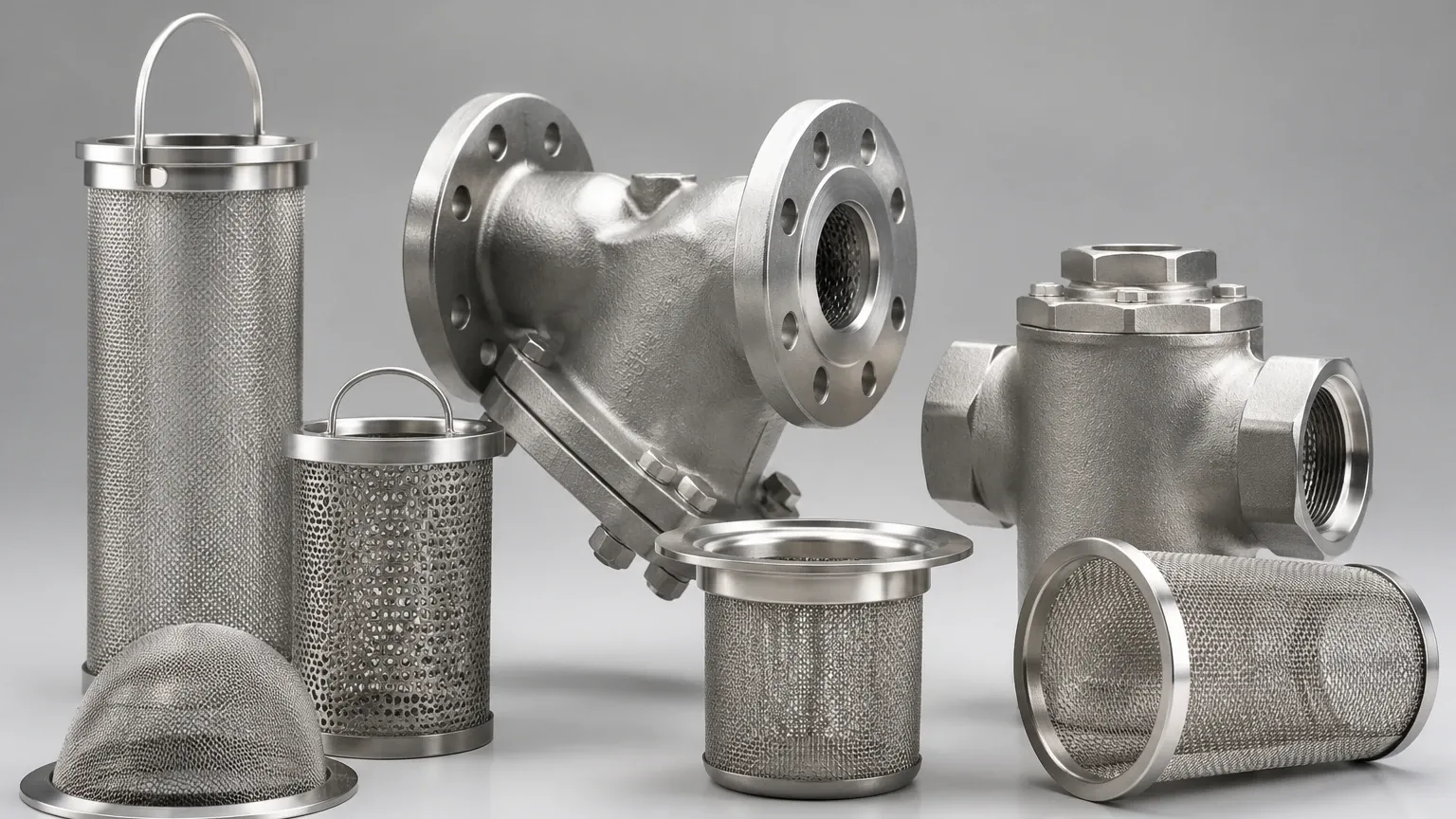
Selecting the correct Strainers & Baskets requires a deep understanding of fluid dynamics, material compatibility, and the specific mechanical stresses of the application. Whether the requirement is based on physical dimensions or filtration precision, engineering teams must evaluate several technical parameters to ensure long-term operational efficiency and system integrity.
Engineering Specifications for 5-Inch Industrial Strainers
When a "5 strainer" refers to the physical size of the housing or the connection points, it generally denotes a 5-inch (NPS 5) pipeline component. In industrial piping, a 5-inch line is a significant conduit capable of handling substantial flow rates, often found in cooling water systems, chemical processing lines, and large-scale hydraulic circuits.
Flow Capacity and Velocity
For a 5-inch strainer, the internal geometry must be designed to minimize turbulence. Engineers must calculate the maximum flow velocity through the strainer body. Typically, for liquid service, velocities are maintained between 5 and 10 feet per second (fps). If the velocity exceeds these limits, the resulting pressure drop (ΔP) can lead to cavitation in downstream pumps or mechanical vibration within the strainer basket itself.
Flange and Connection Standards
Standard 5-inch strainers are usually equipped with ANSI/ASME B16.5 flanges. The pressure rating—such as Class 150, 300, or 600—dictates the wall thickness and the bolt pattern of the strainer. For high-pressure hydraulic or steam applications, the structural integrity of the 5 strainer housing is paramount. Engineers must verify that the casting or fabrication meets the required pressure-temperature ratings for the specific medium being processed.
Achieving 5-Micron Filtration Accuracy
In many precision contexts, a 5 strainer refers to a 5-micron filtration level. This level of filtration is considered "fine" in the world of industrial strainers and often requires the use of specialized wire mesh or sintered metal media rather than simple perforated plate.
Wire Mesh vs. Sintered Media
Standard perforated baskets typically provide "coarse" filtration (measured in fractions of an inch or millimeters). To achieve a 5-micron rating, a secondary lining of stainless steel wire mesh is required.
* Single Layer Mesh: Suitable for low-pressure applications where the particulate load is minimal.
* Multi-Layer Sintered Mesh: For demanding environments, multiple layers of stainless steel mesh are vacuum-sintered together. This process creates a robust, rigid filter medium that maintains a precise 5-micron pore size even under high differential pressure. This is essential for applications where the 5 strainer must withstand backwashing or high-pressure surges without deforming.
Nominal vs. Absolute Ratings
When specifying a 5-micron strainer, it is critical to distinguish between nominal and absolute ratings. A nominal 5-micron rating suggests the filter will retain the majority of particles 5 microns and larger, but not all. An absolute rating implies a 99.9% efficiency at that specific micron level. In pharmaceutical or high-purity chemical applications, absolute ratings are often mandatory to prevent trace contamination.
Material Integrity in Strainers & Baskets
The performance of any 5 strainer is heavily dependent on its material of construction. Because these components are often exposed to corrosive fluids or extreme temperatures, selecting the appropriate alloy is a foundational engineering decision.
Stainless Steel 304 and 316L
Stainless steel is the industry standard for high-performance filtration.
* Grade 304: Provides excellent durability and corrosion resistance for water-based applications and mild chemicals.
* Grade 316L: Contains molybdenum, which significantly enhances resistance to chlorides and pitting. This is the preferred material for marine environments, food and beverage processing, and aggressive chemical filtration. The "L" (low carbon) designation is preferred for welded components to prevent sensitized grain boundaries that could lead to intergranular corrosion.
Specialized Alloys
In highly acidic or high-temperature environments, standard stainless steels may fail. In these cases, engineers may specify exotic alloys such as Monel, Hastelloy, or Duplex stainless steel. These materials ensure that the Strainers & Baskets maintain their structural shape and filtration accuracy over years of service, reducing the total cost of ownership by extending replacement cycles.
Custom Design Factors for High-Performance Filtration
Off-the-shelf solutions often fail to meet the specific nuances of complex industrial systems. Customization of a 5 strainer allows engineers to optimize the component for specific flow patterns and debris types.
Open Area Ratio (OAR)
One of the most important metrics in strainer design is the Open Area Ratio. This is the ratio of the total open area of the basket holes to the internal cross-sectional area of the inlet pipe. A high-quality 5 strainer should ideally have an OAR of at least 6:1 or 8:1. A higher OAR results in a lower initial pressure drop and longer intervals between cleanings, as there is more surface area available to trap debris before the flow is significantly restricted.
Reinforcement and Structural Support
Because 5-micron mesh is relatively delicate, it must be supported by a heavier perforated metal backup basket. This "basket-within-a-basket" design ensures that the fine mesh does not collapse under the weight of accumulated debris or the force of the fluid flow. Custom-engineered baskets may also include internal baffles or heavy-duty handles to facilitate safe removal during maintenance.
Operational Considerations: Pressure Drop and Cleaning
The efficacy of a 5 strainer is monitored primarily through differential pressure. As the strainer traps particles, the pressure at the outlet drops relative to the inlet pressure.
Monitoring Differential Pressure
Engineers should install duplex gauges or differential pressure switches across the strainer. A common rule of thumb is to clean or replace the basket when the differential pressure reaches 5-10 psi above the clean pressure drop. Exceeding this limit risks damaging the internal mesh or forcing contaminants through the media.
Cleaning Cycles and Maintenance
For a 5-micron strainer, the cleaning process must be handled with care. Unlike coarse strainers that can be hosed down, fine mesh may require ultrasonic cleaning or chemical soaking to remove deeply embedded particles. If the application involves high levels of fine solids, a duplex strainer configuration—which allows one side to be cleaned while the other remains in operation—is often the most efficient choice to prevent system downtime.
Industry-Specific Applications for 5-Micron Filtration
The requirement for a 5 strainer (5-micron) is prevalent in several high-stakes industries where fluid purity is non-negotiable.
1. Chemical Processing: Protecting precision dosing pumps and spray nozzles from fine precipitates or undissolved solids.
2. Food and Beverage: Ensuring the clarity of liquids and protecting heat exchangers from fouling during pasteurization or cooling processes.
3. Hydraulic Systems: Maintaining the ISO 4406 cleanliness codes for hydraulic oils, where 5-micron filtration is often required to protect sensitive servo-valves.
4. Water Treatment: Acting as a pre-filter for Reverse Osmosis (RO) membranes to prevent premature fouling by silt or fine sand.
Selecting the Right Solution for Your Application
When sourcing a 5 strainer, procurement and engineering teams should confirm several key data points with the manufacturer to ensure the component is fit for purpose:
* Fluid Properties: Viscosity and specific gravity significantly impact the pressure drop across a 5-micron mesh.
* Contaminant Characteristics: Is the debris hard and angular, or soft and gelatinous? This determines whether a surface-loading mesh or a depth-loading media is required.
* Operating Conditions: Maximum operating pressure and temperature must be within the safe working limits of the housing and the basket material.
* Customization Requirements: Does the application require specific flange types, drain plugs, or specialized basket handles?
By focusing on these technical realities rather than generic specifications, engineers can select Strainers & Baskets that provide reliable protection and optimized flow performance. Whether the "5" refers to the pipe diameter or the micron rating, the goal remains the same: ensuring the purity of the process fluid and the longevity of the industrial system.
