


Strainer Basket 6
In industrial fluid handling systems, the efficiency of filtration is often determined by the precision and durability of the internal components. A strainer basket 6 refers to a specific size or classification of filtration insert typically designed for 6-inch nominal pipe size (NPS) housings or specialized industrial equipment requiring high-capacity debris removal. These components are critical for protecting downstream equipment such as pumps, valves, and heat exchangers from particulate contamination.
At Kaifil, we specialize in the engineering and manufacturing of high-performance Strainers & Baskets tailored to meet the rigorous demands of chemical processing, water treatment, and food production. Understanding the technical nuances of a strainer basket 6—from material compatibility to flow dynamics—is essential for engineers and procurement teams looking to optimize system uptime and filtration accuracy.
Understanding the Role of 6-Inch Strainer Baskets in Industrial Filtration
The primary function of a strainer basket 6 is to provide a large surface area for the collection of solids while maintaining a low pressure drop across the system. Because a 6-inch line typically handles significant flow volumes, the basket must be engineered to withstand high differential pressures without collapsing or bypassing.
Unlike temporary conical strainers, basket strainers are designed for permanent installation and frequent cleaning. The "6-inch" designation usually implies a basket diameter or a fitment for a 6-inch flange connection, though exact dimensions can vary based on the manufacturer’s housing design. These baskets are often used in "Simplex" or "Duplex" strainer configurations where continuous flow or high-solids loading is expected.
Material Selection and Engineering Specifications
Material integrity is the most critical factor when selecting a strainer basket 6. Since these components are often exposed to corrosive chemicals, high temperatures, and abrasive particles, the choice of alloy determines the service life of the filter.
Stainless Steel Alloys
Most industrial applications utilize Stainless Steel 304 or 316.
- SS 304: Suitable for general-purpose applications, water treatment, and food-grade environments where moderate corrosion resistance is required.
- SS 316/316L: Preferred for chemical processing, marine environments, and pharmaceutical applications due to its superior resistance to chlorides and acidic solutions.
- Specialty Alloys: For highly aggressive environments, baskets can be fabricated from Monel, Hastelloy, or Duplex stainless steel to prevent premature failure.
Perforation and Mesh Linings
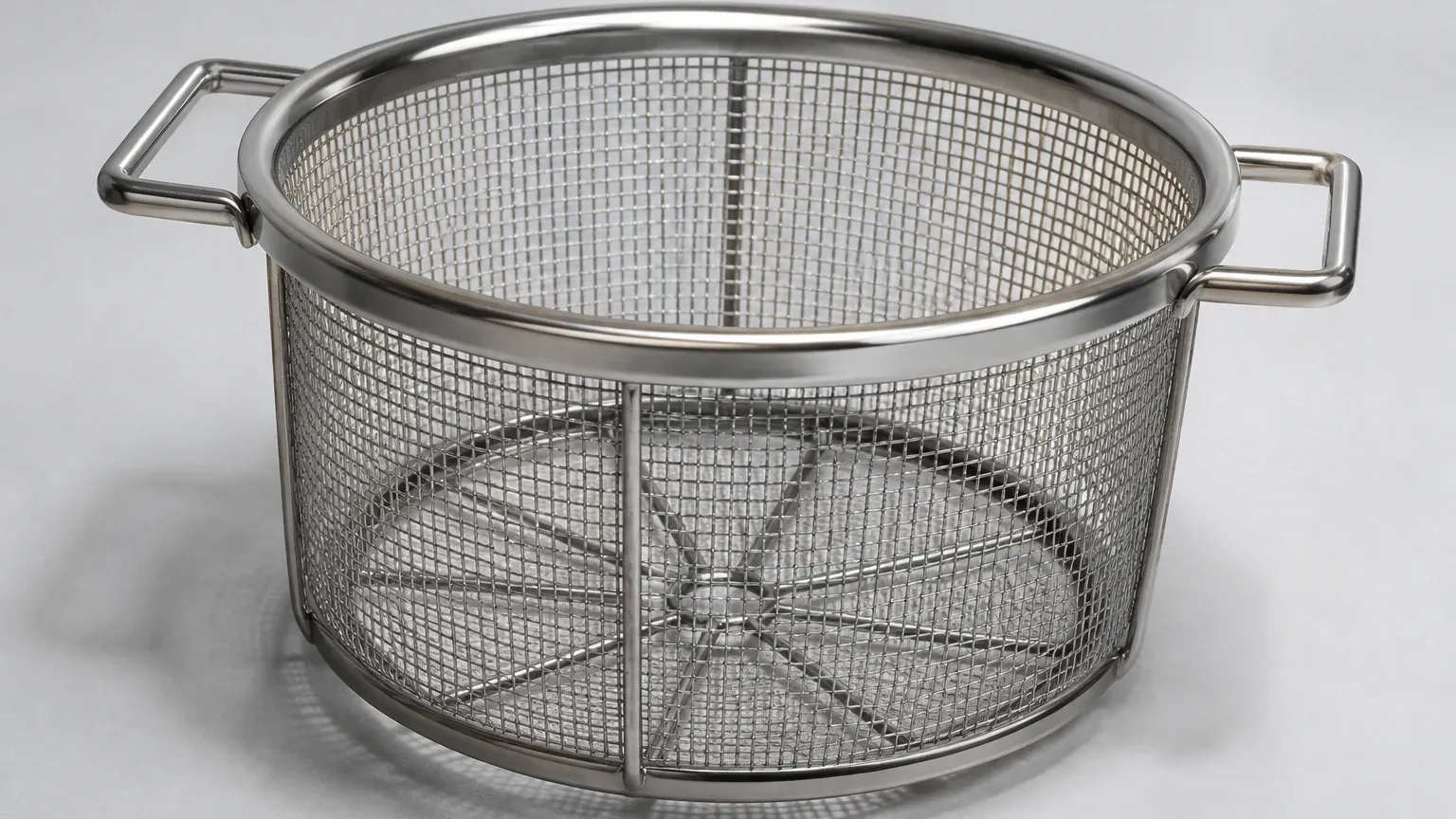
A strainer basket 6 is rarely a single layer of metal. It typically consists of a heavy-duty perforated metal support cylinder lined with a fine wire mesh. The perforation provides structural rigidity, while the mesh determines the filtration precision (micron rating). Engineering teams must specify the required "Open Area Ratio," which is the ratio of the total area of the holes to the total area of the basket. A higher open area ratio reduces the frequency of cleaning and lowers the initial pressure drop.
Flow Dynamics and Pressure Drop Considerations
When integrating a strainer basket 6 into a piping system, engineers must calculate the clean pressure drop (ΔP). If the basket is too restrictive, it will cause a significant energy loss and may lead to pump cavitation.
Factors Influencing Pressure Drop:
1. Viscosity of the Fluid: Higher viscosity fluids require larger mesh openings or a larger basket surface area to maintain flow.
2. Solids Loading: If the process fluid contains a high concentration of particulates, the basket will fill quickly. A 6-inch basket provides a larger dirt-holding capacity than smaller sizes, but the rate of accumulation must be monitored.
3. Velocity: Flow velocity in a 6-inch line can be substantial. The basket must be designed with reinforced longitudinal seams and a heavy-duty bottom plate to resist the mechanical force of the incoming fluid.
To ensure optimal performance, it is recommended that the total open area of the strainer basket be at least 6 to 8 times the cross-sectional area of the inlet pipe. This "6:1 area ratio" is a standard benchmark for ensuring that the strainer does not become a bottleneck in the system.
Customization Options for Specialized Applications
Standard off-the-shelf baskets often fail to meet the specific needs of complex industrial processes. As a custom manufacturer, Kaifil provides tailored solutions for the strainer basket 6 to address unique operational challenges.
Handle and Lifting Configurations
Given the size and potential weight of a 6-inch basket when full of debris, ergonomic handling is vital. Customization options include:
- Slant Top Handles: For easy retrieval from the housing.
- Heavy-Duty Bail Handles: Designed for mechanical lifting equipment.
- Gasketed Seats: To ensure a zero-bypass seal between the basket and the housing rim.
Structural Reinforcements
In high-pressure hydraulic or steam applications, a standard mesh basket may bulge or tear. We offer reinforced designs featuring external cages, internal support rings, and pleated mesh inserts. Pleating the mesh significantly increases the surface area within the same 6-inch footprint, allowing for finer filtration without sacrificing flow capacity.
Maintenance, Cleaning, and Replacement Cycles
The longevity of a strainer basket 6 depends heavily on the maintenance protocol. Unlike disposable cartridge filters, stainless steel baskets are designed to be cleaned and reused. However, improper cleaning can damage the mesh, leading to "media migration" or bypass.
Cleaning Procedures
- Backwashing: In some automated systems, the flow is reversed to flush particles off the mesh.
- Manual Cleaning: For Simplex and Duplex strainers, the basket is removed and cleaned using high-pressure water or ultrasonic baths. It is crucial to avoid using wire brushes that can broaden the mesh openings or cause cross-contamination of metals.
- Inspection: During each cleaning cycle, the basket should be inspected for signs of "blinded" mesh (permanent clogging), broken welds, or corrosion pitting.
When to Replace
While stainless steel is durable, it is not infinite. A strainer basket 6 should be replaced if:
- The mesh shows signs of mechanical fatigue or fraying.
- The structural support cylinder is deformed.
- The pressure drop remains high even after thorough cleaning.
- The process requirements change (e.g., a move to a finer micron rating).
Key Factors to Confirm Before Purchasing
Before placing an order for a strainer basket 6, engineering and purchasing teams should document and confirm the following technical data points to ensure compatibility and performance:
1. Exact Dimensions: Confirm the outside diameter (OD) of the flange, the total length of the basket, and the diameter of the body. There is no universal "6-inch" standard across all housing brands.
2. Micron or Mesh Rating: Determine the smallest particle size that must be removed. Over-filtering (selecting a mesh that is too fine) leads to excessive maintenance and pressure loss.
3. Operating Conditions: Specify the maximum operating pressure, temperature, and the chemical composition of the fluid.
4. Seal Requirements: Determine if the basket requires a flat gasket, an O-ring, or a metal-to-metal machined fit to prevent bypass.
5. Flow Direction: Confirm whether the fluid flows from the inside of the basket to the outside (standard) or outside-in, as this affects the placement of the reinforcement layers.
By addressing these factors, facilities can ensure they receive a filtration component that maximizes the protection of their industrial assets. For more information on custom dimensions and material options, you can Review product options and application support to find the ideal configuration for your specific filtration requirements.
Conclusion
The strainer basket 6 is a workhorse in industrial filtration, bridging the gap between small-scale particulate removal and high-volume bulk straining. By focusing on high-quality stainless steel construction, precise engineering of the open area ratio, and customized structural features, Kaifil ensures that these components deliver reliable performance in the most demanding environments. Whether you are replacing an existing unit or designing a new filtration system, prioritizing technical specifications over generic fits will result in lower total cost of ownership and superior process protection.
