


Basket Strainer 6 Inch
In industrial fluid handling, the protection of downstream equipment is a critical engineering priority. A basket strainer 6 inch is a fundamental component designed to remove large particles and debris from liquids flowing through a 6-inch nominal pipe size (NPS) system. By intercepting solids before they reach pumps, valves, heat exchangers, or nozzles, these strainers prevent mechanical damage, reduce downtime, and maintain the integrity of the process fluid. For engineers and procurement teams, selecting the correct basket strainer involves more than just matching pipe size; it requires a deep understanding of material compatibility, filtration precision, and flow dynamics.
Understanding the Role of a Basket Strainer 6 Inch in Industrial Systems
A 6-inch basket strainer is typically used in medium-to-high flow applications where the volume of fluid requires a larger surface area for effective filtration without causing excessive pressure drop. Unlike Y-strainers, which are often used for smaller lines or lower debris loads, basket strainers are designed with a larger storage capacity for solids. This makes them ideal for continuous or batch processes where the fluid may contain a significant amount of particulate matter.
The horizontal configuration of the basket allows for easy access and cleaning. In a 6-inch line, the flow velocity and volume are substantial, meaning that any restriction caused by the strainer must be carefully managed. The "basket" design provides a higher open-area ratio compared to other strainer types, ensuring that the system maintains efficient flow rates even as the basket begins to fill with debris.
Material Engineering: Selecting the Right Alloy for Durability
Material selection is the most critical factor in ensuring the longevity of a Strainers & Baskets installation. Because these components are often exposed to corrosive fluids, high temperatures, and abrasive particles, the base metal and the internal basket material must be chosen based on the chemical and physical properties of the process medium.
Stainless Steel 304 and 316
Stainless steel is the industry standard for high-performance filtration. SS304 is widely used for general industrial applications, water treatment, and food and beverage processing where moderate corrosion resistance is required. However, for more demanding environments, such as chemical processing or marine applications, SS316 is preferred. The addition of molybdenum in SS316 provides superior resistance to chlorides and pitting, ensuring that the basket strainer 6 inch remains structural sound over years of service.
Specialty Alloys and Coatings
In specific high-acid or high-temperature environments, engineers may specify duplex stainless steel or even Hastelloy for the internal components. For the housing, carbon steel is sometimes used in non-corrosive oil and gas applications to manage costs, provided the internal basket is made of a more durable alloy to prevent erosion of the filtration interface.
Filtration Efficiency: Perforated Plate vs. Wire Mesh Baskets
The internal basket of a 6-inch strainer can be constructed using different media types depending on the required filtration accuracy. The choice between perforated metal and wire mesh is driven by the size of the particles that need to be removed.
1. Perforated Metal Baskets: These are typically used for coarse filtration. The holes are punched into a metal sheet, providing a robust and rigid structure. Common perforation sizes range from 1/32" to 1/4". These are ideal for removing large scales, welding slag, or stones.
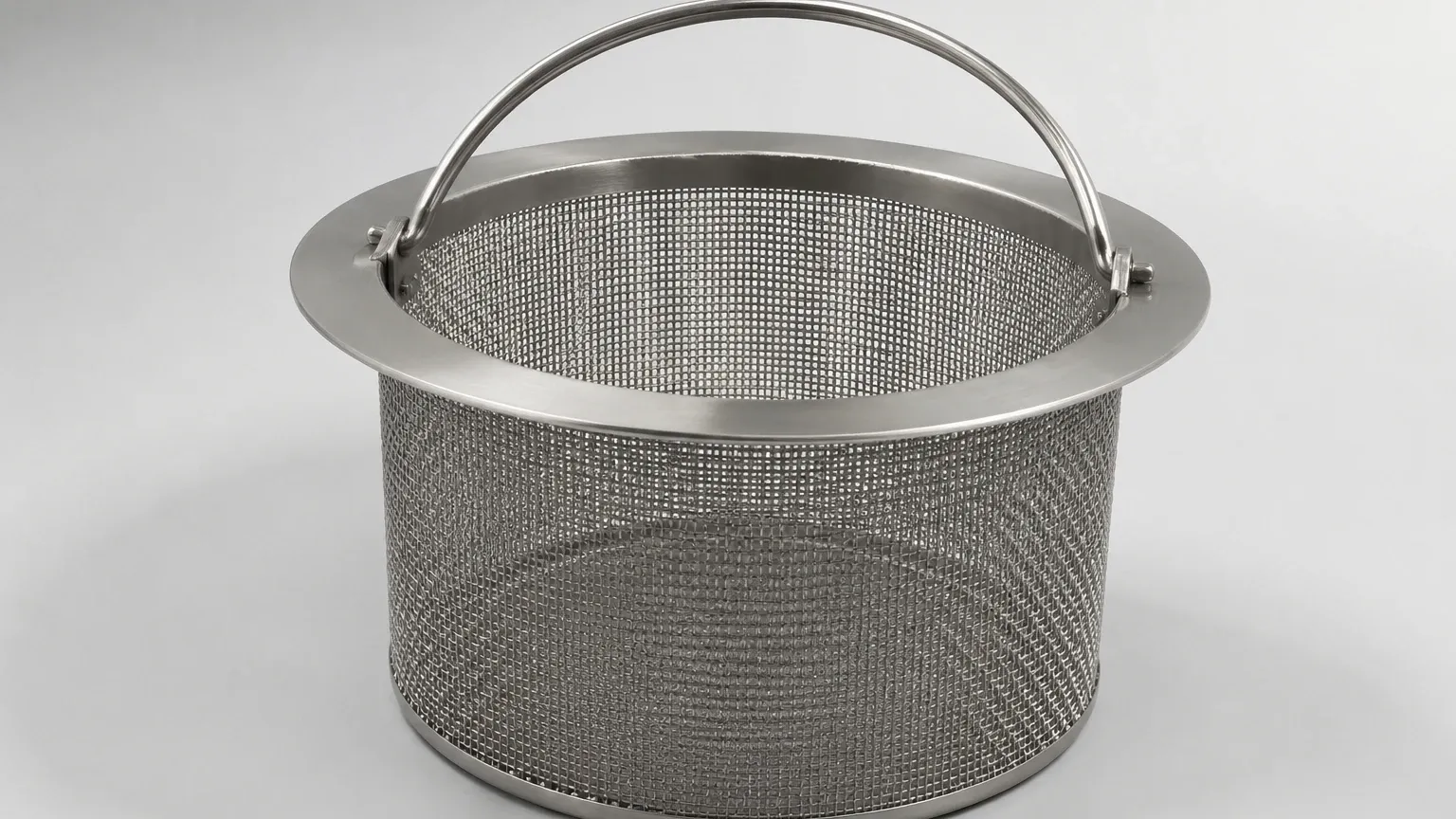
2. Wire Mesh Linings: When finer filtration is required—down to the micrometric level—a wire mesh lining is added to the perforated basket. The perforated plate acts as a support structure (the "cage"), while the stainless steel wire mesh performs the actual filtration. This combination allows for precise control over particle removal while maintaining the structural integrity needed to withstand the differential pressure in a 6-inch line.
Evaluating Flow Dynamics and Pressure Drop (Delta P)
One of the primary engineering challenges when integrating a basket strainer 6 inch into a piping system is managing the pressure drop. Every component added to a line introduces resistance to flow. If the pressure drop (Delta P) across the strainer is too high, it can lead to cavitation in pumps or reduced efficiency in the overall process.
Open Area Ratio
The efficiency of a basket strainer is often measured by its open area ratio (OAR). This is the ratio of the total open area of the basket holes to the cross-sectional area of the inlet pipe. For a 6-inch strainer, a high OAR (typically 6:1 or higher) is desirable to ensure that the strainer can collect a significant amount of debris before the pressure drop becomes critical. A higher OAR extends the time between cleaning cycles, reducing maintenance labor.
Viscosity and Flow Rate
The viscosity of the fluid also plays a major role. Thicker fluids, such as heavy oils or syrups, require larger baskets or coarser mesh to prevent excessive resistance. Engineers must calculate the clean pressure drop based on the fluid's specific gravity and viscosity at operating temperatures to ensure the system remains within its design parameters.
Design Features for Operational Efficiency and Maintenance
The physical design of the basket strainer 6 inch significantly impacts the ease of maintenance. In industrial settings, minimizing downtime is essential, leading to several common design variations:
* Cover Types: For 6-inch strainers, covers can be bolted or equipped with quick-opening mechanisms like swing bolts or knob covers. Bolted covers are generally used for high-pressure applications, while quick-opening covers are preferred when frequent cleaning is anticipated.
* Drain Plugs and Vents: A standard 6-inch strainer should include a drain plug at the bottom of the housing to allow for the safe removal of liquid before the basket is pulled. A vent plug on the cover helps relieve internal pressure before opening.
* Differential Pressure Gauges: Many engineers specify the installation of pressure gauges on both the inlet and outlet sides of the strainer. By monitoring the difference in pressure, maintenance teams can determine exactly when the basket is full and requires cleaning, moving from a schedule-based maintenance model to a condition-based one.
Industry-Specific Applications for 6-Inch Strainers
The versatility of the basket strainer 6 inch makes it a staple across various sectors, each with its own set of technical requirements.
Chemical Processing
In chemical plants, strainers are used to protect sensitive instrumentation and reactors from particulate contamination. Here, the focus is on chemical compatibility and leak prevention. Precision-welded stainless steel baskets ensure that no bypass occurs, even under fluctuating pressure conditions.
Food and Beverage
For food-grade applications, the strainer must meet sanitary standards. This involves using 316L stainless steel with a high-polish finish to prevent bacterial growth in crevices. The design must allow for complete disassembly and easy cleaning (CIP/COP compatibility).
Water Treatment and Desalination
In large-scale water treatment, 6-inch strainers act as pre-filters for membranes or UV disinfection systems. They remove sand, silt, and organic matter that could foul more expensive downstream components. In desalination, the use of high-grade alloys is mandatory to resist the corrosive nature of seawater.
Selection Criteria and Procurement Considerations
When sourcing a basket strainer 6 inch, technical professionals should confirm several key data points with the manufacturer to ensure the component is fit for purpose:
1. Pressure Rating: Ensure the housing and flange connections meet the system's design pressure (e.g., ASME Class 150, 300, or 600).
2. Filtration Grade: Define the specific micron or mesh size required. Over-filtering (selecting a mesh that is too fine) can lead to rapid clogging and unnecessary maintenance.
3. Seal Materials: The O-ring or gasket material (Buna-N, EPDM, Viton, or PTFE) must be compatible with the process fluid and operating temperature.
4. Customization Requirements: For unique piping layouts, custom nozzle orientations or specialized basket handles (such as slanted baskets for easier removal) may be necessary.
By focusing on these technical boundaries, engineers can ensure that their filtration solution provides reliable performance and long-term value. A well-engineered basket strainer 6 inch is not just a passive component; it is a critical safeguard that maintains the health of the entire industrial fluid system.
