


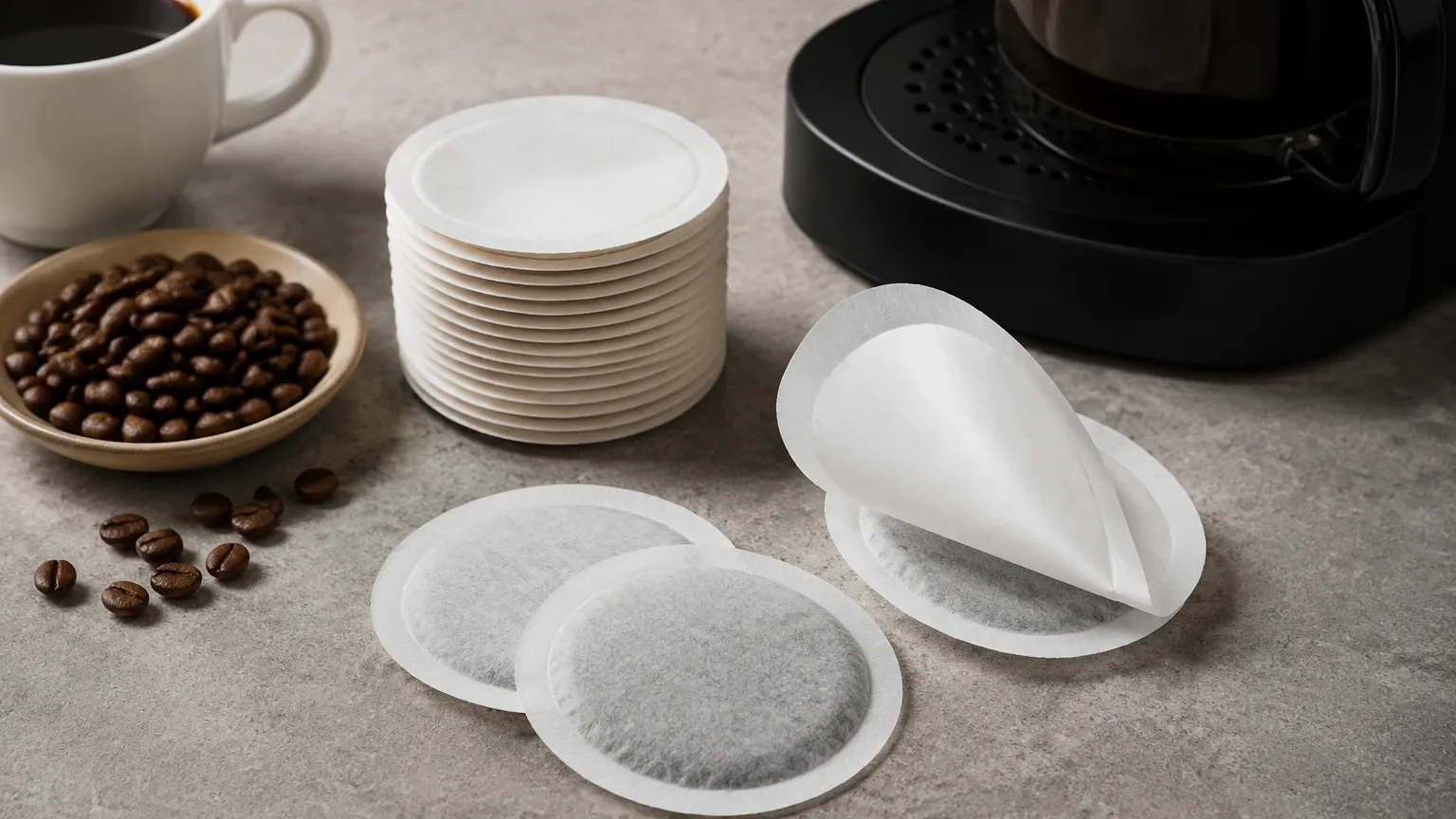
Maxwell House Coffee Filter Packs
In the global beverage industry, the efficiency of extraction and the consistency of the final product depend heavily on the precision of filtration components. While the term "Maxwell House coffee filter packs" is synonymous with consumer convenience in the retail market, it represents a significant engineering challenge at the industrial production level. For engineers and procurement professionals in the food and beverage sector, understanding the transition from large-scale industrial extraction to individual portion control requires a deep dive into the technical specifications of high-performance filtration media.
Industrial filtration is not merely about separating solids from liquids; it is about controlling flow rates, managing pressure differentials, and ensuring the chemical purity of the filtrate. To achieve the consistency required for brands like Maxwell House, manufacturers rely on sophisticated Filter Discs & Packs that can withstand the rigors of high-temperature extraction and continuous processing cycles.
The Engineering Behind Beverage Filtration Packs
The production of coffee-related products involves several stages where filtration is critical. From the initial processing of green coffee beans to the final packaging of pre-measured filter packs, the integrity of the filtration media determines the quality of the end product. In industrial brewing and extraction, the goal is to maximize the yield of soluble solids while preventing the passage of unwanted fines and sediment.
Industrial-grade filter packs differ significantly from consumer paper filters. While paper is suitable for single-use domestic applications, industrial environments demand durable materials like stainless steel wire mesh. These metal filter packs are designed for longevity, cleanability, and precise micron control. They are often integrated into large-scale extraction vessels where they must support the weight of the coffee grounds and resist the mechanical stresses of high-pressure liquid flow.
Material Selection for Industrial Filter Discs & Packs
When designing filtration components for the beverage industry, material selection is the primary consideration. Stainless steel is the industry standard due to its corrosion resistance, mechanical strength, and food-grade safety profiles.
AISI 304 vs. AISI 316L Stainless Steel
Most industrial filter discs are manufactured from AISI 304 or 316L stainless steel. While 304 is suitable for many general-purpose applications, 316L is preferred in beverage processing due to the presence of molybdenum, which enhances resistance to pitting and crevice corrosion. This is particularly important when dealing with the acidic nature of coffee and the harsh chemicals used in Clean-in-Place (CIP) cycles.
Multi-Layer Sintered Mesh
For applications requiring extreme durability and precise filtration, engineers often specify sintered wire mesh packs. Sintering is a process that uses heat and pressure to fuse multiple layers of wire mesh together without the need for binders or adhesives. This creates a robust, porous structure that maintains its shape under high pressure, ensuring that the filtration rating remains constant throughout the production run.
Technical Specifications: Micron Ratings and Mesh Geometry
The performance of Filter Discs & Packs is defined by their technical geometry. Engineers must balance the need for fine filtration with the requirement for high flow rates.
1. Micron Rating: This indicates the size of the particles the filter can effectively trap. For coffee extraction, the micron rating must be fine enough to prevent sediment from entering the final liquid but open enough to allow essential oils and soluble compounds to pass through.
2. Mesh Count: The number of wires per linear inch. A higher mesh count typically results in finer filtration but may increase the pressure drop across the filter.
3. Wire Diameter: The thickness of the wire used in the weave. Larger wire diameters increase the mechanical strength of the pack but reduce the open area, affecting throughput.
4. Weave Types: Common weaves include Plain Weave, Twilled Weave, and Dutch Weave. Dutch weaves, in particular, are favored for high-pressure applications because they provide a denser, more tortuous path for the fluid, resulting in superior particle retention.
Structural Integrity: Sintering and Edge Processing
In an industrial setting, a filter is only as strong as its weakest point. For filter discs used in high-volume production, the edges and joints are critical areas of concern.
Edge Binding and Welding
To prevent the wire mesh from fraying and to ensure a leak-proof fit within the filtration housing, filter packs often feature specialized edge treatments. This can include spot welding, plasma welding, or the addition of a metal rim (often made of aluminum or stainless steel). These rims provide structural support and create a reliable sealing surface against gaskets or O-rings.
Multi-Layer Configurations
Industrial filter packs are rarely a single layer of mesh. They are typically composed of a filtration layer, a support layer, and a drainage layer. The filtration layer provides the necessary micron rating, while the support layers provide the mechanical strength to prevent the mesh from deforming under the weight of the coffee grounds or the force of the pump.
Maintenance and Total Cost of Ownership (TCO)
For facilities producing large quantities of Maxwell House coffee filter packs, the "Total Cost of Ownership" of filtration components is a vital metric. While disposable paper or plastic filters have a lower initial cost, they generate significant waste and require frequent replacement, leading to increased downtime.
In contrast, stainless steel Filter Discs & Packs offer several long-term advantages:
* Durability: Metal filters can withstand thousands of cycles without degradation.
* Cleanability: They can be cleaned using ultrasonic baths, backwashing, or chemical solvents, restoring them to near-original performance levels.
* Consistency: Unlike paper filters, which can vary in thickness and porosity, precision-engineered metal mesh provides a consistent filtration barrier every time.
* Environmental Impact: By reducing the volume of single-use waste, permanent metal filters align with corporate sustainability goals.
Customization for OEM Beverage Equipment
Every industrial extraction system is unique, requiring customized filtration solutions. OEM (Original Equipment Manufacturer) capabilities are essential for producing filter components that fit perfectly into existing machinery. Customization options include:
* Shape and Dimension: Circular discs, rectangular packs, or complex geometric shapes tailored to specific housing designs.
* Layer Composition: Adjusting the number and type of mesh layers to achieve specific flow characteristics.
* Material Certification: Providing full traceability and material certificates (MTRs) to ensure compliance with FDA and other food safety regulations.
When sourcing components for beverage processing, engineers should confirm the manufacturer's ability to maintain tight tolerances. Even a small deviation in the diameter of a filter disc can lead to "bypassing," where the liquid flows around the filter rather than through it, compromising the quality of the entire batch.
Conclusion: Optimizing the Filtration Process
The production of high-quality coffee products, ranging from large-scale industrial extracts to individual Maxwell House coffee filter packs, relies on the invisible but essential performance of precision filtration. By selecting the appropriate Filter Discs & Packs, manufacturers can ensure product consistency, reduce operational downtime, and maintain the high standards expected by global consumers.
For engineers, the choice between different mesh types, alloys, and structural designs is a balance of physics and economics. Understanding the technical nuances of stainless steel wire mesh—from micron ratings to sintering techniques—is the key to optimizing any industrial filtration system. As the industry moves toward more sustainable and efficient production models, the role of durable, high-precision metal filtration will only continue to grow.
