


Do You Need a Paper Filter with a Permanent Filter
In industrial filtration environments, the choice between disposable media and permanent hardware is rarely a matter of simple preference. It is an engineering decision based on fluid dynamics, chemical compatibility, temperature ranges, and the required level of filtration precision. One of the most common questions encountered by plant engineers and procurement teams is: do you need a paper filter with a permanent filter?
To answer this, one must first define what constitutes a "permanent" filter in an industrial context. Unlike consumer-grade mesh, industrial permanent filters—typically constructed from stainless steel wire mesh or sintered metal—are designed for high-pressure durability and repeated cleaning cycles. Understanding the relationship between these robust components and disposable paper inserts is critical for optimizing system performance and controlling operational costs.
Understanding the Role of Permanent Industrial Filters
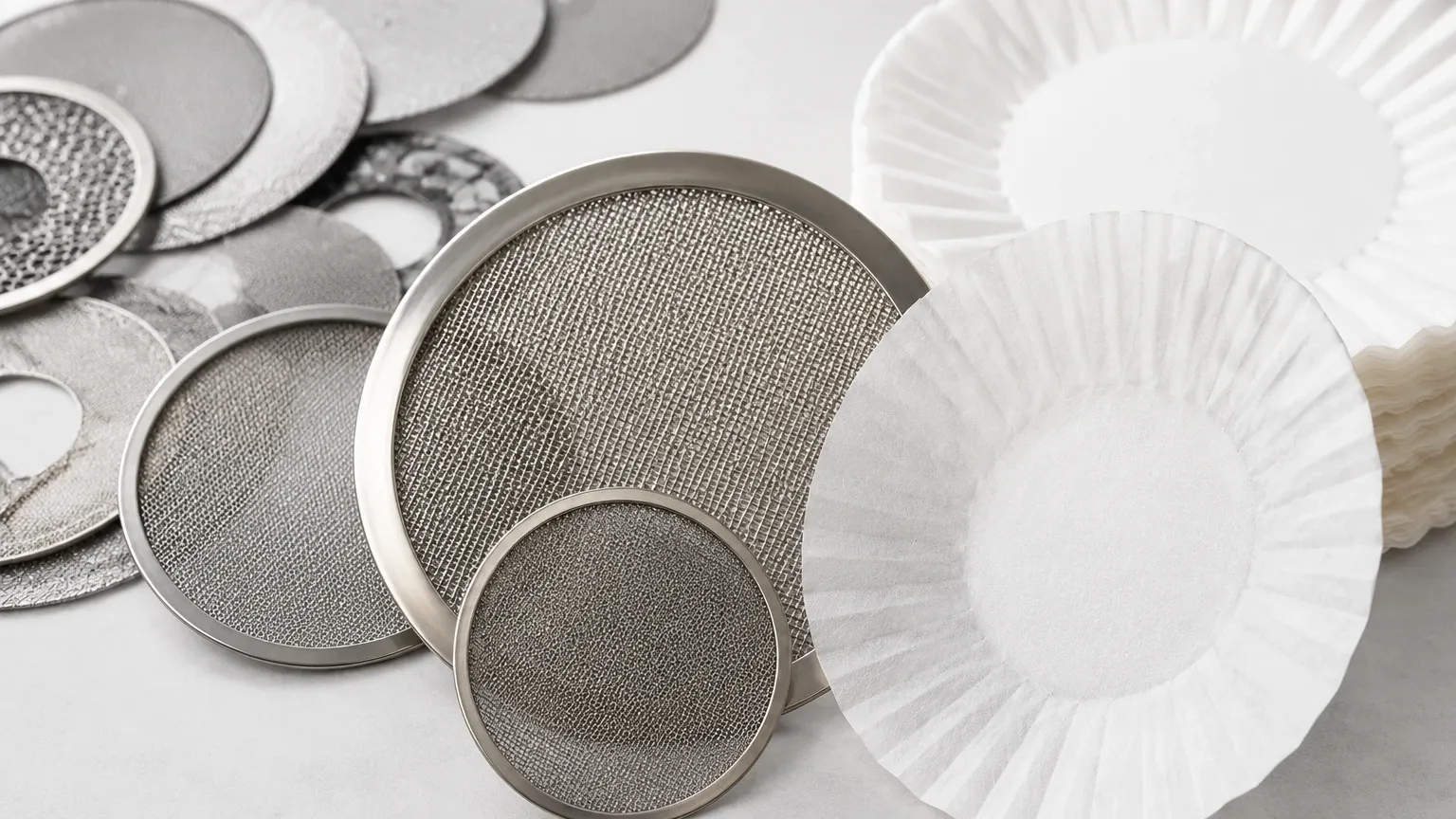
Permanent filters, specifically those manufactured from high-grade stainless steel (such as 304 or 316L), are engineered to withstand conditions that would cause cellulose or polymer-based paper filters to fail. These filters are often deployed in the form of Filter Discs & Packs, which can be customized to provide specific micron ratings and structural integrity.
The primary advantages of permanent stainless steel filters include:
* Thermal Resistance: Stainless steel can operate in environments exceeding 400°C, where paper filters would char or disintegrate.
* Chemical Stability: In chemical processing and pharmaceutical applications, permanent metal filters resist corrosion from solvents, acids, and bases that would dissolve paper media.
* Mechanical Strength: Permanent filters can handle high differential pressures (ΔP) without the risk of media migration or bursting.
* Cleanability: Through ultrasonic cleaning, backwashing, or chemical baths, these filters can be restored to near-original permeability, extending their service life over several years.
The Functionality of Paper Filters in Industrial Systems
Paper filters, often referred to as disposable or depth media, are generally made from cellulose, glass fiber, or synthetic polymers. Their primary role is "one-and-done" filtration. They are highly effective at capturing fine particles due to their dense, tortuous path structure. In some specific applications, such as laboratory testing or very fine oil polishing, paper filters offer a level of sub-micron capture that is cost-prohibitive to achieve with a single layer of metal mesh.
However, paper filters have significant limitations. They are prone to "blinding" (surface clogging) when exposed to high concentrations of solids, and once they reach their maximum pressure drop, they must be discarded. This creates a recurring operational expense and generates waste, which may be a concern for facilities aiming for ISO 14001 environmental compliance.
Do You Need a Paper Filter with a Permanent Filter?
In the vast majority of heavy industrial applications, the answer is no. A properly engineered permanent filter is designed to be a standalone solution. However, there are specific engineering scenarios where a hybrid approach—using both—is considered.
1. The "Polishing" Scenario
In processes where the primary goal is the removal of large contaminants, a permanent stainless steel mesh might serve as the primary filter. If the final product requires an extremely high degree of clarity (such as in fine beverage production or high-purity chemical manufacturing), a secondary paper filter may be placed downstream. In this case, the permanent filter protects the paper filter from premature clogging, while the paper filter performs the final "polishing."
2. Structural Support (The "Backing" Role)
Sometimes, the question of do you need a paper filter with a permanent filter arises from a structural perspective. If a process requires the specific filtration characteristics of paper but operates at pressures that would rupture the paper, a permanent stainless steel filter disc is used as a support plate. Here, the permanent filter provides the mechanical backbone, while the paper provides the filtration media.
3. Transitioning to Multi-Layer Metal Packs
Modern engineering has largely rendered the paper-plus-metal combination obsolete through the use of multi-layer Filter Discs & Packs. By sintering or welding multiple layers of different wire mesh gauges together, manufacturers can create a single component that offers the fine filtration of a paper filter with the structural strength and cleanability of a permanent filter. This eliminates the need for disposable inserts entirely.
Engineering Considerations: Micron Rating and Permeability
When evaluating whether to use a paper filter alongside a permanent one, engineers must calculate the cumulative effect on the system's hydraulics. Adding a paper filter to an existing permanent filter setup increases the total resistance to flow.
Pressure Drop (ΔP)
Every layer of filtration media introduces a pressure drop. If you stack a paper filter on top of a permanent metal disc, the initial pressure drop will be significantly higher than using the metal disc alone. This requires the pump or hydraulic system to work harder, increasing energy consumption. If the system is not designed for this added resistance, it can lead to cavitation or reduced flow rates.
Micron Rating vs. Capture Efficiency
A common misconception is that a 10-micron permanent filter and a 10-micron paper filter perform identically. Paper filters are often "nominal," meaning they capture a percentage of particles at that size. Stainless steel wire mesh can be manufactured to "absolute" ratings, ensuring that no particle larger than the pore size passes through. If your permanent filter has an absolute rating that meets your process requirements, adding a paper filter provides no functional benefit and only increases maintenance complexity.
Total Cost of Ownership: Metal vs. Paper
From a procurement standpoint, the decision involves comparing Capital Expenditure (CAPEX) with Operating Expenditure (OPEX).
* Permanent Filters (High CAPEX, Low OPEX): The initial cost of custom stainless steel Filter Discs & Packs is higher than a box of paper filters. However, because they are cleaned and reused, the cost per gallon filtered drops significantly over time. There is also no cost associated with the disposal of contaminated paper media.
* Paper Filters (Low CAPEX, High OPEX): While the filters themselves are cheap, the labor costs for frequent replacement, the downtime required to change filters, and the ongoing purchase orders make them more expensive in high-volume industrial settings.
If you find yourself asking do you need a paper filter with a permanent filter to save money, the answer is usually to invest in a higher-quality, multi-stage permanent filter pack that can handle the entire filtration load without disposable assistance.
Maintenance and Cleaning Protocols
One of the strongest arguments for moving away from paper filters in favor of permanent solutions is the streamlined maintenance.
When a permanent filter becomes loaded with contaminants, the system typically indicates a high differential pressure. The filter is then removed and cleaned. For stainless steel mesh, cleaning methods include:
* Backpulsing: Reversing the flow of fluid to knock particles off the surface.
* Ultrasonic Cleaning: Using high-frequency sound waves in a solvent bath to dislodge particles from deep within the mesh layers.
* Burn-off/Pyrolysis: For polymer applications, heating the filter to a temperature where the organic contaminants are carbonized and removed.
In contrast, a paper filter cannot be cleaned. If it is used in conjunction with a permanent filter, the maintenance team must manage both a cleaning schedule for the metal and a replacement schedule for the paper, doubling the maintenance touchpoints.
Conclusion: Selecting the Right Solution
For most industrial applications in chemical processing, hydraulics, and food production, a permanent stainless steel filter is the superior choice. The need for a paper filter is usually an indication that the current permanent filter is either improperly sized or has an incorrect micron rating for the task.
By utilizing advanced Filter Discs & Packs, engineers can achieve precise filtration targets—even down to very fine levels—while maintaining the durability and cost-effectiveness of metal. If your process currently relies on a combination of both, it may be time to evaluate a customized metal filtration solution that consolidates these functions into a single, cleanable, and high-performance component.
When determining your filtration strategy, prioritize the mechanical requirements of your system. If the environment involves high temperatures, high pressures, or aggressive chemicals, the reliability of a permanent stainless steel filter will always outweigh the temporary convenience of paper. Focusing on the right mesh weave, layer configuration, and material grade will ensure that your filtration system operates at peak efficiency without the need for redundant disposable media.
Download Do You Need a Paper Filter with a Permanent Filter as a PDF
