


Filters Pack
In the realm of industrial processing, the efficiency of filtration systems often hinges on the structural integrity and precision of the filter media. A filters pack—frequently referred to as a multilayer screen pack—is a critical component used to remove impurities from molten polymers, chemicals, and industrial fluids. Unlike single-layer screens, these packs are engineered assemblies of multiple wire mesh layers designed to withstand high pressures while maintaining exacting filtration standards.
For engineers and procurement specialists, selecting the correct Filter Discs & Packs involves a deep understanding of material science, fluid dynamics, and mechanical stress. This guide examines the technical considerations, construction methods, and performance metrics essential for optimizing industrial filtration processes.
Engineering Principles of Multi-Layer Filter Packs
The primary advantage of a filters pack over a single-layer disc is its ability to provide both fine filtration and structural support simultaneously. In high-pressure environments, such as plastic extrusion or fiber spinning, a fine mesh screen (the filtration layer) is often too delicate to withstand the mechanical force of the flow. Without support, the mesh would deform or "blow out."
To solve this, a filters pack is constructed using a graduated layer strategy:
1. The Filtration Layer: This is the core mesh with the specific micron rating required for the application. It is usually positioned in the center or protected by other layers.
2. The Support Layers: Coarser meshes are placed on either side of the filtration layer. These provide the necessary rigidity to prevent the fine mesh from collapsing under pressure.
3. The Drainage Layers: In complex assemblies, additional layers facilitate the even distribution of fluid across the entire surface area of the pack, preventing localized blinding and extending the service life.
By combining these layers, manufacturers can achieve a high dirt-holding capacity and precise particle retention without sacrificing the mechanical durability of the component.
Material Selection for Industrial Environments
The choice of material for a filters pack is dictated by the chemical composition of the medium, the operating temperature, and the required corrosion resistance. Stainless steel remains the industry standard due to its versatility and durability.
Stainless Steel 304
This is the most common material used for general-purpose industrial filtration. It offers excellent mechanical properties and good resistance to atmospheric corrosion. It is widely used in food processing and standard chemical applications where extreme acidity is not a factor.
Stainless Steel 316 and 316L
For more demanding environments, 316L (low carbon) is preferred. The addition of molybdenum enhances resistance to pitting and crevice corrosion, particularly in chloride-rich environments. In pharmaceutical and high-purity chemical processing, 316L is often the mandatory choice to ensure no metallic contamination occurs during the filtration process.
Specialized Alloys
In extreme cases involving high-temperature oxidation or highly corrosive acids, alloys such as Hastelloy or Inconel may be utilized. However, for the vast majority of polymer extrusion and hydraulic applications, stainless steel provides the most cost-effective and reliable performance.
Structural Configurations: Spot-Welded vs. Rimmed
How the individual layers of a filters pack are joined significantly impacts its performance and ease of installation. There are two primary construction methods used in the industry:
Spot-Welded Filter Packs
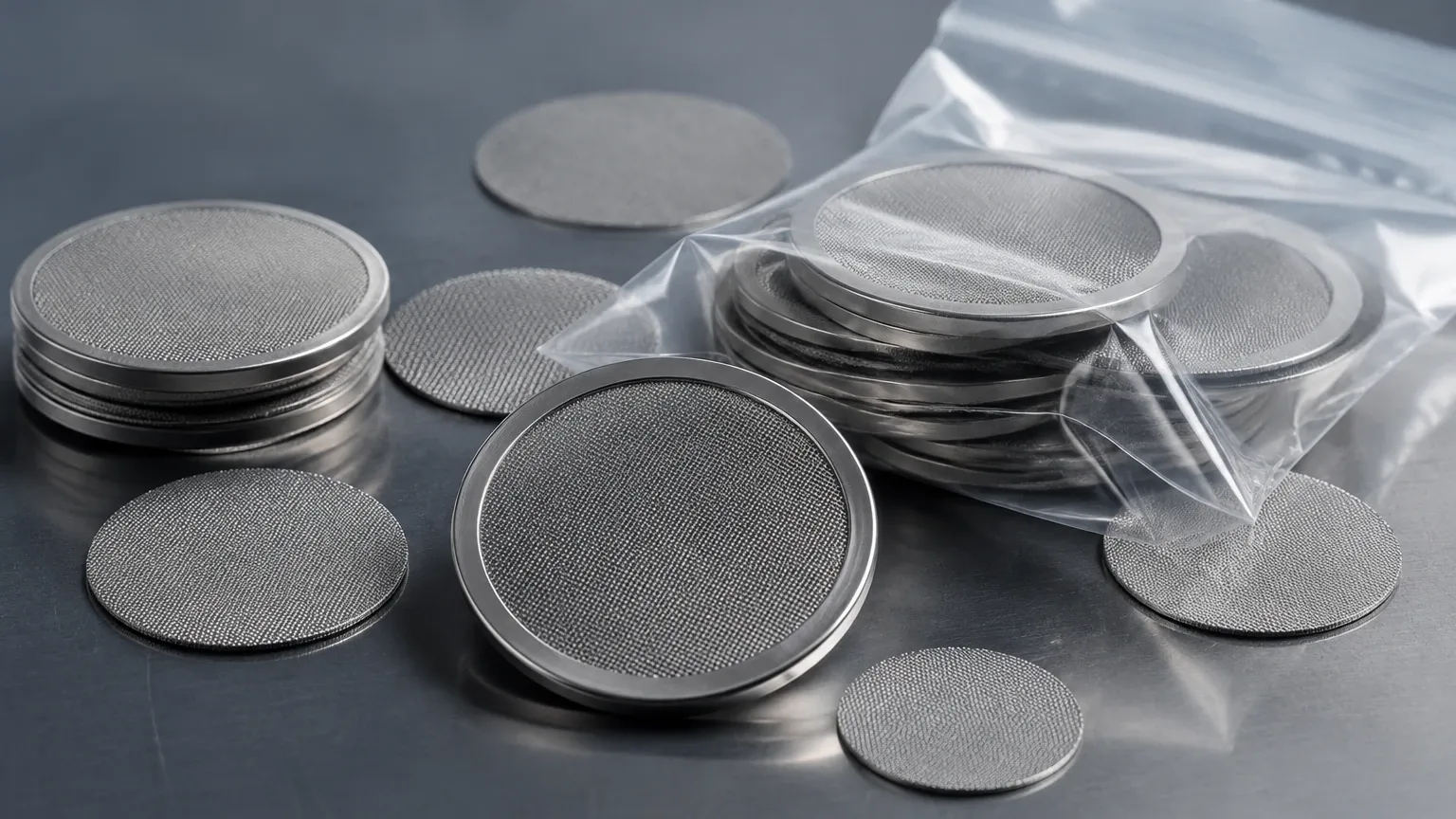
In this configuration, the multiple layers of wire mesh are joined at specific points using resistance welding. This method ensures that the layers remain in the correct sequence during shipping and installation. Spot-welded packs are economical and provide excellent flow characteristics because the edges remain open, allowing for maximum effective filtration area.
Rimmed (Bound) Filter Packs
Rimmed packs feature a metal binding—often made of aluminum, stainless steel, or copper—around the outer circumference. This binding serves several purposes:
* Leak Prevention: The rim acts as a gasket, providing a superior seal within the screen changer or filter housing.
* Enhanced Rigidity: The frame prevents the edges of the mesh from fraying and adds significant structural strength.
* Safety: The rim covers the sharp edges of the cut wire mesh, making the packs safer for operators to handle during maintenance cycles.
Critical Performance Metrics for Extrusion and Processing
When evaluating a filters pack for a specific application, engineers must look beyond the micron rating. Several performance metrics determine the total efficiency of the filtration system.
Pressure Drop (ΔP)
The pressure drop is the difference in fluid pressure before and after the filter. A well-designed pack should minimize initial ΔP to reduce the energy required by pumps or extruders. As the pack captures contaminants, ΔP will naturally increase. The rate of this increase is a primary indicator of the filter’s dirt-holding capacity.
Micron Retention Accuracy
Filtration accuracy is not just about the smallest hole in the mesh; it is about the consistency of those openings across the entire surface. High-quality Filter Discs & Packs utilize precision-woven wire cloth to ensure that no particles larger than the specified rating pass through the system, which is vital for preventing downstream equipment damage.
Throughput and Flow Rate
The geometry of the weave (e.g., plain weave, twilled weave, or Dutch weave) affects how much fluid can pass through the pack per unit of time. Selecting a weave that balances filtration fineness with high permeability is essential for maintaining production speeds.
Customization Options for Specialized Applications
Industrial processes are rarely one-size-fits-all. Customization is often required to fit specific machine geometries or to address unique processing challenges. Kaifil specializes in providing OEM solutions that cater to these specific needs.
Diverse Shapes and Dimensions
While circular discs are the standard, many screen changers require kidney-shaped, oval, or rectangular packs. Precision laser cutting and die-cutting technologies allow for the production of filters pack components with extremely tight tolerances, ensuring a perfect fit in any housing.
Layer Sequencing
The number of layers can vary from two to over seven, depending on the pressure and the level of contamination in the raw material. Engineers can specify the exact mesh count for each layer to create a customized gradient that optimizes the balance between filtration depth and flow resistance.
Specialized Finishes
In some applications, the mesh may undergo ultrasonic cleaning or heat treatment to ensure it is free of oils and residues before being deployed in sensitive pharmaceutical or food-grade environments.
Maintenance and Replacement Cycles
The longevity of a filters pack depends on the contamination level of the feedstock and the total surface area of the filter. In continuous extrusion processes, the timing of a screen change is critical to preventing production downtime and maintaining product quality.
Signs That Replacement is Required
* Increased Back Pressure: This is the most common indicator. When the pressure upstream of the filter reaches a predetermined limit, the pack is considered "blinded" and must be replaced.
* Reduced Flow Rate: If the pump speed remains constant but the output drops, the filter is likely restricted.
* Product Defects: In polymer processing, the appearance of "specks" or un-melted particles in the final product indicates that a filter pack may have suffered a mechanical failure or bypass.
* Mechanical Deformation: During routine inspections, if a pack appears "dished" or warped, it suggests that the support layers were insufficient for the operating pressure, and a more robust pack design should be considered.
Total Cost of Ownership (TCO)
When purchasing industrial filters, procurement teams should consider the total cost of ownership rather than the unit price alone. A higher-quality filters pack that lasts 20% longer or allows for a 5% higher flow rate can result in significant annual savings by reducing downtime and energy consumption.
Conclusion
The selection of a filters pack is a technical decision that directly impacts the reliability of industrial production lines. By understanding the interplay between material selection, structural design, and performance metrics, engineers can ensure they are using the most efficient filtration solution for their specific application. Whether for chemical processing, hydraulic systems, or polymer extrusion, a precision-engineered Filter Discs & Packs solution provides the necessary protection for downstream components and ensures the consistency of the final product.
For those seeking to optimize their filtration processes, consulting with a manufacturer that offers extensive customization and technical support is the most effective way to balance performance, durability, and cost.
