


Engineering Guide to Wire Mesh Grease Filters: Principles, Selection, and Industrial Application
In industrial ventilation and process engineering, the management of airborne grease and oil mist is a critical requirement for both operational efficiency and fire safety. Wire mesh grease filters serve as the primary line of defense in commercial kitchens, food processing plants, and industrial workshops where hydrocarbons are aerosolized. Unlike standard particulate filters, these components are designed to handle high-viscosity contaminants while maintaining structural integrity under high temperatures and frequent cleaning cycles.
Selecting the appropriate filtration media requires a deep understanding of fluid dynamics, material science, and the specific geometric configurations of the filter elements. For many heavy-duty applications, the use of Wire Mesh Filter Cylinders & Tubes provides the necessary surface area and structural rigidity to handle high-velocity airflows while ensuring effective grease capture.
1. The Operating Principles of Wire Mesh Impingement
Wire mesh grease filters operate on the principle of mechanical impingement. As grease-laden air passes through the multi-layered mesh structure, the air is forced to change direction rapidly and repeatedly. Because grease particles have significantly more mass and momentum than the air molecules carrying them, they cannot follow the abrupt changes in the airflow path.
The Tortuous Path
This phenomenon creates what engineers call a "tortuous path." When the heavy grease droplets strike the surface of the wire, they lose momentum and adhere to the metal. Over time, these small droplets coalesce into larger beads, which then drain away from the mesh surface into a collection trough or grease trap.
Efficiency Factors
The efficiency of this process is governed by several variables:
* Wire Density: The proximity of the wires to one another determines the number of impingement points. Higher density generally increases capture efficiency but also increases resistance to airflow.
* Face Velocity: The speed at which the air enters the filter. If the velocity is too low, the particles may have insufficient momentum to strike the wire. If it is too high, the air may "re-entrain" captured grease, pulling it off the mesh and back into the ductwork.
* Layering: Most industrial wire mesh grease filters utilize multiple layers of knitted or woven mesh to maximize the surface area without creating an impenetrable barrier to the air.
2. Material Selection and Environmental Compatibility
In industrial environments, the choice of material is not merely a matter of cost but of longevity and chemical resistance. While aluminum filters are common in light commercial applications, industrial-grade filtration usually demands stainless steel or specialized alloys.
Stainless Steel (Grade 304 and 316)
Stainless steel is the industry standard for wire mesh grease filters due to its exceptional resistance to corrosion and high temperatures. Grade 304 is suitable for most food processing and general industrial applications. However, in environments involving high salinity or corrosive cleaning agents, Grade 316 is preferred due to its molybdenum content, which provides superior resistance to pitting corrosion.
Thermal Stability
Industrial grease filters are often located near heat sources, such as industrial fryers or metalworking machinery. Stainless steel maintains its mechanical properties at temperatures where aluminum might soften or deform. This thermal stability ensures that the mesh remains taut and the frame does not warp, preventing bypass—where unfiltered air escapes around the edges of the filter.
Chemical Resistance
Grease filters require frequent cleaning with heavy-duty degreasers. These chemicals are often highly alkaline. Stainless steel can withstand repeated exposure to these caustic agents without the surface degradation or oxidation that characterizes lower-grade materials.
3. Structural Design: Wire Mesh Filter Cylinders & Tubes
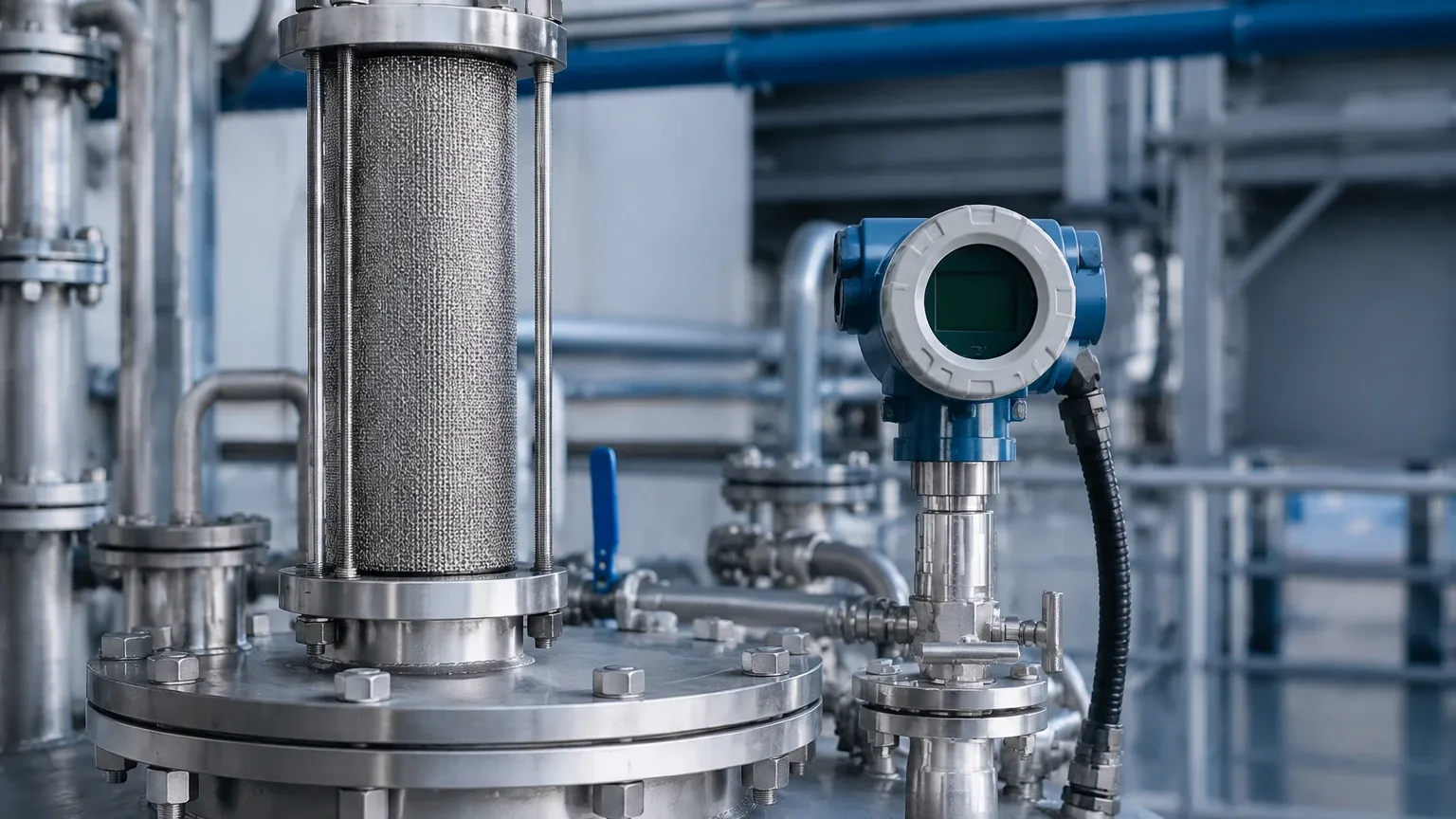
While flat panel filters are the most recognizable form of grease filtration, many industrial processes require more complex geometries to accommodate specific machine footprints or higher volume flows. Wire Mesh Filter Cylinders & Tubes are frequently utilized in these scenarios.
Advantages of Cylindrical Geometry
Cylindrical filters offer a significantly higher surface-area-to-volume ratio compared to flat panels. This is particularly beneficial in compact industrial equipment where space is at a premium. The circular design also provides inherent structural strength, allowing the filter to withstand higher pressure differentials without collapsing.
Customization in Manufacturing
At Kaifil, the production of these components involves precision welding and forming techniques to ensure that the mesh layers are securely bonded to the support structures. For OEM applications, engineers can specify:
* Micron Ratings: Though grease filtration is usually measured by impingement efficiency, the mesh opening size is critical for balancing airflow and capture rates.
* Internal Support Cores: For high-pressure hydraulic or pneumatic systems that may also involve grease or oil mist, perforated metal cores can be added to the interior of the tube to prevent deformation.
* End Cap Configurations: Custom flanges, threaded connections, or open-ended designs allow for seamless integration into existing industrial housings.
4. Evaluating Performance: Efficiency vs. Pressure Drop
One of the most significant challenges for a B2B buyer or systems engineer is balancing the grease extraction efficiency with the system's static pressure drop.
Static Pressure Considerations
Every layer of mesh added to a filter increases the resistance that the exhaust fan must overcome. A high pressure drop leads to increased energy consumption and may require a larger, more expensive fan motor. Conversely, a filter with too little resistance may allow a significant portion of grease aerosols to pass through, leading to grease buildup in the ductwork, which represents a major fire hazard.
The Saturation Point
Engineers must also consider the "loaded" pressure drop. As the wire mesh grease filters capture more material, the gaps between the wires narrow, and the pressure drop increases. High-quality industrial filters are designed to hold a significant volume of grease before the pressure drop reaches a critical level, thereby extending the service interval.
5. Installation Constraints and Application Risks
Proper installation is as important as the filter's construction. Even the most efficient wire mesh filter will fail if air is allowed to bypass the media.
Sealing and Gasketing
In industrial settings, filters should be installed in a frame that provides a tight seal. Any gaps between the filter frame and the housing will allow grease-laden air to enter the exhaust system directly. High-temperature silicone or metal-to-metal precision fits are commonly employed to mitigate this risk.
Fire Safety and Flashpoints
Grease is highly flammable. In the event of a cooktop fire or a spark in a grinding station, the grease trapped in the filter can ignite. Industrial wire mesh filters act as a flame arrestor to a limited degree by dissipating heat across the large surface area of the metal mesh. However, this only works if the filters are cleaned regularly. A heavily saturated filter is a fuel source, not a safety device.
Drainage Orientation
Filters must be installed at the correct angle—usually between 45 and 60 degrees—to allow the captured grease to drain via gravity. If installed horizontally, the grease will simply pool on the mesh, eventually dripping back onto the process area or causing an extreme pressure drop.
6. Maintenance, Cleaning, and Total Cost of Ownership
For procurement teams, the initial purchase price of a filter is only a fraction of the total cost of ownership (TCO). The durability and cleanability of the filter determine its long-term value.
Cleaning Protocols
Unlike disposable pleated filters, stainless steel wire mesh grease filters are designed to be permanent. They can be cleaned using:
* Soak Tanks: Immersion in a heated degreasing solution.
* High-Pressure Washing: Using hot water and detergent to blast grease from the inner layers of the mesh.
* Dishwashers: Many commercial and industrial units are sized to fit into standard industrial ware-washers.
Durability and Replacement Cycles
A high-quality stainless steel filter from a manufacturer like Kaifil can last for years if maintained correctly. In contrast, cheaper aluminum or galvanized steel filters may oxidize, lose their structural integrity, or become impossible to clean fully, necessitating frequent replacements. When calculating TCO, engineers should factor in the labor costs associated with cleaning versus the capital expenditure of replacement.
7. Procurement Guide: Information for International Buyers
When sourcing wire mesh grease filters for industrial applications, providing vague specifications can lead to performance failures. Buyers should be prepared to confirm the following technical details with their manufacturer:
1. Exact Dimensions: Including frame thickness and the tolerances required for the housing.
2. Material Grade: Specify SS304, SS316, or other alloys based on the chemical environment.
3. Airflow Requirements: Provide the target CFM (Cubic Feet per Minute) and the maximum allowable initial pressure drop.
4. Layer Count and Mesh Type: Determine if the application requires knitted mesh (better for grease) or woven mesh (better for structural consistency).
5. Compliance Standards: Ensure the filters meet relevant local fire safety and food grade certifications (such as UL 1046 or NSF standards).
By focusing on these technical parameters, engineering and purchasing teams can ensure they select filtration components that offer the best balance of performance, safety, and longevity. Whether the application requires standard panels or specialized Wire Mesh Filter Cylinders & Tubes, the goal remains the same: efficient contaminant capture and the protection of downstream assets.
