


Metal Mesh Grease Filter: An Engineering Guide to Industrial Performance and Selection
In industrial exhaust and air filtration systems, the management of airborne grease and oil mist is a critical operational requirement. A metal mesh grease filter serves as the primary line of defense, designed to capture heavy particulate matter and droplets before they can enter ductwork or damage sensitive downstream components. Unlike disposable alternatives, these filters are engineered for durability, high-temperature resistance, and repeated cleaning cycles, making them a staple in food processing, industrial manufacturing, and heavy-duty HVAC applications.
For engineers and procurement professionals, selecting the correct filtration media involves more than just matching dimensions. It requires an understanding of fluid dynamics, material compatibility, and the structural requirements of the specific housing. This guide examines the technical aspects of metal mesh filtration, from operating principles to the specialized use of Wire Mesh Filter Cylinders & Tubes in complex industrial systems.
Engineering Principles: How Impingement Filtration Works
The primary mechanism behind a metal mesh grease filter is mechanical impingement. As grease-laden air passes through the multiple layers of the filter media, the air is forced to change direction rapidly and repeatedly. Because grease particles and oil droplets have greater mass and momentum than the surrounding air, they cannot follow the air's rapid directional changes. Instead, they strike the surface of the metal wires and adhere to them.
As more particles strike the wire, they coalesce into larger droplets. Eventually, gravity causes these droplets to run down the mesh into a collection trough or drainage system. This process is highly effective for removing large-diameter particles (typically 5 microns and larger) and is essential for preventing the buildup of flammable residues in exhaust ducts. The efficiency of this process is governed by several factors:
* Face Velocity: The speed at which air enters the filter. If the velocity is too low, particles may lack the momentum to impinge on the wire. If it is too high, the air may "re-entrain" captured grease, pulling it off the mesh and back into the airstream.
* Media Density: The number of layers and the mesh count (wires per inch) determine the "tortuous path" the air must navigate.
* Surface Area: Increasing the total surface area of the wire allows for higher holding capacity and longer intervals between cleaning.
Material Selection and Structural Integrity
In industrial environments, the choice of material is dictated by the chemical composition of the effluent and the operating temperature. While aluminum filters are common in light commercial applications, industrial-grade solutions almost exclusively utilize stainless steel.
Stainless Steel 304 vs. 316
Stainless steel 304 is the standard for most grease filtration needs, offering excellent corrosion resistance and the ability to withstand high-temperature steam cleaning. However, in environments involving high salinity (such as coastal facilities) or exposure to acidic cleaning agents, Stainless Steel 316 is preferred. The addition of molybdenum in 316 provides superior resistance to pitting and chloride-induced stress corrosion cracking.
Frame and Support Construction
Industrial filters must maintain their structural integrity under high static pressure. A robust frame, often constructed from 1.0mm to 2.0mm thick stainless steel, prevents the filter from vibrating or bypassing air. For high-flow applications, internal support grids or specialized geometries, such as Wire Mesh Filter Cylinders & Tubes, are used to provide the necessary rigidity without significantly increasing the pressure drop.
Key Performance Metrics: Efficiency vs. Pressure Drop
One of the most significant challenges in filtration engineering is balancing filtration efficiency with the static pressure drop. A denser mesh will capture more grease but will also resist airflow, forcing the exhaust fans to work harder and increasing energy consumption.
1. Initial Resistance: This is the pressure drop across a clean filter. Engineers must ensure the system's fan curve can accommodate the filter's resistance at the required CFM (Cubic Feet per Minute).
2. Grease Extraction Efficiency: This is typically measured as a percentage of grease mass captured. Industrial-grade metal mesh filters often achieve 60% to 90% efficiency for particles over 8 microns, depending on the number of layers.
3. Dust Holding Capacity: While primarily designed for grease, these filters also capture solid particulates. The "holding capacity" refers to how much contaminant the filter can retain before the pressure drop reaches a critical limit (usually 1.0 to 1.5 inches of water gauge).
Application-Specific Configurations: Panels, Cylinders, and Tubes
While the flat panel is the most recognizable form of a metal mesh grease filter, many industrial processes require specialized shapes to fit into compact or high-pressure housings.
Flat Panel Filters
These are standard in hood exhausts and wall-mounted filtration units. They are easy to slide in and out for maintenance and provide a large face area for low-velocity impingement.
Cylindrical and Tubular Filters
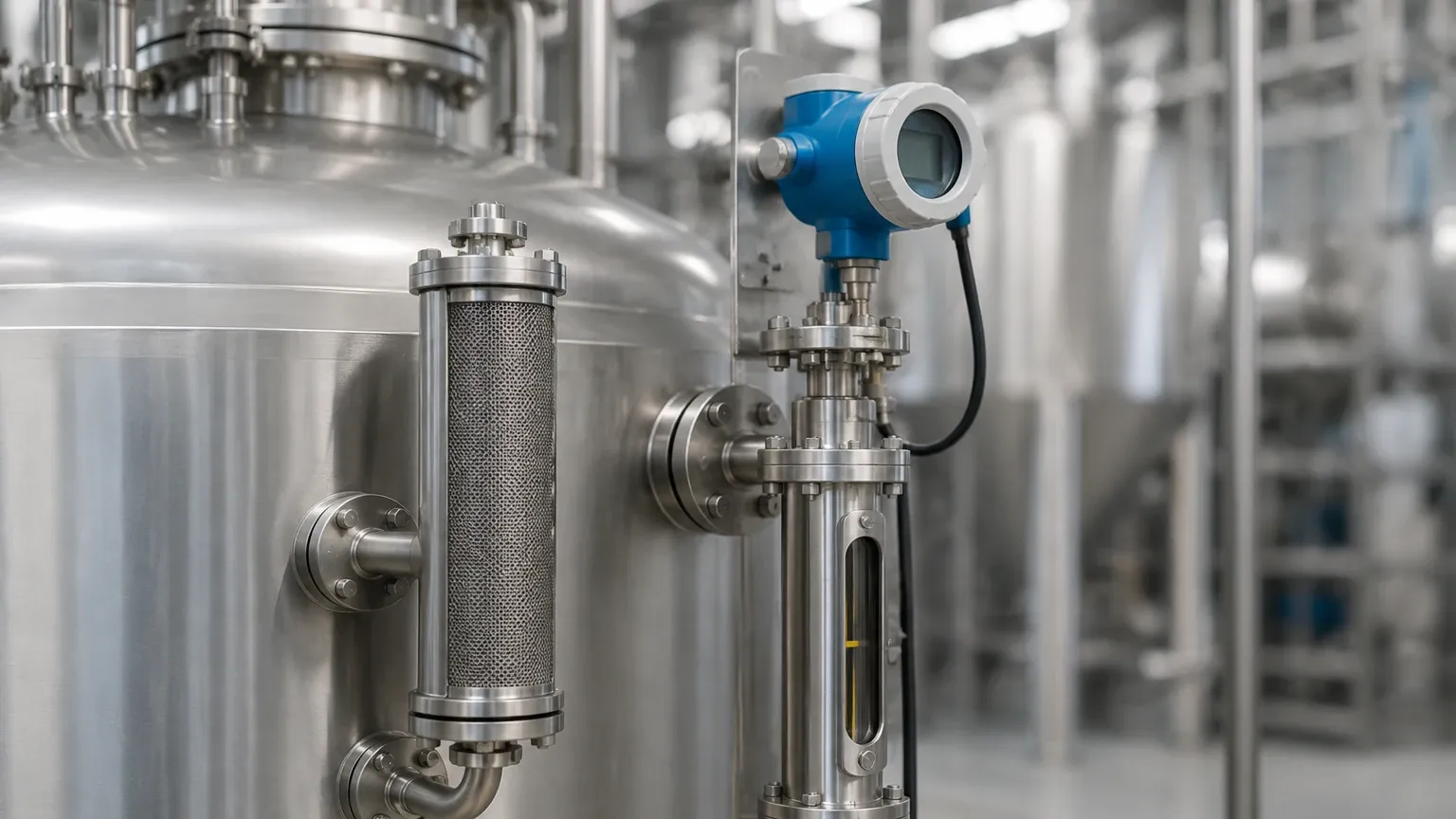
In applications such as CNC mist collection, vacuum pump protection, or high-pressure hydraulic exhaust, Wire Mesh Filter Cylinders & Tubes are the preferred geometry. The cylindrical design offers several engineering advantages:
* Increased Surface Area: A cylinder provides significantly more filtration surface area within the same footprint compared to a flat panel.
* Pressure Resistance: The radial structure of a tube is naturally stronger and better suited to withstand inward or outward pressure without deforming.
* Uniform Flow: Cylindrical filters allow for 360-degree air intake, which can lead to more uniform loading of the filter media and longer service life.
Installation Constraints and Operational Safety
Proper installation is paramount to both performance and safety. In many jurisdictions, grease filters must meet specific fire safety standards (such as UL 1046). These standards ensure that the filter acts as a flame arrestor, preventing a flash fire on the cooking surface or in the machinery from traveling into the ductwork.
Sealing and Bypass
Air will always follow the path of least resistance. If there are gaps between the filter frame and the housing, grease-laden air will bypass the filter entirely. This leads to rapid grease accumulation in the fans and ducts, creating a significant fire hazard. Industrial housings should utilize gaskets or precision-machined tracks to ensure a tight seal.
Drainage Orientation
For a metal mesh grease filter to function as designed, it must be oriented correctly to allow for drainage. In panel filters, the layers are often arranged so that captured grease flows downward toward a drainage hole. If installed horizontally without a pitch, the grease will pool, increasing the risk of "clogging" and dripping back onto the process equipment.
Maintenance, Cleaning, and Total Cost of Ownership (TCO)
The primary advantage of a stainless steel mesh filter over disposable media is its long-term cost-effectiveness. While the initial purchase price is higher, the total cost of ownership is significantly lower due to the filter's reusability.
Cleaning Protocols
In high-volume industrial environments, filters should be cleaned on a scheduled basis—ranging from daily to weekly. Stainless steel filters can be cleaned using:
* High-Pressure Steam: Effective for melting and dislodging hardened grease.
* Caustic Soaks: Useful for breaking down organic fats and oils, provided the filter material (SS304/316) is compatible with the chemical.
* Ultrasonic Cleaning: The most thorough method for deep-cleaning multi-layered mesh where manual scrubbing cannot reach.
Replacement Cycles
Despite their durability, metal filters are not infinite. Over years of use and aggressive cleaning, the fine wires in the mesh may begin to fray or corrode, and the frame may warp. A compromised filter loses its efficiency and flame-arresting capabilities. Engineers should inspect filters for "light leaks" (visible gaps in the mesh) and frame integrity during every cleaning cycle.
Customization and OEM Procurement Considerations
For equipment manufacturers (OEMs), off-the-shelf filters rarely meet the exact requirements of a proprietary system. Customization is often necessary to optimize performance. When sourcing custom filtration components, buyers should provide the following specifications to the manufacturer:
* Micron Rating: The target particle size for capture.
* Flow Rate (CFM/m³/h): The volume of air the filter must handle.
* Maximum Allowable Pressure Drop: The limit the system can tolerate when the filter is clean.
* Environmental Factors: Exposure to chemicals, extreme temperatures, or high-pressure washdowns.
* Structural Requirements: Whether the application requires standard panels or specialized Wire Mesh Filter Cylinders & Tubes.
By working closely with a manufacturer like Kaifil, which specializes in custom stainless steel filtration, engineers can develop components that are tailored to the specific rigors of their application. Whether it is a precision-engineered metal mesh grease filter for a high-end exhaust system or a reinforced cylindrical filter for heavy industrial machinery, the right design ensures operational efficiency, safety, and long-term reliability.
